
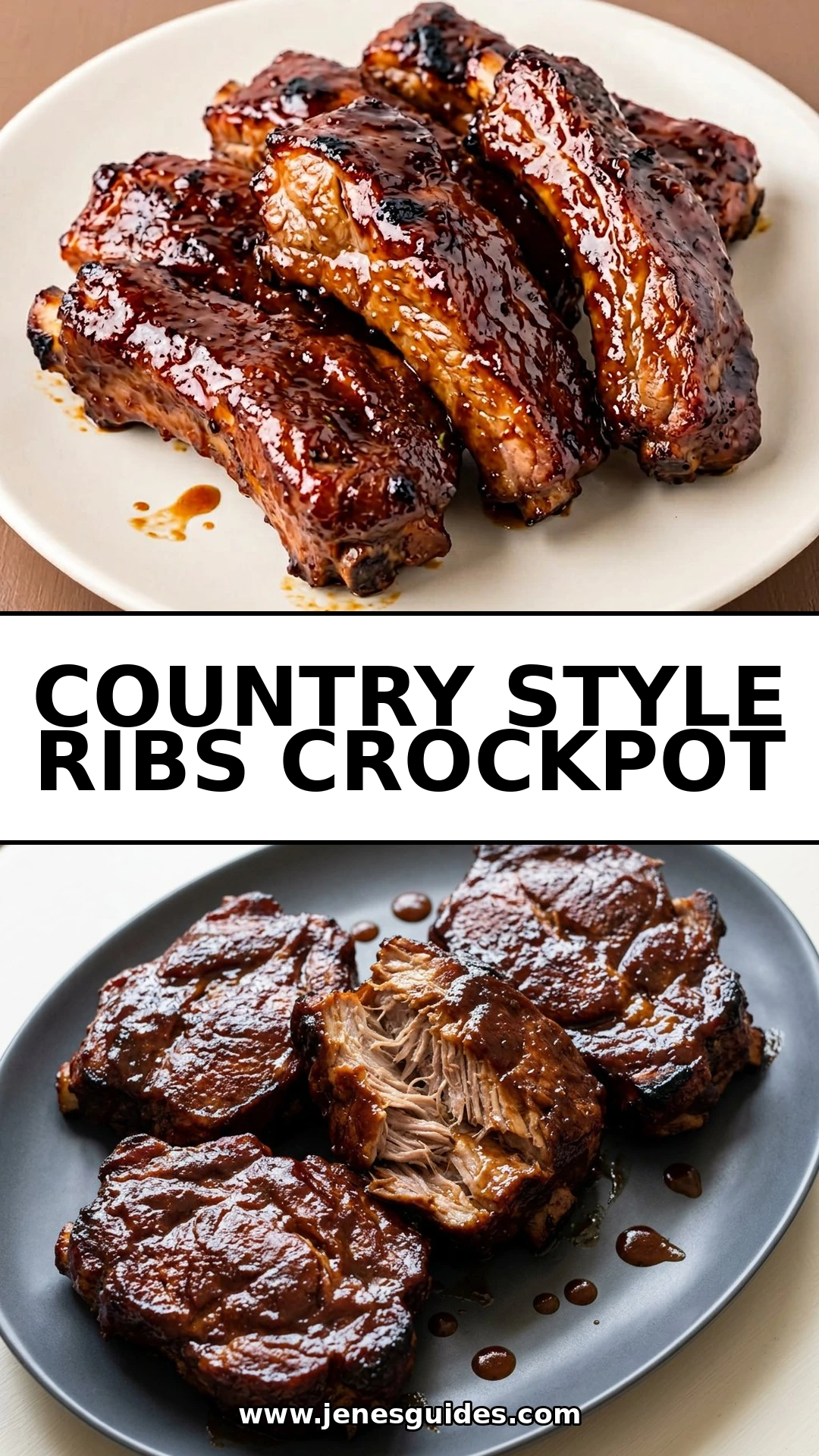
Crockpot country style ribs are the dinner that convinces people you worked all day when you actually worked for about ten minutes.
Meaty pork ribs slow cook for 7 to 8 hours in a tangy sweet BBQ sauce with apple cider vinegar, brown sugar, and smoked paprika until they surrender completely and barely hold together for the plate.
A quick broil at the end caramelizes the glaze into sticky, charred edged magic. Here is the secret nobody tells you: country style ribs are really meaty pork shoulder cut into rib shapes, which means more meat and less fuss.
It is ideal for busy weeknights, lazy Saturdays, cookouts, and anyone who wants real barbecue flavor without standing over a smoker all afternoon.
Recipe at a Glance
| Prep time | 10 minutes |
| Cook time | 7 to 8 hours on low |
| Total time | About 8 hours |
| Servings | 6 |
| Main ingredients | Country style pork ribs, BBQ sauce, apple cider vinegar, brown sugar |
| Skill level | Easy |
Ingredients You’ll Need
- 3 lbs country style pork ribs
- 1 cup BBQ sauce
- 1/2 cup apple cider vinegar
- 1/4 cup brown sugar
- 1 onion, quartered
- 3 cloves garlic
- 1 tsp smoked paprika
- 1/2 tsp salt
- 1/4 tsp pepper
Ingredient Notes & Easy Substitutions
Country style pork ribs: Boneless or bone in both work beautifully here, so buy whatever looks meatiest and is on sale.
They come from the shoulder end of the pig, which is exactly the marbled, forgiving cut that slow cookers love. If yours are tied in a big slab, cut them into individual rib sized pieces so every piece bathes in sauce.
BBQ sauce: Use a sauce you already love, because it is doing real flavor work here. Sweet, smoky, or spicy all land well. The vinegar and brown sugar round it into something that tastes homemade even though we both know the bottle did the heavy lifting.

Apple cider vinegar: Half a cup sounds like a lot, but it is the backbone of the whole sauce, tenderizing the pork and cutting the sweetness so each bite makes you lean in rather than tune out. Do not swap in white vinegar; the fruity tang of cider vinegar is the personality here.
Smoked paprika: This is the shortcut to smokehouse flavor without a smoker. Regular paprika works in a pinch, but the smoked version adds a campfire depth that makes people ask what you did differently.
Equipment You’ll Need
- 6 quart or larger slow cooker
- Medium mixing bowl
- Whisk
- Tongs
- Baking sheet lined with foil, for the broil finish
- Basting brush
How to Make Country Style Ribs Crockpot
Step One: Layer the Foundation
Place the ribs in the slow cooker in a mostly single layer, then tuck the quartered onion and the garlic cloves in and around the meat.
The onion is not there for looks; as it softens over hours it melts into the sauce and adds a gentle sweetness you cannot buy in a bottle.
A mostly single layer means every piece of pork gets equal sauce time, so if your cooker is small and things stack up, it is fine, just plan to stir once halfway through if you are nearby.
Step Two: Mix and Pour the Sauce
In a medium bowl, whisk together 1 cup BBQ sauce, 1/2 cup apple cider vinegar, 1/4 cup brown sugar, 1 tsp smoked paprika, 1/2 tsp salt, and 1/4 tsp pepper until smooth. Pour the sauce evenly over the ribs.
Whisking the sauce separately matters because brown sugar clumps when it meets cold meat, and clumps mean uneven sweetness. Pour it over rather than around, letting it run down through every layer.
The sauce will look thin and watery now, which is exactly right; the pork will release juice and the sauce will concentrate into lacquer by the end.
Step Three: The Long, Patient Cook
Cover and cook on low for 7 to 8 hours, until the ribs are fork tender and practically sliding apart when you look at them.
Low and slow is not a suggestion here, it is the entire technique, because shoulder meat needs time for its connective tissue to melt into richness.
Resist lifting the lid, since every peek vents twenty minutes of accumulated heat. Done means a fork slides in with zero resistance; if you feel any fight at all, give it another hour and walk away.
Step Four: Skim the Sauce
Carefully lift the ribs out onto a foil lined baking sheet, then skim the excess fat off the surface of the sauce left in the slow cooker.
Skimming takes two minutes with a large spoon and it is the difference between glossy sauce and greasy sauce. Pork shoulders give off a surprising amount of fat over eight hours, and while fat carries flavor, you want it in balance.
Tilt the cooker and let the fat pool at one corner, then spoon it off; the sauce underneath will be deep reddish brown and smell incredible.
Step Five: The Caramelizing Broil
Brush the ribs generously with the skimmed sauce and broil them 3 to 5 minutes, watching constantly, until the edges char slightly and the glaze turns sticky and lacquered.
This five minute broil is where good ribs become great ribs, because the sugars in the sauce caramelize under direct heat and build that barbecue joint crust.
Stay at the oven door the entire time; the line between caramelized and burnt is about forty five seconds. Brush on a second layer of sauce halfway through if you want an extra thick glaze.
Step Six: Sauce, Rest, Serve
Warm the remaining sauce, spoon it over the broiled ribs, and let them rest for five minutes before serving so the juices settle back into the meat.
Resting feels impossible when the smell is doing laps around the house, but those five minutes keep every bite juicy instead of puddling on the cutting board.
Serve the extra sauce on the side for people who believe, correctly, that more sauce is always an option. Warn everyone that the meat slides off in strands, because the fork tender texture is half the joy.
Serving Size & Batch Scaling
Three pounds of country style ribs feeds six people generously, or four people who came to eat. The recipe scales beautifully; a 6 quart cooker handles five pounds, and the timing stays nearly identical as long as the sauce covers most of the meat.
Halving the recipe works too, though the sauce quantity benefits from staying at three quarters strength so the smaller batch does not dry out over the long cook.
Leftovers shred into some of the best pulled pork sandwiches of your life, so consider making extra on purpose.
Making More or Less?
Halving the recipe is simple: two ribs, half the sauce, same low and slow clock, though check for fork tenderness starting at hour six since a less full cooker heats a little faster.
For a bigger table, a 6 quart slow cooker takes five pounds comfortably; keep the sauce at one and a half strength and let the extra hour slide in without worry.
Leftovers shred beautifully for sandwiches, which is the strongest argument for cooking more rather than less.
Nutrition Estimate Per Serving
One serving lands around 430 calories with roughly 38 grams of protein, 22 grams of fat, and 18 grams of carbohydrates, depending mostly on your BBQ sauce choice and how enthusiastically you sauce at the table.
It is an estimate, not medically precise information, and trimming visible fat before serving lowers the numbers comfortably.
The protein count is the headline: this is genuinely filling dinner, the kind that means nobody raiding the pantry an hour later.
Common Mistakes to Avoid
The classic error is cooking on high to save time, which toughens shoulder meat instead of tenderizing it; the melt apart texture only comes from patient low heat.
- High for four hours in a true emergency is survivable, but low for seven to eight is the road to ribs that quit on the fork.
The second mistake is skipping the skim and the broil. Greasy sauce weighs everything down, and without the broil the ribs are merely tender instead of caramelized and sticky edged.
Those two small steps are the entire difference between slow cooker food and slow cooker food that tastes like you cheated at a barbecue restaurant.
Troubleshooting Guide
My ribs are not tender at hour seven. Every slow cooker runs at its own personality, and some run cool. Give them another hour on low; shoulder meat is nearly impossible to overcook in this window and will get more tender, not less.
My sauce seems too thin. Simmer it in a saucepan on the stove for five minutes to reduce, or stir in a cornstarch slurry and boil briefly until it coats a spoon.
My sauce tastes too sharp. That is the vinegar, and a teaspoon of brown sugar stirred in rounds it instantly. Balance is personal; taste and adjust without apology.
Variations & Customizations
Add a teaspoon of liquid smoke for deeper barbecue flavor, or a dash of cayenne if your table likes heat. A tablespoon of Dijon whisked into the sauce sharpens everything pleasantly, and honey can replace the brown sugar one for one.
The cooks at On My Kids Plate inspired my dry rub first instinct, and the folks at Eating on a Dime reminded me that budget cuts deserve big flavor.
Shred any leftovers entirely and pile them onto rolls with slaw for day two sandwiches that disappear embarrassingly fast.
What to Serve With It
Classic cookout sides are the move here: creamy coleslaw, cornbread, potato salad, or baked beans all sit happily beside the sticky sweetness.
For a cozy indoor pairing, my Mississippi pot roast fans already know the beauty of pepperoncini tang, and a vinegary slaw does the same job here, cutting through the rich glaze.
If you are a slow cooker devotee, my pulled pork slow cooker recipe is the natural next stop, and warm cornbread underneath turns this into open faced barbecue that requires a knife and fork and zero regrets.
Meal Prep & Make-Ahead Instructions
You can mix the sauce up to three days ahead and refrigerate it, which turns morning prep into a ninety second pour.
The ribs also cook beautifully overnight; start them at ten at night and they are tender and waiting by breakfast, ready for a quick reheat and broil at dinner.
The broil step waits happily; keep the cooked ribs refrigerated in their sauce for up to two days, then brush and broil straight from the fridge, adding a minute to the clock. This make ahead flexibility is exactly why the recipe earns a permanent slot in busy family rotations.
Storage & Leftovers
Store leftover ribs in an airtight container with some of the sauce, refrigerated, for up to four days. The sauce keeps the meat moist and the flavors keep marrying; day two ribs taste deeper and rounder than day one.
Freeze the ribs in sauce for up to three months in freezer bags, pressed flat for quick thawing. Thaw overnight in the refrigerator and reheat gently; the texture holds up remarkably well because shoulder meat loves moisture.
Reheating Instructions
Reheat in a covered baking dish at 300 degrees for about 15 minutes with a spoonful of sauce, or microwave in sixty second bursts, covered and stirred between rounds. Either way, finish with a one minute broil if you want to bring back the caramelized edges.
Gentle heat is the rule, because dried out barbecue is a small heartbreak that is entirely avoidable. And that is the whole slow cooker: sauce, patience, and a broiler finish that turns a humble pork shoulder into the stickiest, happiest dinner of the week.
Frequently Asked Questions
Can I cook these on high instead? Yes, on high for about 4 hours in a pinch, though the texture is noticeably better on low. If you do go high, check for fork tenderness at the three and a half hour mark.
Do I need to brown the ribs first? No; the broiler finish at the end builds all the browning you need, and the slow cooker keeps today’s version a true one vessel dinner. Browning first adds a little depth if you have ten spare minutes, but it is optional, not required.
Can I use baby back ribs instead? You can, but reduce the cook time to five to six hours on low, since baby backs are leaner and smaller. Country style ribs are meatier and more forgiving, which is why they star here.
Why did my sauce turn out thinner than expected? Slow cooker lids trap moisture and drip it back in, so sauces stay loose. Skim, then reduce the sauce on the stove for a few minutes, and it thickens right up into lacquer.