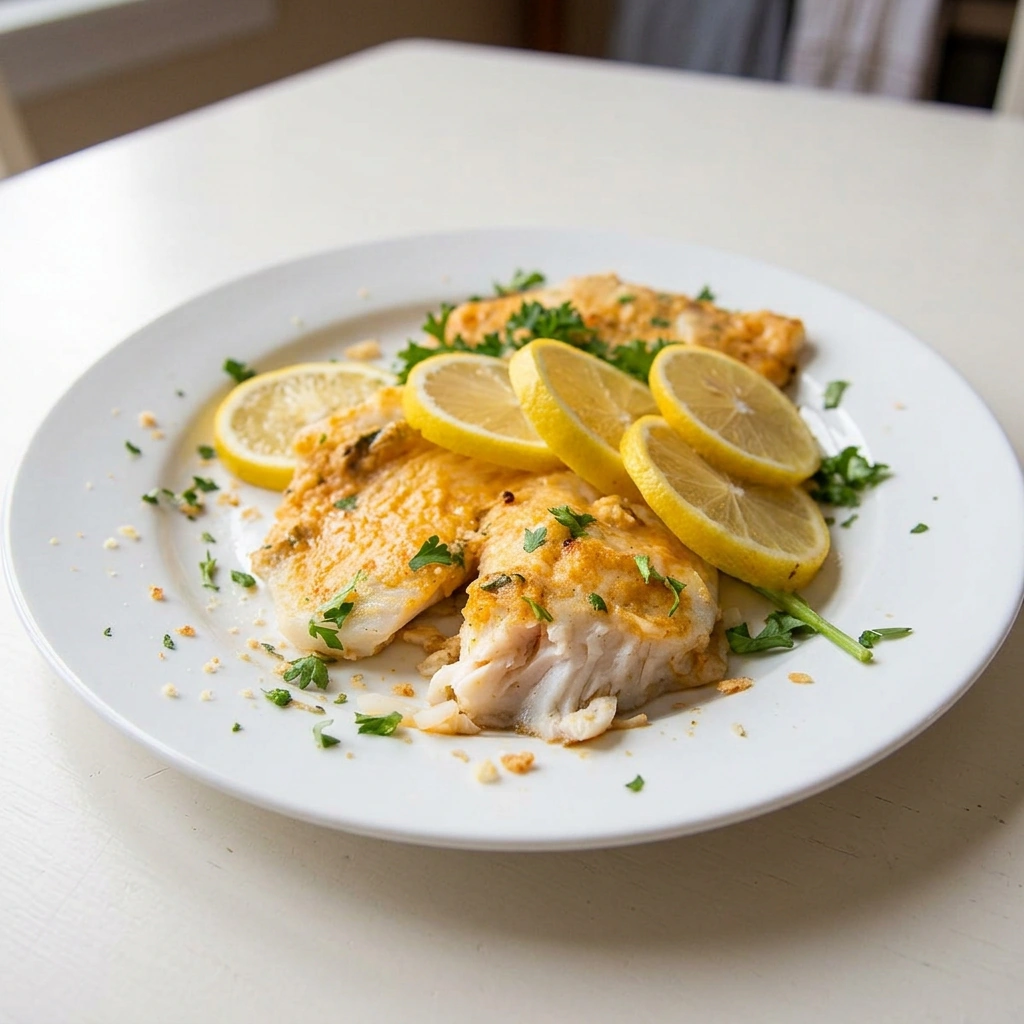
Parmesan crusted tilapia is the fish dinner that converts people who claim they do not like fish. Mild fillets get a thin layer of mayo, a crunchy Parmesan panko crust, and just 12 to 15 minutes in a 400 degree oven.
It is ideal for busy weeknights, Lenten Fridays, introducing kids to seafood gently, and anyone who wants dinner on the table faster than delivery. Golden, crispy, lemony, and done before the rice cooker even clicks.
Recipe at a Glance
| Prep time | 10 minutes |
| Cook time | 15 minutes |
| Total time | 25 minutes |
| Servings | 4 |
| Main ingredients | Tilapia fillets, Parmesan, panko, lemon |
| Skill level | Easy |
Ingredients You’ll Need
- 1.5 lbs tilapia fillets (4 to 6 fillets)
- 1/2 cup panko breadcrumbs
- 1/2 cup Parmesan cheese, grated
- 1/4 cup mayonnaise
- 1 tsp lemon juice
- 1 tsp garlic powder
- 1/2 tsp smoked paprika
- 1 tbsp fresh parsley, chopped
- 1/2 tsp salt
- 1/4 tsp black pepper
- Lemon wedges, for serving
Ingredient Notes & Easy Substitutions
Tilapia: Mild, affordable, and quick cooking, tilapia is the perfect canvas for a bold crust. Buy fillets of similar size so they finish together, and thaw completely if frozen. Cod, haddock, or flounder all work with the same method; thicker fillets just need a couple of extra minutes.
Mayonnaise: A thin layer of mayo is the classic fish crust glue, keeping the fillet moist while the topping bakes golden. You will not taste mayo; you will taste rich, golden crust. Greek yogurt works for a tangier version, and melted butter is the old school alternative.
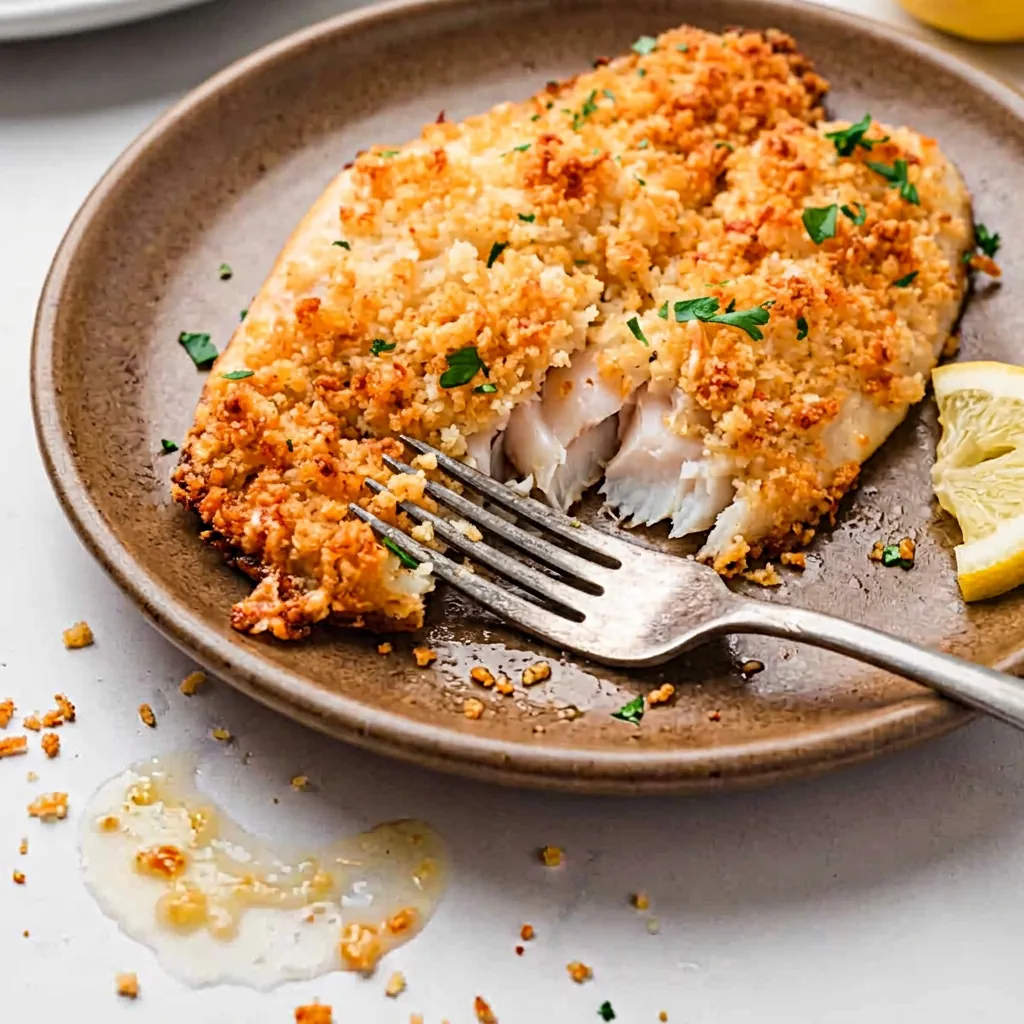
Panko and Parmesan: Equal parts make a crust that shatters and savors at once, with the cheese browning beautifully against the panko’s crunch. Grate the Parmesan fine so it packs into the crumbs. Smoked paprika is the background note that makes people ask what the secret is.
Lemon: A teaspoon goes into the mayo layer, and wedges arrive at the table, because fish and lemon are a treaty older than recipes. Fresh lemon matters more here than in most dishes; the bottled kind works in the glaze but the finishing squeeze should be real.
Equipment You’ll Need
- Rimmed baking sheet
- Parchment paper
- Small bowl and shallow dish
- Paper towels
- Spatula or thin fish slice
How to Make Parmesan Crusted Tilapia
Step One: Dry the Fillets
Preheat the oven to 400 degrees and line a baking sheet with parchment. Pat the tilapia fillets completely dry with paper towels.
Dry fillets are the entire foundation of a crispy crust, because moisture steams the coating from below and turns panko to paste. Press gently with the towels until the surface feels tacky rather than wet. It takes ninety seconds and it is the difference between golden and gray, which is a trade no one has ever regretted making.
Step Two: The Mayo Layer
Stir the mayonnaise with the lemon juice, then brush a thin, even layer over the top of each fillet.
Thin is the operative word; mayo is glue and moisture here, not a sauce, and too much makes the crust slide and steam. A pastry brush or the back of a spoon spreads it evenly. Whatever you do, coat the full surface edge to edge, because bare spots mean the crust has nowhere to hold on.
Step Three: Press the Crust
Mix the panko, Parmesan, garlic powder, smoked paprika, parsley, salt, and pepper in a shallow dish. Spoon the mixture over each fillet and press gently so it adheres in an even layer.
Press with the flat of your fingers rather than dumping; an even, compacted crust bakes uniformly and stays put. Do not crust the underside, which sits on the pan and would only go soggy; the top crust is the whole show. You may have a little mixture left over depending on fillet size, and that is normal.
Step Four: Bake
Bake for 12 to 15 minutes, until the crust is golden and the fish flakes easily at the thickest point, or reads 145 degrees on an instant read thermometer.
Tilapia fillets are thin, so the window between perfect and overdone is small; start checking at twelve minutes.
If your pan runs small and the fillets touch, trade a minute of bake time for space, because crowded fish steams. Done fish turns opaque and flakes when you nudge it with a fork, separating into clean, pearly layers that tell you everything is on schedule. The crust should be deep golden with toasted cheese freckles; if it is pale at fifteen minutes, one minute of broiler finishes the color.
Step Five: Rest Briefly
Let the fillets sit on the pan for 2 to 3 minutes after baking, which lets the crust set and the fish finish its carryover gently.
Those couple of minutes keep the crust attached when you lift the fillets instead of leaving half of it on the parchment. Fish is delicate straight from the oven, and a thin spatula slid under the whole fillet moves it cleanly to the plate. Use this window to squeeze the rice out of the cooker or pour the drinks, because everything is about to happen fast.
Step Six: Lemon and Serve
Serve the fillets immediately with lemon wedges and an extra pinch of fresh parsley over the top.
The lemon squeeze at the table is not optional in spirit; the acid wakes up the crust and makes the whole bite brighter. This is dinner that looks far more skilled than the fifteen minutes it took, which is exactly the kind of secret worth keeping. Rice, salad, or crusty bread all make honest partners while the fish stays the headline.
Serving Size & Batch Scaling
A pound and a half of fillets feeds four adults, especially with sides. The recipe scales linearly across two pans; rotate them halfway so both crusts brown evenly, and keep the coating mixture in proportion.
Fish is best fresh, so for a crowd I would bake in two successive rounds rather than holding a big batch. The coating mixture can be made in bulk ahead and kept in a jar in the fridge, which turns future fish nights into a five minute decision.
Making More or Less?
Cooking for two, bake two or three fillets with half the coating and the same clock; the pan just feels roomier and the crust gets even better airflow.
For family fish Fridays, double everything across two sheets and set out lemon wedges like you own a seaside cafe. Kids who like crunch tend to approve of this fish unanimously, which is quietly the best review a seafood dinner can earn.
Nutrition Estimate Per Serving
- Calories: about 280
- Protein: 30 g
- Fat: 14 g
- Carbohydrates: 8 g
It is an estimate, not medically precise information, and those numbers are friendly because the crust bakes instead of frying. High protein, light carbs, and on the table in twenty five minutes is a trio worth repeating weekly.
Common Mistakes to Avoid
The number one mistake is skipping the paper towels, because damp fillets steam the crust into sadness. The second is thick mayo, which slides off and takes the crust with it; a thin, even layer is glue, not sauce.
Overbaking is the quiet third mistake; tilapia is thin and turns chalky fast, so trust the flake test or the thermometer at twelve minutes. And use the real lemon for the finishing squeeze, because the bright acid is doing more flavor work than its price suggests.
Troubleshooting Guide
My crust went soggy. The fillets were wet underneath, or the mayo went on thick. Pat very dry next time and spread a thin layer; also make sure the oven was fully preheated before the pan went in.
My fish smells too fishy. Tilapia should smell like almost nothing; a strong smell means it is past its prime. Soaking fillets in a little milk for fifteen minutes before cooking also mellows any ocean notes that linger.
My crust is pale. The oven may run cool or the cheese was pre grated with anti caking starch. A final minute under the broiler adds color fast, and freshly grated Parmesan browns far more reliably.
Variations & Customizations
Add lemon zest to the crumb for extra citrus perfume, or a pinch of cayenne for heat. Swap the parsley for fresh dill, which loves fish, and a Parmesan ranch version with a teaspoon of ranch seasoning is a family crowd pleaser. Old Bay in place of the smoked paprika shifts the whole plate toward the coast.
The mayo glue and panko ratio at eMeals shaped my crust build, and the drying discipline and timing from Tod Recipes are why mine stays crunchy. A quick tartar sauce or a spoon of remoulade turns it into a fish sandwich night.
What to Serve With It
Rice pilaf, roasted potatoes, or buttered noodles make honest beds for the fish, and something green finishes the plate.
Serve the lemon wedges with a free hand. My southern green beans bring smoky snap that plays beautifully against the crispy crust.
Warm small batch homemade biscuits turn the plate into a proper fish fry night without the fryer. A simple slaw with vinegar dressing is the classic seaside pairing and takes five minutes. Lemon wedges, tartar sauce, and a bottle of hot sauce on the table cover every preference at once.
Meal Prep & Make-Ahead Instructions
Mix the crumb topping up to a week ahead and store it in a jar in the fridge; fish night becomes crust, pan, oven. You can also crust the fillets in the morning and refrigerate them uncovered, which dries the surface slightly and helps the crust grip.
Cooked leftovers are fine for two days, though fish is at its peak fresh. If you meal prep, flake the cold fish over salads or into tacos, where the texture shift does not matter and the flavor still runs the show. The crumb topping also doubles as a quick crust for baked shrimp or chicken, which stretches one jar across several dinners.
Storage & Leftovers
Store leftovers in an airtight container in the refrigerator for up to two days, with a paper towel underneath to catch moisture. The crust softens in the fridge; that is the honest physics of baked coatings.
The oven or air fryer brings back most of the crunch, while the microwave brings back warmth only. Flaked leftover fish also makes genuinely great fish cakes with an egg and a few breadcrumbs, pan fried until golden on both sides.
Reheating Instructions
Reheat on a rack over a baking sheet in a 400 degree oven for about six minutes, or air fry at 380 for three to four minutes, until hot and re-crisped.
Short and hot is the strategy, since thin fish overcooks on reheat faster than it did the first time. A fresh squeeze of lemon after warming makes the second round taste deliberate rather than leftover.
Frequently Asked Questions
Can I use frozen tilapia? Yes; thaw it completely in the fridge overnight and pat it very dry, since frozen fillets release extra water. The crust method works identically once the fillet is dry.
Can I taste the mayonnaise? No; it bakes into the crust as moisture and richness, exactly like the classic topping it is. Greek yogurt or melted butter swap in if you prefer, with yogurt adding a little tang.
What temperature is done fish? The FDA recommends 145 degrees for fish, and tilapia also passes the flake test, separating into clean layers when nudged with a fork. Either check works; the thermometer removes the doubt.
What sides do kids actually eat with this? Buttered noodles, rice, or oven fries; the crispy crust makes fish feel familiar, and a light squeeze of lemon keeps the plate bright. Most kids who reject saucy fish approve of this one on first contact.
Can I make this in the air fryer? Yes; crust the fillets as directed and air fry at 400 for about 8 to 10 minutes in a single layer. The crust gets extra crunchy, which honestly feels like cheating in the best way.