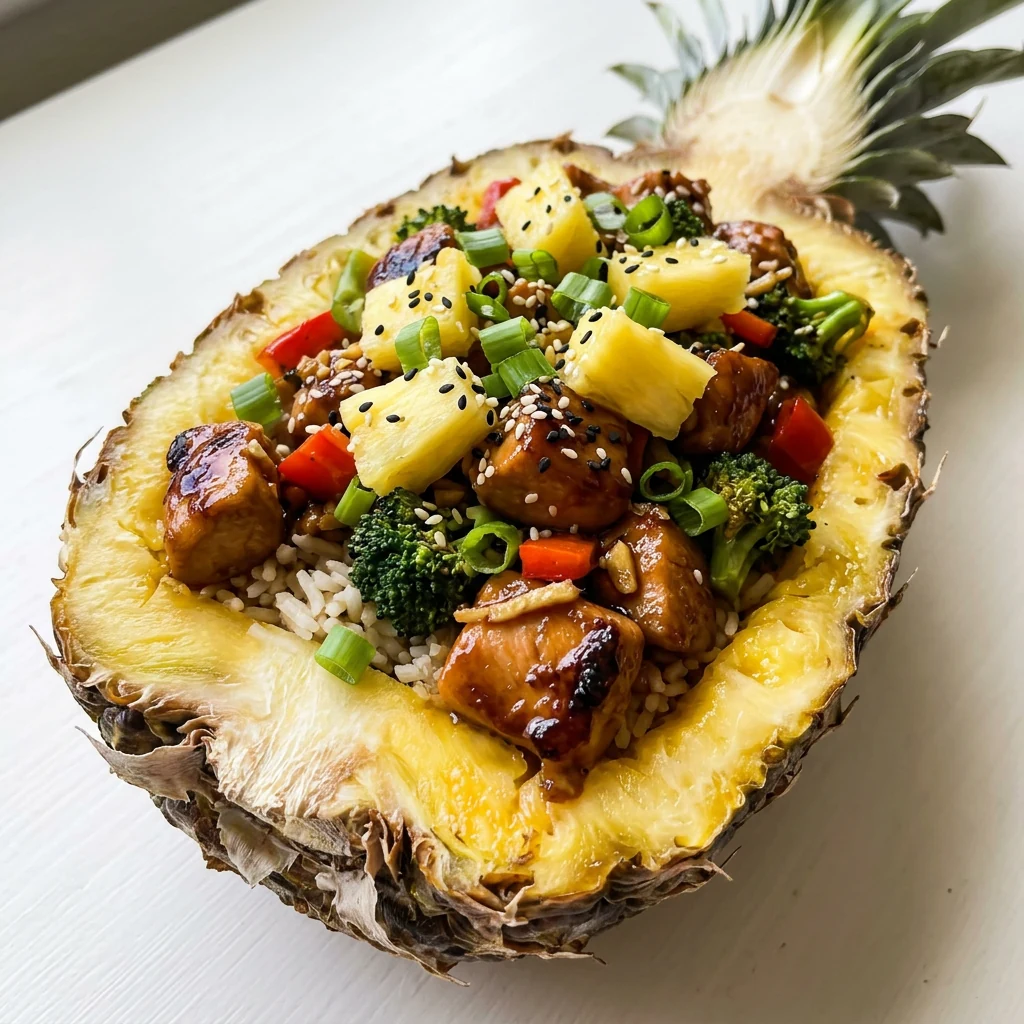
Teriyaki chicken pineapple bowl is the tropical dinner that tastes like a vacation and cooks in one skillet. Cubed chicken sears golden, glosses in a homemade honey soy teriyaki with bell pepper and broccoli, and lands over rice in hollowed pineapple halves.
It is ideal for summer dinners, family fun nights, impressing kids and adults at once, and anyone who believes dinner should occasionally be this much fun. Thirty minutes, one pan, and a pineapple bowl that earns applause.
Recipe at a Glance
| Prep time | 15 minutes |
| Cook time | 20 minutes |
| Total time | 35 minutes |
| Cooking method | Skillet stir fry with glaze finish |
| Servings | 4 |
| Main ingredients | Chicken breasts, soy sauce, honey, fresh pineapple, rice, broccoli |
| Skill level | Easy |
Ingredients You’ll Need
- 1.5 lbs chicken breasts, cubed
- 1/4 cup soy sauce
- 2 tbsp honey
- 1 tbsp rice vinegar
- 1 tsp ginger, grated
- 2 cloves garlic, minced
- 1 pineapple, cubed
- 2 cups cooked rice
- 1 red bell pepper, diced
- 1 cup broccoli florets
- 1 tbsp sesame oil
- Sesame seeds
- Green onions
Ingredient Notes & Easy Substitutions
Chicken breasts: Cubed bite sized pieces sear fast and evenly, which keeps this a thirty minute dinner and gives every cube a golden face for the sauce. Pat the cubes dry before they hit the oil, because a dry surface browns and a wet one steams. Thighs swap in happily and stay even juicier under the glaze.
The teriyaki sauce: Soy sauce, honey, rice vinegar, ginger, and garlic is the whole homemade teriyaki, and it tastes brighter and fresher than any bottle. The honey caramelizes against the hot pan while the vinegar keeps the sweetness from going flat. Whisk it before cooking starts, because the stir fry moves fast once the oil is hot.
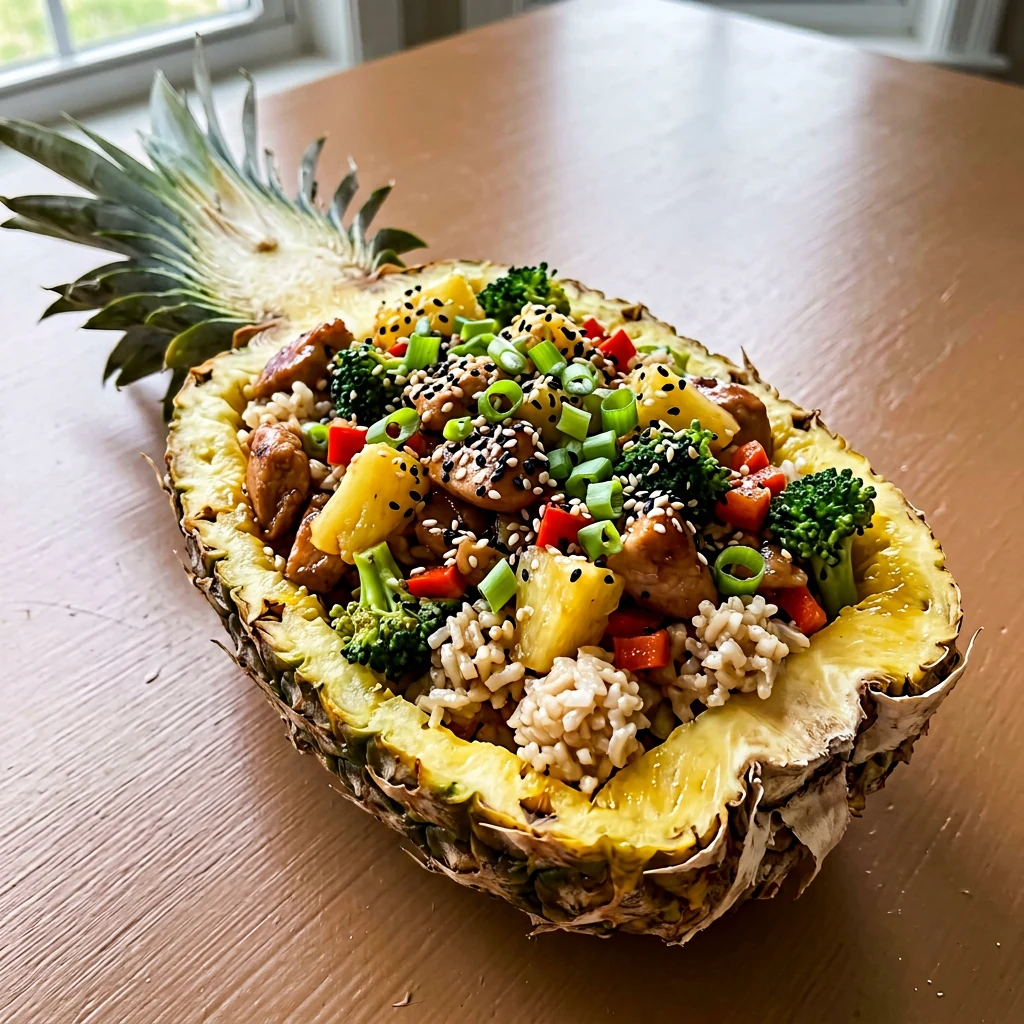
Fresh pineapple: One pineapple gives you both the cubes for the stir fry and the hollowed halves that become the serving bowls, which is the theatrical point of the dish. Cut it in half lengthwise, scoop the flesh in one piece, and cube what you need. Canned chunks work when pineapple is out of season; serve in regular bowls and lose only the applause.
Broccoli, bell pepper, and sesame oil: The broccoli and pepper bring crunch and color that stand up to the sweet glaze, and the sesame oil finishes the pan with its toasted, unmistakable aroma. Sesame oil is a finishing oil, not a frying oil, so it goes in at the start of the stir only briefly or swirled at the end.
Equipment You’ll Need
- Large skillet or wok
- Sharp knife, for the pineapple
- Small bowl and whisk, for the sauce
- Melon baller or spoon, for hollowing
How to Make Teriyaki Chicken Pineapple Bowl
Step One: The Teriyaki Sauce
Whisk the soy sauce, honey, rice vinegar, ginger, and garlic together in a small bowl and set it beside the stove.
Making the sauce first is the stir fry rule, because the cooking moves too fast for whisking once the pan is hot. The mixture will look thin and unimpressive now, but a few minutes against hot chicken and pineapple thickens it into a glossy glaze all on its own. Give it one more whisk than feels necessary, since the honey hides at the bottom.
Step Two: Sear the Chicken
Heat the sesame oil in a large skillet over medium high heat, add the chicken cubes, and cook for 6 to 7 minutes, turning occasionally, until browned on all sides and cooked through.
Let the cubes sit undisturbed for the first couple of minutes so the golden forms; moving them constantly steams instead of sears. The cubes are small, so the window is short, and done means no pink at the centers. They finish their journey in the sauce, so a good sear now is the flavor foundation of the whole bowl.
Step Three: Sauce and Vegetables
Add the teriyaki sauce, bell pepper, and broccoli to the skillet and cook for 5 minutes, stirring, until the vegetables are crisp tender and the sauce has started to glaze.
The sauce hits the hot pan and reduces quickly, coating the chicken while the vegetables cook in its steam and sweetness. Five minutes is the window for bright, snappy broccoli; longer turns it olive and soft. Stir occasionally so the honey does not catch on one spot, and watch the glaze tighten around the chicken.
Step Four: Pineapple In
Stir in the pineapple cubes and cook 2 minutes, just until they are heated through and glossy with sauce.
Pineapple goes in last because two warm minutes is all it takes to turn sweet and juicy, while a long simmer makes it mushy and weeps juice into the glaze. The fruit also tenderizes the chicken slightly with its enzymes, which is one more reason it joins at the end. The pan should smell like a tropical vacation right about now.
Step Five: Build the Bowls
Spoon the cooked rice into the hollowed pineapple halves and pile the teriyaki chicken mixture on top.
The pineapple half is the bowl and the garnish in one, so set them on plates first and build inside them. Rice first, then the saucy chicken heaped generously, with any extra glaze from the pan poured over the top. If you are using regular bowls, the same layering applies; the pineapple flavor is in the stir fry either way.
Step Six: Sesame and Green Onion
Scatter sesame seeds and sliced green onions over each bowl and serve immediately.
The sesame seeds bring the toasty crunch and the green onions the fresh snap, and both take ten seconds to scatter. Serve right away, while the glaze is glossy and the pineapple shell is cool to the touch, which is the hot and cold trick that makes this bowl feel special. Applause is common and entirely acceptable.
Serving Size & Batch Scaling
A pound and a half of chicken with one pineapple feeds four in half pineapple bowls. Scaling up means a second pineapple and a second skillet session, since crowding the pan is the only real way to ruin this dish.
The stir fry itself doubles beautifully in a wok or wide Dutch oven, and the components are inexpensive year round. For a dinner party, this is the dish people photograph, and the cost of that kind of theater is one pineapple and half an hour.
Making More or Less?
Halving for two uses one pineapple half per person and half the stir fry, with the same skillet and clock; make the full sauce anyway if you love extra glaze over the rice.
Scaling up for a crowd, stir fry in shifts and hold the finished batches on a platter, then build all the bowls at once. The pineapple shells can be hollowed in the afternoon and chilled, which turns party assembly into a straight fill and serve.
Nutrition Estimate Per Serving
- Calories: about 520
- Protein: 38 g
- Fat: 9 g
- Carbohydrates: 68 g
It is an estimate, not medically precise information, and the honey and pineapple account for most of the carbohydrate with zero apology. Lean protein, two vegetables, and fruit in one dinner is a balance sheet most takeout containers cannot touch.
Common Mistakes to Avoid
The classic mistake is adding the pineapple early, which waters down the glaze and turns the cubes to mush; two warm minutes at the end is the whole plan. The second is overcooking the broccoli in pursuit of softer vegetables, losing the color and the crunch that make the bowl look alive.
Burning the honey glaze is the quiet third mistake; the sugars darken fast on high heat, so keep the pan moving during the sauce minutes. And hollow the pineapple gently, leaving a good half inch wall so the bowls hold their structure at the table.
Troubleshooting Guide
My sauce is thin. Simmer it one more minute uncovered; the reduction thickens it fast. For a saucier version, whisk a teaspoon of cornstarch into the sauce at the start and it will glaze noticeably quicker.
My glaze tastes burnt. The honey caught on the pan during the sauce minutes. Next round, stir more often and keep the heat at a confident medium high rather than a roar; a pinch of the burnt taste can be masked with an extra squeeze of rice vinegar.
My pineapple bowls leaked. The wall was scooped too thin or the bowls sat too long before filling. Leave a sturdy half inch of flesh, dry the cavity with a paper towel, and fill just before serving so the shells hold their post.
Variations & Customizations
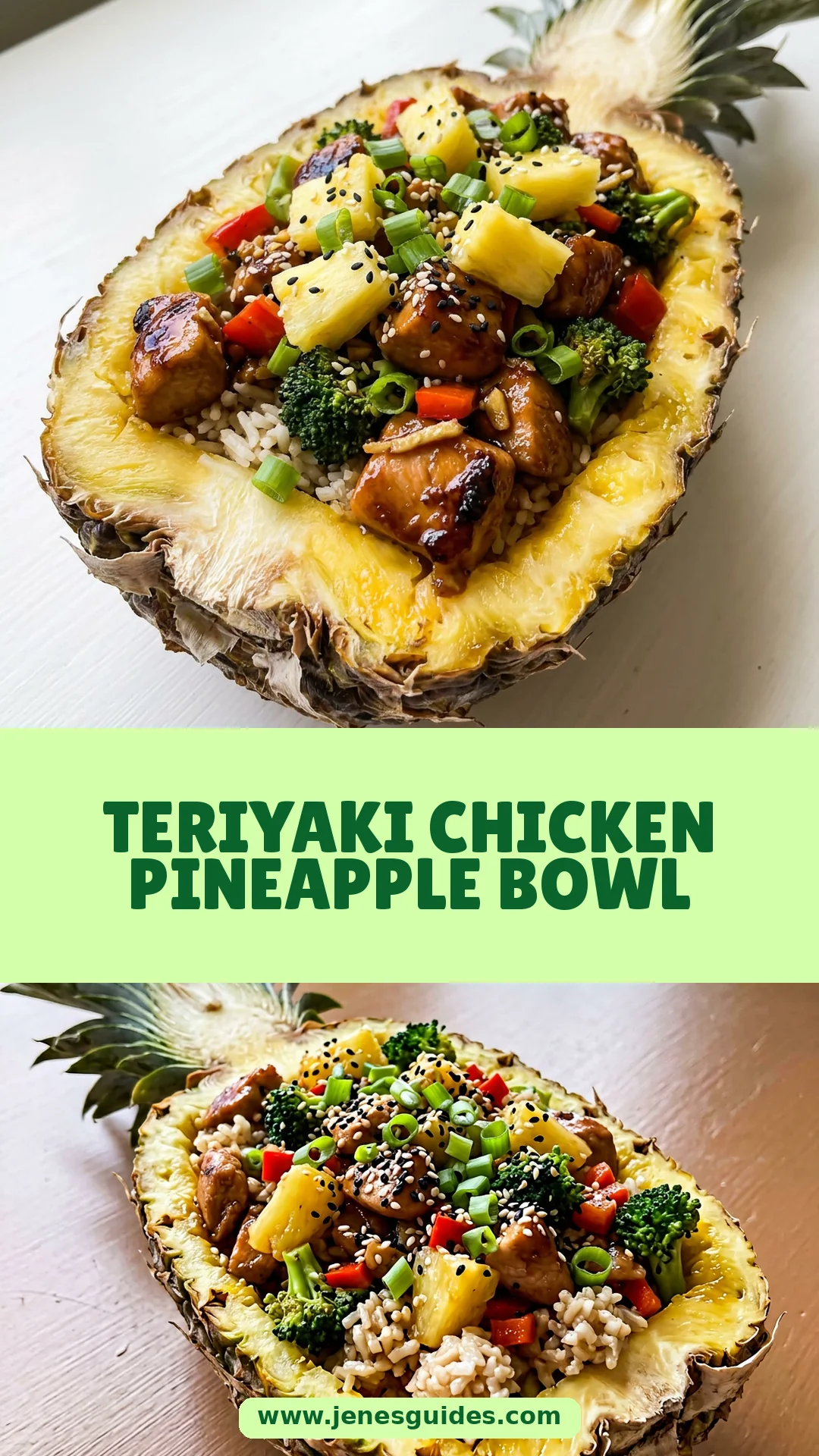
Add snap peas or shredded carrot with the broccoli, swap the chicken for shrimp with half the cook time, or finish with a drizzle of sriracha for sweet heat. Toasted coconut on top is the full tropical escalation, and leftover stir fry over plain rice for lunch the next day is a quietly excellent plan.
The honey soy glaze balance at Jar of Lemons shaped this version, and the pineapple bowl presentation from Gourmet Martha is the theater that makes the dinner. Extra sesame seeds at the table are for the people who always want more, and there are always people who want more.
What to Serve With It
The bowl is a complete meal, and something simple on the side is plenty. My Hawaiian chicken sheet pan is the tropical sibling for your next island night.
And for the same glossy glaze energy in bowl form, my street corn chicken rice bowl runs on the same build and garnish structure with a completely different compass point. Chilled cucumber salad is the fresh side that keeps the sweet glaze in check.
Meal Prep & Make-Ahead Instructions
Whisk the sauce up to three days ahead and refrigerate it; cube the chicken in the morning, and dinner is a straight twenty minute skillet run. The pineapple can be hollowed and cubed in the afternoon, with the shells chilled until serving.
Cooked stir fry keeps for three days and reheats well over fresh rice, though the broccoli softens slightly by day two. For meal prep containers, pack the stir fry over rice and add the sesame seeds and green onion fresh at lunchtime for the full effect.
Storage & Leftovers
Store leftovers in an airtight container in the fridge for up to three days, with the stir fry separated from any rice you want to keep fluffy.
The glaze keeps everything glossy through day three, and the flavors meld overnight in a way that makes the leftovers quietly excellent. Hollowed pineapple shells are single use; they dry out once scooped, so compost them happily after the photo session.
Reheating Instructions
Reheat portions in a hot skillet for about four minutes, letting the glaze loosen and re gloss, or microwave at fifty percent power for about two minutes with a splash of water.
The skillet brings back the glossy sheen that the microwave only approximates, and fresh green onions after warming make day two taste deliberate. Serve over newly heated rice and the leftover bowl competes with the original.
Frequently Asked Questions
Can I use canned pineapple? Yes, drained chunks work in the stir fry, and you skip the carving entirely. Fresh is what earns the pineapple bowl presentation, but the flavor of the dish survives the swap with dignity.
How do I cut a pineapple bowl? Slice the pineapple in half lengthwise, run a knife around the inside edge about half an inch from the skin, then score and scoop the flesh out with a spoon or melon baller in sections. Cube what you need for the stir fry and keep the shells chilled until filling.
Can I make this without added sugar? The honey is central to the glaze, but you can halve it and let the pineapple’s own sweetness carry more of the load. The sauce will be less glossy and slightly brighter, and still genuinely good.
Can I use chicken thighs? Absolutely; cube them the same and sear a minute longer. The richer meat stands up beautifully to the sweet glaze, and the leftovers may be even better the next day.