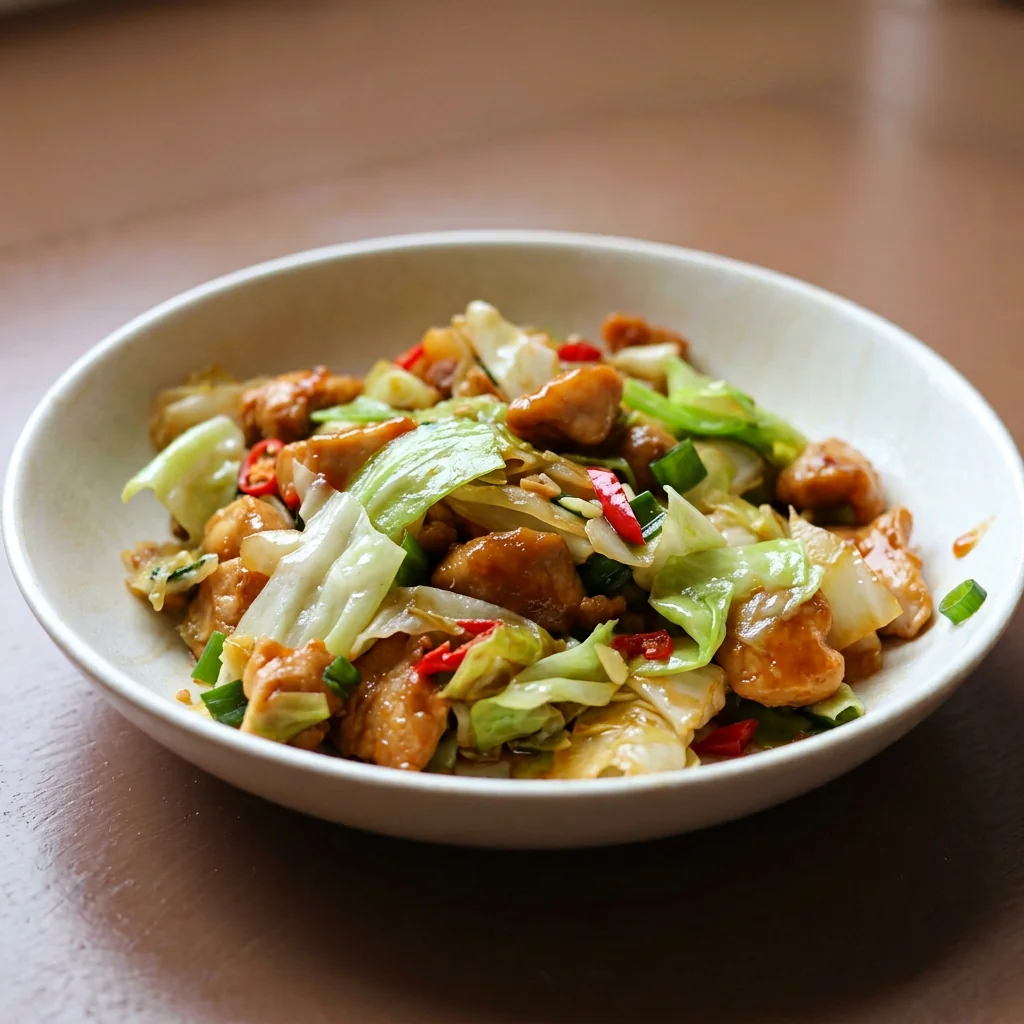
Chicken cabbage stir fry is the twenty minute wok dinner that turns a humble head of cabbage into the most exciting thing on the table.
Sliced chicken sears fast, crisp cabbage and carrots tumble in with garlic, ginger, and a soy sesame sriracha sauce, and dinner lands glossy and loud.
It is ideal for cleaning out the crisper drawer, low carb dinners that refuse to be boring, faster than takeout weeknights, and anyone who owns a wok and feels underuse guilt. One pan, one bowl of sauce, and a vegetable you ignored all week becomes the main event.
Recipe at a Glance
| Prep time | 10 minutes |
| Cook time | 15 minutes |
| Total time | 25 minutes |
| Cooking method | High heat wok stir fry |
| Servings | 4 |
| Main ingredients | Chicken breasts, cabbage, carrot, soy sauce, sesame oil, sriracha |
| Skill level | Easy |
Ingredients You’ll Need
- 1 lb chicken breasts, sliced
- 4 cups cabbage, shredded
- 1 carrot, julienned
- 3 cloves garlic, minced
- 1 tsp ginger, grated
- 2 tbsp soy sauce
- 1 tbsp rice vinegar
- 1 tbsp sesame oil
- 2 tbsp vegetable oil
- 1 tbsp sriracha
- sesame seeds
- green onions
Ingredient Notes & Easy Substitutions
Sliced chicken: A pound of chicken breasts sliced into thin strips sears in five to six minutes and stays juicy under high heat. Slice against the grain for tender pieces, and pat the strips dry before they meet the wok, because a dry surface browns while a wet one steams and sulks.
Cabbage and carrot: Four cups of shredded cabbage are the volume and the crunch of this dish, and they cook down to half their height in minutes, so do not panic at the mountain in the raw state. One carrot, julienned into matchsticks, brings sweetness and color that makes the pan look intentional.
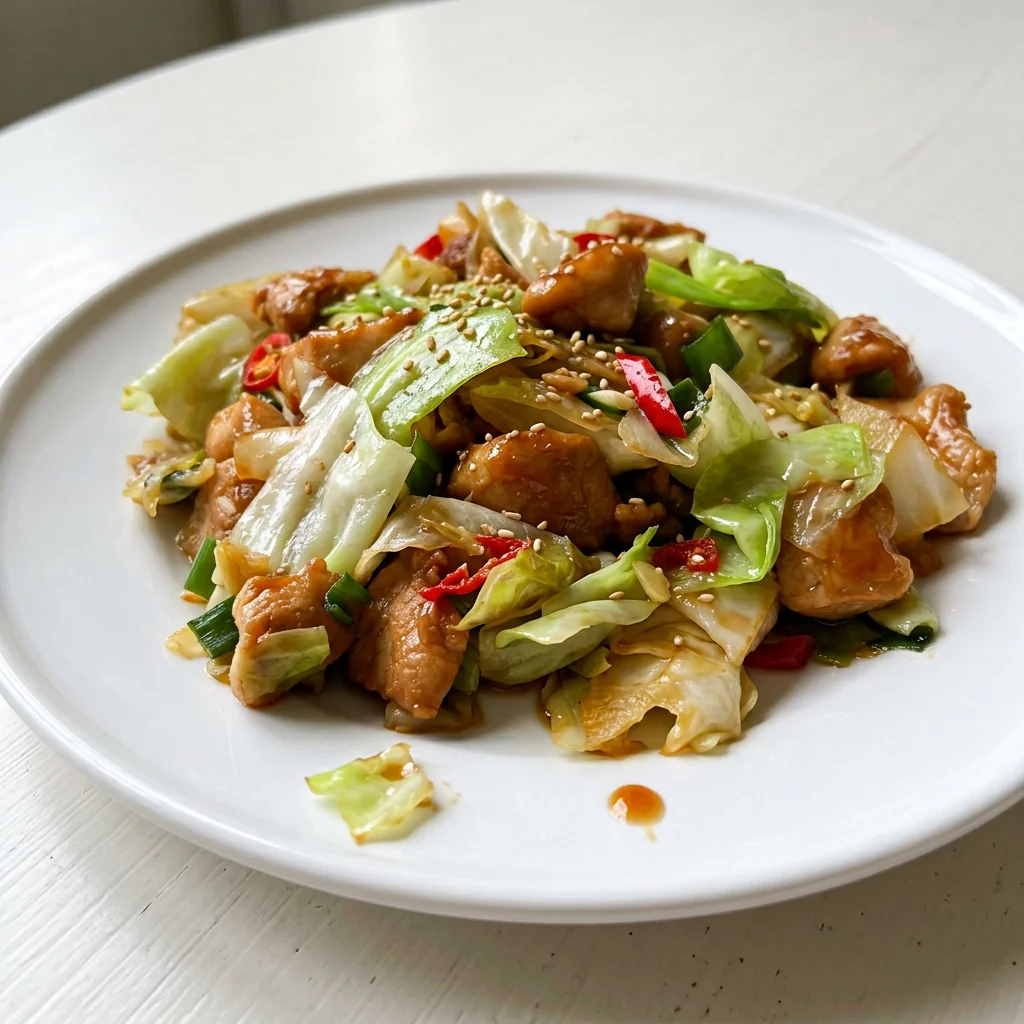
The sauce squad: Two tablespoons of soy sauce bring the salt, a tablespoon of rice vinegar the brightness, a tablespoon of sesame oil the toasted perfume, and a tablespoon of sriracha the friendly heat. They go in together with the garlic and ginger as one flavorful wave, coating everything in seconds.
Two oils and the finishers: Vegetable oil does the high heat frying because it can take the temperature, while sesame oil is the finishing fragrance that joins late. Sesame seeds and sliced green onions land at the very end, when the wok is off the heat and the crunch still matters.
Equipment You’ll Need
- Wok or large heavy skillet
- Wooden spatula or tongs
- Chef’s knife and cutting board
- Small bowl, for the sauce mix
How to Make Chicken Cabbage Stir Fry
Step One: Sear the Chicken
Heat the vegetable oil in a wok over high heat. Stir fry the chicken for 5 to 6 minutes, until golden and cooked through. Remove it to a plate.
Wait for the oil to shimmer before the chicken lands, then let the strips sit undisturbed for the first minute so a sear forms before the tossing begins.
Five to six minutes cooks thin strips through with golden edges. Removing them now is the restaurant move; they rejoin at the end tender instead of overcooked and rubbery.
Step Two: Cabbage and Carrot
Add the cabbage and carrot to the hot wok and stir fry for 3 to 4 minutes.
The mountain collapses fast as the cabbage wilts and glosses in the chicken’s leftover oil, and the carrot matchsticks soften just enough to bend.
Toss constantly with confidence; the goal is crisp tender with a few char kissed edges, not soft submission. Those browned spots on the cabbage are flavor, not mistakes.
Step Three: Sauce and Aromatics
Add the garlic, ginger, soy sauce, rice vinegar, sesame oil, and sriracha to the wok and toss.
Everything flavorful arrives in one wave, sizzling against the hot cabbage and perfuming the whole kitchen in seconds.
The soy and sriracha coat while the vinegar lifts, and the sesame oil rounds the edges. Thirty seconds of tossing distributes it all before the garlic can think about burning.
Step Four: Chicken Returns
Return the chicken to the wok and toss everything together.
The chicken and its resting juices rejoin the party, and a few decisive tosses coat every strip and shred in the glossy sauce. The wok should be loud and lively; quiet food is food not being stirred. Everything is already cooked, so this is purely a mingling exercise.
Step Five: The Final Two Minutes
Cook 2 more minutes, letting the sauce cling and the cabbage reach your perfect tenderness.
Two minutes is the window where the sauce reduces slightly, the cabbage turns silky at the edges while staying crisp inside, and the whole pan becomes cohesive. Taste a shred and decide; more minutes mean softer cabbage, and this is one of the few dishes where your preference is the only clock that matters.
Step Six: Garnish and Serve
Top with sesame seeds and sliced green onions and serve immediately.
The wok goes straight to the table or straight over rice, depending on the night’s constitution. Sesame seeds bring the toast, green onions the fresh bite, and stir fry waits for no one, so plates out first, phones down second. It is at its loud, crackling best in the first five minutes of its life.
Serving Size & Batch Scaling
A pound of chicken and four cups of cabbage feed four as a low carb main or two generously over rice. Scaling up is two wok sessions, because a full wok steams instead of sears and the whole character of the dish changes for the worse.
This is one of the cheapest proteins-plus-vegetables dinners in the rotation; half a cabbage, a carrot, and a pound of chicken is pantry arithmetic at its finest. It also meal preps beautifully, holding its texture better than most stir fries through a few fridge days.
Making More or Less?
Halving for two works in the same hot wok with the same clock; the cabbage just wilts a touch faster in the smaller batch.
For a crowd, stir fry in rounds and hold the finished batches on a platter, then toss everything together briefly before serving to redistribute the sauce. The wok respects volume the way a theater respects stage space; work within it and every performance lands.
Nutrition Estimate Per Serving
- Calories: about 280
- Protein: 28 g
- Fat: 14 g
- Carbohydrates: 10 g
It is an estimate, not medically precise information, and the low carbohydrate number is the quiet headline for a dinner with this much flavor. Cabbage brings fiber and crunch, the chicken brings the protein, and the sauce brings everything else worth talking about.
Stir fry math is friendly because the bulk of the bowl is cabbage, which translates to volume without a calorie invoice. Over rice the numbers climb politely, straight from the wok they barely move, and either version keeps the protein front and center where a weeknight dinner wants it. Either way, the wok earns its cupboard space twice a week.
Common Mistakes to Avoid
The classic mistake is a lukewarm wok, which turns searing into steaming and gray chicken into a personality trait; wait for the shimmer. The second is overcooking the cabbage into olive colored surrender, since three to four minutes keeps it bright and alive.
Burning the garlic is the quiet third mistake, and it happens in seconds when the wok runs hot; keep everything moving from the moment it lands. And crowd the pan at your peril, because stir fry is a solo performance that punishes encores.
Troubleshooting Guide
My chicken is dry. The strips were thin and the heat was shy, so they stewed. Slice evenly, get the wok properly hot, and pull the chicken at five to six minutes; carryover heat during the final toss finishes the job gently.
My stir fry is watery. The cabbage was freshly washed or the pan was crowded. Dry the shreds well and work in batches; the small amount of liquid the cabbage releases should evaporate into steam that carries flavor, not pool at the bottom.
It is not spicy enough. The sriracha is adjustable; add another tablespoon at the sauce stage or serve chili crisp at the table. Heat added at the end shouts while heat simmered in sings, so build it where you like the balance.
Variations & Customizations
Add sliced bell peppers or mushrooms with the cabbage, swap the sriracha for chili garlic sauce, or finish with a drizzle of honey for sweet heat. A fried egg on top turns it into dinner and brunch at once, and leftover shredded rotisserie chicken can replace the sear for a ten minute version.
The hot wok and quick wilt discipline at Simply Scratch shaped this version, and the coleslaw wilts fast reassurance from Averie Cooks is why you stop fearing the mountain of raw cabbage. Extra sesame seeds at the table are for the loyalists.
Baby corn, water chestnuts, or a handful of cashews all move the dish toward restaurant territory, and a final flick of chili crisp before serving is the modern flourish nobody complains about. The sauce ratio stays the anchor; everything else is a friendly suggestion.
What to Serve With It
Over rice is classic, and the low carb crowd goes straight to the bowl. My street corn chicken rice bowl is the rice bowl sibling with a completely different compass heading.
And for another fast, hot skillet dinner with big flavor, my cowboy butter steak bites are the land based rival for your busy weeknights. Chilled cucumber salad keeps the heat honest between bites.
Meal Prep & Make-Ahead Instructions
Slice the chicken, shred the cabbage, and julienne the carrot up to two days ahead, and the stir fry becomes a fifteen minute event. Whisk the sauce ingredients in a jar and it waits in the fridge like a loaded spring.
For weekly prep, cook a double batch and portion it over rice in containers; the cabbage stays pleasantly crunchy through day three, which most stir fries cannot claim. Keep the sesame seeds and green onions in a tiny separate container and garnish at lunchtime for the full effect.
Storage & Leftovers
Cooled stir fry keeps in a sealed container in the fridge for up to four days, and it is one of the rare stir fries that does not turn sad overnight.
The cabbage softens slightly and drinks the sauce, which reads more like improvement than decay. Cold from the container over leftover rice, it is a legitimately great desk lunch that makes the microwave line feel superior.
Reheating Instructions
Reheat portions in a hot skillet for about three minutes to bring back a trace of wok char, or microwave for about 90 seconds when the office clock is winning.
The skillet revives the edges while the microwave accepts the situation, and either way a few fresh green onions after warming reset the whole bowl. Fresh sesame seeds on top are the thirty second upgrade that makes leftovers feel like a decision rather than a compromise.
A splash of water in the hot skillet loosens the sauce and steams the cabbage back to life, thirty seconds of patience that outperforms any microwave setting. Leftovers rarely survive to a third day, so consider this section theoretical.
Frequently Asked Questions
Can I use bagged coleslaw mix? Yes; a 16-ounce bag is almost exactly four cups and shreds uniformly, which makes this an even faster dinner. It wilts the same way, and nobody at the table conducts an audit.
Can I use chicken thighs? Absolutely; boneless thighs sliced thin sear beautifully and stay extra juicy under high heat. Keep the same clock, and consider it an upgrade if you are a dark meat household.
Is there a substitute for sriracha? Chili garlic sauce, sambal oelek, or a pinch of red pepper flakes all fill the role. Start with less than a tablespoon and taste, since their heat levels wander in different directions.
Can I make it gluten free? Swap the soy sauce for tamari and check your sriracha label, and the dish keeps its entire personality. Everything else in the pan is naturally gluten free already.