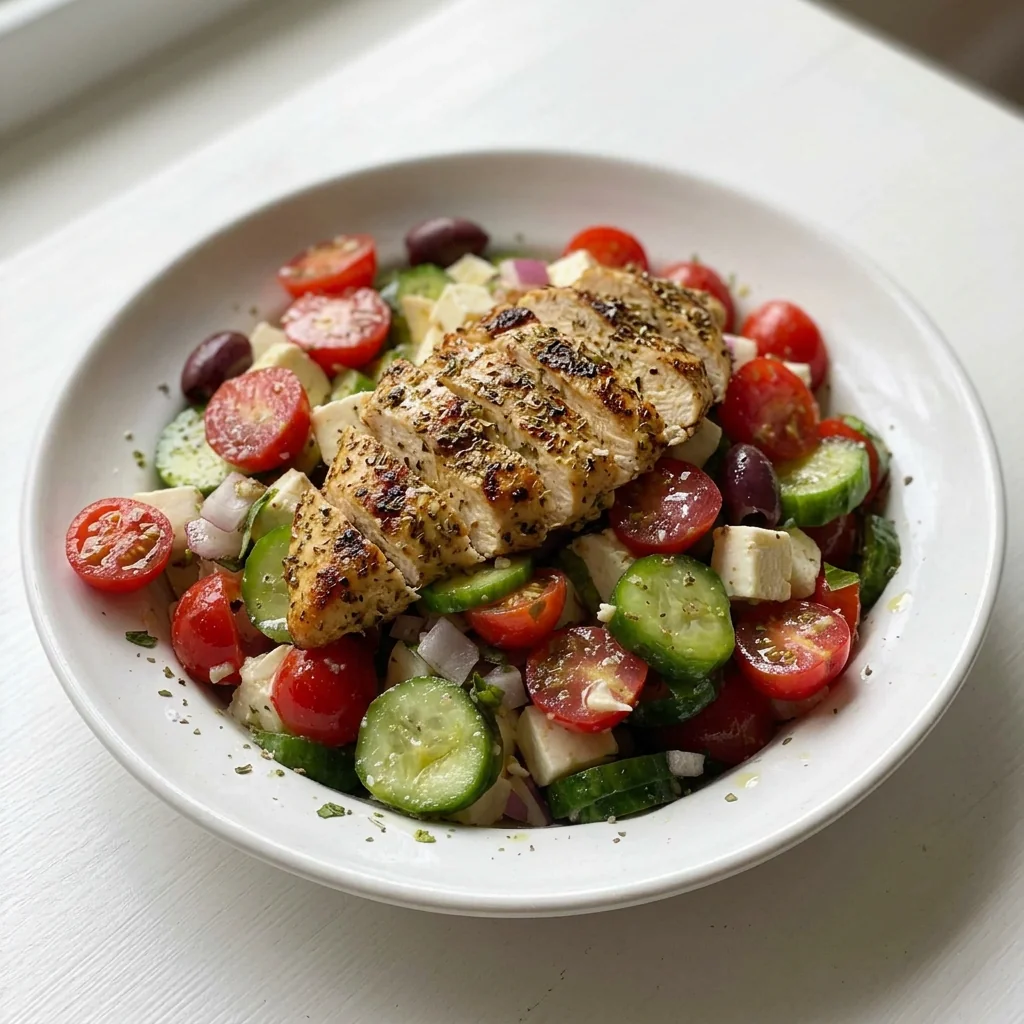
Greek chicken cucumber salad is the fresh, briny, sun-soaked dinner that needs exactly twelve minutes at the stove.
Oregano lemon chicken sears golden, cools slightly, and lands on a crunchy tumble of cucumber, cherry tomatoes, red onion, Kalamata olives, and feta under a red wine vinegar dressing.
It is ideal for hot evenings, lunch that ruins other lunches, low carb dinners full of texture, and anyone who thinks feta is doing the heavy lifting of happiness. One skillet, one bowl, and a plate that tastes like a taverna with a view.
Recipe at a Glance
| Prep time | 15 minutes |
| Cook time | 15 minutes |
| Total time | 30 minutes |
| Cooking method | Pan-seared chicken, chilled salad assembly |
| Servings | 4 |
| Main ingredients | Chicken breasts, cucumber, cherry tomatoes, Kalamata olives, feta, red wine vinegar |
| Skill level | Easy |
Ingredients You’ll Need
- 1.5 lbs chicken breasts
- 2 tbsp olive oil
- 2 tbsp lemon juice
- 2 tsp oregano
- 1 tsp garlic powder
- salt and pepper
- 1 cucumber, diced
- 1 pint cherry tomatoes, halved
- 1/2 red onion, sliced
- 1/2 cup Kalamata olives
- 1/2 cup feta cheese, crumbled
- 1/4 cup red wine vinegar
- fresh dill
Ingredient Notes & Easy Substitutions
The chicken: A pound and a half of breasts marinate in olive oil, lemon juice, oregano, and garlic powder, even a quick fifteen minutes, then grill or pan-sear for 6 to 7 minutes per side. The oregano lemon crust is the Greek accent, and sliced warm chicken over a chilled salad is the temperature contrast that makes this plate sing.
The salad: One diced cucumber, a pint of halved cherry tomatoes, half a sliced red onion, half a cup of Kalamata olives, and half a cup of crumbled feta are the classic Greek chorus, crunchy, briny, creamy, and sharp all at once. Salt the cucumber lightly and let it drain a few minutes if your cucumbers run watery.
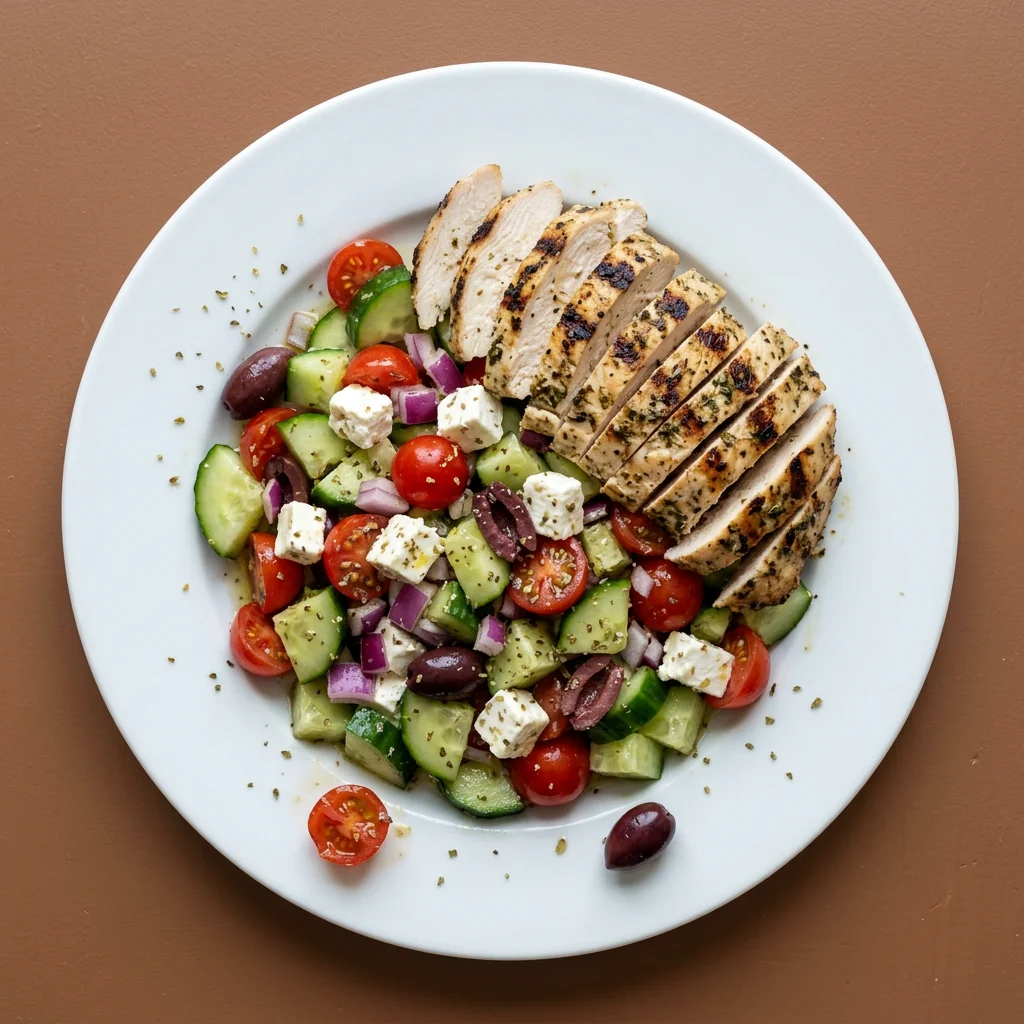
The dressing: A quarter cup of red wine vinegar whisked with olive oil, oregano, salt, and pepper is the entire vinaigrette, sharp and bright the way Greek dressings are supposed to be. The vinegar cuts the feta and olives with precision, so do not tame it; the brine squad needs a strong opponent.
Fresh dill: A scattering of fresh dill over the finished plates is the aromatic signature that says Greece louder than any label could. It goes on at the end, generously, and it is worth buying the bunch even if you only use half, because tomorrow’s feta omelet has already made the case.
Equipment You’ll Need
- Skillet or grill pan
- Large salad bowl
- Small bowl and whisk
- Chef’s knife and cutting board
How to Make Greek Chicken Cucumber Salad
Step One: Season the Chicken
Season the chicken with the olive oil, lemon juice, oregano, garlic powder, salt, and pepper, turning to coat.
Massage the marinade into the breasts and let them sit while you chop the salad, or up to a few hours in the fridge if the day allows. The lemon and oregano start working immediately, and even fifteen minutes noticeably perfumes the meat. This is the only seasoning the chicken gets, so be thorough with both sides.
Step Two: Cook the Chicken
Grill or pan-sear the chicken for 6 to 7 minutes per side, until cooked through, then slice.
A hot skillet or grill marks the breasts golden while the oregano toasts into the crust, and the kitchen smells like a taverna at noon. Pull them at 165, rest five minutes on the board, then slice against the grain into generous strips. Those resting minutes keep every slice juicy under the cold salad.
Step Three: Build the Salad
Combine the cucumber, cherry tomatoes, red onion, olives, and feta in a bowl.
Tumble everything together gently, because feta crumbles prefer encouragement to force. The colors alone do half the work; red, green, white, and purple in one bowl is a salad that looks finished before a single drop of dressing arrives. Taste a tomato for salt, since the olives and feta are coming with their own.
Step Four: The Dressing
Whisk the red wine vinegar, olive oil, oregano, salt, and pepper together for the dressing.
Whisk until the dressing turns slightly cloudy and emulsified, thirty seconds of effort that makes it cling instead of pooling at the bowl’s floor. Taste it on a cucumber slice; it should be bright, briny, and just sharp enough to make your eyebrows consider moving. Adjust salt with restraint, since the feta arrives salty.
Step Five: Toss
Toss the salad with the dressing until everything is lightly coated.
Dress the salad just before serving, because dressed cucumbers and tomatoes weep if they wait, and weeping salads water down the vinegar’s hard work. Fold rather than stir, keeping the feta in recognizable crumbles and the onion slices in distinct purple crescents. Every piece should glisten, not swim.
Step Six: Chicken and Dill
Top the salad with the sliced chicken and a generous scatter of fresh dill.
Lay the warm chicken strips over the chilled salad so everyone watches the temperature contrast happen on the plate, then shower the whole thing with dill. Serve immediately with lemon wedges and let the table do its own extra feta. This is dinner assembled at its most effortless and eaten at its most satisfied.
Serving Size & Batch Scaling
A pound and a half of chicken with a pint of tomatoes and a cucumber feeds four hearty plates. Scaling up is straightforward; the salad doubles in a bigger bowl and the chicken sears in two batches without ceremony.
This is summer grocery math at its best; produce, olives, and a block of feta cover a family dinner for less than a single takeout salad. It also travels well undressed, which makes it the potluck contribution that disappears first and earns the recipe requests.
Making More or Less?
Halving for two is clean division; one breast each, half the vegetables, and the same dressing whisked in a teacup. The skillet work is identical.
Scaling up for a crowd, sear the chicken ahead and serve it warm or at room temperature over the dressed salad in a wide platter. Both temperatures are legitimate, and the buffet version might actually be easier than the weeknight one.
Nutrition Estimate Per Serving
- Calories: about 340
- Protein: 37 g
- Fat: 18 g
- Carbohydrates: 9 g
It is an estimate, not medically precise information, and the numbers read like a fitness plan while the plate eats like a vacation. Lean protein, healthy fats from the olive oil and olives, and barely any carbohydrate is the Greek salad bargain that never gets old.
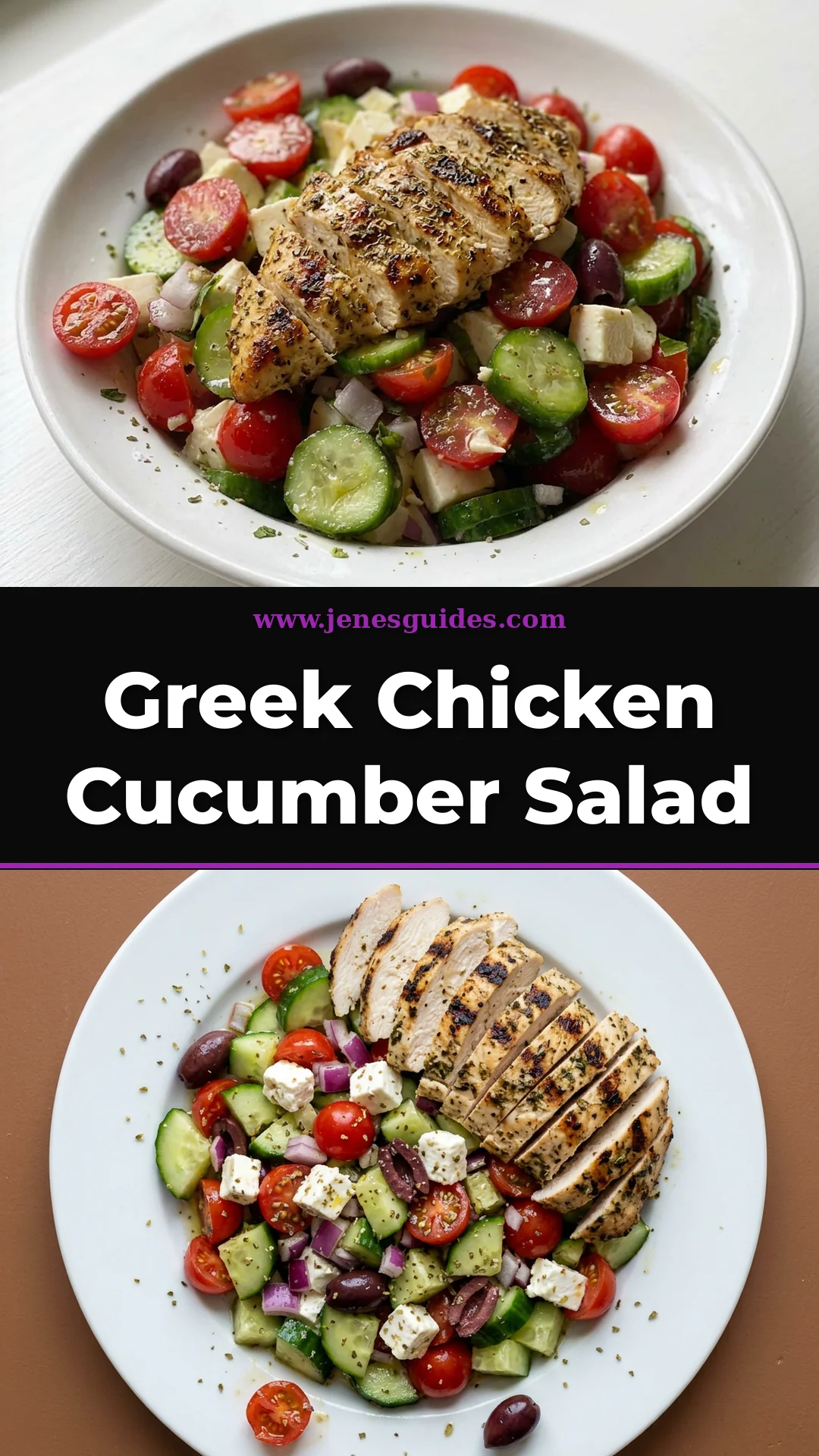
This is the plate that makes the numbers look like a plan; lean protein, olive oil fats, and vegetables doing the volume work. The feta and olives add sodium rather than calories, so if that matters to your table, rinse the olives and let the lemon carry the salt impression. Portion sizes run generous here, and seconds are common enough that I plan the chicken count accordingly.
Feta quantities are self reported in this house and rarely match the label.
Common Mistakes to Avoid
The classic mistake is dressing the salad too early, which turns crisp cucumber limp and watery by serving time; dress at the last possible moment. The second is overcooked chicken, which no amount of feta can rescue, so pull the breasts promptly at 165.
Skipping the dill is the quiet third mistake, leaving the plate Greek adjacent instead of Greek. And go easy on the added salt until you have tasted everything together, because olives and feta arrive pre-seasoned and proud of it.
Troubleshooting Guide
My salad is watery. The cucumber and tomatoes released their juice after dressing. Salt and drain the cucumber first next time, dress at the last minute, and serve promptly; the sixty second window between toss and table is the whole technique.
My dressing tastes too sharp. Red wine vinegar is bold by design; add the olive oil slowly next time and stop when the edge mellows. A tiny pinch of sugar or an extra drizzle of oil over the finished plates rounds it off without betraying the style.
My chicken is pale. The pan was crowded or not hot enough. Sear in batches with real heat for the golden oregano crust, or finish pale pieces with a two minute broil while the salad waits, undressed and patient.
Variations & Customizations
Add chickpeas for staying power, torn romaine for a bigger bowl, or banana pepper rings for a tangy kick. Swap the feta for grilled halloumi when you want the cheese to squeak, or serve the whole thing in pita pockets for a hand held version. Leftover chicken over tomorrow’s greens is the lunch that plans itself.
The jar-shaken red wine vinaigrette and grilled chicken pairing at Foodie Crush shaped this version, and the briny feta and vinegar balance from Erin Lives Whole is why the dressing tastes taverna right. Extra dill on top is always the correct amount.
What to Serve With It
The salad is the meal, and simple sides complete it. My Hawaiian chicken sheet pan is the other fresh, bright dinner for your warm weather rotation.
And when the evening wants cozy instead of crisp, my creamy smothered chicken and rice is the comfort counterpart. Warm pita or crusty bread on the side catches any dressing that made a run for it.
Meal Prep & Make-Ahead Instructions
Marinate the chicken overnight and the sear is a twelve minute job; the dressing whisk together up to a week ahead in a jar. Chop the vegetables in the morning and hold them dry and separate for an assembly that takes five minutes at dinner.
For work lunches, pack the undressed salad, the sliced chicken, and the dressing jar separately, combining at your desk like someone who has their life together. The components stay crisp for four days, making this one of the best meal prep salads in the category.
Storage & Leftovers
Store the components separately when you can: the chicken in one container for up to four days, the undressed salad in another for up to three, and the dressing in its jar indefinitely by weekday standards.
Once dressed, the salad eats best within a day, though day two dressed leftovers are still perfectly good with a fork and low expectations for crunch. The chicken actually improves overnight as the lemon and oregano settle deeper into every slice.
Dressed leftovers become tomorrow’s lunch salad in every sense; the cucumber softens slightly and everything else stays true, and honestly the second day dressing is better than the first. Pack the pita separately if you are the pita type.
Reheating Instructions
The chicken can take a quick thirty second microwave warm if you want the hot-on-cold contrast again, but this is genuinely a cold plate by design.
Leftover chicken straight from the fridge over freshly dressed greens is arguably the superior second day experience, and no reheating appliance needs to be involved. Room temperature chicken is also completely legitimate here, in the way of all great Mediterranean food.
Frequently Asked Questions
Can I use dried dill? It works in the dressing at a third of the quantity, but the fresh dill scatter on top is the aromatic moment worth keeping. If fresh is impossible, extra oregano in the dressing keeps the Greek accent honest.
Can I grill the chicken outdoors? Absolutely, and grilled marks make the plate even better; medium high heat and the same 6 to 7 minutes per side apply. Let the grill do the talking and the feta do the singing.
Can I make it dairy free? Skip the feta and add extra olives plus a handful of toasted pine nuts for richness. It changes the personality slightly, but the lemon oregano chicken and the sharp dressing carry the dish with confidence.
How far ahead can I marinate the chicken? Up to twenty four hours; the lemon gets assertive beyond that but nothing breaks. Even a fifteen minute marinade while you chop makes a noticeable difference, so there is no wrong window here.