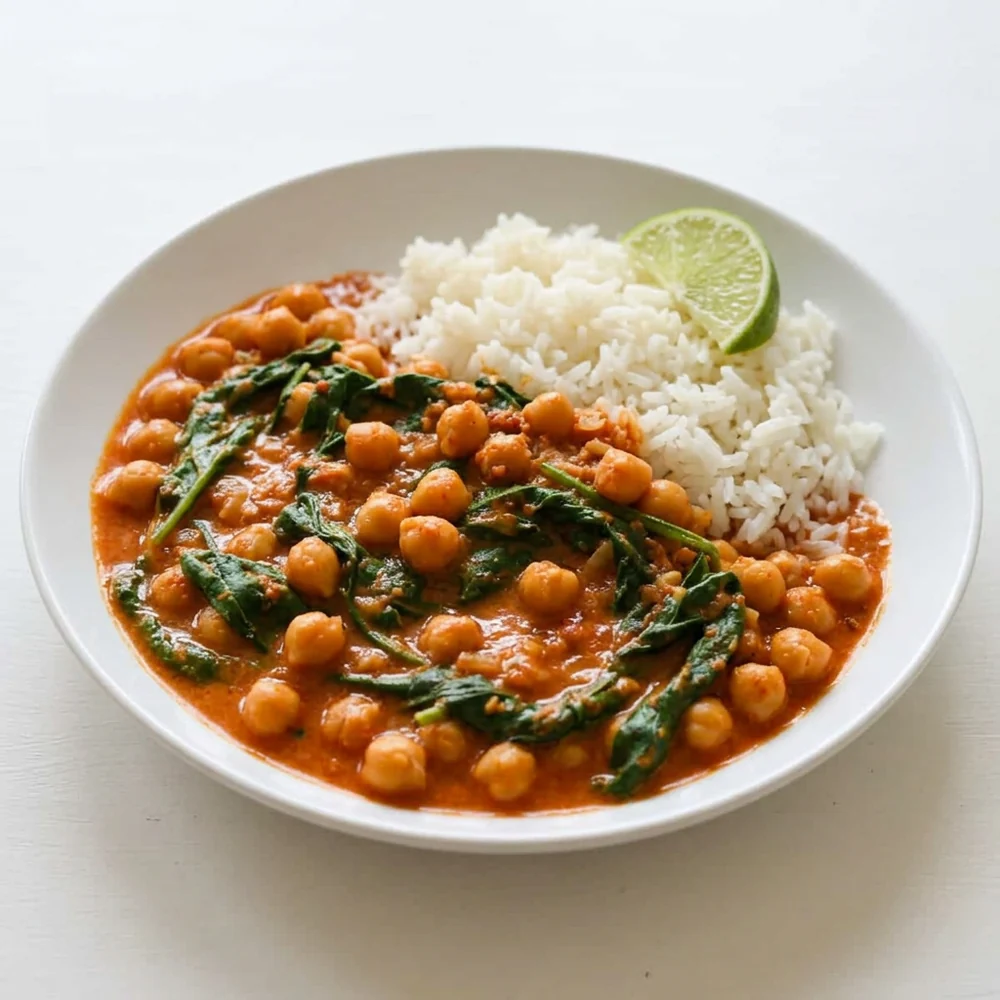
Chickpea curry coconut style is the thirty minute dinner that makes your kitchen smell like your favorite Thai spot. You bloom red curry paste into coconut milk, simmer two cans of chickpeas until the sauce turns velvety, and finish it with spinach and lime off the heat.
You need this in your week if your budget wants plants and your mouth wants fireworks, if your meatless Monday has run out of ideas, or if you need a one pan dinner that forgives your evening completely. One skillet, pantry staples, and a bowl you will crave again by Thursday.
Recipe at a Glance
| Prep time | 10 minutes |
| Cook time | 30 minutes |
| Total time | 40 minutes |
| Cooking method | Stovetop one pan simmer in coconut milk |
| Servings | 4 |
| Main ingredients | Chickpeas, coconut milk, Thai red curry paste, spinach, lime |
| Skill level | Easy |
Ingredients You’ll Need
- 2 tablespoons grapeseed oil
- 1/2 cup chopped yellow onion
- 1 tablespoon minced garlic
- 1 tablespoon grated fresh ginger
- 2 tablespoons Thai red curry paste
- 1 (13.5 ounce) can unsweetened coconut milk
- 1 cup vegetable broth
- 1/2 teaspoon kosher salt
- 2 (15 ounce) cans chickpeas rinsed and drained
- 3 cups baby spinach leaves
- 1 tablespoon fresh lime juice
- 1/2 cup coarsely chopped toasted cashews
- 2 cups cooked rice
Ingredient Notes & Easy Substitutions
Your coconut milk: One full fat can of unsweetened coconut milk is the body of your sauce, and you should shake it well before opening because the cream separates in the can. Your full fat version simmers down into velvet; your light version makes soup, and you did not come here for soup.
Your curry paste: Two tablespoons of Thai red curry paste are your entire spice rack for the night, blooming in the hot pan until it darkens and fills your kitchen. Different brands run different heat levels, so your first taste after simmering tells you whether your table needs a spoon of honey or an extra pinch of salt.
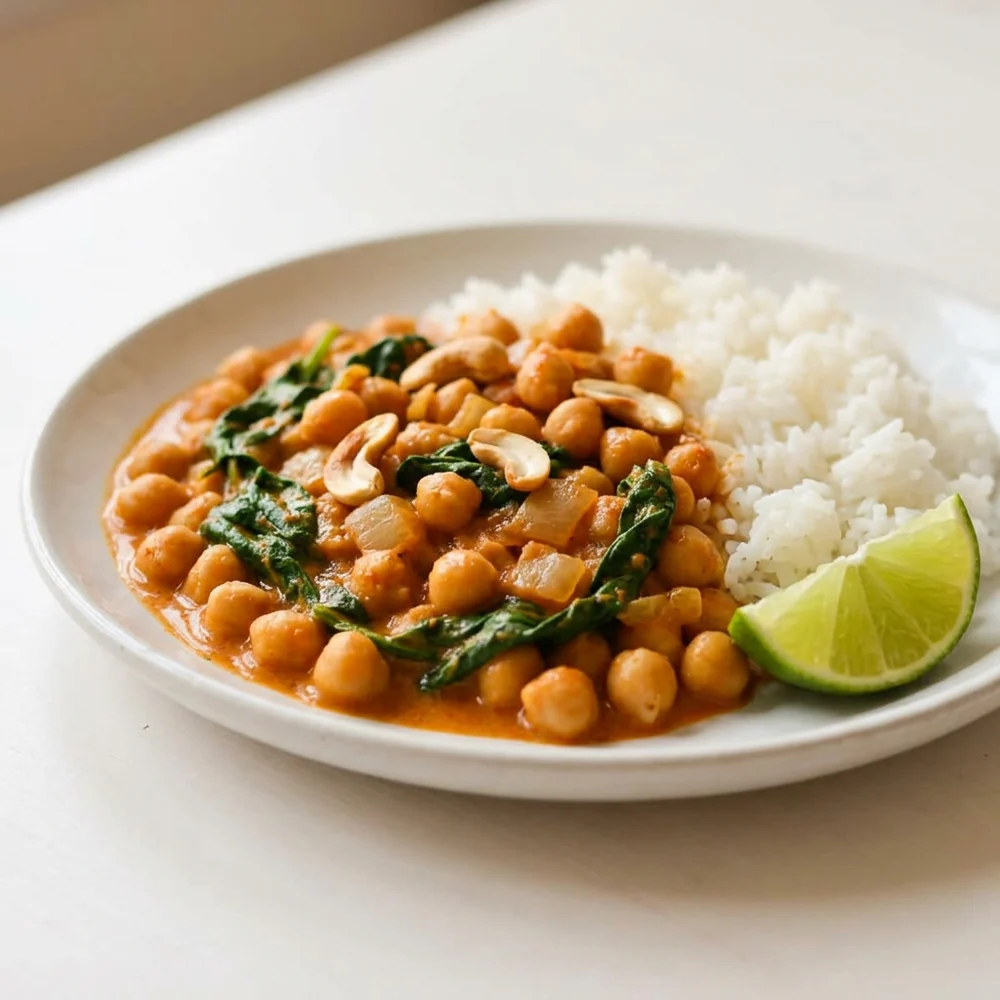
Your chickpeas: Two cans of chickpeas, rinsed well, bring the protein and the creamy heft that makes this a main dish instead of a sauce. Your chickpeas drink the coconut curry as they simmer, and by the twenty minute mark they taste like they were born in it.
Your finishers: Three cups of baby spinach wilt in off the heat, your tablespoon of lime juice brightens the whole pan at the last second, and your half cup of toasted cashews brings the crunch your creamy bowl is secretly craving. Your cilantro and rice round out the service, so do not skip the citrus; it is the difference between good and memorable.
Equipment You’ll Need
- Large high sided skillet
- Chef’s knife and grater
- Wooden spoon
- Small pan for toasting cashews
How to Make Chickpea Curry Coconut
Step One: Soften Your Onion
Heat your oil in a large high sided skillet over medium heat. Add the onion and cook until softened, about 4 minutes.
Give your onion its four minutes and a couple of stirs; you want it translucent and sweet, not browned, because your curry paste brings all the color this dish needs. Your pan should sizzle gently, and if your onion is hissing aggressively, your heat is running high and your garlic will pay for it later.
Step Two: Garlic and Ginger
Add your garlic and ginger and cook until fragrant, about 1 minute.
This minute is doing more for your bowl than any other minute in the recipe; your garlic and ginger bloom in the oil and perfume the whole base.
Stir constantly so nothing catches, and pull them the moment your kitchen smells like a proper curry house. Burnt garlic is the one flavor your coconut milk cannot rescue.
Step Three: Bloom the Curry Paste
Add your red curry paste and cook, stirring constantly, until it darkens slightly, about 1 minute.
Frying your paste in the oil is what wakes it up; stirred straight into liquid it tastes raw and flat, but toasted for a minute it turns deep and almost smoky.
Keep it moving the whole time, coating your onion in the red, and watch the color deepen. Your entire dinner is being decided in these sixty seconds.
Step Four: Coconut Milk and Chickpeas
Stir in your coconut milk, broth, and salt and bring it to a boil. Stir in your chickpeas.
Pour your coconut milk in slowly and stir so the paste dissolves evenly into it, then add your broth and salt and bring the pan to a full boil before your chickpeas go in. Scraping the bottom as you stir picks up every bit of fried paste, which is pure flavor you already earned.
Step Five: The Fifteen to Twenty Minute Simmer
Reduce your heat to maintain a gentle simmer and cook until the sauce thickens slightly, 15 to 20 minutes.
This is where your curry becomes curry; your coconut milk reduces and thickens, your chickpeas soften into the sauce, and every flavor rounds off its sharp edges.
Stir every five minutes or so and scrape the bottom, and when your spoon leaves a trail across the pan that closes slowly, your sauce is ready. Patience here is the entire recipe.
Step Six: Spinach, Lime, and Service
Remove your pan from the heat and stir in the spinach and lime juice. Serve with the cashews, cilantro, and rice.
Your spinach wilts in the residual heat in about a minute, staying bright green instead of going army colored, and your lime goes in now because boiled lime tastes flat.
Spoon your curry over rice, scatter your cashews and cilantro on top, and hand everyone a lime wedge. Your meatless Monday just became your favorite night.
Serving Size & Batch Scaling
Two cans of chickpeas make four generous bowls over rice, and your batch doubles in a wide pot with the same simmer window. Your curry is one of those rare dishes that scales without effort, because your sauce is just arithmetic and your pan just needs width.
Your ingredient list is the cheapest dinner in this category; two cans of chickpeas and a can of coconut milk feed four people a restaurant caliber curry for less than the cost of one delivery appetizer. It also freezes like a dream, which means your future self has opinions about how often you should make it.
Making More or Less?
Cooking for two? Halve everything into a medium skillet; your simmer shortens to about 12 minutes because the shallower layer reduces faster. Your lime and spinach still go in off the heat at the end.
Feeding a crowd? Double into a Dutch oven and give your simmer the full twenty minutes, stirring from the bottom so nothing catches. Set your rice, cashews, cilantro, and lime wedges out in bowls and let your guests run their own finishing program while you take the credit calmly.
Nutrition Estimate Per Serving
- Calories: about 480
- Protein: 14 g
- Fat: 24 g
- Carbohydrates: 56 g
It is an estimate, not medically precise information, and your bowl earns its calories honestly: plant protein from chickpeas, fiber in the double digits across the bowl, and fats from coconut and cashews rather than anything fried. This is comfort food your body actually thanks you for.
Common Mistakes to Avoid
The first mistake you can make is rushing the simmer, because your fifteen to twenty minutes is where the coconut milk turns from soup to sauce; a ten minute curry tastes like ingredients, a twenty minute curry tastes like a restaurant. The second is burning your garlic in step two, which haunts the whole pan.
Skipping the paste bloom is the quiet third mistake, and your curry will taste raw and separated because of it; sixty seconds of constant stirring fixes what no amount of simmering can. And add your spinach off the heat, because boiled spinach gives up its color and its dignity together.
Troubleshooting Guide
Your curry is too thin. Simmer it uncovered for five more minutes and stir from the bottom; coconut milk reduces slowly but surely. If you are out of patience, mash a spoonful of your chickpeas against the pan and stir them in, and your sauce thickens in a minute.
It is too spicy for your table. Stir in a teaspoon of honey or a splash more coconut milk, and serve extra rice on the side, because rice is the universal heat regulator. Your next round uses a tablespoon and a half of paste instead of two.
It tastes flat. It almost always wants salt and acid; add a pinch of salt, taste, then a squeeze more lime, taste again. Your curry should be loudly seasoned, because rice dilutes everything it touches and your first bowl is always slightly quieter than you intended.
Variations & Customizations
Add diced sweet potato with your chickpeas for a heartier bowl, stir in a spoon of peanut butter for a richer sauce, or swap your spinach for kale with a few extra minutes in the pan. Your curry also welcomes tofu, and a handful of cherry tomatoes burst into the sauce makes it brighter. Over rice noodles instead of rice, it becomes a completely different dinner.
The paste blooming technique and simmer window from Nora Cooks shaped this version, and the off heat spinach finish from It Doesn’t Taste Like Chicken is why your greens stay bright. Extra lime wedges at your table are not optional in this kitchen.
What to Serve With It
Your curry runs well with bold company. My Korean BBQ pork is the other big flavor skillet for the night your table wants both pans working.
And for the slow cozy counterpoint to your fast curry, my slow cooker beef tips and gravy covers your comfort quota. Warm naan or extra rice on your table catches every last drop of the sauce, which is the whole point of the exercise.
Meal Prep & Make-Ahead Instructions
Your curry is a make ahead machine; make the full pan up to three days ahead and reheat portions gently, because the flavor deepens daily and your Thursday bowl outranks your Monday one. Keep your rice and your cashews separate so everything lands fresh at serving.
For your freezer, cool the curry completely and freeze it in quart containers for up to two months; thaw overnight and reheat with a splash of broth, because the sauce tightens in the cold. Your spinach goes in fresh at the reheat, and your bowl tastes like you cooked it that morning.
Storage & Leftovers
Your leftovers keep in a sealed container in the fridge for up to four days, and the sauce continues to thicken as the chickpeas keep drinking, so plan on loosening each portion with a splash of broth or water.
This is one of those curries that many people prefer on day two, when the ginger and lime have settled into the coconut and the whole pan tastes rounder. Keep your cashews in a separate container, because crunchy things surrender overnight and your topping deserves better.
Reheating Instructions
Reheat your portions on the stovetop over medium low for about eight minutes with a splash of broth, or microwave for about two minutes with a stir at the halfway mark.
Your curry loosens back to its fresh pan texture with the added liquid, and a fresh squeeze of lime after reheating wakes the whole bowl back up. Fresh spinach can wilt right into your reheated portion in about a minute, which is the easiest upgrade in your leftover repertoire.
Frequently Asked Questions
Can you use light coconut milk? You can, though your sauce runs thinner and less luxurious; simmer it a few minutes longer to compensate. Your full fat can is worth its calories here, because it is the entire texture of the dish and not just an ingredient in it.
Can you make it in a slow cooker? You can; bloom your paste and aromatics in a pan first, then transfer everything to your slow cooker on low for four hours and stir your spinach and lime in at the end. Your stovetop version is faster, but your slow cooker version fills your house with the smell of good decisions.
Is this curry very spicy? It runs gently warm rather than hot, and your heat depends entirely on your curry paste brand. Taste your paste from the jar before you commit; some brands are family friendly and some are passionate, and your recipe works either way with an adjustment.
Can you use dried chickpeas instead of canned? You can; cook three cups of dried chickpeas until tender first, then pick the recipe up at the coconut milk step. Your home cooked chickpeas turn extra creamy in the simmer, and your budget smiles about it too.