
Grandma’s old fashioned cornbread is the sweet, tender, golden-crusted kind that comes out of a buttered cast iron skillet with a sizzle you can hear across the kitchen.
Creamed butter and sugar, a scoop of cornmeal, and a hot oven turn seven simple ingredients into the most comforting bread in American baking.
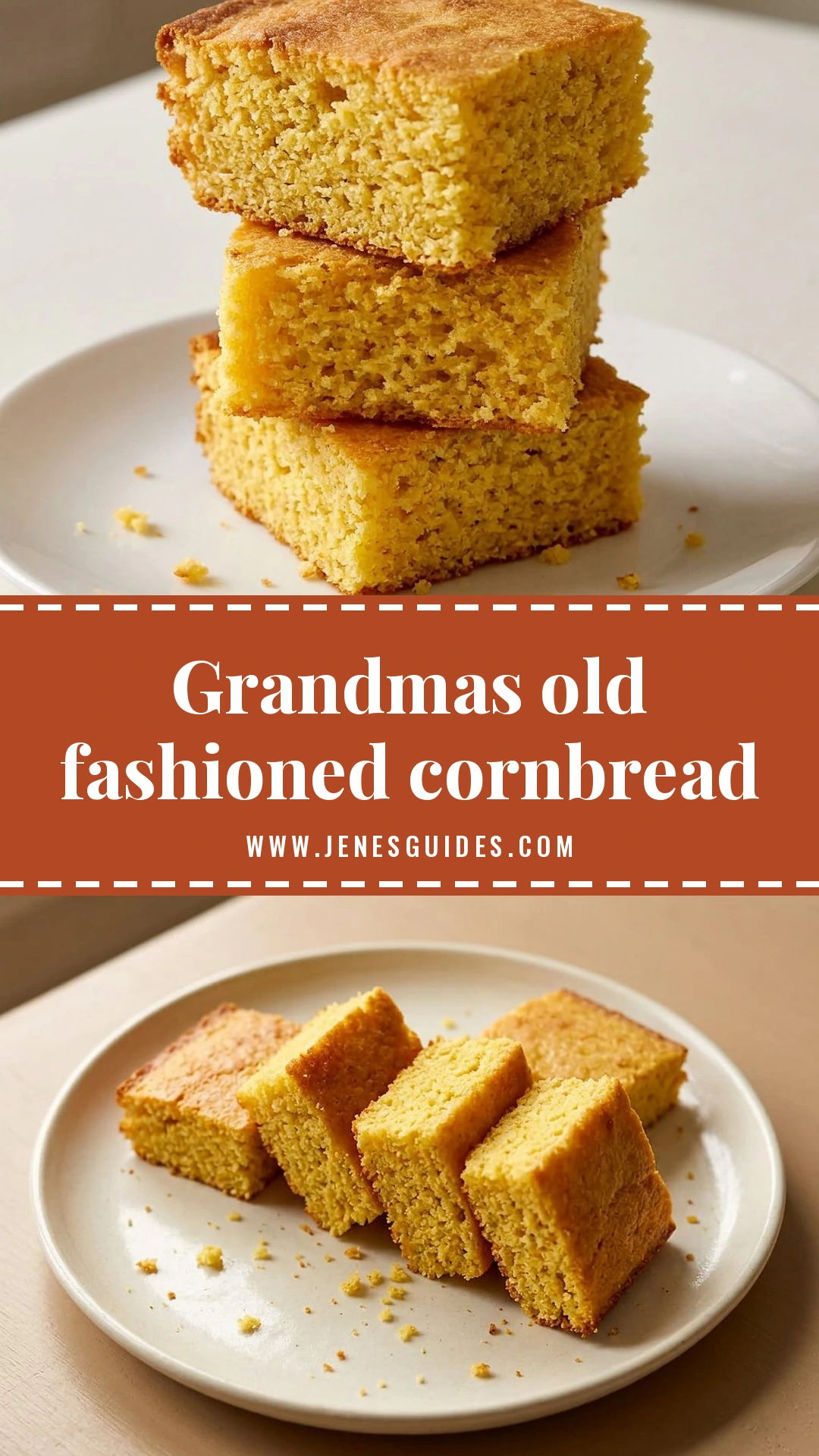
The crumb is soft and cake-like with real cornmeal character, the edges crisp where the butter sizzles, and the flavor lands right between sweet and savory where cornbread belongs.
It is ideal for weeknight chili nights, Sunday dinners, and anyone who grew up on a grandma’s table where the skillet was always warm. Twenty minutes of hands-off baking, one bowl, and no buttermilk required; everything is already in your kitchen.
Recipe at a Glance
- Prep time: 15 minutes
- Bake time: 25 to 30 minutes
- Total time: about 40 minutes
- Servings: 8 slices
- Difficulty: Easy
- Method: One bowl, cast iron skillet, oven-baked

Ingredients You’ll Need
- ⅓ cup granulated sugar
- ⅓ cup unsalted butter, softened (plus more for the pan)
- 1 cup all-purpose flour
- 4 teaspoons baking powder
- ½ teaspoon salt
- 1 large egg
- 1¼ cups milk
- 1 cup cornmeal
Ingredient Notes & Easy Substitutions
Cornmeal: Yellow or white, medium grind, plain (not self-rising, since this recipe adds its own leavening). Medium grind gives that classic cornbread bite; stone-ground brings even more corn flavor if your store carries it.
Sugar and butter: This is what makes it grandma’s version: sweet, tender, and rich, creamed together like a cake. This is the sweet Northern-style cornbread that generations were raised on. If you were raised on unsweetened Southern cornbread, cut the sugar to 2 tablespoons and know that both camps are right.
Baking powder: Four teaspoons is correct, and it is what gives this bread its high, tender rise. Check the date on the can; weak baking powder is the reason some cornbread comes out flat and heavy.
Milk: Whole milk is ideal, but 2% works fine. No buttermilk needed here, which is the beauty of this old recipe; it was written for everyday kitchens. In a pinch, any plant milk works too.
Butter for the pan: Do not skimp. A liberal slick of butter in a hot skillet is what fries the bottom crust golden and releases the bread cleanly. It is doing more than preventing stickiness; it is an ingredient.
Egg: One egg binds and enriches. Beat it into the milk before mixing so it incorporates evenly in seconds.
Equipment You’ll Need
- 9-inch cast iron skillet (an 8×8 baking dish works; the skillet just does it better)
- Small mixing bowl and a large mixing bowl
- Whisk and a wooden spoon or spatula
- 4-cup measuring cup or a medium bowl for the milk and egg
- Toothpick for testing
How to Make Grandma’s Old Fashioned Cornbread
Cream, whisk, stir, bake. Grandma did it in one session without a mixer, and so can you. Follow with me.
Step One: Preheat the Oven and Butter the Pan
Preheat the oven to 425°F and liberally butter your cast iron skillet or baking dish, including the sides. Set it aside.
You are looking for a generously buttered pan with no dry spots. The hot butter is what fries that legendary crisp bottom crust, so treat this step like it matters, because it does.
Step Two: Cream the Sugar and Butter
In a small bowl, mash and stir the sugar and softened butter together with a fork until the mixture is smooth and fluffy, a minute or two by hand.
You are looking for a pale, well-blended paste with no visible butter chunks. This old-fashioned creaming is what makes the crumb tender and cake-like instead of dry and crumbly; it is the step that separates grandma’s cornbread from boxed mix.
Step Three: Mix the Dry Ingredients
In a large bowl, whisk together the flour, baking powder, and salt until evenly combined.
You are looking for a uniform mixture; four teaspoons of baking powder left in clumps will bake bitter spots into the crumb, so give it a proper whisk.
Step Four: Combine the Milk and Egg
In a measuring cup or small bowl, beat the egg, then whisk in the milk until uniform.
You are looking for a smooth, pale liquid with no stringy egg white. Beating the egg first, before it meets anything else, is the old recipe’s way of making sure it blends in seconds instead of leaving streaks in the batter.
Step Five: Bring the Batter Together
Whisk the milk and egg mixture into the butter mixture, then pour this into the flour mixture and stir just until combined. Add the cornmeal and stir only until no dry streaks remain.
You are looking for a thick, slightly lumpy batter, and lumpy is correct. Cornbread overmixed turns tough and bakes with tunnels; stop stirring the moment everything is moistened, even if it looks a little rough.
Step Six: Bake Until Golden
Pour the batter into the buttered skillet and bake at 425°F for 25 to 30 minutes, until the top is golden and a toothpick poked in the center comes out clean.
You are looking for a deep golden top with slightly crispy edges pulling away from the sides of the pan. The high heat is what gives cornbread its character: crisp edges, tender middle, and those gorgeous golden-brown corners everyone fights over.
Step Seven: Rest, Slice, and Serve Warm
Let the cornbread rest for 5 minutes in the skillet, then slice into 8 wedges and serve warm with plenty of butter.
You are looking for steam rising off the first slice and butter melting on contact. That 5-minute rest lets the crumb set so the wedges lift cleanly; cornbread straight from the oven is glorious but fragile.
Serving Size & Batch Scaling
This recipe makes 8 wedges from a 9-inch skillet. With a pot of chili or soup on the stove, count on 6 generous servings because people cut bigger pieces; as one bread among several at a big Sunday dinner, it stretches to 10. Cornbread portions are decided by appetite, not math, so treat these as friendly estimates.
For a crowd, the recipe doubles perfectly into a 9×13 pan; the bake time stays nearly the same and the edge-to-middle ratio actually improves.
Making More or Less?
- 4 servings: Half of everything in a 6-inch skillet; the egg is the only fiddly part, so beat it first and use half. Bake 20 to 25 minutes and check early.
- 8 servings: The recipe as written.
- 16 servings: Double everything into a 9×13 baking dish. Bake 25 to 30 minutes at the same 425°F; the larger pan needs no extra time, just a clean toothpick in the center.
For any batch: keep the 425°F heat, keep the butter generous, and stop mixing the moment the batter comes together. That advice is 90 percent of good cornbread.
Nutrition Estimate Per Serving
The following is an estimated nutritional breakdown per wedge (1 of 8), calculated from the ingredients in this recipe. It is an estimate, not medically precise information.
- Calories: ~245
- Protein: 5g
- Carbohydrates: 35g
- Fat: 10g
- Fiber: 2g
- Sugar: 9g
- Sodium: ~480mg
Useful highlight: cornmeal brings whole-grain fiber and a modest 245 calories a wedge, which makes this one of the more reasonable breads you can put next to a big pot of soup.
Common Mistakes to Avoid
Overmixing the batter. The number one cornbread sin. Stir until moistened, stop, and accept the lumps; they bake out into tenderness.
Stingy butter in the pan. A thin film does nothing. The liberal butter coat is what fries the bottom crust and releases the wedges whole.
Old baking powder. This recipe leans on four teaspoons of it. If your can is old, the bread will be flat and dense no matter what else you do right.
Using self-rising cornmeal or flour. The recipe brings its own leavening, so self-rising products double it and the bread rises then collapses. Plain cornmeal, please.
Letting it dry out. Cornbread’s window of glory is short. Serve it warm, and wrap leftovers the moment they cool.
Troubleshooting Guide
My cornbread is dry and crumbly. What happened? Overbaking is the usual cause, followed by overmixing or too much cornmeal-to-liquid. Check it at 25 minutes; a few moist crumbs on the toothpick mean done, not raw.
It is dense and heavy. Why? Old baking powder, or the batter got overworked. Fresh leavening plus a light hand fixes both.
The middle is raw but the top is brown. Now what? Tent the skillet with foil and bake 5 to 10 more minutes. Cast iron holds heat aggressively on the edges, so the center sometimes needs a little longer than the top suggests.
It stuck to the skillet. How do I prevent that? Butter more generously and make sure the pan is fully preheated with the oven, not just warmed. Well-seasoned cast iron plus real butter releases like a dream.
Variations & Customizations
Southern unsweetened version: Cut the sugar to 2 tablespoons and swap the butter in the pan for bacon grease. Smoky, savory, and deeply traditional.
Buttermilk version: Swap the milk for buttermilk and add ¼ teaspoon of baking soda; the crumb turns slightly tangier and more tender, the way many grandmas in the South made it.
Honey butter version: Keep the recipe as written and serve with whipped honey butter; the sweet-sweet combination is kid catnip.
Jalapeño cheddar version: Fold in ½ cup shredded cheddar and one diced jalapeño with the cornmeal. Game day gold.
Cornbread muffins: Divide the batter into 12 muffin cups and bake 15 to 18 minutes at 425°F. Same recipe, portable format.
This recipe follows the classic method passed down through the Grandma’s cornbread at Renee Nicole’s Kitchen, creamed butter and sugar and all, and it bakes up exactly the way the old recipe cards promised.
Curious about the other side of the cornbread debate? The less-sweet cornbread at Love and Lemons is a beautiful example of the savory Southern style.
What to Serve With It
For chili night: Warm wedges, a pot of chili, and cold milk. This is the pairing cornbread was invented for, and my smothered chicken and gravy plate benefits from a wedge just as much.
For Sunday dinner: Alongside greens and a roast, with butter melting into every wedge. My southern green beans and potatoes and this bread were made to share a table.
For soup suppers: A wedge with a bowl of my chicken pot pie soup is a complete, cozy dinner that costs almost nothing.
For breakfast: Day-old wedge, split and griddled in butter, drizzled with honey or sorghum syrup. Old-timers will tell you this is the best way to eat cornbread, and they are not wrong.
Meal Prep & Make-Ahead Instructions
Can this be made ahead? Yes, with one honest note: cornbread is at its peak the day it bakes. For a big dinner, you can mix the dry ingredients in a jar up to a month ahead and cream the butter and sugar a day ahead; then it is a five-minute assembly when you need it.
Baked cornbread also freezes surprisingly well (more on that below), which makes doubling the recipe on a quiet weekend the smart move.
What should stay separate is the final mixing; once the baking powder meets the liquid, the clock starts. Batter waits for no skillet.
Storage & Leftovers
Refrigeration: Wrap the cooled cornbread well and keep it at room temperature for 2 days, or refrigerate up to 5 days. The fridge keeps it safe but firms the crumb; reheating restores most of the softness.
Freezing: Wrap wedges or the whole slab tightly and freeze up to 3 months. Thaw at room temperature and reheat in the oven; the texture comes back remarkably well.
Leftover ideas: Crumble dried cornbread for dressing at the holidays, cube it for cornbread salad with tomatoes and beans, or griddle wedges in butter for breakfast. Old cornbread is an ingredient, not a loss.
Reheating Instructions
Oven (best method): Wrap wedges in foil and warm at 350°F for about 10 minutes. The crumb steams soft inside while the edges re-crisp.
Skillet (for the true experience): A little butter in a hot pan, wedge cut-side down, two minutes a side. This makes leftover cornbread taste deliberate, like it was planned all along.
Microwave (fastest): 15 to 20 seconds with a damp paper towel over the wedge. Quick and soft, though the edges stay pale.
A little added moisture helps here; cornbread is drier than most breads, so the foil in the oven or the damp towel in the microwave makes a real difference.
Frequently Asked Questions
Is this sweet or savory cornbread? It is the sweet-tender style, the kind most grandmas in the North and Midwest made, with real cake-like crumb.
For Southern-style savory, simply cut the sugar to 2 tablespoons; the recipe flexes beautifully in both directions.
Do I need a cast iron skillet? No, an 8×8 baking dish works fine with the same bake time. But the skillet gives you that fried, crisp bottom crust and keeps the bread warm on the table, which is why the old recipes insist on it.
Can I use buttermilk? Yes; swap it 1:1 for the milk and add ¼ teaspoon of baking soda alongside the baking powder. The flavor turns slightly tangy and the crumb even more tender.
Why four teaspoons of baking powder? Cornmeal is heavy, and this batter needs the full measure to rise tall and tender in the short bake. It is not a typo; it is how the old recipe cards were written.
And that is grandma’s cornbread, exactly as promised: seven ingredients, one sizzling skillet, and a bread that makes a pot of soup feel like an occasion.
If it earns a place in your rotation, bake the double batch next time; wedges from the freezer have saved more weeknight dinners than any grocery run ever will. Keep the skillet warm.