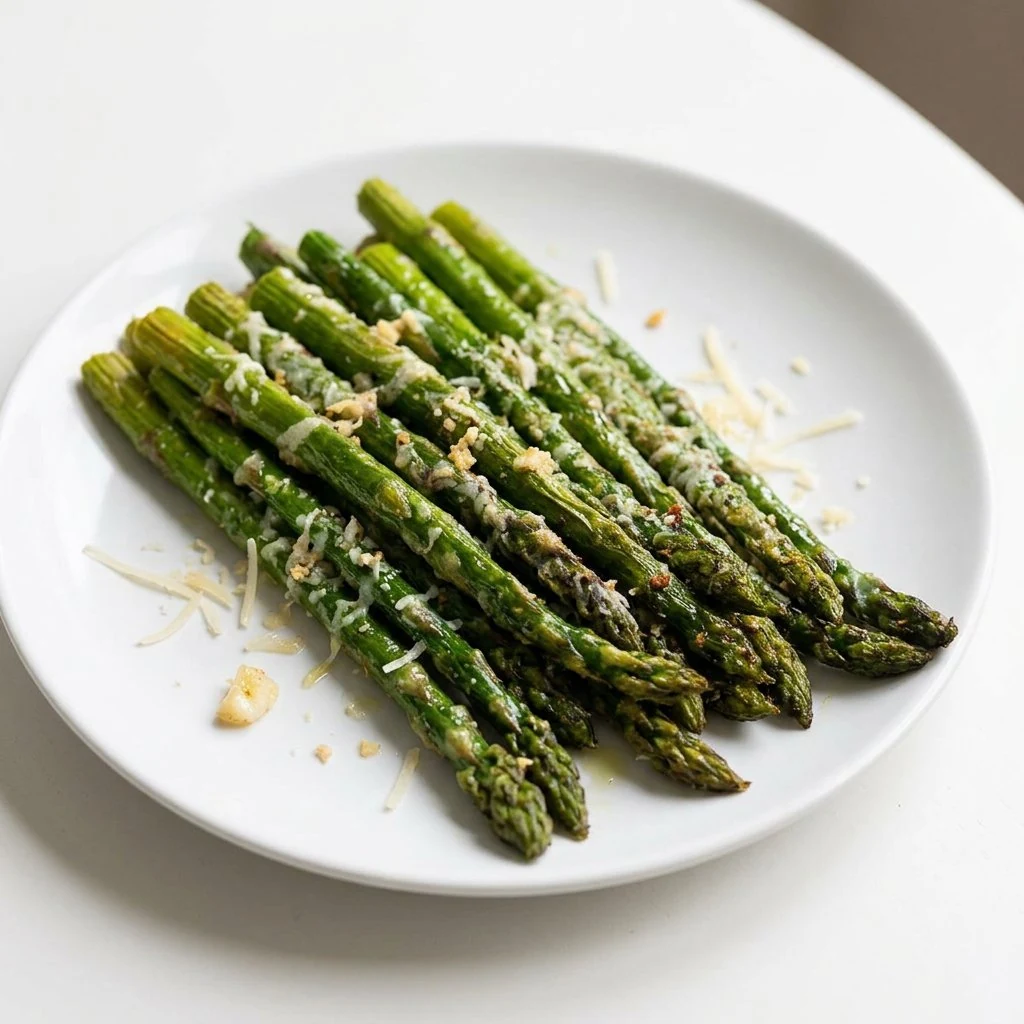
Roasted asparagus parmesan style is the fast, bright, garlicky side that makes your dinner plate look finished with almost no effort from you.
You trim fresh spears, roast them hot until tender-crisp, then hit them with lemon juice, Parmesan, and parsley right on the pan while they steam and shine.
You need this recipe when your dinner needs a green that takes fifteen minutes, when your holiday table wants one dish nobody fights you on, or when asparagus goes on sale and you buy too much on purpose.
Recipe at a Glance
| Prep time | 5 minutes |
| Cook time | 15 minutes |
| Total time | 20 minutes |
| Cooking method | High heat oven roasting on a foil lined sheet pan |
| Servings | 4 to 6 |
| Main ingredients | Asparagus, olive oil, garlic, Parmesan, lemon, parsley |
| Skill level | Easy |
Ingredients You’ll Need
- 2 lbs asparagus trimmed
- 2 tbsp olive oil
- 1/2 cup Parmesan cheese
- 3 cloves garlic minced
- 1 tsp salt
- 1/2 tsp pepper
- 1 tbsp lemon juice
- fresh parsley
Ingredient Notes & Easy Substitutions
Your asparagus should be firm spears with tight, closed tips, and snapping off the woody ends takes one bend per spear. Two pounds feeds a table generously, and uniform thickness matters more than size, because thin and thick spears on one pan finish at different times.
Your garlic tosses with the raw spears before roasting, which mellows it into sweetness instead of bitterness; the lemon arrives after the oven, which keeps its brightness intact. The marinade logic at Last Ingredient, whisking oil with lemon and garlic, shows why this pairing works so well on asparagus specifically.
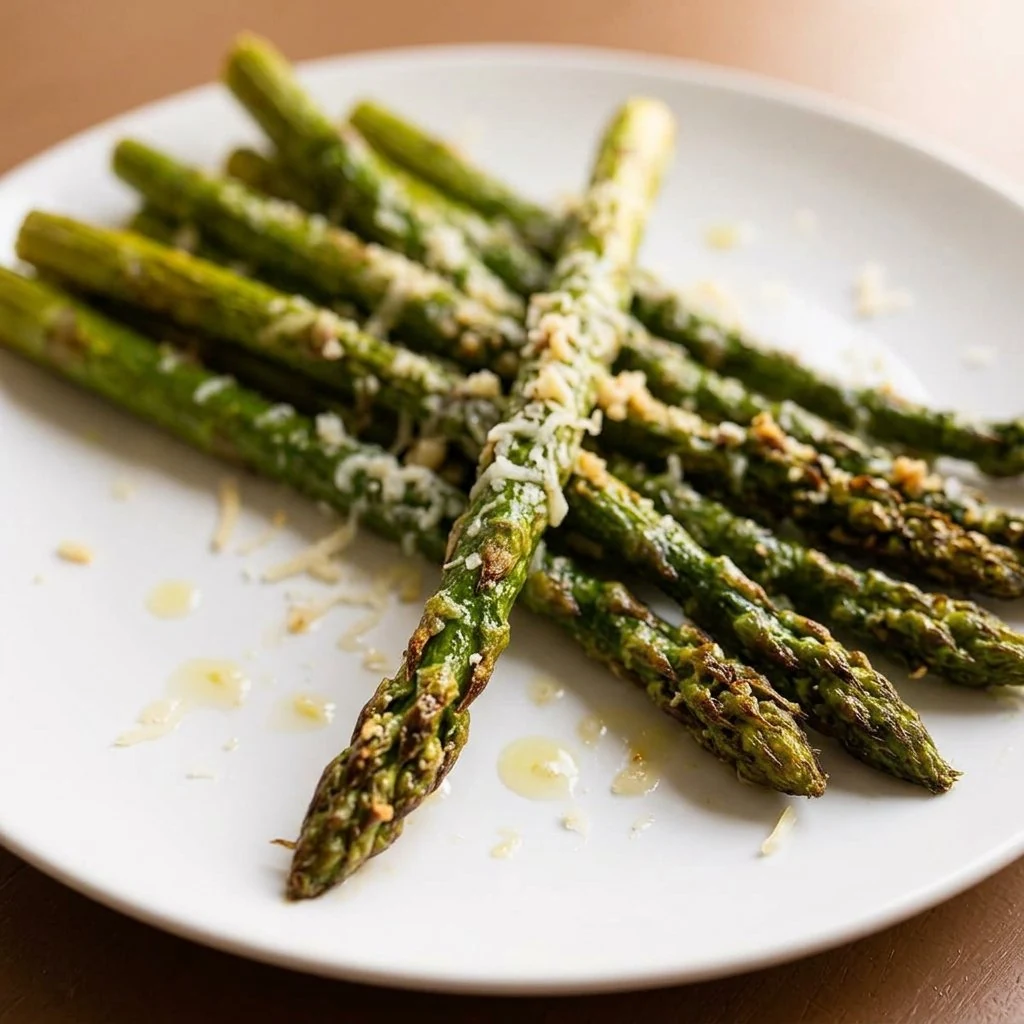
Your Parmesan goes on after roasting, when the residual heat softens it into the spears without browning; the finish at Sweet Beginnings does the same, tossing lemon, garlic, and cheese together at the end. If you only have the canned shaker kind, use less salt elsewhere and know that a block grated fresh is the upgrade that costs ninety seconds.
Equipment You’ll Need
You need a large rimmed baking sheet, aluminum foil, a sharp knife, a lemon, a grater for the Parmesan, and a cutting board. Tongs make the toss easy, and a microplane grates the garlic straight into the oil if you prefer it that fine.
The foil is doing two jobs: catching the cheese that melts off the spears and turning your cleanup into a two second peel. If you use parchment instead, expect slightly less caramelized edges and the same great flavor.
How to Make Roasted Asparagus Parmesan
Step One: Preheat and Line
Preheat your oven to 400F and line a baking sheet with foil. Getting the oven fully hot before the spears go in matters, because asparagus cooks fast and a lagging oven steams the tips instead of roasting them; your pan waits, ready for its green cargo.
Step Two: Oil the Spears
Place the asparagus on the sheet and drizzle with olive oil. Use your hands or tongs to make sure every spear has a thin coat, because oil is what carries heat into the vegetable and what keeps the garlic from scorching onto dry spears.
Step Three: Garlic and Seasoning
Add the garlic, salt, and pepper and toss to coat right on the pan. Spread the spears into a single layer with space between them, because crowded asparagus steams and single file asparagus roasts, and only one of those gets caramelized edges.
Step Four: The Quick Roast
Roast 12 to 15 minutes until tender-crisp. Thin spears check at ten minutes, fat ones closer to fifteen, and the target is bright green with a little bite left; the tips should still stand up rather than slump, because slumped tips mean the oven already won.
Step Five: Lemon, Off the Heat
Remove the pan from the oven and squeeze the lemon juice over the asparagus immediately. The hot spears drink the citrus in seconds, the pan hisses, and that fresh acid cut is what makes the whole tray taste like more than the sum of its five ingredients.
Step Six: Parmesan and Parsley
Sprinkle the Parmesan cheese and chopped parsley over the top and serve immediately. The residual heat melts the cheese gently onto the spears, the parsley adds the fresh green finish, and this dish, like all roasted vegetables, is at its absolute peak in the first ten minutes.
Serving Size & Batch Scaling
Two pounds serves four to six as a side, and asparagus shrinks modestly in the oven, so the pan you see is roughly the portion you get. For a dinner party, count five servings; for a family that includes asparagus fans, count four and buy accordingly next time.
Doubling means two pans on two racks, swapped halfway through the roast. Never pile two pounds onto one crowded sheet, because the steam trapped between spears is the specific enemy of everything you are trying to achieve here.
For a holiday table, tuck the spears into the empty space around your roast on the serving platter; asparagus dresses up any centerpiece, and the green against a golden bird is the color coordination your table photographer will thank you for. It costs you nothing and looks like a florist was consulted.
Making More or Less?
For two, one pound of asparagus with half the seasoning roasts on a quarter sheet in the same window; keep the full lemon finish, since brightness does not scale down well. Your small pan comes out just as festive.
If your table runs big, roast in successive batches and hold finished spears on a platter at room temperature rather than in a warm oven, which keeps cooking them. A final squeeze of lemon across all batches just before serving re unifies the whole tray.
Nutrition Estimate Per Serving
- Calories: about 115 per serving
- Protein: 6 g
- Carbohydrates: 8 g
- Fat: 8 g
- Fiber: 3 g
- Sugar: 3 g
- Sodium: about 430 mg
The following is an estimated nutritional breakdown based on standard ingredient data, so treat these numbers as friendly guidance rather than clinical data. This is one of those rare sides that is light on calories and heavy on actually being delicious, and the Parmesan is doing the persuading.
Common Mistakes to Avoid
The number one mistake is overcooking, because asparagus goes from vibrant to olive drab in about two minutes of inattention, and limp spears never recover. The second is crowding the pan; spears stacked on spears steam in their own moisture and you get the pale, squeaky result that gives roasted asparagus a bad name.
Do not skip trimming the woody ends, since those bottom two inches are fibrous no matter how long they roast; one gentle bend per spear snaps exactly where the toughness ends. And do not add the cheese before the roast unless you enjoy watching it slide off and weld to the foil.
Finally, do not dress the spears with lemon before roasting; acid added early softens them and dulls the color. Lemon after the oven, cheese after the lemon, table immediately: that is the whole choreography.
Troubleshooting Guide
If your spears came out limp, they were thin, old, or over-roasted; next round, start checking at eight minutes and pull them while the tips still stand proud. If they are raw tasting at fifteen minutes, they were thick, so give them five more and cover them loosely if the tips darken first.
If your garlic tastes bitter, it scorched on the dry spots; toss more thoroughly with the oil next time, or grate the garlic into the oil before it meets the pan. If the dish tastes flat, it needs one more pinch of salt and a second squeeze of lemon; asparagus responds to brightness like it is being paid.
If the cheese slid off entirely, the spears were served too slowly after topping; cheese clings to hot, glistening spears and gives up on cooling ones. Plate the moment the Parmesan goes on and the problem never exists.
Variations & Customizations
Add lemon zest with the parsley for a double citrus finish, or scatter toasted almonds or panko over the top for crunch. A drizzle of balsamic glaze after roasting turns this into the steakhouse version, and a pinch of red pepper flakes in the oil toss handles the heat contingent without a word.
For a richer holiday version, shave Parmesan with a peeler instead of grating it and let the wide ribbons melt dramatically across the spears. A soft boiled egg chopped over the top turns the side into a light lunch, and nobody has ever been sad about that outcome.
What to Serve With It
This asparagus pairs with anything you would put a vegetable beside, and it is especially happy next to chicken, salmon, or a holiday ham. It brings fresh green balance to a plate featuring Hawaiian chicken sheet pan dinner, and alongside creamy smothered chicken and rice, it is the crisp, bright counterpoint that keeps the whole plate honest.
A wedge of extra lemon on the side lets everyone dial their own brightness, and if you somehow have leftovers, chopped into a frittata the next morning is the quiet best use of them.
Meal Prep & Make-Ahead Instructions
You can trim the spears up to two days ahead and store them upright in a jar with an inch of water like a bouquet, or wrapped in a damp towel in the fridge. Grate the cheese and chop the parsley ahead too, so dinner time is a five minute sprint.
You can even toss the spears with oil, garlic, salt, and pepper on the foil lined pan a few hours ahead and hold it at room temperature. When the oven hits 400F, slide the pan in and dinner proceeds exactly on schedule with zero prep left.
Storage & Leftovers
Leftovers keep in an airtight container in your fridge for up to three days, though the spears soften as they sit and the color dulls slightly. They remain entirely useful, just no longer the crisp showpiece they were on night one.
Freezing roasted asparagus is not recommended, since thawed spears turn watery and limp. Chopped into pasta, frittatas, or grain bowls, leftovers find second lives easily, and honestly the jar bouquet method means you can just buy less and roast fresh.
Leftover spears also make a quick appetizer; chop them bite size, wrap them in prosciutto if you have it, and warm them just before guests arrive. Roasting the full two pounds means these bonus bites exist by default rather than by planning, and the lemon Parmesan flavor does all the talking while you take the credit.
Reheating Instructions
Your oven at 400F for four to five minutes, or an air fryer at 375F for three, brings spears back close to their former crisp selves. The microwave makes them soft in thirty seconds, which is fine if soft is what your lunch break ordered.
A fresh squeeze of lemon and a small pinch of Parmesan after reheating reset the flavor completely, and if the spears are destined for a frittata or pasta anyway, skip reheating entirely and let the new dish’s heat do the work.
Frequently Asked Questions
Can this be made ahead? Prep yes, roasting no; asparagus is at its peak in the first ten minutes after the oven. Trim and even pre season the pan hours ahead, then roast just before serving, since the whole bake is only twelve to fifteen minutes anyway.
How do you trim asparagus properly? Hold one spear near each end, bend gently, and let it snap where it wants to; that break line is where the woody fiber ends. Line the rest up against it and cut, or snap each individually, and none of your guests will be chewing stalks like celery.
Do you have to peel asparagus? Only the fat ones; spears thicker than your finger benefit from a light peel of the bottom third, where the skin turns fibrous. Thin and medium spears need nothing but a trim, and the whole prep stays under five minutes.
Can you roast asparagus at a higher temperature? Yes; 425F gets you there in about eight to ten minutes with slightly blistered edges. Watch the tips, which brown first, and pull the pan the moment the spears bend without breaking; higher heat rewards attention.