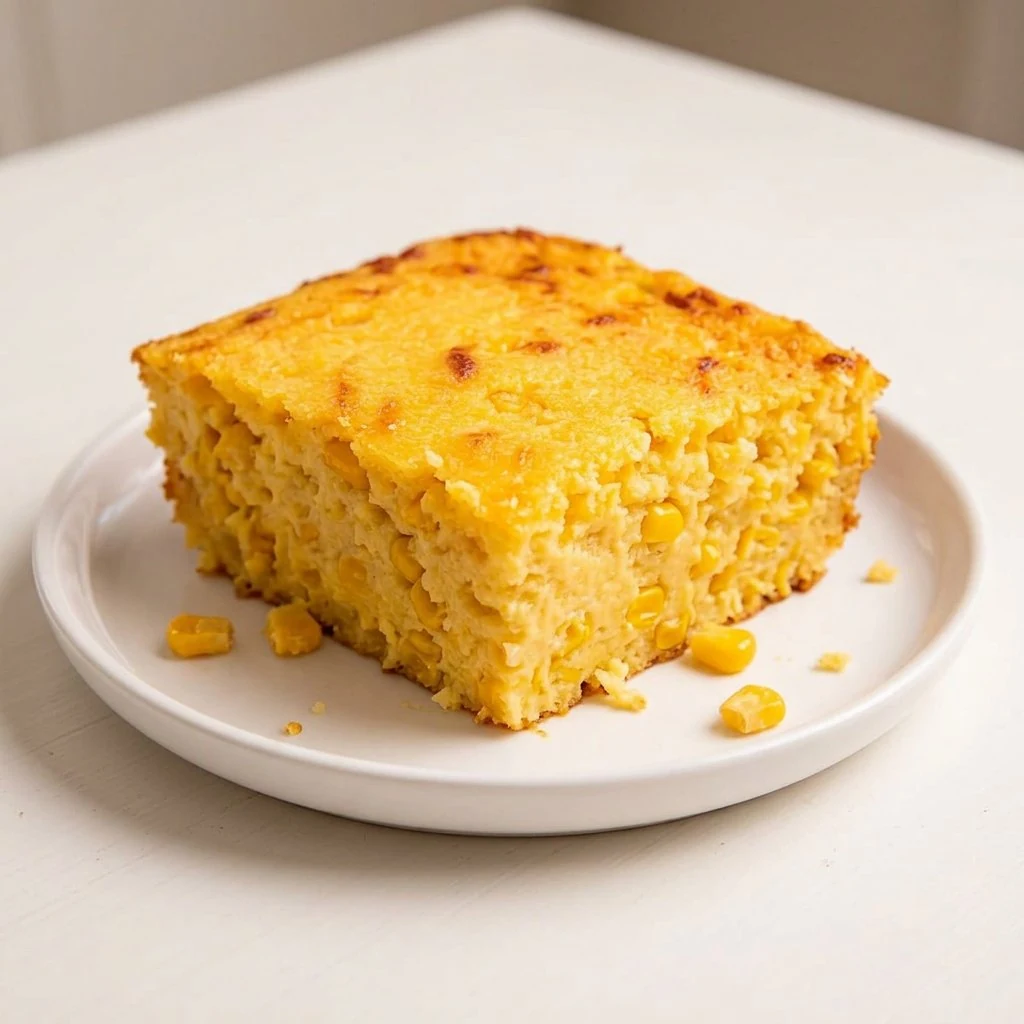
Corn pudding casserole is the sweet, custardy, golden topped bake that quietly becomes the first empty dish at any holiday table. You whisk eggs with sour cream and butter, stir in two kinds of corn plus cornmeal, and bake until the center sets and the top turns a deep, buttery gold.
You need this recipe if your Thanksgiving menu has a cornbread shaped hole, if your potluck reputation needs a champion, or if your family considers corn a food group.
Recipe at a Glance
| Prep time | 10 minutes |
| Cook time | 45 to 55 minutes |
| Total time | About 1 hour 5 minutes |
| Cooking method | Oven baked corn custard in a 9×9 dish |
| Servings | 6 to 8 |
| Main ingredients | Whole kernel corn, cream style corn, cornmeal, sour cream, butter, eggs |
| Skill level | Easy |
Ingredients You’ll Need
- 1 (15.25 oz) can whole kernel corn drained
- 1 (14.75 oz) can cream-style corn
- 1 cup cornmeal
- 1 cup sour cream
- 1/2 cup butter melted
- 3 large eggs
- 1/4 cup sugar
- 1 tsp salt
- 1/2 tsp baking powder
Ingredient Notes & Easy Substitutions
Your two cans of corn are doing different jobs: the drained whole kernel brings pops of texture and the cream style brings the custard body, which is why the recipe wants both. The whisk eggs first method at On Sutton Place shows how simple this batter really is, and your cornmeal stands in for the boxed mix versions with better flavor and no mystery envelope.
Your cornmeal is the from scratch backbone here, giving the pudding its tender crumb without a Jiffy box in sight, a move the Southern tradition at I Heart Recipes would recognize instantly. Yellow cornmeal matches the golden color; a coarse grind adds a little more bite to every spoonful.
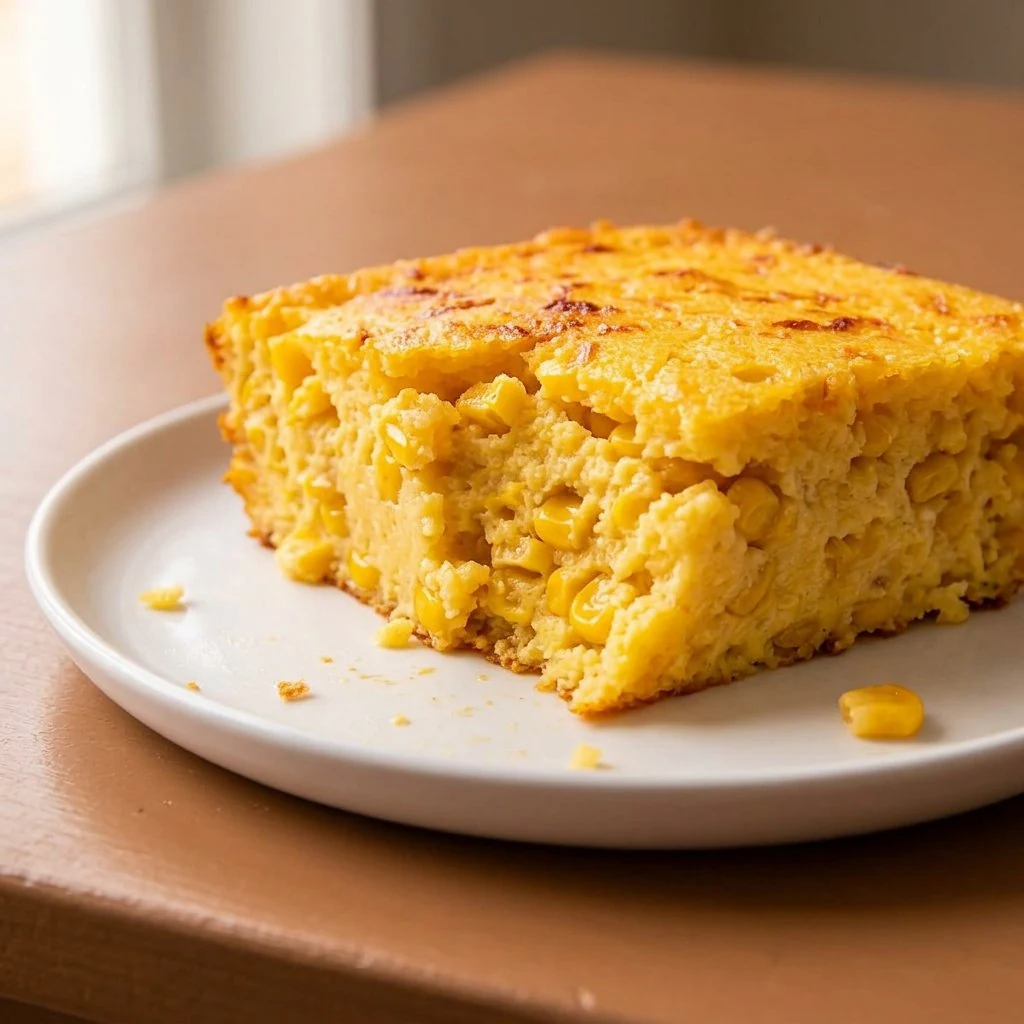
Your sour cream keeps the center moist for days, and the quarter cup of sugar leans this dish gently toward the sweet side where corn pudding belongs. If your crowd prefers savory, cut the sugar to a tablespoon and add a shredded cup of cheddar to the batter, which is a direction nobody has ever complained about.
Equipment You’ll Need
You need a 9×9 baking dish, one large mixing bowl, a whisk, a spatula, and a can opener. Measuring cups round out the lineup, and that is genuinely the whole equipment list for a dish this popular, which feels like a clerical error but is not.
A glass or ceramic dish bakes evenly and shows off the golden edges, and a buttered dish releases the pudding cleanly. If you double the recipe, move to a 9×13 and add five to ten minutes, because depth, not volume, is what controls your bake time.
How to Make Corn Pudding Casserole
Step One: Preheat and Grease
Preheat your oven to 350F and grease a 9×9 baking dish. Butter gives the edges the crisp golden crust people quietly cut for themselves, so be generous with the greasing, especially in the corners where the best pieces hide.
Step Two: Eggs, Sour Cream, Butter
Whisk the eggs in a large bowl, then add the sour cream and butter. Whisking the eggs alone first means they incorporate fully instead of streaking through the batter, and your base should look smooth, pale, and glossy before the corn arrives.
Step Three: The Corn Lineup
Add both cans of corn, the cornmeal, sugar, salt, and baking powder. The baking powder is the lift that keeps the center from turning dense, and the drained kernel corn keeps its texture while the cream style corn melts into everything around it.
Step Four: Stir It Together
Stir until well combined, scraping the bottom of the bowl so no dry pocket of cornmeal survives. The batter will be loose and pourable, which is correct; corn pudding sets in the oven, not in the bowl, so resist any urge to thicken it now.
Step Five: Into the Dish
Pour the batter into your prepared dish and level it with the spatula. Give the dish a gentle tap on the counter to release air pockets, and slide it into the oven before you lose any more batter to the spatula taste test, which is traditional and forgivable.
Step Six: Bake and Rest
Bake 45 to 55 minutes until golden and set in the center, then let it cool 10 minutes before serving. The center should barely wobble when you nudge the dish, and the rest is what turns molten corn into sliceable squares; your patience is a structural ingredient.
Serving Size & Batch Scaling
A 9×9 dish serves six to eight as a holiday side, and corn pudding has a documented history of disappearing faster than the turkey. For a full table with many sides, eight servings; next to just ham and greens, plan on six and a quiet second batch request.
Doubling into a 9×13 takes the same oven and roughly ten extra minutes. Two 9×9 dishes on separate racks work even better for potlucks, because one can stay covered and hot while the first disappears at record speed.
Serve it right from the dish it baked in for maximum potluck drama, or transfer squares to a platter if your table prefers formal. Either way, keep a spoon nearby, because the corner pieces have a way of vanishing before you even call everyone in.
Making More or Less?
For a smaller household, halve the recipe into a loaf pan or small dish and start checking at 35 minutes; shallower puddings bake faster. Your weeknight gets the full holiday energy at half the dish count.
If your family wants it again two days later, make the double batch anyway and refrigerate half the batter in the dish, unbaked, for up to a day. Fresh baked round two beats reheated round one by a mile, and the effort difference is one stir.
Nutrition Estimate Per Serving
- Calories: about 330 per serving
- Protein: 8 g
- Carbohydrates: 33 g
- Fat: 20 g
- Fiber: 3 g
- Sugar: 9 g
- Sodium: about 560 mg
The following is an estimated nutritional breakdown based on standard ingredient data, so treat these numbers as friendly context rather than lab certified truth. Corn brings real fiber to the party, and the sour cream and butter bring the reason everyone asks for the recipe.
Common Mistakes to Avoid
The classic mistake is underbaking, because a jiggly center turns to soup on the serving spoon; you want the wobble of set custard, not the slosh of batter. The second is skipping the rest after the bake, which is the ten minutes that turn a delicious puddle into slices you can actually plate.
Do not forget to drain the whole kernel corn, because that can liquid thins the batter and pushes your bake time into the next county. And do not overbake chasing a firm center; corn pudding is meant to be tender and spoon soft, with just enough set to hold its golden top.
Finally, do not use creamed corn and cream style corn interchangeably without checking the can; cream style is the coarse puree with the corn in it, and it is doing the custard work here while the kernels do the texture work.
Troubleshooting Guide
If your pudding is golden on top but loose in the middle, cover it loosely with foil and give it ten more minutes; the top stops darkening and the center catches up. If the edges set long before the middle, your dish was deeper than planned, and lower oven heat with a longer bake is the fix.
If your pudding tastes flat, it needs the full teaspoon of salt; corn and cornmeal are shy without it. If it seems dense rather than tender custard, your baking powder may be old; test it in warm water, and if it does not fizz, it has been decorating your shelf, not leavening.
If the top browned too fast, foil over the dish for the remainder of the bake. A deep golden top is the goal, and ten minutes of foil supervision is usually all that separates perfect from slightly ambitious.
Variations & Customizations
Stir in a cup of shredded cheddar and a diced jalapeno for a savory, Tex-Mex leaning pudding, or add a pinch of nutmeg and a tablespoon of honey to lean it sweeter and more old fashioned. Cooked, crumbled bacon folded into the batter turns the side into the dish people circle back for.
For a lighter version, swap the sour cream for Greek yogurt and cut the butter to a quarter cup; the custard stays tender from the eggs and corn, and the golden top still arrives right on schedule. A handful of chopped chives on top is the color upgrade that costs nothing.
What to Serve With It
Corn pudding is a holiday table fixture beside turkey, ham, and green bean everything, and it brings sweet comfort to a plate of street corn chicken rice bowl flavors when corn is the theme of the night. It also settles in happily next to Mississippi pot roast, where the gravy and the sweetness trade bites like old friends.
Leftover squares, pan fried in a little butter until caramelized on both sides, are a side dish promotion nobody sees coming and everybody requests again.
Meal Prep & Make-Ahead Instructions
You can mix the batter, pour it into the greased dish, cover, and refrigerate up to a day ahead; bake it cold at 350F for about 60 minutes. The baking powder loses a little lift overnight, but the custard character, which is the real personality here, carries on undisturbed.
The fully baked casserole also reheats beautifully, which makes it a double duty make ahead dish: bake it the day before, refrigerate, and rewarm covered at 325F for about 20 minutes before serving. Your holiday oven traffic just got one vehicle shorter.
Storage & Leftovers
Covered leftovers keep in your fridge for up to four days, and the pudding firms as it chills into clean cutting squares. Those squares, reheated or pan fried, are the portion veterans of this dish quietly aim for.
Freezing works for up to two months; wrap portions well, thaw overnight, and reheat covered. The texture softens slightly after a freeze, and a few minutes uncovered in a hot oven brings the edges back to their golden duties.
Leftover squares also freeze well individually on a tray before bagging, which means your future self can pull single portions instead of committing to a whole casserole on a Tuesday. Reheat them from frozen in a 350F oven for about 25 minutes, and a few minutes uncovered at the end brings the edges back to their golden best. Your holiday side just became a freezer asset with a reputation.
Reheating Instructions
Your oven at 325F, covered with foil, reheats the dish in about 20 minutes; squares take 12 to 15. The microwave handles a portion in about a minute, best for lunch plates where speed outranks crust.
For the deluxe revival, pan fry reheated squares in butter until both sides crisp and caramelized. A fresh crack of pepper and a tiny pinch of salt, and your day three corn pudding eats like it was the plan all along.
Frequently Asked Questions
Can this be made ahead? Yes, two ways: refrigerate the unbaked batter for up to a day and bake it cold with extra minutes, or bake it fully the day before and reheat covered. Both routes land a golden dish on your table with almost no day of effort.
Why is my corn pudding runny? A runny center means an underbake, a too deep dish, or undrained kernel corn. Bake until the center wobbles like set custard rather than sloshes, and give it the full rest; those two habits solve almost every runny case.
Can you use fresh corn instead of canned? You can; cut kernels from about four ears and add a splash of milk to stand in for the cream style corn. The flavor is brighter and more seasonal, and your bake time stays the same.
Is corn pudding the same as corn casserole? The names get used interchangeably, and both describe this tender baked corn dish; pudding leans sweeter and more custardy, casserole leans breadier. This recipe sits right on the delicious border between the two.