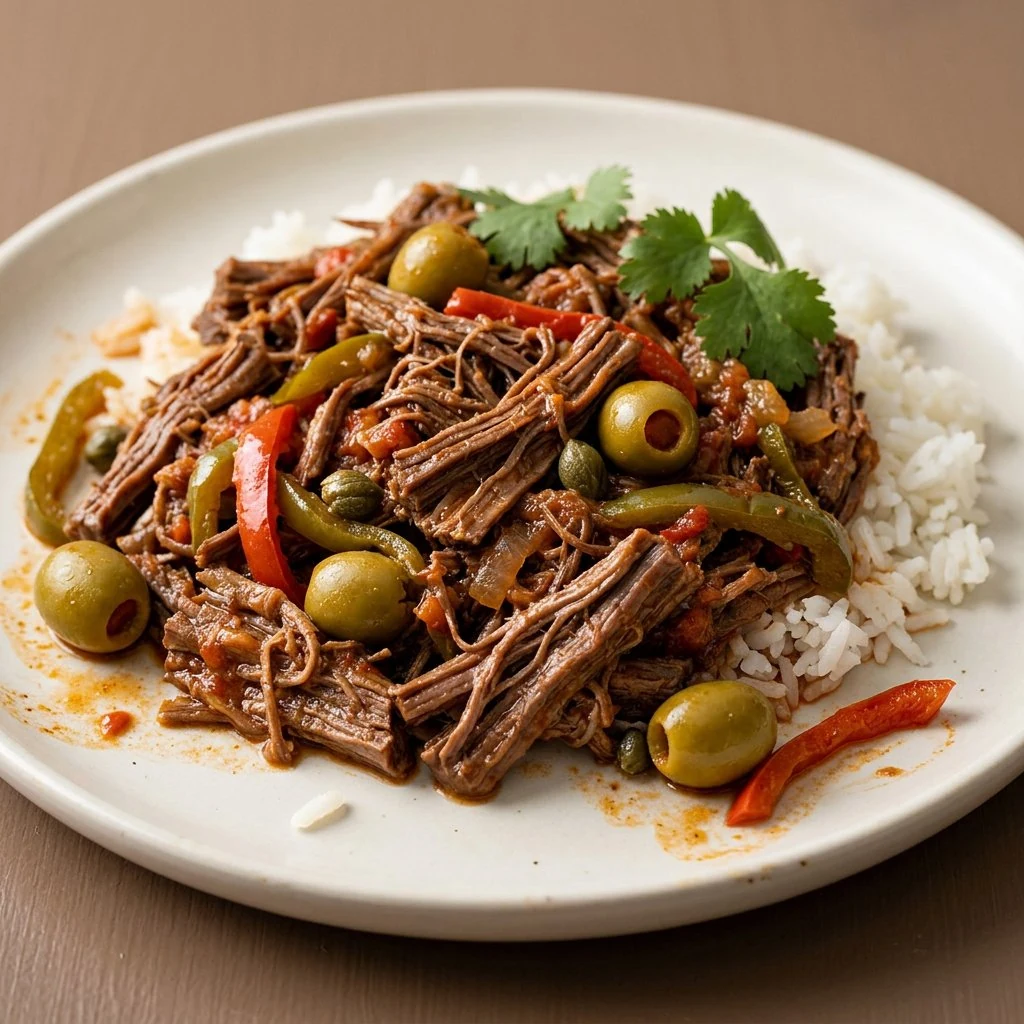
Ropa vieja is Cuba’s national treasure: flank steak slowly braised in a sofrito-tomato sauce until it shreds into tender “old rags,” tangled with sweet bell peppers, briny olives, and a sauce worth drinking. Served over white rice, it is the kind of plate that makes a Tuesday feel like a holiday in Havana.
This Cuban classic is easier than its restaurant pedigree suggests. One Dutch oven, a patient simmer, and a handful of pantry staples stand between you and the most flavorful shredded beef of your week.
It is ideal for family dinners, meal prep Sunday, and anyone who loves beef with a little drama in its backstory. One pot, six servings, and leftovers that genuinely improve overnight.
Recipe at a Glance
- Prep time: 20 minutes
- Cook time: 3 hours 15 minutes
- Total time: about 3.5 hours (mostly hands-off)
- Servings: 6
- Difficulty: Easy
- Method: Stovetop braise, shredded and sauced
Ingredients You’ll Need
- 2 pounds flank steak (or chuck roast)
- 1 teaspoon salt, plus more to taste
- 1/2 teaspoon black pepper
- 3 tablespoons olive oil, divided
- 1 large yellow onion, thinly sliced
- 1 green bell pepper, cut into strips
- 1 red bell pepper, cut into strips
- 5 garlic cloves, minced
- 2 teaspoons ground cumin
- 1 teaspoon dried oregano
- 1 tablespoon tomato paste
- 14 ounce can crushed tomatoes
- 1/2 cup dry white wine (or beef broth)
- 1.5 cups beef broth
- 2 bay leaves
- 1/3 cup pimiento-stuffed green olives, sliced
- 1 tablespoon drained capers (optional but wonderful)
- Chopped fresh parsley or cilantro, to finish
Ingredient Notes & Easy Substitutions
Flank steak: The traditional cut, with long fibers that shred into authentic “old rag” strands. Chuck roast is the budget-friendly understudy and shreds even more readily; brisket works beautifully too.
The bell peppers: Green and red together are the Cuban signature, green for grassy bite and red for sweetness. They melt into the sauce over the long simmer, which is exactly the point. This is a peppers-forward dish, so do not trim the quantity.

Sofrito base: Onion, garlic, and peppers cooked slowly in olive oil before the tomatoes land. This aromatic start is the flavor engine of every good ropa vieja, so give it the full few minutes it asks for.
Olives and capers: The briny accents that make Cuban shredded beef taste Cuban rather than Italian. Pimiento-stuffed olives are the classic; skip the capers if your pantry objects, but try them once.
White wine: A dry pour deglazes the fond and lifts the browned bits into the sauce. Extra beef broth substitutes cleanly on a no-wine day.
Equipment You’ll Need
- Large Dutch oven with lid
- Two forks for shredding
- Wooden spoon
- Sharp knife and cutting board
How to Make Cuban Ropa Vieja
Sear, sofrito, simmer, shred, and tangle the beef back into its sauce. Long cook, short effort list. Follow with me.
Step One: Season and Sear the Steak
Pat the flank steak dry, season both sides with salt and pepper, and sear in a tablespoon of hot oil in the Dutch oven for 2 to 3 minutes per side until deeply browned. Move it to a plate.
You are looking for a dark crust, not cooked-through meat. The sear deposits flavor into the pot that the sauce will spend three hours collecting back up.
Step Two: Build the Sofrito
Add the remaining oil, then the onion and both peppers. Cook over medium heat for 8 minutes until softened and sweetly browned at the edges, then stir in the garlic, cumin, and oregano for one fragrant minute.
You are looking for slumped, glossy vegetables and a kitchen that suddenly smells like a Cuban kitchen. Scrape up the seared bits from the steak while you stir; they belong in the sauce.
Step Three: Deglaze and Add Tomatoes
Stir in the tomato paste and cook it for a minute, then pour in the wine, letting it bubble and lift everything stuck to the pot. Add the crushed tomatoes, broth, and bay leaves, and stir into a uniform red sauce.
You are looking for a thick, rust-red sauce with the wine’s sharpness already mellowing. Let it come to a steady bubble before the steak goes back in.
Step Four: Braise Until Fork-Tender
Return the steak and any resting juices to the pot, cover, and reduce the heat to the lowest steady simmer for 2.5 to 3 hours, turning the steak halfway. Check at 2.5 hours; the steak should pull apart with gentle fork pressure.
You are looking for meat that yields without a fight, never a boil. Flank can hold out stubbornly for a while and then give all at once, so patience is the only technique that matters here.
Step Five: Shred Into Rags
Lift the steak to a cutting board and shred it with two forks, pulling with the grain into long, ragged strands. This is literally the “old clothes” the dish is named for.
You are looking for irregular, juicy ribbons rather than fine crumbs. Rustic texture is the soul of ropa vieja, so keep it scruffy on purpose.
Step Six: Marry Beef and Sauce
Return the shredded beef to the pot, stir in the olives and capers, and simmer uncovered for 10 minutes so the beef drinks the sauce and the whole pot thickens slightly. Fish out the bay leaves and finish with parsley.
You are looking for glistening, brick-red shreds in a sauce that coats a spoon. Taste for salt one final time, then serve over rice while the pot is still steaming.
Serving Size & Batch Scaling
Two pounds of flank steak feeds 6 over rice, generously sauced. Ropa vieja is one of those rare dishes that improves overnight, so a bigger pot on Sunday quietly covers Monday’s lunch and Tuesday’s dinner.
The braise scales up easily in a larger Dutch oven; allow an extra half hour of simmering for every additional pound of meat.
Making More or Less?
- 3 servings: One pound of steak with two-thirds of the sauce. Same simmer window; check tenderness at 2.5 hours.
- 6 servings: The recipe as written.
- 10 servings: Three pounds of steak, one and a half times the sauce, in a bigger pot. Plan on about 3.5 hours before it shreds willingly.
For any batch: sear honestly, sofrito patiently, simmer low, and let the beef tell you when it is ready. The clock is a suggestion; the fork is the truth.
Nutrition Estimate Per Serving
The following is an estimated nutritional breakdown per serving (1 of 6, beef and sauce only, over-nothing), calculated from the ingredients in this recipe. It is an estimate, not medically precise information.
- Calories: ~320
- Protein: 36g
- Carbohydrates: 11g
- Fat: 15g
- Fiber: 2g
- Sugar: 6g
- Sodium: ~760mg
Useful highlight: a high-protein main at roughly 36 grams of protein per serving, naturally gluten-free, and lighter than most braises since flank steak is one of the leanest beef cuts going.
Common Mistakes to Avoid
Shredding against the grain into dust. Pull along the grain for long rag-like strands; the texture is the dish’s namesake and its charm.
Boiling the braise. High heat tightens flank steak into squeaky bands. The lowest steady simmer wins, always.
Skipping the olives. They are not garnish; they are the briny spine of Cuban flavor. Even a modest handful changes everything.
Serving it dry. Ropa vieja is saucy by definition. If the pot reduced too far, loosen it with a splash of broth before it hits the rice.

Troubleshooting Guide
The steak resists shredding at 3 hours. Now what? Cover it, keep it at a murmur, and test every 20 minutes. Flank’s collagen gives up suddenly after pretending otherwise for hours.
The sauce is too thin. Can I fix it? Simmer uncovered for 10 to 15 minutes to reduce, or mash a few pepper strips against the pot wall to thicken it naturally.
It tastes a little flat. How can I improve it? Usually it wants acid or brine: a splash of the olive brine or lime juice wakes the whole pot. Then re-salt with a light hand.
Does this work in a slow cooker? Yes. Sear and build the sauce as written, then cook on low for 8 hours. Shred, return to the sauce, and finish exactly the same.
Variations & Customizations
Ropa vieja tacos: Pile the saucy beef into warm tortillas with avocado and queso fresco. Cuban-Mexican fusion that disappears instantly.
Ropa vieja bowls: Serve over rice with black beans and fried sweet plantains for the full Cuban plate. Sweet, savory, briny, complete.
Spicy version: Add a minced jalapeño with the garlic or a pinch of red pepper flakes with the cumin. Havana heat, your rules.
Mexican shredded beef night: When the craving runs toward chiles instead of sofrito, my carne guisada and beef birria are the family’s Tex-Mex cousins.
The sofrito-and-olives structure here follows the classic Cuban method at Food Fidelity, and the mojo-kissed version at La Piña en la Cocina is a beautiful next step once you own the base recipe.
What to Serve With It
The Cuban classic: White rice, black beans, and sweet plantains. Three sides, zero arguments.
Simplest plate: Steamed rice and a squeeze of lime. The sauce is so complete it needs almost nothing.
Bread option: Crusty Cuban bread for dragging through the sauce when rice is not in the mood. No judgment at this table.
A fresh counterpoint: Sliced avocado with lime and flaky salt cools the plate and adds a creamy note against the briny sauce.
Meal Prep & Make-Ahead Instructions
Can this be made ahead? Ropa vieja is a meal-prep legend precisely because day two is better: the shreds marinate in the sauce overnight and turn almost confit-like. Make the full pot up to two days early, then reheat gently and serve like you spent all afternoon.
The beef can also be braised a day ahead and shredded cold, which is honestly easier than shredding warm. Reunite beef and sauce during the reheat and no one will ever know the timeline.
Storage & Leftovers
Refrigeration: Airtight for up to 4 days, beef and sauce together. The sauce gels slightly when cold and loosens beautifully with heat.
Freezing: Freeze up to 3 months in bags or containers, sauce included. Thaw overnight and reheat gently; the dish bounces back completely.
Leftover ideas: Ropa vieja empanadas, quesadillas, Cuban-style sloppy joes on toasted rolls, or stirred into scrambled eggs. The pot outworks most leftovers in the fridge.
Reheating Instructions
Stovetop (best method): Medium-low heat with a splash of broth, covered, for 8 to 10 minutes with one gentle stir. The shreds steam loose and glossy again.
Microwave (single serving): Covered, 90 seconds, stirred halfway and rested for a minute. Sauce hides heat pockets, so give it that rest.
Slow cooker (for gatherings): Warm setting, stirred loosely, holding happily for hours while people serve themselves over rice.
Keep a little broth or water nearby at reheat time; the sauce thickens overnight and a splash restores its silky spoon-coating glory.
Frequently Asked Questions
Why is it called ropa vieja? The name means “old clothes,” a nod to the ragged shredded beef tangled in sauce. The origin story involves a peasant who shredded and cooked his own clothes, and the meal turned into meat and beans. Every culture deserves a legend like that.
Can I use chuck roast instead of flank steak? Yes, and it shreds even more easily with a richer, fattier result. Flank gives the classic long-strand texture; chuck gives tenderness. Both are correct answers.
Do I have to use wine? No; an equal splash of beef broth with a teaspoon of lime juice covers the deglazing duties. The wine adds a little backbone, not a mandatory one.
How do I know when flank steak is done braising? Grab a fork and twist. If long strands pull away with gentle pressure, it is ready; if the meat fights back, give it another half hour and keep the pot at a murmur.
And that is the whole pot: seared flank, a sofrito with real patience, briny olives, and beef that shreds into its own legend. Serve it over rice, tangle it into tomorrow’s empanadas, and let the national dish of Cuba earn its title at your table. Buen provecho.