
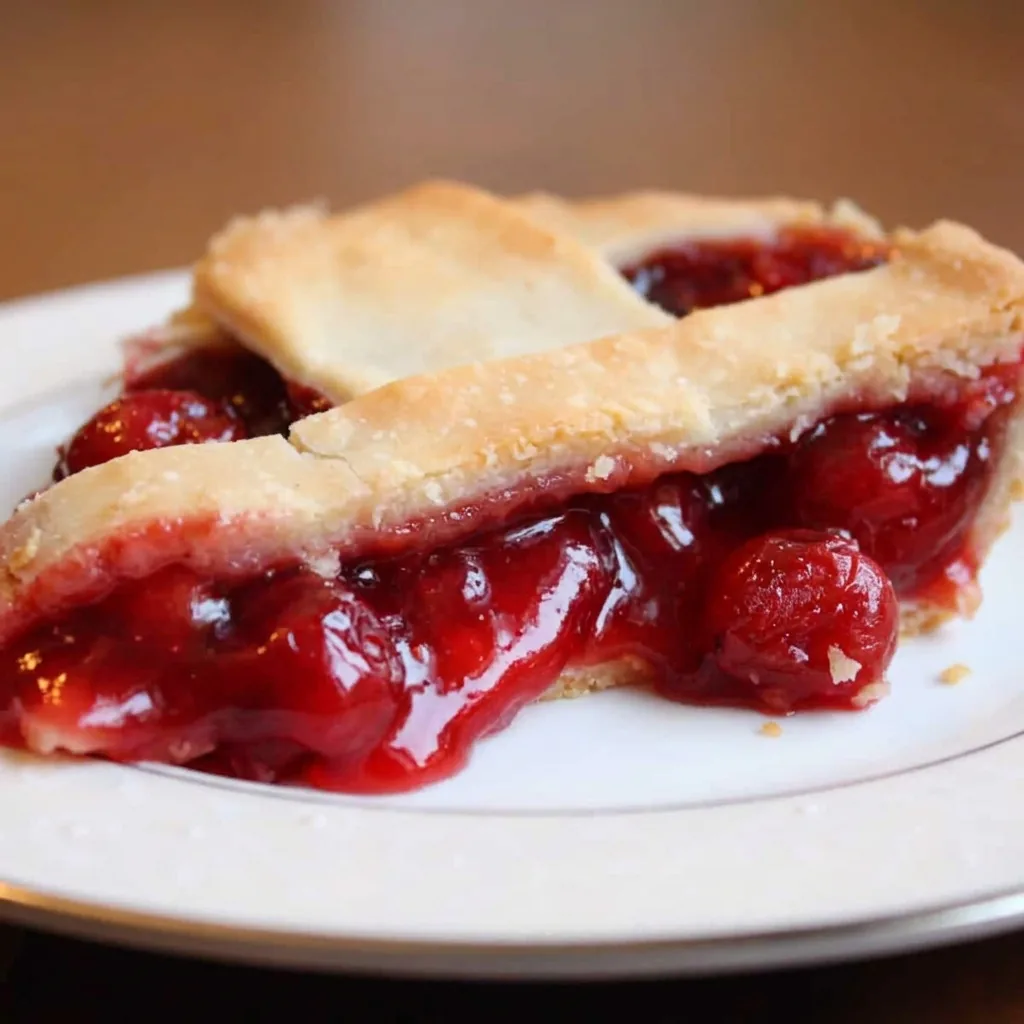
Cherry pie with a lattice crust is the bake that makes people stop in the doorway: ruby filling bubbling up through woven strips of golden, buttery pastry, with coarse sugar catching the light on top.
It looks like it took all day, and the secret is that the lattice is mostly patience and a little geometry.
This version uses refrigerated pie crusts, a five-minute cherry filling brightened with almond extract, and a fold-back weaving method that keeps every strip exactly where you put it.
It is ideal for summer cherry season, holidays, and anyone who wants the applause of a showstopper without rolling a single crust from scratch. Serve it warm with vanilla ice cream and accept the applause gracefully.
Recipe at a Glance
- Prep time: 30 minutes
- Bake time: 45 to 50 minutes
- Cooling time: at least 2 hours
- Total time: about 3 hours 30 minutes
- Servings: 8
- Difficulty: Moderate (the lattice, and only the lattice)
- Method: Double-crust pie with woven lattice top, oven-baked
Ingredients You’ll Need
- 1 package refrigerated pie crusts (2 crusts)
- 5 cups pitted cherries, fresh or frozen
- 1 cup sugar
- 1/4 cup cornstarch
- 1 tbsp lemon juice
- 1/2 tsp almond extract
- 1 egg, beaten
- 1 tbsp coarse sugar for sprinkling
Ingredient Notes & Easy Substitutions
Cherries: Fresh sweet cherries in season are glorious, and frozen cherries work straight from the freezer with a few extra minutes of bake time. Sour cherries make a classic pie; bump the sugar to a cup and a quarter if you go that route.
Cornstarch: The quarter cup thickens all that cherry juice into a filling that slices instead of flooding. Tapioca substitutes at the same amount with a glossier finish; flour needs a tablespoon and a half more and stays cloudy.
Almond extract: The half teaspoon is the professional’s trick: cherries and almonds are botanical cousins, and the extract makes the fruit taste twice as much like itself. More is not better here; it is a loud flavor.
Refrigerated crusts: Two crusts, softened per the box, and nobody in your dining room will file a complaint. If you are a from-scratch loyalist, your favorite double-crust recipe fits the same 9 inch pan.
Coarse sugar: Sparkle, crunch, and bakery-window looks on the lattice. Regular sugar works, but coarse sugar is what makes people ask where you bought the pie, which is the finest insult available.
Equipment You’ll Need
- 9 inch pie plate
- Pizza cutter or sharp knife for strips
- Cherry pitter (or patience and a bobby pin)
- Large mixing bowl
- Pastry brush
- Baking sheet to catch drips
- Sharp knife and serving spatula
How to Make Cherry Pie with Lattice Crust
Fruit filling, bottom crust, and a woven top that is far easier than it looks. The fold-back method does the geometry for you. Follow with me.
Step One: Prep the Oven and Filling
Preheat the oven to 375°F. Stir the cherries together with the sugar, cornstarch, lemon juice, and almond extract until every cherry is coated.
You are looking for cherries glistening in a thick red slurry with no dry cornstarch hiding anywhere. Let the bowl sit five minutes; the sugar starts pulling juice and the filling thickens in the oven more evenly.
Step Two: Line the Pie Plate
Fit one crust into the 9 inch pie plate, pour in the cherry filling, and dot the top with a few small bits of butter if you like.
You are looking for an even filling mounded gently in the center, with the bottom crust’s edge hanging slightly over the rim for crimping later. The center mound settles as it bakes; heap it a little.
Step Three: Cut the Lattice Strips
Roll out the second crust and cut it into 10 to 12 strips, about one inch wide, using a pizza cutter or sharp knife.
You are looking for strips of even width; a chilled strip is an obedient strip, so pop them in the freezer for 10 minutes if the dough feels soft. Uneven strips still make a beautiful rustic lattice, so do not stress the ruler.
Step Four: Weave the Lattice
Lay half the strips in one direction across the pie, fold every other one back, lay a strip across the center, unfold the folded strips over it, then alternate:
fold back the strips that are lying flat, add the next crosswise strip, unfold, repeat until the top is woven.
You are looking for an even basket weave with the strips lying flat, not stretched. The fold-back rhythm means you never have to lift a long strip over the whole pie; the dough stays cool and the weave stays neat.
Step Five: Trim, Crimp, and Finish
Trim the strip ends and the bottom crust edge level with the rim, tuck them under, and crimp the border. Brush the whole top with beaten egg and sprinkle with coarse sugar.
You are looking for a sealed, crimped edge holding all the strips captive and a lattice that gleams with egg wash.
The egg wash is what turns pale dough into deep golden pastry; the coarse sugar is what turns golden pastry into a centerpiece.
Step Six: Bake Until Golden and Bubbly
Bake at 375°F for 45 to 50 minutes, until the crust is deep golden and the filling bubbles thickly through the lattice openings.
You are looking for slow, syrupy bubbles, not a rolling boil; those bubbles confirm the cornstarch has fully activated and the pie will slice instead of pour. Shield the crust edges with foil strips if they brown ahead of schedule.
Step Seven: Cool Before Slicing
Cool the pie on a rack for at least 2 hours before cutting; the filling sets as it cools.
You are looking for a filling that holds the slice shape when you cut. Warm pie is delicious soup and clean pie is a two-hour wait; plan the bake so the wait lands before dinner, not during dessert.
Serving Size & Batch Scaling
One 9 inch pie serves 8 in proper slices, or 6 on generous days. The recipe doubles trivially if you have two pie plates and one oven rack situation; bake both on the same rack and rotate them halfway through.
Pie bakes are the one dessert where the second unit costs almost nothing extra, since the oven is already hot and the filling bowls are already out. Cherry season argues for the double bake every single year.
Making More or Less?
- 4 servings: Half the filling in a 6 inch pie plate with one crust cut smaller; bake 40 minutes.
- 8 servings: The recipe as written.
- 16 servings: Two pies, same shelf, rotated at the 25-minute mark. Weave one lattice while the first pie bakes and the workflow doubles neatly.
For any batch: coat the fruit evenly, keep the strips chilled until the moment they are placed, and wait for the bubbles. The lattice rewards calm hands above all else.
Nutrition Estimate Per Serving
The following is an estimated nutritional breakdown per slice (1 of 8), calculated from the ingredients in this recipe. It is an estimate, not medically precise information.
- Calories: ~390
- Protein: 4g
- Carbohydrates: 63g
- Fat: 14g
- Fiber: 2g
- Sugar: 39g
- Sodium: ~230mg
Useful highlight: cherries bring antioxidants and real fiber to the pan, and the lattice top uses dough you already counted, so portions stay predictable.

Common Mistakes to Avoid
Cutting into a hot pie. Two hours of cooling is the recipe. Patience is an ingredient here even though the ingredient list does not say so.
Skipping the egg wash. An unwashed lattice bakes pale and dry-looking. One beaten egg is the difference between pale pastry and deep golden pastry, and there is no substitute worth using.
Stretching the strips. Stretched dough shrinks in the oven and drags the weave apart. Lay the strips gently and let them rest where they fall.
Underbaking past golden. A pale crust over raw-tasting filling happens when the pie comes out at the first hint of color. Deep golden, thick bubbles: those are the finish lines.
Troubleshooting Guide
My filling is runny. What happened? Underbaking or under-measured cornstarch. Next time bake until the bubbles are unmistakably thick; with frozen cherries, add an extra 10 to 15 minutes.
The bottom crust is pale and soggy. Now what? Bake the pie on the lower oven rack or a preheated baking sheet; the direct heat crisps the base properly.
The lattice strips slid while weaving. Why? Warm, soft dough. Chill the strips 10 minutes before weaving and handle each one by its ends as little as possible.
The edge browned too fast. Can I fix it? Yes; wrap the rim in foil strips mid-bake. Professional bakers do this without shame, and so should you.
Variations & Customizations
Cherry almond version: Add a quarter cup of sliced almonds to the coarse sugar sprinkle. The nuts toast on the lattice and double down on the almond extract.
Mixed berry version: Swap a cup and a half of the cherries for blueberries or raspberries. The filling turns purple-black and dramatic.
Full-coverage version: Skip the weave and lay the whole second crust over the top with slits cut for steam. Same pie, faster romance.
More cherry baking: My sweet cherry almond cake uses the same flavor pairing in tender cake form, and my strawberry cheesecake dump cake is the five-minute wonder for busy summer tables.
The fold-back weaving method here follows the clear tutorial at Sugar Spun Run, and the filling ratios at Sally’s Baking Addiction back up the cornstarch and almond extract choices.
What to Serve With It
The classic: Vanilla ice cream on a just-warmed slice. Hot cherry filling and cold cream have been partners for a century and will not be separated now.
The traditionalist: A pour of cold heavy cream over the wedge. Old-school, underrated, and honestly wonderful.
For the cheese board crowd: A thin slice alongside sharp cheddar. Fruit pie and cheddar is a historic pairing that deserves its revival.
With morning coffee: Breakfast cherry pie is a vacation behavior, and vacations deserve support.
Meal Prep & Make-Ahead Instructions
Can this be made ahead? The filling can be stirred and refrigerated overnight, which actually improves it as the juices macerate.
The assembled, unbaked pie can also be frozen solid, wrapped well, and baked straight from frozen at 375°F for about an hour.
Baked pie holds at room temperature for a day and refrigerated for several more, which makes it a stress-free holiday centerpiece. Bake it the morning before company; the kitchen will smell like a bakery and dinner will feel handled.
Storage & Leftovers
Room temperature: Loosely covered, the pie keeps overnight. The crust stays reasonably crisp within that window.
Refrigeration: Covered, up to 4 days. The crust softens gradually in the fridge, so serve slices at room temperature or briefly warmed.
Freezing: Freeze baked slices or the whole cooled pie, wrapped tightly, up to 3 months. Thaw overnight in the refrigerator and refresh in a warm oven.
Reheating Instructions
Oven (best method): 300°F for 10 to 15 minutes re-crisps the crust and warms the filling to bakery-window glory.
Microwave (single slice): 30 seconds warms a slice well; the crust surrenders some crispness but the flavor never suffers.
Cold from the fridge: Fruit pie eaten cold over the sink at midnight is a tradition older than this recipe. No judgment issued here.
However you serve it, add the ice cream after warming, and wipe the knife between slices so each wedge shows off those woven strips.
Frequently Asked Questions
Can I use frozen cherries? Yes, straight from the freezer with no thawing, plus an extra 10 to 15 minutes of bake time. Thawing first waters down the filling and muddies the thickening math.
How do I keep the lattice from sinking into the filling? Keep the strips chilled and lay them gently without stretching. Warm, stretched strips sink and shrink; cold, relaxed strips hold their weave.
Do I need to vent a lattice pie? The weave vents itself beautifully; every opening is a steam hole. That is part of why lattice tops exist beyond the good looks.
Why did my pie bubble over in the oven? Overfilled pan or a filling with too much juice. The baking sheet underneath catches the overflow either way; line it and relax.