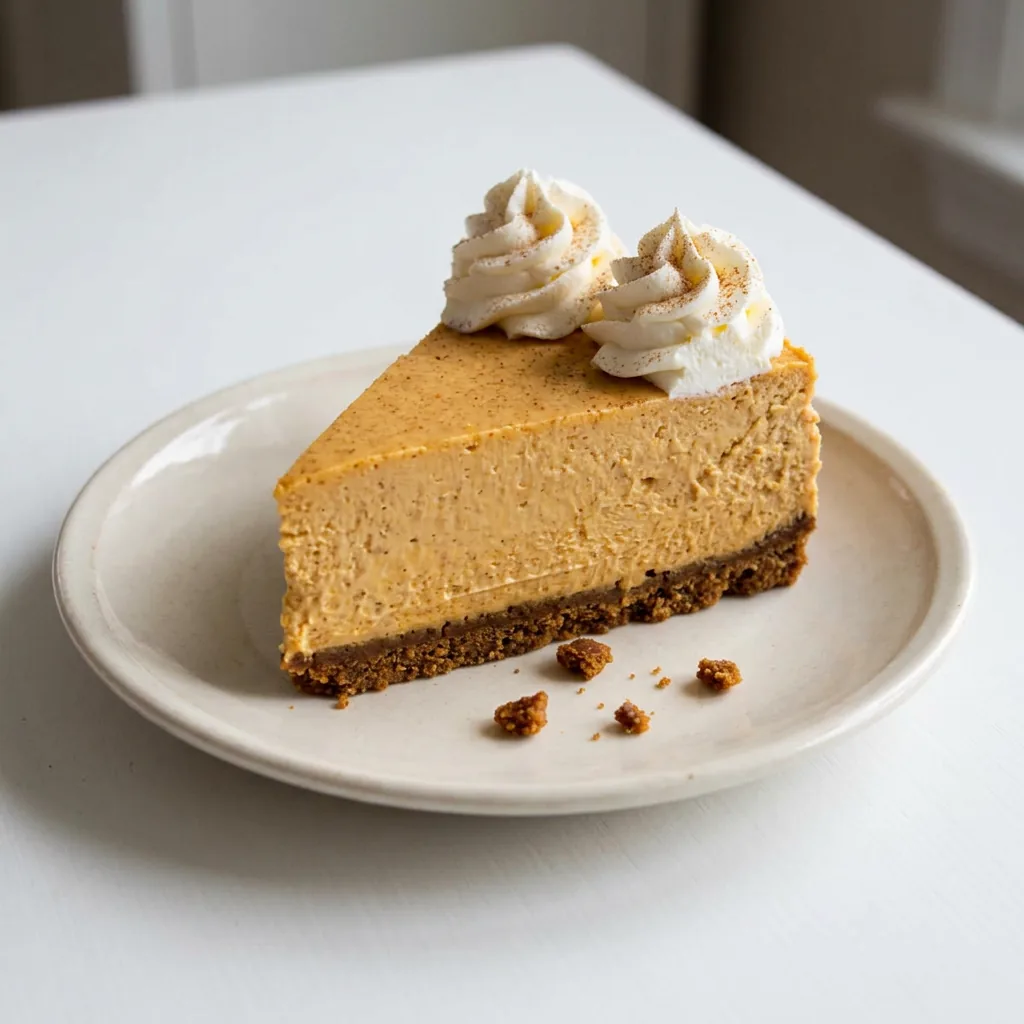
Pumpkin cheesecake with a gingersnap crust is the dessert that owns the holiday table before anyone lifts a knife: silky spiced pumpkin filling baked tall in a ten-inch springform, buttery crust underneath,
and a crown of sweetened whipped cream and toasted pecans on top. Two full pounds of cream cheese go in, so every slice is dense, rich, and unapologetically cheesecake.
The method is long, gentle, and wonderfully forgiving: a slow bake plus an hour of resting in the switched-off oven keeps the top smooth and crack free.
It is ideal for Thanksgiving, Christmas dinners, and anyone who believes pumpkin pie is merely the warm up act. Chill it overnight and the slices cut like they were ordered from a bakery.
Recipe at a Glance
- Prep time: 25 minutes
- Bake time: 2 hours 45 minutes, plus 1 hour resting in the oven
- Chill time: at least 4 hours
- Total time: about 8 hours (mostly hands off)
- Servings: 14 to 16 slices
- Difficulty: Moderate (easy steps, long bake)
- Method: Baked cheesecake in a springform pan

Ingredients You’ll Need
- 2 lbs cream cheese softened
- 2 3/4 cups sugar
- 1 (15 oz) can pumpkin puree
- 6 large eggs
- 2 1/2 tsp cinnamon
- 1/4 tsp ground cloves
- 1 tsp salt
- 1 tsp vanilla extract
- 1/4 cup sour cream
- 2 1/2 cups graham cracker crumbs
- 12 tbsp unsalted butter melted
- 2 cups sweetened whipped cream
- 1/3 cup toasted pecans
Ingredient Notes & Easy Substitutions
Cream cheese: Two full pounds, softened completely, and always the brick style rather than the spreadable tub. This is a tall, dense cheesecake and the cream cheese is the entire architecture; cold lumps will haunt every slice, so let it sit out until it dents easily under a finger.
Pumpkin puree: Plain canned pumpkin, never pumpkin pie filling, which brings its own sugar and spices and throws the balance off. Pat the measured puree with a paper towel if it looks watery; drier pumpkin means a firmer, silkier set.
- This is the same puree rule that makes my pumpkin bread with chocolate chips moist instead of soggy.
Cinnamon and cloves: Two and a half teaspoons of cinnamon lead the spice chorus and the quarter teaspoon of cloves hums underneath it. Cloves are powerful, so resist adding more; this ratio tastes like the holidays without tasting like potpourri.
The crust: The list uses 2 1/2 cups of graham cracker crumbs with 12 tablespoons of melted butter, pressed into a ten-inch springform.
For the true gingersnap experience the name promises, substitute gingersnap cookie crumbs in the same amount; the butter measurement stays identical and the spice level climbs beautifully.
Sour cream: A quarter cup loosens the filling just enough for a creamy, tangy finish. Room temperature, always; cold sour cream can seize the batter into lumps.
Equipment You’ll Need
- 10-inch springform pan
- Stand mixer or hand mixer and a large bowl
- Medium bowl for the crust
- Silicone spatula
- Measuring cups and spoons
- Wire cooling rack
- Sharp knife for clean slices
How to Make Pumpkin Cheesecake with a Gingersnap Crust
Crust, batter, a long bake, and an even longer wait. Nothing here is difficult; the recipe mostly asks for patience and room temperature ingredients. Follow with me.
Step One: Prep the Oven and Crust
Preheat the oven to 350°F. Combine the graham cracker crumbs with the melted butter and press the mixture firmly into the bottom of a 10-inch springform pan.
You are looking for an even, compact crust with no crumbly corners; press hard with the flat bottom of a measuring cup. A firm crust anchors the whole cheesecake and slices cleanly instead of scattering.
Step Two: Beat the Base
Beat the softened cream cheese until completely smooth, then add the sugar and pumpkin puree and mix well.
You are looking for a thick, glossy, brick orange batter with zero lumps. Stop and scrape the bowl and beater twice; hidden pockets of cream cheese are the number one enemy of a silky slice.
Step Three: Eggs and Spices
Add the eggs one at a time, mixing after each, then add the cinnamon, cloves, salt, vanilla, and sour cream and mix until just combined.
You are looking for a uniform, pourable filling. Eggs go in one at a time so the batter emulsifies instead of scrambling, and once the flourless batter is combined, stop mixing; extra air is what makes cheesecakes crack and puff.
Step Four: Fill and Bake Low and Slow
Pour the filling over the crust and bake for 2 hours 45 minutes.
You are looking for edges that are set while the very center trembles like gelatin when you nudge the pan. This long, gentle bake is what makes a cheesecake this tall set through without a water bath.
If the top takes on deep color partway through, lay a sheet of foil loosely over the pan and carry on.
Step Five: Rest in the Oven
Turn the oven off and let the cheesecake cool inside with the door cracked open for 1 hour.
You are looking for a gradual, gentle cooldown rather than a blast of cold kitchen air. Sudden temperature swings are what split cheesecake tops; this slow landing keeps the surface smooth and flat as a lake at dawn.
Step Six: Chill and Finish
Refrigerate for at least 4 hours, then top with the sweetened whipped cream and toasted pecans just before serving.
You are looking for a cheesecake that is fully cold to the center before it meets the knife, and garnishes that go on at the last minute so the cream stays tall and the pecans stay crunchy. Run the knife under hot water and wipe it between slices for bakery clean edges.
Serving Size & Batch Scaling
A ten-inch springform cuts into 14 slender slices or 12 generous ones, which covers a holiday table beautifully. Cheesecake is the one dessert I refuse to halve; the leftover slices are the entire point of making it.
If you need two cheesecakes for a crowd, mix the batter in two rounds rather than doubling in one bowl, since most home mixers cannot handle two pounds of cream cheese plus a second batch without straining.
Making More or Less?
- 8 servings: Bake the full recipe in a 7-inch springform; add 15 to 20 minutes to the bake and test for the gentle jiggle.
- 14 to 16 servings: The recipe as written in the 10-inch pan.
- A crowd: Two cheesecakes, mixed separately, baked on the same rack and staggered by one oven position. Same temperature, same timing discipline.
For any batch: room temperature bricks, one egg at a time, and the slow oven rest. Those three habits separate smooth cheesecake from cheesecake with a story about what went wrong.
Nutrition Estimate Per Serving
The following is an estimated nutritional breakdown per slice (1 of 14), calculated from the ingredients in this recipe. It is an estimate, not medically precise information.
- Calories: ~560
- Protein: 9g
- Carbohydrates: 55g
- Fat: 36g
- Fiber: 2g
- Sugar: 44g
- Sodium: ~420mg
Useful highlight: the pumpkin brings real vitamin A to the table, and cheesecake slices stretch further than most desserts because a thin wedge satisfies completely.
Common Mistakes to Avoid
Cold cream cheese. It beats into lumps that never smooth out later. Soften the bricks fully; this one detail decides the entire texture.
Overmixing after the eggs. Extra air puffs the batter up and then cracks as it collapses. One egg at a time, mix to combine, stop.
Skipping the oven rest. Pulling the cheesecake straight from a hot oven into a cold kitchen invites a canyon down the middle. The cracked-door hour is part of the recipe.
Garnishing while warm. Whipped cream on a not yet chilled cheesecake melts into a puddle. Chill first, decorate last.
Troubleshooting Guide
My cheesecake cracked. Can I fix it? Yes, cosmetically: the whipped cream topping covers a multitude of sins, and honestly nobody tastes a crack. Next time, lean harder on the oven rest and mix the final stage more gently.
The center is still wobbly after the full bake. Now what? A slight jiggle is correct, but if it sloshes, give it 15 more minutes and check again. Ovens vary, and a tall cheesecake keeps setting as it rests anyway.
The crust is soggy. Why? The crust needed a firmer press or the pan sat in a humid fridge uncovered. Press hard, and once chilled, keep the cheesecake loosely covered rather than sealed tight while condensation settles.
The filling tastes grainy. What happened? Cold ingredients or underbeaten cream cheese at the start. Everything smooth must happen before the eggs go in; after that, gentleness is the goal.
Variations & Customizations
Full gingersnap version: Swap the graham crumbs for gingersnap crumbs one for one. That is the crust this cheesecake was named for, warm with ginger and molasses against the pumpkin.
Bourbon pecan version: Stir a teaspoon of bourbon into the whipped cream and toast the pecans with a pinch of brown sugar. The table will go quiet.
Caramel drizzle version: A ribbon of caramel over each plated slice with extra toasted pecans turns dessert into an event, and the table goes completely quiet.
More cheesecake energy: The no bake path lives in my banana pudding cheesecake, and the instant pudding shortcut shows up again in my heaven in a bowl layered dessert.
The long gentle bake here follows the classic approach at Sugar Spun Run, and the springform and pecan topping build at Lemon Blossoms lines up with the version above.
What to Serve With It
The holiday table: This cheesecake sits proudly beside or instead of pumpkin pie, and it needs no sauce, no side, and no apology.
With coffee: Black coffee against a sweet spiced slice is the correct ending to a heavy dinner. Decaf counts.
Extra pecans: Set a small bowl of toasted pecans on the table; someone always wants more crunch, and it costs you nothing.
For the day after: A cold slice with morning coffee is a holiday tradition nobody admits to planning and everybody cherishes.
Meal Prep & Make-Ahead Instructions
Can this be made ahead? It is the ultimate make ahead dessert: bake it two days before the big dinner and it will be at its absolute best. The full chill actually improves the texture and the spices deepen overnight.
Add the whipped cream and pecans within a few hours of serving so everything stays proud and fresh. The crust can also be pressed and refrigerated a day ahead if you want to split the work across two evenings.
Storage & Leftovers
Refrigeration: Covered, the cheesecake keeps 5 days. Keep the garnish separate if you expect leftovers so the cream stays firm.
Freezing: Freeze slices unwrapped on a tray until solid, then wrap tightly and label with the date, up to 2 months. Thaw overnight in the refrigerator.
Leftover ideas: Cube chilled slices into a trifle, crumble a slice over ice cream, or blend a wedge into a milkshake. Holiday leftovers deserve better than a quiet death in the back of the fridge.
Reheating Instructions
None, ever: Cheesecake is served cold or at cool room temperature. Warmth loosens the set you spent hours building.
For serving: Ten minutes on the counter takes the deepest chill off and rounds the spices forward. That is the only warming this dessert needs.
Hot knife trick: Dip the blade in hot water and wipe it dry before each slice for glossy, bakery window cuts.
Frequently Asked Questions
Do I need a water bath for this cheesecake? No; the long, low bake plus the cracked door rest does the gentle cooking for you. A water bath with a springform is just a leak experiment waiting to happen.
Can I use gingersnap crumbs instead of graham? Yes, in exactly the same amount with the same butter. The spice climbs and the color deepens; it is a wonderful swap.
Why did my cheesecake puff up and then sink? Overmixed eggs whip air into the batter. Mix on low, one egg at a time, just until each disappears, and the top stays flat.
How do I know it is done? The edges are set, the center wobbles like set gelatin, and the surface looks dry rather than wet. When in doubt, it rests another few minutes in the cooling oven anyway.