
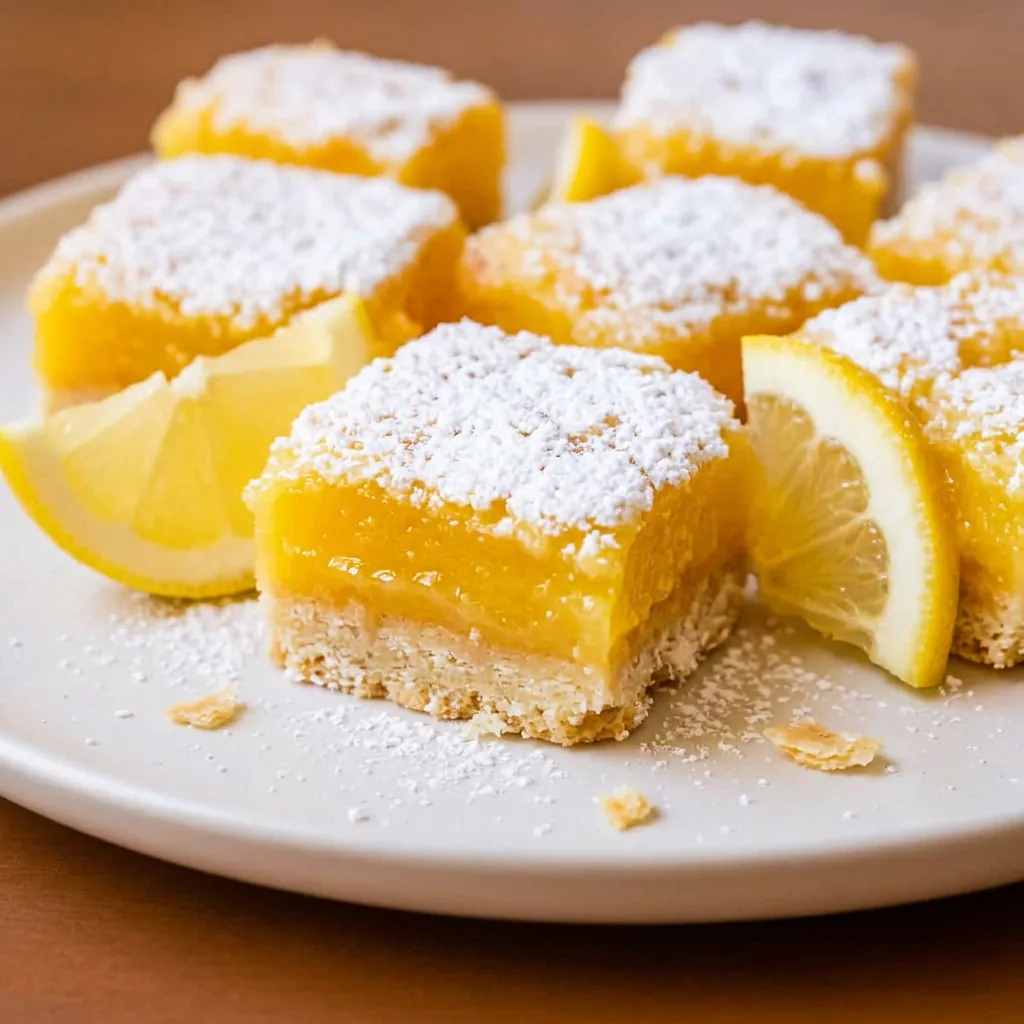
Lemon bars with powdered sugar are the two layer classic that never leaves the rotation: a buttery shortbread crust baked golden underneath a tangy, br lemon curd filling, then buried under a snowfall
of powdered sugar that makes every square look like it arrived from a bakery window. Sharp, sweet, buttery, and gone in one sitting, in that order.
The recipe is honest work with simple rewards: press the crust, bake it, whisk the filling, pour it over the warm crust, and let the oven finish.
It is ideal for spring tables, bake sales, baby showers, and anyone who believes dessert should wake up the whole mouth. The refrigerated chill before slicing is the secret to squares that cut like a dream.
Recipe at a Glance
- Prep time: 20 minutes
- Bake time: 45 minutes total
- Chill time: at least 2 hours
- Total time: about 3 hours 30 minutes
- Servings: 24 squares
- Difficulty: Easy
- Method: Shortbread crust with baked lemon curd, oven finished and chilled
Ingredients You’ll Need
- 1 cup butter
- 1/2 cup granulated sugar
- 2 cups all-purpose flour
- 4 large eggs
- 2 cups granulated sugar
- 1/3 cup fresh lemon juice
- 2 tbsp lemon zest
- 1/4 cup all-purpose flour
- powdered sugar for dusting
Ingredient Notes & Easy Substitutions
The shortbread crust: One cup of butter creamed with half a cup of sugar and two cups of flour makes a press in crust that bakes into a rich, snappy base.
Real butter only here; the crust is half the identity of a lemon bar and substitutes announce themselves immediately.
Fresh lemon juice: A third of a cup, squeezed from actual lemons, is the entire point of this dessert. Bottled juice tastes flat and faintly bitter against the shortbread; four to five lemons usually cover the third of a cup plus the zest.
Lemon zest: Two tablespoons of zest put the perfume in the curd that juice alone cannot reach. Zest the lemons before juicing them; everyone learns this the hard way exactly once.
Eggs and sugar in the filling: Four eggs and two cups of sugar set the curd into that signature sweet tart layer. Whisk them thoroughly with the juice, zest, and quarter cup of flour, which is what keeps the filling silky instead of curdled.
Powdered sugar for dusting: The final blizzard goes on just before serving, never before chilling, or the crust drinks it. Dust generously; this is the one dessert where more powdered sugar is always the correct answer.
Equipment You’ll Need
- 9×13 baking pan
- Aluminum foil
- Hand mixer and a large bowl
- Medium bowl
- Citrus juicer and zester
- Small sieve for dusting
- Sharp knife
How to Make Lemon Bars with Powdered Sugar
Crust, bake, curd, bake, chill, dust. Six moves and the most refreshing bar on any table. Follow with me.
Step One: Prep the Oven and Pan
Preheat the oven to 350°F. Line a 9×13 pan with foil, leaving overhang on the sides to lift the bars out later.
You are looking for a smooth foil sling pressed into the corners. Lemon curd clings to everything; the foil overhang is what turns cleanup and cutting from a project into a formality.
Step Two: Make and Bake the Crust
Cream the butter and half cup of sugar together, add the two cups of flour, and press the dough into the pan. Bake for 20 minutes.
You are looking for a firm, even layer pressed into every corner, baked to a pale gold. Press firmly with the flat of a measuring cup; a compact crust carries the filling instead of crumbling under it.
Step Three: Whisk the Filling
While the crust bakes, whisk the eggs and two cups of sugar together, then add the lemon juice, zest, and quarter cup of flour and mix well.
You are looking for a smooth, pale yellow liquid with the sugar fully dissolved. The flour stabilizes the curd so it sets silky and sliceable; whisk until you cannot feel any grain at the bottom of the bowl.
Step Four: Fill and Bake Again
Pour the filling over the warm crust and bake for 25 minutes, until set.
You are looking for a filling that no longer jiggles as one mass when you nudge the pan, with only a slight tremble in the very center. Pouring onto the warm crust is deliberate; it helps the layers bond so the topping never slides off when cut.
Step Five: Cool and Refrigerate
Cool the pan completely, then refrigerate for at least 2 hours.
You are looking for a fully chilled filling before any knife appears. Warm lemon curd is pudding; chilled lemon curd is a clean cutting bar. The chill is not patience for its own sake, it is architecture.
Step Six: Dust and Serve
Lift the bars out with the foil, dust generously with powdered sugar, and cut into squares.
You are looking for a thick, even snowfall of sugar over the bright yellow layer, and clean cuts made with a sharp knife wiped between slices. Dust first, cut second; dusting after cutting gives you sticky knife marks instead of that clean bakery contrast.
Serving Size & Batch Scaling
A 9×13 pan cuts into 24 squares, or 36 petite pieces for trays and showers. The recipe doubles into two pans for big gatherings; the filling is just more whisking, and both pans bake in the same window on two racks.
Lemon bars are one of the few desserts that get requested more than chocolate at spring events, so if you are bringing one pan somewhere with a lemon loving crowd, history says bring backup.
Making More or Less?
- 12 servings: Half of everything in an 8×8 pan; the crust bakes 18 minutes and the filling 22 to 24.
- 24 servings: The recipe as written.
- 48 servings: Two 9×13 pans on two racks, rotated halfway through. Whisk the filling in two bowls so both pour fresh.
For any batch: real lemons, firm pressed crust, warm crust under cold filling, and the full chill. Those four rules deliver bakery squares every time.
Nutrition Estimate Per Serving
The following is an estimated nutritional breakdown per square (1 of 24), calculated from the ingredients in this recipe. It is an estimate, not medically precise information.
- Calories: ~185
- Protein: 2g
- Carbohydrates: 26g
- Fat: 8g
- Fiber: 0g
- Sugar: 19g
- Sodium: ~85mg
Useful highlight: fresh lemon juice brings real vitamin C to the party, and the small square format keeps the buttery richness easy to enjoy without sliding into a second helping. Immediately. Every time.

Common Mistakes to Avoid
Bottled lemon juice. It tastes like the idea of lemon rather than lemon, and the whole bar suffers. Fresh only; this recipe earns it.
Pouring filling onto a cold crust. The layers stay strangers and the topping slides when cut. Warm crust meets filling, always.
Cutting before the chill. Room temperature curd smears and drags. Two hours in the fridge and the knife glides.
Dusting too early. Powdered sugar on warm bars melts into a glaze and disappears. Dust at serving time for the white snowy look.
Troubleshooting Guide
My filling is runny after baking. What happened? Underbaking or a cold crust to start. The center should barely wobble at the end; give it five more minutes and it will set firm in the chill.
The crust is hard as a board. Why? Overmeasured flour or overworked dough. Press gently, measure by spooning and leveling, and the shortbread stays tender.
There is a white foamy layer on top of my filling. Now what? That is overwhisked egg foam that rose in the oven. Whisk until combined rather than frothy next time; a skim of foam is harmless and hides under the sugar anyway.
The bars taste too tart or too sweet. Can I adjust? The two cup sugar to third cup juice ratio is the classic balance; for sharper bars, drop to a quarter cup of juice plus a half teaspoon more zest rather than more juice, which thins the set.
Variations & Customizations
Lime bars version: Swap in lime juice and zest for a key lime styled bar; my key lime pie runs the same bright citrus in pie form.
Coconut crust version: Stir half a cup of toasted coconut into the crust dough. Tropical, crunchy, unexpectedly wonderful.
Raspberry dust version: Dust with a mix of powdered sugar and freeze dried raspberry powder for a pink snowfall that tastes as good as it looks.
More chilled sweets: The chill and serve format continues in my strawberry pretzel salad, and my lemon cake covers the softer, frosted side of the citrus shelf.
The par-baked crust and fresh curd method here follows the classic at Preppy Kitchen, and the chilling and dusting sequence at A Latte Food matches the steps above.
What to Serve With It
The classic: Nothing at all. A lemon bar, a napkin, and a moment of quiet is a complete experience.
With tea: Black tea and lemon bars is the correct four o’clock pairing and always has been.
With berries: A few fresh raspberries on the plate cut through the sweetness and dress the squares up for company.
On dessert trays: The white on yellow contrast makes these the visual anchor of any cookie assortment. Cut them small; they are rich and they vanish either way.
Meal Prep & Make-Ahead Instructions
Can this be made ahead? These are a make ahead dessert by design; the two hour chill is mandatory and day two bars are arguably better. Bake them the evening before serving and dust with powdered sugar right before they meet the table.
The crust can also be baked a day in advance and the filling whisked and poured the next day. Splitting the work keeps the prep to minutes on each side, which is exactly how holiday baking survives.
Baking for two events in one week is manageable as well: half the pan stays fresh covered for the first gathering while the other half freezes undusted for the second, and a fresh dusting of powdered sugar makes both trays look identical.
Storage & Leftovers
Refrigeration: Covered, the bars keep 4 days. The crust softens slightly as they sit; most of us consider that a feature by day two.
Freezing: Freeze undusted bars in layers between parchment up to 3 months. Thaw in the refrigerator and dust fresh; frozen powdered sugar weeps and streaks.
Leftover ideas: Crumble bars over vanilla ice cream or whirl a square into a milkshake. Lemon and vanilla are shockingly good friends.
Reheating Instructions
None, ever: Lemon bars are served chilled or at cool room temperature. Warm shortbread and warm curd lose everything that makes them special.
For serving: Ten minutes on the counter takes the deepest chill off and brightens the lemon flavor. That is the only warming they need.
Second dusting tip: If the sugar has faded by day two, a fresh light dusting revives the whole tray in ten seconds.
Frequently Asked Questions
Can I use bottled lemon juice? In an emergency, yes, and the bars will still vanish. But fresh juice is the single biggest upgrade available in this recipe, and it costs four lemons.
Why did my filling stick to the foil? It bonds to everything when warm. Peel the foil back slowly at an angle after chilling, or lightly grease the foil before the crust goes in.
How do I know the filling is done? The edges are set and puffed slightly, the center trembles as one piece, and the surface looks matte rather than wet. When in doubt, two more minutes.
Can I make these gluten free? A one to one gluten free flour blend works in both crust and filling. The texture is marginally more tender and nobody at the table will detect the swap.
And that is the whole pan: buttery shortbread, bracing lemon curd, and a blizzard of powdered sugar on top.
It is the dessert that disappears first at spring tables and gets requested by name at every one after. Cut them small, dust them generously, and watch the tray empty in polite silence.