
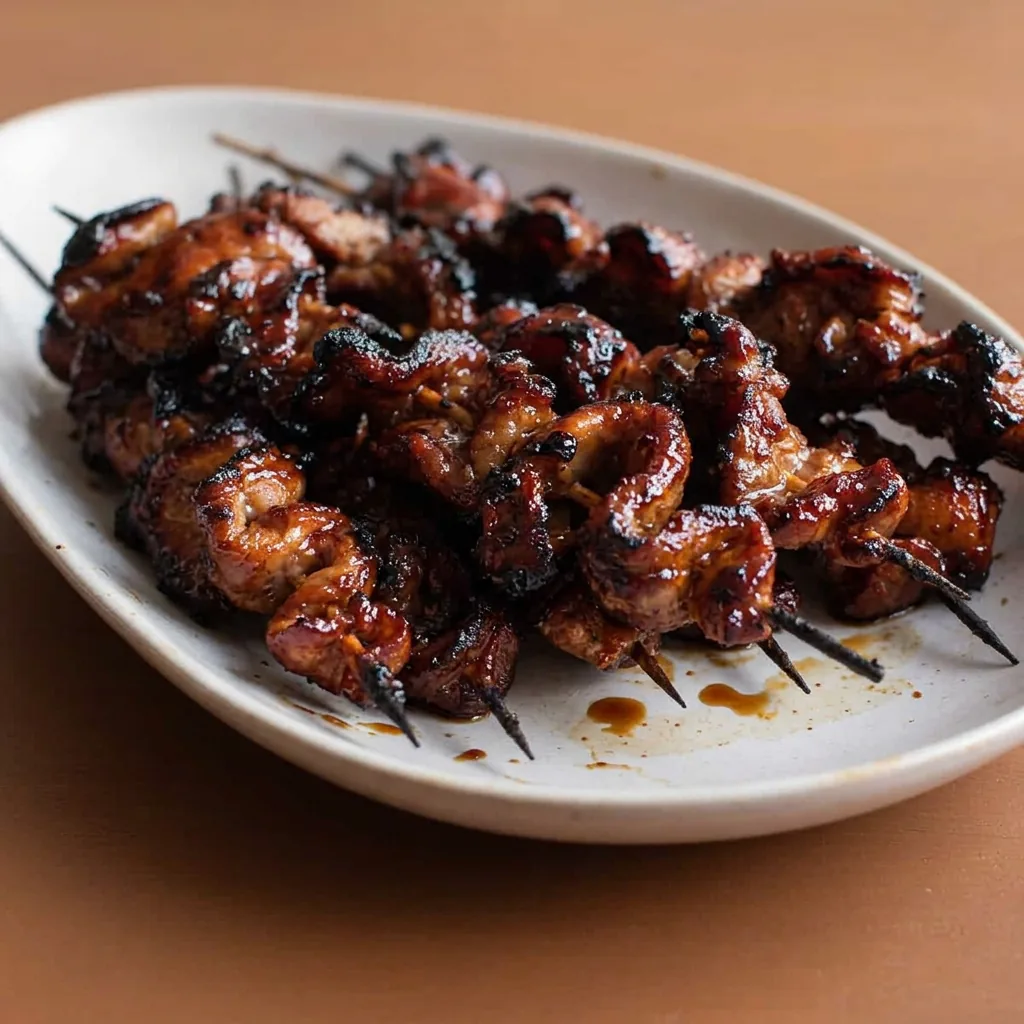
Filipino BBQ pork skewers are the sweet, smoky, slightly spicy street grill classic: pork chop strips threaded onto skewers, marinated for hours in a sticky Filipino style sauce of Coca-Cola, brown sugar,
soy sauce, ketchup, and vinegar, then grilled over medium heat with constant basting until every strip is glossy, charred at the edges, and cooked to a juicy 160 degrees.
The Coke in the marinade is not a gimmick; it is the traditional sweetener that caramelizes on the grill the way Filipino barbecue stalls have done it for decades.
It is ideal for summer cookouts, family grilling nights, and anyone who wants the sweet and savory street food experience without booking a flight. Sixteen strips, eight skewers, and no leftovers in recorded history.
Recipe at a Glance
- Prep time: 20 minutes, plus 4+ hours marinating
- Cook time: about 15 minutes
- Total time: 4 hours 35 minutes (mostly marinating)
- Servings: 6
- Difficulty: Easy
- Method: Marinated skewers on the grill, basted as they cook
Ingredients You’ll Need
- 4 thick cut pork chops, boneless
- 8 large skewers
- 1/3 cup Coca-Cola
- 1/4 cup brown sugar
- 1/4 cup onion, finely chopped
- 1/4 cup soy sauce
- 1/4 cup ketchup
- 1/4 cup apple cider vinegar
- 3 garlic cloves, minced
- 2 tsp lemon juice
- 1/4 tsp salt
- 1/4 tsp black pepper
- 1/4 tsp red pepper flakes
- 1/2 tsp sriracha
Ingredient Notes & Easy Substitutions
Thick cut pork chops: Four boneless chops, sliced from the short side into strips, are the fast version of the traditional pork shoulder. Boneless pork butt or shoulder cut into cubes is the street stall original; the marinade loves both equally.
Coca-Cola: One third of a cup brings the caramel sweetness that defines Filipino barbecue; regular Coke or Pepsi both work. The sugar in the soda is what builds the glossy, charred glaze on the grill.
The sweet and sour backbone: Brown sugar, ketchup, and apple cider vinegar in equal quarter cups balance sweet, tangy, and savory. Red wine vinegar substitutes for the cider vinegar; tomato sauce stands in for ketchup in a pinch.
Sriracha and red pepper flakes: Half a teaspoon of sriracha plus a quarter teaspoon of flakes bring gentle warmth, not heat. Double the sriracha if your table skews brave; the brown sugar keeps everything in friendly territory.
Skewers: Eight large skewers; if they are wooden, soak them in water for 30 minutes before grilling so they do not catch fire halfway through the cook.
Equipment You’ll Need
- Large mixing bowl
- Sharp knife and cutting board
- 8 large skewers
- Gas or charcoal grill
- Tongs
- Basting brush
- Meat thermometer
How to Make Filipino BBQ Pork Skewers
Slice, marinate, skewer, grill with basting, serve. The marinade is the recipe; the grill just finishes it. Follow with me.
Step One: Slice the Pork
Slice each pork chop from the short side into four even strips. You will have 16 strips once you are done slicing all four pork chops.
You are looking for long, even strips about an inch wide; even thickness means every strip hits 160 degrees at the same moment instead of some drying out while their neighbors finish.
Step Two: Marinate
In a large bowl, combine all of the marinade ingredients. Reserve about a quarter of the sauce in the fridge for basting later, then toss the pork strips in the remaining marinade. Cover, and place in the fridge for 4 or more hours; this can be done overnight.
You are looking for every strip coated in the dark, sweet sauce, with the reserved quarter held back and untouched by raw pork.
That separate quarter is your basting sauce; keeping it clean is what makes it safe and glossy for the final glaze. Four hours is the floor; overnight is where the street stall flavor lives.
Step Three: Skewer the Pork
To skewer the pork chops: place 2 to 4 pork strips on each skewer, longways, as many as you can fit per skewer.
You are looking for strips threaded snugly along the skewer but not compressed; a little space lets the heat curl around each piece and the edges caramelize instead of steaming.
Step Four: Grill and Baste
Heat your grill to medium heat. Once hot, lightly oil the grates and place the pork skewers on. Close the lid. Turn the skewers every 3 to 4 minutes until the internal temperature reaches 160 degrees, basting between turns with the reserved sauce.
Every grill is different, so monitor the pork and adjust if some skewers cook faster than others.
You are looking for glossy, mahogany strips with lightly charred edges and an internal temperature of 160 degrees. The baste between every turn builds the lacquer layer by layer; sugar burns if you rush, so medium heat is the whole discipline here.
Step Five: Rest and Serve
Remove the pork skewers from the grill, give them one final baste, and serve with your favorite BBQ side dishes.
You are looking for a shine on every strip and a slight rest of a few minutes before the platter lands; the carryover finishes the juices. White rice and atchara pickles are the traditional partners, but the platter travels well to any cookout table.
Serving Size & Batch Scaling
Fourteen to sixteen strips across eight skewers feeds 6, about two to three skewers per person with sides.
The marinade doubles cleanly; grill in two waves and hold the finished skewers loosely tented while the second batch cooks.
The strips can also be threaded tighter, four per skewer, for heartier individual portions at a party.
Making More or Less?
- 3 servings: Two pork chops, half the marinade, four skewers; the grill clock holds.
- 6 servings: The recipe as written.
- A crowd: Three batches of chops, one and a half times the marinade, grilled in waves; reserve extra basting sauce and never run dry mid glaze.
For any batch: even strips, reserved clean basting sauce, medium heat, baste between turns, 160 degrees internal. Those five rules grill the same skewers every time.
Nutrition Estimate Per Serving
The following is an estimated nutritional breakdown per serving (1 of 6), calculated from the ingredients in this recipe. It is an estimate, not medically precise information.
- Calories: ~290
- Protein: 27g
- Carbohydrates: 14g
- Fat: 14g
- Fiber: 0g
- Sugar: 12g
- Sodium: ~640mg
Useful highlight: the skewers are high protein with most of the sugar staying in the charred glaze, and pork delivers serious B vitamins and zinc per strip.

Common Mistakes to Avoid
Grilling on high. The brown sugar and Coke glaze burns before the pork finishes. Medium heat, lid down, patience; the char comes from caramelization, not fire.
Basting with the raw marinade. It touched raw pork all night. The reserved quarter cup lives in the fridge untouched, and only that sauce touches the finished skewers.
Skipping the thermometer. Pork’s sweet spot is 160 degrees; guesswork either overcooks the strips or undercooks them. Twelve seconds with a thermometer ends the debate.
Rushing the marinade. Thirty minutes flavors the surface; four hours and beyond pushes the sweet soy depth all the way in. Marinate in the morning for dinner, or the night before for greatness.
Troubleshooting Guide
My skewers charred before they hit 160. Why? The grill ran hot or the glaze layered on too thick at the start. Baste lightly early and heavily late, and move the skewers to a cooler zone if the edges blacken early.
The pork came out dry. Thin strips or overcooking. Pull at exactly 160 degrees and rest a few minutes; next round, slice the strips slightly thicker so they have more moisture to give.
The flavor is flat. The marinade needed more time or the final baste was skipped. A last minute glaze with the reserved sauce, plus a squeeze of lemon over the platter, wakes the whole batch up.
Can I cook these indoors? Yes; a hot cast iron grill pan or the broiler, turning every 3 to 4 minutes with the same basting rhythm, gets you remarkably close to grill results. Open a window; the glaze smokes happily.
Variations & Customizations
Chicken version: Chicken thighs cut into strips run the same marinade; grill to 165 degrees and the glaze behaves identically.
Spicy version: Double the sriracha and the red pepper flakes; the sugar tames the heat into a warm glow rather than a dare.
Rice bowl route: Strip the grilled pork off the skewers over garlic rice with a fried egg on top; the Filipino barbecue silog breakfast is reason enough to marinate extra.
Grill night companions: My street corn recipe in a cup and my easy Mexican street corn dip round out any grill platter this skewer tray headlines.
The exact marinade and grill method here follows the original at Amanda Cooks and Styles, and the same Coca-Cola and brown sugar street barbecue tradition at Nyomi Recipes backs the basting and 160 degree finish used above.
What to Serve With It
The traditional plate: Garlic fried rice, atchara pickled papaya, and a splash of spiced vinegar. That is the Filipino street stall pairing and it never misses.
Cookout spread: Corn in any form, coleslaw, and grilled vegetables beside the skewer platter; the sweet glaze plays well with everything smoky.
Weeknight version: Steamed rice and sliced cucumbers with a drizzle of the extra basting sauce; fifteen minutes on the grill and dinner is a festival. Add sliced mango or pineapple on the side and it is officially a party.
Party plan: Cut the skewers into shorter strips on shorter sticks for passed appetizers; the glaze does the talking at room temperature too.
Meal Prep & Make-Ahead Instructions
Can this be made ahead? The marinade is a make ahead machine: slice and marinate up to 24 hours ahead, and the strips only improve. The sauce can also be doubled and half frozen for future skewer nights.
Cooked leftovers keep beautifully and reheat into rice bowls without losing the glaze.
Storage & Leftovers
Refrigeration: Airtight, the cooked strips keep 3 days off the skewers or on.
Freezing: The raw pork can freeze right in its marinade for up to 3 months; thaw overnight and it marinates as it defrosts. Cooked strips freeze 2 months with the glaze intact.
Leftover ideas: Pork fried rice, banh mi style sandwiches with pickled vegetables, or chopped over a crunchy salad with the extra sauce as dressing. The glaze refuses to quit on day two.
Reheating Instructions
Skillet (best method): A quick warm up in a nonstick pan over medium heat re crisps the glaze edges in about four minutes.
Oven: Foil covered at 350 degrees F for about 10 minutes warms a full batch without drying the strips.
Microwave (single portion): Forty five seconds, covered; the glaze softens but the flavor holds every bit of its swagger.
Frequently Asked Questions
Why Coca-Cola in the marinade? The sugar and caramel notes are the traditional Filipino barbecue sweetener; they caramelize on the grill into that signature mahogany glaze. Brown sugar handles the sweetness while the Coke brings the caramel depth.
How long should I marinate? Four hours is the minimum for real flavor; overnight is the target. Past 24 hours the vinegar starts firming the surface, so the sweet spot is 4 to 24 hours.
Are these spicy? Gently; half a teaspoon of sriracha and a quarter teaspoon of flakes bring warmth, not fire. Adjust both freely; the sugar keeps the balance friendly. Start with the written amounts and climb only if the table asks for more.
Can I use pork shoulder instead of chops? Yes, and it is the more traditional cut; slice it into thin strips or cubes and marinate the same way, adding a couple of minutes per side on the grill.