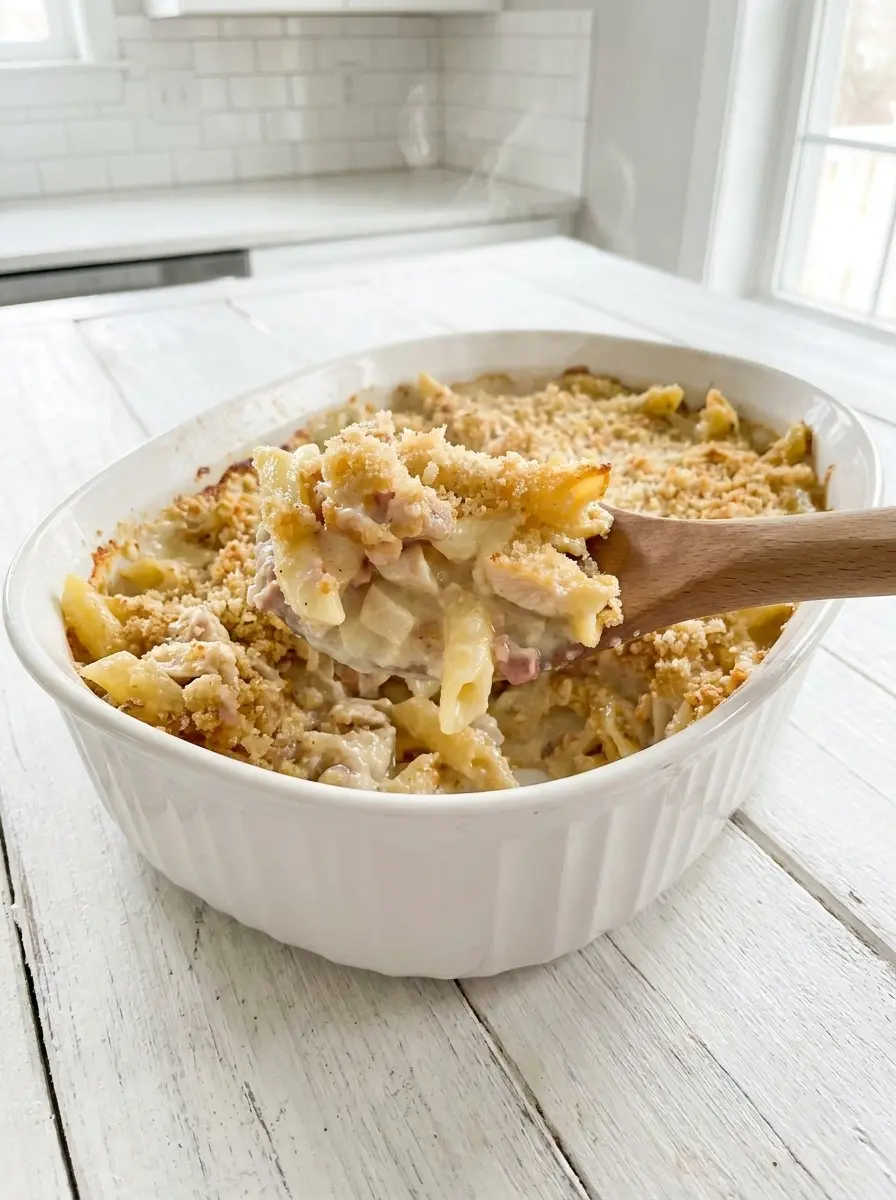
Chicken cordon bleu casserole takes everything you love about the classic French-inspired dish and turns it into something you can actually make on a Tuesday night.
The traditional version requires pounding chicken flat, rolling it with ham and cheese, breading it, and either frying or baking it with careful attention.
This casserole skips all of that. Instead, you toss cavatappi pasta with rotisserie chicken, a creamy Dijon-mustard sauce, and piles of Swiss cheese, then blanket the whole thing with a buttery panko-Parmesan topping. One dish, no rolling, no fussing.
This is comfort food that earns its place on your table. The sauce is rich without being heavy, the Dijon adds a subtle tang that cuts through all that cheese, and the panko topping gets golden and crunchy in the oven.
If you have ever been intimidated by making traditional chicken cordon bleu, this version gives you the same flavors in a fraction of the time.
Recipe at a Glance
- Prep Time: 15 minutes
- Cook Time: 25-30 minutes
- Total Time: 45 minutes
- Servings: 8
- Difficulty: Easy
- Cuisine: French-American comfort
- Cooking Method: Baked casserole
- Meal Type: Dinner
- Calories: ~520 per serving
- Protein: ~32g
- Carbs: ~40g
- Fat: ~26g
- Freezer Friendly: Yes (unbaked)
- Best Occasion: Family dinner, potluck, meal prep
Flavor and Texture Expectations
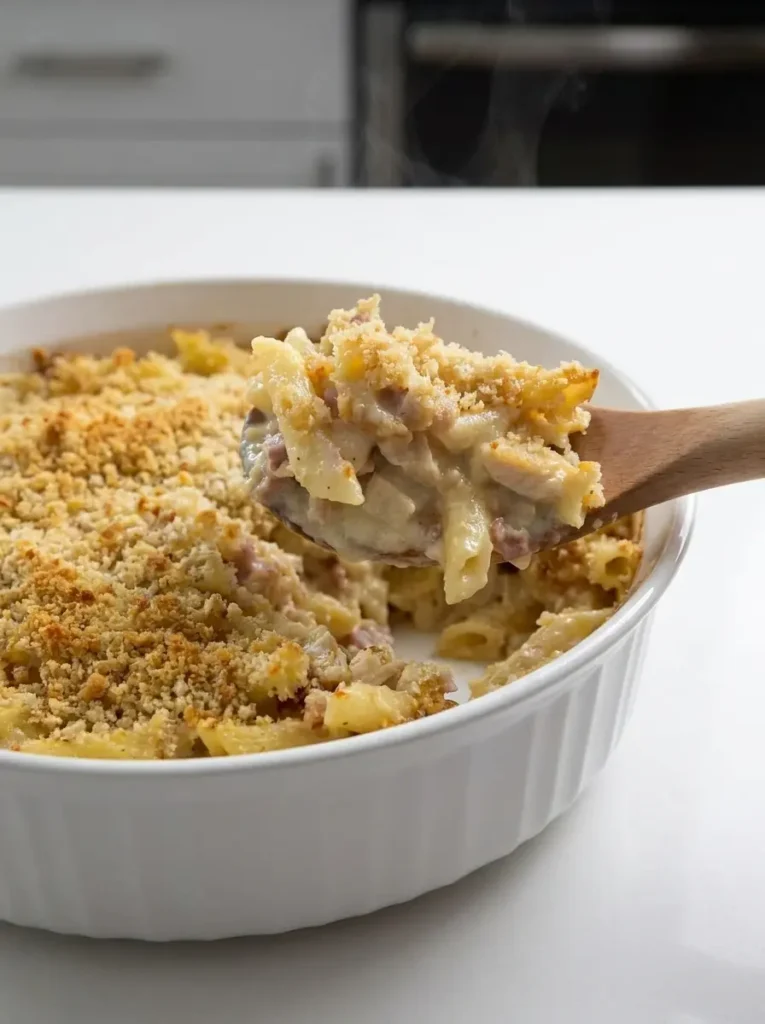
When you pull this casserole out of the oven, the first thing you see is that golden, crackly panko crust. Break through it with your spoon and underneath you find a bubbling, creamy sauce coating spiral pasta and tender chunks of chicken.
The Swiss cheese has melted into the sauce, giving it a mild nutty quality, while the Dijon mustard provides just enough tang to keep every bite from feeling too heavy.
The contrast between the crunchy topping and the creamy filling is what makes this dish work. Each forkful has texture: the crispy breadcrumbs, the soft pasta, the gooey cheese, and the tender chicken.
It is rich and satisfying, the kind of meal that makes you want to go back for seconds.
Ingredients You’ll Need
- Cavatappi pasta (1 lb): Those tight corkscrew shapes are perfect for casseroles because the ridges grab onto the sauce and hold it in every bite. If you cannot find cavatappi, penne, rotini, or elbow macaroni all work.
- Cream of chicken soup (2 cans, 10.5 oz each): The foundation of the sauce. It provides a creamy, savory base that binds everything together. You can make a homemade version with butter, flour, chicken broth, and milk if you prefer to skip the canned stuff.
- Half and half (2 cups): Creates a silky, rich sauce without going full heavy cream. Whole milk works for a lighter version, or heavy cream if you want it even more indulgent.
- Dijon mustard (3 tablespoons): This is the flavor bridge between a basic chicken pasta bake and something that actually tastes like cordon bleu. The sharp, tangy bite cuts through the richness of the cheese and cream.
- Fresh parsley (1 tablespoon, chopped): A small but noticeable fresh note that brightens the heavy sauce.
- Seasoned salt (1 teaspoon, such as Lawry’s): Adds a layered seasoning beyond just salt. It includes paprika, garlic, and onion powders that deepen the overall flavor.
- Black pepper (1/2 teaspoon): A mild heat that balances the creamy sauce.
- Swiss cheese (3 cups, shredded): The defining cheese of cordon bleu. It melts beautifully and has a nutty, slightly sweet flavor. Gruyere is a great upgrade if you want a more pronounced flavor.
- Rotisserie chicken (2 cups, diced): The shortcut that makes this recipe possible on a weeknight. The meat is already cooked and seasoned, so you just chop and go.
- Unsalted butter (1 tablespoon, melted): Coats the panko for even browning.
- Plain panko breadcrumbs (3/4 cup): The secret to that satisfying crunch on top. Panko stays lighter and crispier than regular breadcrumbs.
- Parmesan cheese (1/4 cup, grated): Mixed into the topping for a salty, savory punch that regular breadcrumbs alone cannot provide.
Easy Ingredient Substitutions
- Gluten-free version: Swap the pasta for a gluten-free variety, use gluten-free cream of chicken soup, and replace the panko with gluten-free breadcrumbs. Most grocery stores carry all three now.
- Lighter version: Use reduced-fat cream of chicken soup, substitute the half and half with whole milk or evaporated skim milk, and reduce the Swiss cheese to 2 cups. You can also use low-fat panko and skip the butter in the topping.
- Different cheese: Gruyere is the closest relative to Swiss but with a more complex, earthy flavor. Fontina melts incredibly well and adds a subtle creaminess. Avoid sharp cheddar, which overwhelms the delicate Dijon flavor.
- Add ham for authenticity: Traditional cordon bleu includes ham. Add 1 cup of diced deli ham or leftover baked ham when you mix in the chicken and cheese.
- Vegetable add-ins: A cup of steamed broccoli florets or sauteed mushrooms folded into the casserole adds nutrition and texture without changing the character of the dish.
What to Have Handy
- 9×13 inch baking dish: The standard size for this quantity. Glass or ceramic both work.
- Large pot: For boiling the pasta.
- Large mixing bowl: For combining the sauce, pasta, chicken, and cheese.
- Whisk: For blending the sauce ingredients until smooth.
- Small bowl: For mixing the panko topping.
A baking dish with higher sides gives you more room for the topping without it spilling over as the casserole bubbles. If your dish is on the shallow side, set it on a rimmed baking sheet before putting it in the oven to catch any overflow.
Cooking It Step by Step
While your finished dish may not look exactly like the images in this post, following these instructions will give you the same delicious CHICKEN CORDON BLEU CASSEROLE. So please follow with me!
Preheat your oven to 375°F. Lightly grease your 9×13 baking dish with butter or nonstick spray and set it aside.
Bring a large pot of salted water to a rolling boil and cook the cavatappi according to the package directions, usually 7 to 8 minutes, until it is al dente.
You want the pasta to still have a slight firmness when you bite into it because it will continue cooking in the oven. If you cook it to softness now, it will turn mushy after baking. Drain the pasta well and set it aside.
While the pasta is cooking, make the sauce. In your large mixing bowl, combine both cans of cream of chicken soup, the half and half, Dijon mustard, chopped parsley, seasoned salt, and black pepper. Whisk everything together until the sauce is completely smooth with no lumps. Take a moment to taste it.
You should notice the tang from the Dijon cutting through the creamy base. If the mustard flavor seems too strong, do not worry; it mellows significantly as the casserole bakes and the cheese melts into the sauce.
Add the shredded Swiss cheese and diced rotisserie chicken to the bowl with the sauce. Then fold in the cooked cavatappi. Use a spatula or wooden spoon and mix gently until every piece of pasta is coated and the chicken and cheese are evenly distributed throughout.
You are not trying to stir aggressively here. Overmixing breaks the pasta apart and turns the cheese into clumps instead of letting it melt smoothly into the sauce. For more ideas on using rotisserie chicken, check out our chicken recipes collection.
Pour the entire mixture into your prepared baking dish and spread it out evenly. Take a few seconds to smooth the surface so the topping bakes uniformly.
Now prepare the topping. In a small bowl, combine the melted butter, panko breadcrumbs, and grated Parmesan. Stir until the breadcrumbs are evenly coated with butter and the Parmesan is well distributed.
Sprinkle this mixture evenly over the top of the casserole. The topping should cover the entire surface in a thin, even layer. Any bare spots will leave the filling exposed and it will bubble up through those gaps instead of staying contained.
Place the casserole in the center of the oven and bake for 25 to 30 minutes. You will know it is ready when the edges are bubbling and the panko topping has turned a deep golden brown. The bubbling tells you the sauce is heated through and the cheese has fully melted.
If the topping is not browning enough by the 25-minute mark, switch your oven to broil for 1 to 2 minutes, but watch it constantly.
Broilers can take panko from golden to burnt in seconds. According to the USDA’s guidelines for leftover poultry safety, cooked chicken dishes should reach 165°F internally, so check the center of the casserole with a thermometer if you are unsure.
Remove the casserole from the oven and let it rest for 5 minutes before serving. This rest time matters more than you might think. It allows the sauce to thicken slightly so it clings to the pasta instead of running everywhere when you scoop it.
Nutrition Per Serving
Per serving (1/8 of the casserole):
– Calories: ~520
– Protein: ~32g
– Carbs: ~40g
– Fat: ~26g
– Fiber: ~2g
– Sugar: ~4g
– Sodium: ~950mg
These values are estimates. Actual nutrition will vary based on the brand of soup you use, the type of chicken, and how much cheese ends up in each scoop.
Secrets for Better Results
- Undercook the pasta by one minute. It finishes cooking in the oven as it absorbs the sauce. Pasta cooked to package directions before baking ends up overcooked after 25 minutes in the oven.
- Shred your own Swiss cheese. Pre-shredded cheese comes coated with anti-caking powders that prevent it from melting smoothly. A block of Swiss shredded at home melts into long, gooey strings that make the sauce creamier.
- Let the casserole rest. Those 5 minutes after it comes out of the oven transform the texture from soupy to set. The sauce continues to thicken as it cools slightly, making it easier to serve clean portions.
- Taste the sauce before assembling. The Dijon flavor should be present but not aggressive. If it tastes too sharp, add a pinch more seasoned salt. If it tastes flat, another half teaspoon of Dijon will wake it up.
When Things Don’t Go Right
- The topping did not get crispy: This usually happens when the butter was not mixed evenly into the panko, or the casserole was covered with foil during baking. Remove any foil for the last 10 minutes, or give it a brief broil to crisp the top.
- The casserole is too soupy: You may not have drained the pasta well enough, or you measured the half and half generously. Next time, drain the pasta thoroughly and consider reducing the half and half by 1/4 cup. The casserole also sets more as it cools, so give it a full 5-minute rest.
- The Dijon flavor is overpowering: Three tablespoons is the right amount for this volume of sauce, but some Dijon mustards are stronger than others. If your Dijon is particularly assertive, start with 2 tablespoons and add more to taste.
- The cheese separated or got greasy: This happens when the casserole bakes too long or at too high a temperature. Stick to 375°F and check at the 25-minute mark. For more casserole tips, our baked ranch chicken article covers similar baking principles.
Twist It Your Way
- Classic cordon bleu with ham: Add 1 cup of diced deli ham when you fold in the chicken. This brings the recipe closer to traditional cordon bleu and adds a smoky, salty layer.
- Broccoli cordon bleu: Fold in 2 cups of steamed broccoli florets. The broccoli absorbs the creamy sauce and adds color and nutrition.
- Spicy version: Add 1/2 teaspoon of cayenne pepper to the sauce or use spicy brown mustard instead of Dijon for a version with more kick.
- Make-ahead: Assemble the casserole without the topping, cover tightly, and refrigerate for up to 24 hours. When ready to bake, add the topping and bake at 375°F for 30 to 35 minutes since it starts cold.
- Freezer meal: Assemble without the topping, wrap tightly in plastic wrap then foil, and freeze for up to 3 months. Thaw overnight in the fridge, add the topping, and bake as directed, adding 10 extra minutes.
Serve It Alongside
This casserole is rich and filling on its own, but a few sides balance the meal. A simple green salad with a tangy vinaigrette cuts through the creaminess. Steamed or roasted green beans add a fresh, crisp contrast. A crusty loaf of bread is perfect for soaking up any extra sauce on the plate.
For a complete comfort food dinner, pair it with our garlic butter chicken as a second protein, or keep it simple with a side of buttered egg noodles or dinner rolls. A crisp white wine like Sauvignon Blanc or a light Chardonnay complements the Swiss cheese and Dijon beautifully. Browse more ideas in our dinner recipes section.
Leftovers and Storage
Cover the baking dish tightly with foil or transfer leftovers to an airtight container. The casserole keeps in the refrigerator for 3 to 4 days. The sauce thickens as it sits, and the flavors actually improve overnight.
To reheat, the oven method gives the best results. Cover with foil and warm at 350°F for 20 to 25 minutes until heated through. Remove the foil for the last 5 minutes if you want to crisp the topping again. Microwave reheating works for individual portions but the topping will soften. Heat for 2 to 3 minutes on high.
For freezing, assemble the casserole without the breadcrumb topping, wrap well, and freeze for up to 3 months. When ready to bake, thaw overnight in the refrigerator, add the topping, and bake at 375°F for 30 to 35 minutes. According to USDA food storage recommendations, cooked poultry casseroles maintain best quality for 3 to 4 months in the freezer.
Frequently Asked Questions
Can I make this ahead of time?
Absolutely. Assemble the entire casserole without the panko topping, cover it tightly, and refrigerate for up to 24 hours. When you are ready, add the topping and bake. Add about 5 extra minutes since the dish starts cold.
What can I use instead of cream of chicken soup?
Make a quick homemade version by melting 2 tablespoons of butter, whisking in 2 tablespoons of flour, then slowly adding 1 cup of chicken broth and 1/2 cup of milk. Cook until thickened, about 3 to 4 minutes. Season with salt, pepper, and a pinch of garlic powder. This replaces one can, so double it for this recipe.
Can I use leftover chicken instead of rotisserie?
Any cooked chicken works. Leftover roasted chicken, baked chicken breasts, or even poached chicken are all fine. Just make sure it is diced into small, bite-sized pieces so it distributes evenly throughout the casserole.
Why is my topping soggy?
The most common reason is assembling the casserole too far ahead and letting the topping sit on the wet filling. If you are making it ahead, wait to add the topping until right before it goes in the oven. Also, make sure the butter is fully incorporated into the panko so every crumb gets crispy.
Can I double this recipe?
Yes, but use two 9×13 dishes rather than one larger one. A single oversized dish takes too long to heat through in the center, which leads to an overdone topping and a cold middle.