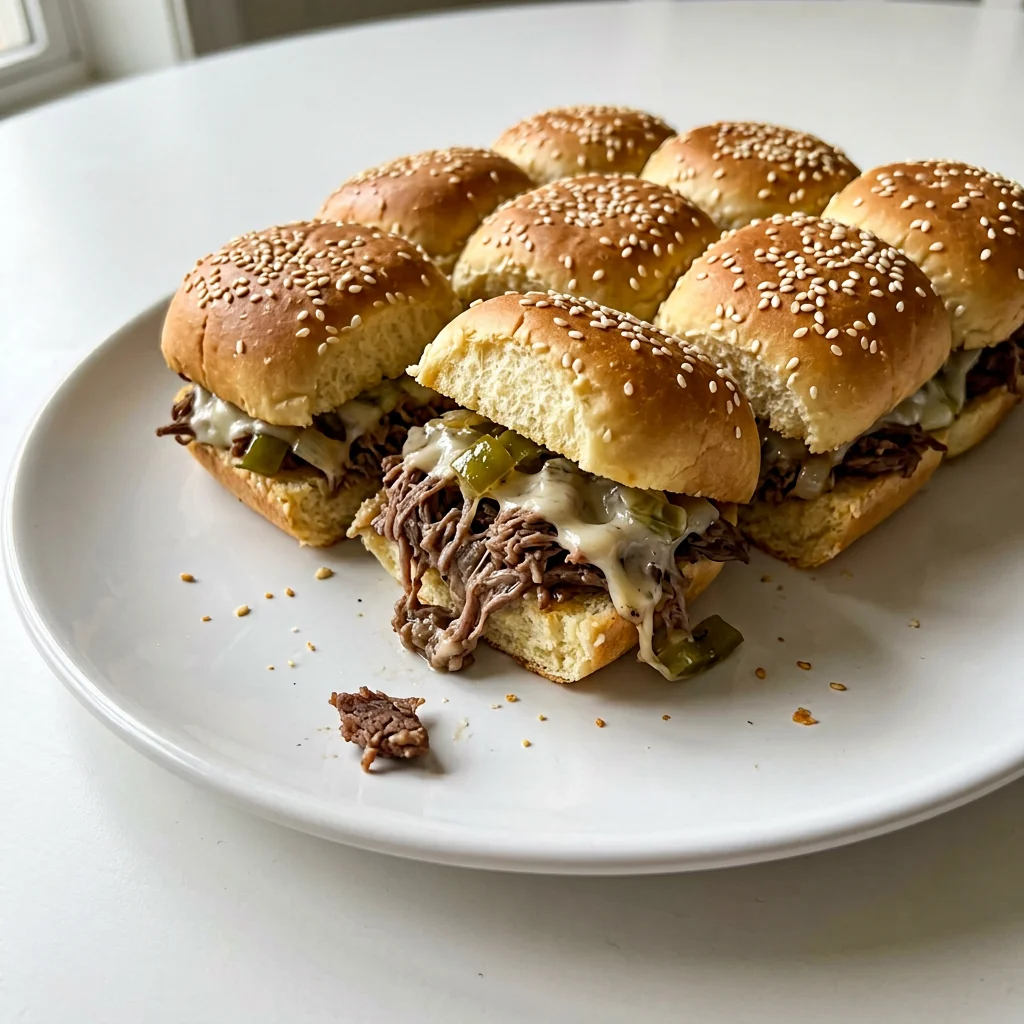
Philly cheesesteak sliders are the party tray that makes people take one bite and immediately look around for more. Thinly sliced ribeye seared with sweet jammy peppers and onions, tucked into soft
slider buns under melted provolone, then baked at 350 degrees until the pan becomes one connected, pull apart tray of happiness. Twelve sandwiches, one dish, zero leftovers, and I say that with receipts.
The honest magic is that everything is already cooked before the buns see the oven, so the final bake only melts cheese and warms bread. It is ideal for game day, Friday nights, feeding a crowd without losing your evening, and anyone who has stood in line for a real cheesesteak and thought, I want this at my house.
Recipe at a Glance
- Prep time: 15 minutes
- Cook time: about 30 minutes
- Total time: 45 minutes
- Servings: 12 sliders
- Difficulty: Easy
- Method: Skillet filling, assembled tray, foil baked finish
Ingredients You’ll Need
- 12 slider buns
- 1 lb ribeye steak, thinly sliced
- 2 bell peppers, sliced
- 1 large onion, sliced
- 2 tbsp butter, melted
- 1 tbsp olive oil
- 1 tsp Worcestershire sauce
- 1 cup provolone cheese, sliced
- Salt and pepper, to taste
- Hoagie seasoning, to taste
Ingredient Notes & Easy Substitutions
Ribeye: This is the cut that makes a cheesesteak taste like a cheesesteak, all that marbling melting into the sear. Ask the butcher to slice it paper thin, or freeze the steak for about 25 minutes at home and slice it yourself; a firmed up ribeye practically falls into thin ribbons under a sharp knife. Shaved steak from the grocery works on busy weeks too.
Peppers and onion: Two bell peppers and a large onion get a full ten minutes in the pan, and I need you to actually give them the ten, because this is where the sweetness comes from. Soft, golden, jammy vegetables are the soul of the sandwich; pale crunchy strips will taste like a shortcut.
Provolone: One cup of sliced provolone laid over the top turns into that famous cheese pull as it bakes. White American is the authentic counter pick and melts even harder, but provolone brings a little tang I love. Whatever you choose, slice it thin and cover every inch, because cheese is the glue holding this whole tray together.
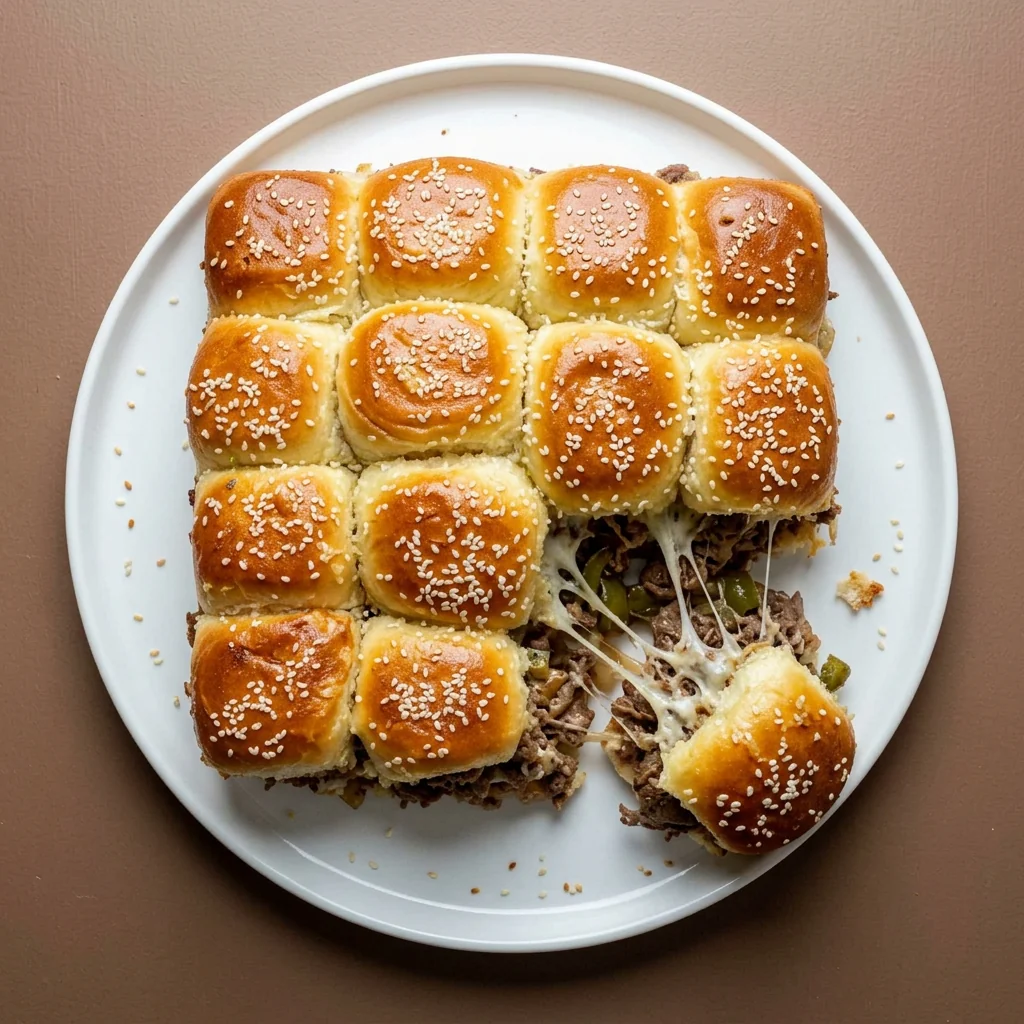
Worcestershire and hoagie seasoning: A teaspoon of Worcestershire stirred into the steak adds the deep savory note that makes people ask what your secret is, and hoagie seasoning, that oregano and garlic Italian style blend, dusted over the vegetables while they cook finishes the sandwich shop flavor.
No hoagie blend on the rack? A pinch each of dried oregano, garlic powder, and parsley gets you there.
The buns: A 12 pack of connected slider rolls, sliced in one horizontal sweep. Keep them attached as a slab; that single piece is what makes these sliders instead of twelve loose sandwiches, and it makes assembly a two minute job.
Equipment You’ll Need
- Large skillet, cast iron if you have it
- 9×13 inch baking dish
- Sharp knife and cutting board
- Pastry brush
- Aluminum foil
How to Make Philly Cheesesteak Sliders
Caramelize the vegetables, sear the steak fast, stack the tray, butter the tops, and let the oven melt everything into one happy pan. I will walk you through every step so nothing surprises you.
Step One: Caramelize the Peppers and Onion
Heat the olive oil in a large skillet over medium heat, add the sliced peppers and onion, and cook for a good 10 minutes, stirring now and then, until they are soft, golden, and caramelized. Sprinkle a little hoagie seasoning and salt over them as they cook. Slide them onto a plate and set aside.
Here is how you know it is right: the onion turns translucent, then deeply golden at the edges, the peppers slump into softness, and your kitchen starts smelling sweet and savory at the same time. Do not crank the heat to rush this.
Medium heat coaxes the sugars out; high heat just burns the edges while the middle stays raw, and there is no fixing that later.
Step Two: Sear the Ribeye
Into that same skillet, still glossy with flavor, add the thinly sliced ribeye in a loose layer. Let it sit against the hot pan for a minute before stirring so it browns, then toss and cook for 3 to 4 minutes total, until no pink remains. Season with the Worcestershire, salt, and pepper, stir once more, and pull it off the heat.
The tell that you nailed it: thin edges crisping brown, juices collecting in the pan, and the meat folding into soft ribbons instead of tight gray chunks. Thin sliced ribeye cooks blazingly fast, so stay close.
Overcooked steak goes from tender to squeaky in about two minutes, and it cannot be undone. If your pan is small, work in two batches so the meat sears instead of steaming.
Step Three: Build the Tray
Slice the slab of slider buns horizontally and set the tops aside. Lay the bottoms in a 9×13 dish, then layer on the steak, spreading it edge to edge. Pile the caramelized peppers and onions over the steak, then cover everything with the provolone slices, letting them overlap slightly so every corner gets cheese.
What you want here is full coverage, no bare bun showing through. Cheese on top is not just flavor, it is structure; as it melts it binds the toppings to the bread so each slider pulls away whole instead of dumping its filling into your lap. Trust me, that top slice of provolone is doing structural engineering.
Step Four: Butter the Tops
Crown the tray with the top buns and brush the melted butter generously over the whole surface, all the way to the edges and into the seams between rolls.
This is the step people skip, and then their buns bake up pale and dry instead of golden and bakery soft. The butter toasts the tops in the oven and adds that rich, savory shine you get from a real sandwich shop.
If you want to be extra, a tiny pinch of hoagie seasoning in the melted butter turns the tops into something people comment on out loud.
Step Five: Foil Bake
Cover the dish with foil and bake at 350 degrees for 15 minutes, until the cheese is completely melted and the filling is hot through.
The foil matters more than it looks. It traps steam that softens the buns while the gentle heat melts the cheese, so you get pillowy bread and gooey filling at the same time.
Without it, the tops can dry out or toast too fast while the middle is still lukewarm. Set your timer, and if you are the peeking type, lift one corner at minute 12 just to watch the cheese bubble. I will not tell.
Step Six: Rest Briefly and Serve
Pull the tray from the oven, let it sit for about 5 minutes so the cheese settles, then slice along the bun lines and serve hot, straight from the dish.
That short rest is the difference between sliders that hold together and sliders that stretch into cheese strings across the whole pan.
Five minutes, that is all it takes, and then carry the whole dish to the table and let people pull their own. Watching the first person realize they can just grab one is half the fun of making these.
Serving Size & Batch Scaling
One 9×13 tray of 12 sliders feeds 4 to 6 as a meal and 8 to 12 as a party snack, depending on how hungry the room is. I have watched six adults make these disappear as a main dish, and I have watched twelve party guests do the same, so plan accordingly.
Doubling is easy and worth it for crowds: two trays, two dishes, all the filling cooked in one big skillet in batches, and both pans baked together on staggered oven racks.
Making More or Less?
- 6 sliders: Half of everything in an 8×8 dish; the bake time holds at 15 minutes.
- 12 sliders: The recipe as written.
- A crowd: Two 9×13 trays, steak seared in batches, both trays foil baked side by side; they vanish at exactly the same speed.
For any batch: soft jammy vegetables, fast seared thin steak, cheese covering every inch, butter brushed to the edges, foil for the melt. Those five habits build the same tray every single time.
Nutrition Estimate Per Serving
The following is an estimated nutritional breakdown per serving (1 of 12 sliders), calculated from the ingredients in this recipe. It is an estimate, not medically precise information.
- Calories: ~320
- Protein: 16g
- Carbohydrates: 20g
- Fat: 17g
- Fiber: 1g
- Sugar: 4g
- Sodium: ~490mg
Useful highlight: each slider carries real steak protein and a serving of cooked peppers and onions, which makes this one of the more balanced party foods you can put on a table without anyone noticing they are eating vegetables.
Common Mistakes to Avoid
Rushing the vegetables. Five minutes gets you raw peppers; ten gets you the sweet, jammy base the sandwich needs. The clock matters here, let them have it.
Overcrowding the steak. A heaped pan steams the meat gray instead of searing it brown. Two quick batches beat one sad pile, every time.
Skipping the butter brush. Dry, pale tops are the saddest outcome in slider baking, and it takes thirty seconds to prevent. Brush every corner.
Slicing before the rest. Molten cheese needs a moment to set or the whole tray pulls apart with it. Give the pan five minutes and everything serves clean.

Troubleshooting Guide
My steak turned out chewy. What happened? It almost always means the slices were too thick or the cook ran long. Ribeye sliced thin needs only 3 to 4 minutes total; past that the proteins tighten up. Next round, chill the steak firmer and slice thinner, and pull it the second the pink disappears.
The bottom buns went soggy. The filling carried extra pan juice into the dish. Let the steak mixture drain for a moment on a slotted spoon before layering, and the butter brushed on top plus the foil bake keeps the crumb tender without wetness.
The cheese melted but the sliders are lukewarm. The pan went in cold from the fridge, or the dish was packed tight. Give it 5 more minutes covered; the foil holds the heat in and nothing suffers.
Can I use a different cut of beef? Yes. Sirloin thinly sliced works well, and prepackaged shaved steak is a genuinely good shortcut. Ribeye is the flavor champion, but the method is forgiving; just keep the slices thin and the cook short.
Variations & Customizations
Mushroom version: Slice 8 ounces of cremini mushrooms in with the peppers and onions; they caramelize the same way and push the whole tray one step closer to the steakhouse original.
Spicy version: A few shakes of red pepper flakes into the vegetables, or pepper jack alongside the provolone, for the heat lovers at the table.
Garlic butter version: Stir a minced garlic clove into the melted butter before brushing; the tops come out of the oven smelling like the best garlic bread of your life.
Slider night neighbors: My French dip sliders are the other tray that lives on repeat in this house, and a pan of my cheesy garlic bread beside these makes the whole table forget restaurants exist.
The 350 degree foil baked, provolone stacked method here follows the Philly Cheesesteak Sliders at The Fresh Cooky, and the layered cheese and toasted top approach at Jawns I Cooked backs the same tray built above.
What to Serve With It
The tray is the meal: Meat, cheese, and bread in every bite; for parties, these need nothing else on the table to disappear first.
Simple sides: Chips, a big salad, or crispy roasted potatoes round out a family dinner version without stealing attention.
For a real Philly night: A jar of pepperoncini and some pickled hot peppers on the side lets everyone turn the heat up their own way.
Game day plan: Cook the filling earlier in the day, assemble right before kickoff, and bake at halftime; the timing works out to the minute and the tray lands hot.
Meal Prep & Make-Ahead Instructions
Can this be made ahead? Yes, and it is worth it: cook the peppers, onions, and steak up to 2 days ahead and refrigerate. Assembly takes five minutes, and the tray goes into the oven straight from the fridge with about 5 extra minutes on the bake clock. Add the cheese fresh at assembly either way.
You can also assemble the full tray hours ahead, hold it covered in the fridge, and slide it into the oven when guests arrive. It bakes while you greet people, which is the kind of multitasking I live for.
Storage & Leftovers
Refrigeration: Airtight, leftover sliders keep 3 days; the buns soften and the filling stays genuinely delicious.
Freezing: The cooked steak and vegetable filling freezes beautifully for up to 3 months; thaw overnight and build a fresh tray whenever the craving hits.
Leftover ideas: Chop the filling over crispy hash browns with a fried egg, or pile it into a hoagie roll with extra provolone and toast it open faced for the grown up version of lunch.
Reheating Instructions
Oven (best method): Foil covered at 350 degrees for about 10 minutes brings the tray back to melty and soft, cheese refreshed on top for the last few minutes.
Air fryer: A single slider at 350 degrees for 3 to 4 minutes crisps the bun edges while the middle turns molten again.
Microwave: Thirty seconds per slider in a pinch. The bun goes softer, the cheese stays happy, and nobody has ever actually complained at midnight.
Frequently Asked Questions
Can I use ground beef instead of ribeye? You can, and it becomes a tastier cousin rather than a true cheesesteak. Brown a pound of ground beef with the same seasonings and build the tray exactly the same; kids never object. But if the ribeye is in reach, the thin sliced original is worth it.
How thin should I slice the steak? Aim for about an eighth of an inch, thin enough to see light through the edge. The freezer trick is the honest secret: 25 minutes in the freezer firms the meat up and the knife suddenly works like a deli slicer.
Do I have to use Hawaiian rolls? Any connected 12 pack of soft slider buns works. Hawaiian rolls bring a sweetness that plays beautifully against the savory steak, but potato rolls and brioche slider slabs are both excellent.
Can I add cheese sauce instead of slices? Slices melt into a layer that holds the tray together, which is why I use them here. If you are a whiz devotee, warm the sauce and drizzle it over the filling before the top buns go on; just know the sliders eat a little looser.
And that is the whole tray: sweet caramelized peppers, fast seared ribeye, and provolone melted into every seam of a buttery bun slab. It is the recipe people text you about the next day, and it asks for one skillet and forty five minutes in return. Make a tray this week and watch it vanish before the pan even hits a trivet.