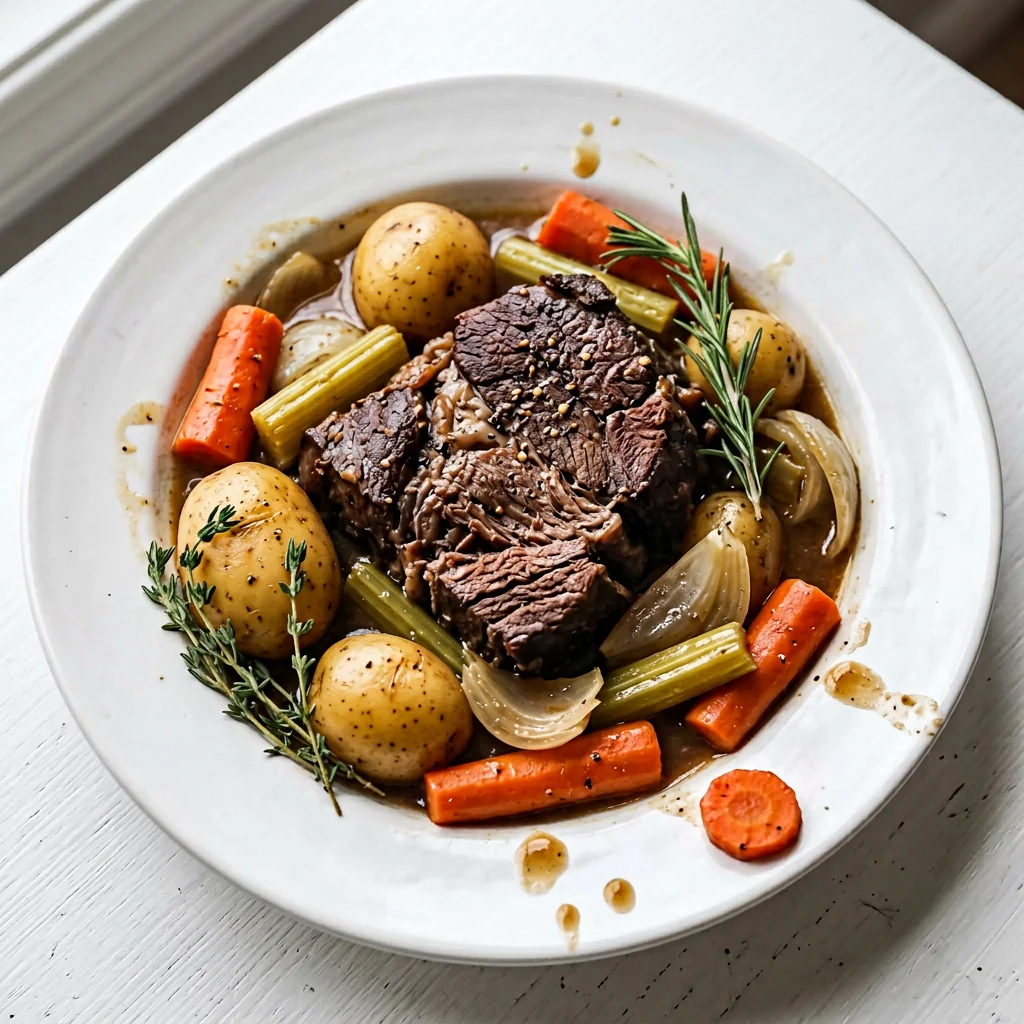
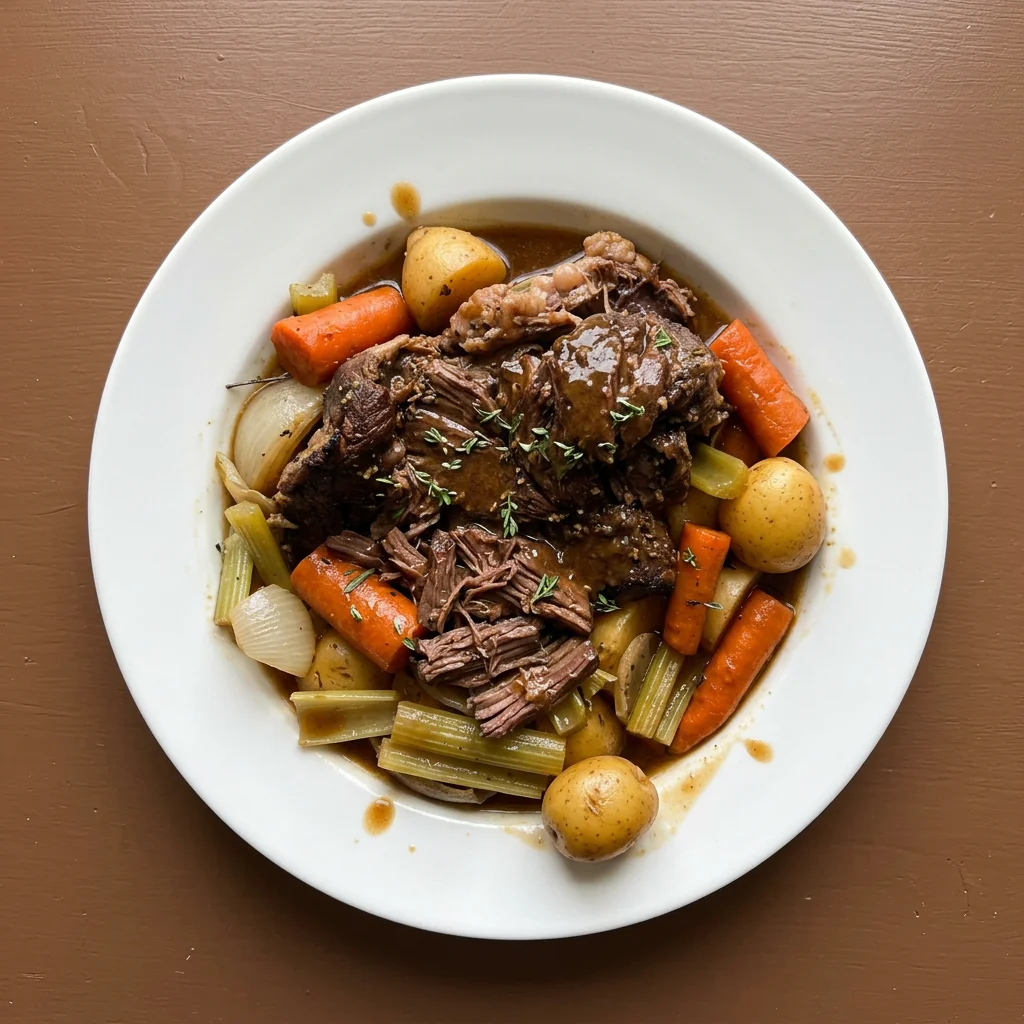
Pot roast with carrots and potatoes is the Sunday dinner that defines the word: a three to four pound chuck roast seared deep, then braised covered in a Dutch oven at 325 degrees for three to four hours with chunked carrots, quartered potatoes, and a savory broth perfumed with rosemary, thyme, and bay.
The meat falls apart under a fork, the vegetables drink the pan juices, and the house smells like a hug for hours.
Everything happens in one pot: sear, sweat, braise, rest. The oven does the patient work while you do literally anything else. It is ideal for slow weekends, family dinners that deserve a centerpiece, and anyone who believes the best meals are the ones that cook themselves into greatness.
Recipe at a Glance
- Prep time: 15 minutes
- Cook time: 3 to 4 hours
- Total time: about 3 hours 30 minutes to 4 hours 30 minutes (mostly hands off)
- Servings: 6
- Difficulty: Easy
- Method: Sear, then covered oven braise at 325°F in a Dutch oven
Ingredients You’ll Need
- 3 to 4 lb chuck roast
- 1 lb carrots, cut into large chunks
- 1.5 lbs potatoes, quartered
- 1 onion, quartered
- 4 cloves garlic
- 2 cups beef broth
- 1 tbsp tomato paste
- 2 tbsp Worcestershire sauce
- 1 tsp dried rosemary
- 1 tsp dried thyme
- 2 bay leaves
- Salt and pepper, to taste
- 2 tbsp olive oil
Ingredient Notes & Easy Substitutions
Chuck roast: The three to four pound chuck is the pot roast gold standard; its marbling melts over the long braise into fork tender strands. A rump roast or bottom round works, though leaner cuts are slightly less buttery; let tenderness, not the clock, call the end.
The vegetables: A pound of carrots in big chunks, a pound and a half of potatoes quartered, and one onion in wedges. Cut them substantial; small pieces dissolve into the broth over four hours, while big, honest chunks turn silky and soak up the juices. Yukon golds hold their shape best.
Tomato paste and Worcestershire: One tablespoon of paste and two tablespoons of Worcestershire are the sauce’s quiet backbone; the paste sweetens and deepens, the Worcestershire brings the savory umami that makes the broth taste like it simmered for days.
Rosemary, thyme, and bay: One teaspoon each of the dried herbs plus two bay leaves, the classic pot roast trio. They steep in the broth for hours and flavor every layer of the pot without ever announcing themselves.
Beef broth: Two cups, good quality; it becomes the gravy. Low sodium is the smart buy since the long reduction concentrates everything, and you control the final seasoning at the table.
Equipment You’ll Need
- Large Dutch oven with a tight fitting lid
- Tongs
- Wooden spoon
- Cutting board and sharp knife
- Two forks, for shredding
- Fine mesh skimmer, optional, for the sauce
How to Make Pot Roast with Carrots and Potatoes
Sear, sweat, braise, rest, shred. One pot, one afternoon, one unforgettable dinner. Follow with me.
Step One: Season and Sear
Season the roast generously on all sides with salt and pepper. Heat the olive oil in a Dutch oven over medium high heat and sear the roast for 4 minutes per side, until a deep brown crust forms on every face.
You are looking for real color, mahogany and crackling, not gray with good intentions. That crust is the foundation of the entire pot’s flavor, so give each side its full four minutes and do not wander.
Step Two: Onion and Garlic
Add the onion quarters and garlic cloves to the pot and cook for 2 minutes, stirring to pick up the browned bits from the bottom.
You are looking for the onions to start softening at the edges and the garlic to turn fragrant. The fond, those browned bits on the pot floor, dissolves into the broth over the braise and becomes the gravy’s depth.
Step Three: Build the Braise
Add the beef broth, tomato paste, Worcestershire sauce, rosemary, thyme, and bay leaves, and stir to combine, nudging the roast back to the center of the pot.
You are looking for the tomato paste to dissolve into the broth and the liquid to come partway up the roast, not drown it. The pot makes its own juices over four hours; shallow liquid concentrates into gravy instead of diluting into soup.
Step Four: Add the Vegetables
Nestle the carrot chunks, quartered potatoes, and onion around the roast, tucking them into the broth.
You are looking for the vegetables mostly submerged but the roast still sitting proud on top. Halfway through the braise, give them a gentle nudge so everything cooks evenly in the pan juices.
Step Five: Braise Covered at 325
Cover the pot and transfer it to a 325 degree F oven. Cook for 3 to 4 hours, until the roast is fork tender.
You are looking for meat that yields the moment a fork twists into it, with no argument at all. At the three hour mark, start testing every thirty minutes; chuck roasts finish on their own schedule, and the tender moment is worth the patience.
Step Six: Rest, Shred, and Serve
Remove the bay leaves. Shred the roast with two forks, discarding any large pieces of fat, and serve it with the vegetables and the pan sauce spooned generously over everything.
You are looking for strands of beef glistening in broth, vegetables that barely hold their shape, and a pot that empties itself. Taste the sauce and season with salt and pepper at the very end; the reduction has concentrated everything, so it may need less than you think.
Serving Size & Batch Scaling
A three to four pound roast with all the vegetables feeds 6 generously. The recipe doubles cleanly into two Dutch ovens or one very large one; keep the liquid ratios the same and let tenderness decide the finish line.
Pot roast is also one of the great next day dinners, which makes cooking the bigger roast on purpose the smartest kind of planning.
Making More or Less?
- 3 servings: A 2 pound roast with three quarters of the vegetables and broth; start testing at 2 and a half hours.
- 6 servings: The recipe as written.
- A crowd: Two roasts in two pots, racks staggered and swapped once; the gravy gets divided and nobody leaves hungry.
For any batch: hard sear, substantial vegetable chunks, covered pot, tenderness over the clock. Those four rules braise the same dinner every time.
Nutrition Estimate Per Serving
The following is an estimated nutritional breakdown per serving (1 of 6), calculated from the ingredients in this recipe. It is an estimate, not medically precise information.
- Calories: ~520
- Protein: 40g
- Carbohydrates: 28g
- Fat: 27g
- Fiber: 4g
- Sugar: 4g
- Sodium: ~640mg
Useful highlight: the plate delivers serious protein and iron from the beef, potassium from the potatoes, and beta carotene from the carrots, with the sauce carrying flavor instead of heavy thickeners.
Common Mistakes to Avoid
A timid sear. Pale meat braises into pale gravy. Four real minutes per face, and the whole pot thanks you later.
Cutting the vegetables small. Two hour vegetables disappear in a four hour braise. Big chunks turn silky; little ones dissolve.
Lifting the lid to check. Every peek vents the steam that is doing the cooking. Trust the timer and the oven; the pot knows its business.
Pulling at the clock, not the fork. Three hours might be plenty, or the roast might need the fourth. Fork tender is the only finish line in braise country.
Troubleshooting Guide
My roast is tough at hour 3. Why? It simply needs more time; collagen surrenders between 3 and 4 hours depending on the cut’s mood. Re-cover and test again every thirty minutes.
The vegetables are mush before the meat is done. They went in too small or the roast is very large. Lift the vegetables out, keep the braising, and return them to warm through at serving.
The sauce is thin. Simmer it on the stovetop after the roast comes out; ten minutes of reduction turns broth into gravy. A tablespoon of flour whisked into the liquid at a simmer tightens it faster.
What if I do not own a Dutch oven? Use any heavy oven safe pot with a tight lid, or take the crockpot route that my viral Mississippi pot roast made famous; sear first, then low for 8 hours. The oven version wins on crusty edges, the crock wins on walking away entirely.
Variations & Customizations
Red wine version: Replace half a cup of broth with dry red wine and scrape the pot thoroughly after searing; the gravy turns deep and Sunday best.
Celery and parsnip version: Add two celery stalks and a parsnip with the carrots for an old fashioned, barely changed from grandmother’s, pot roast.
Gravy lover’s version: After the roast rests, simmer the strained pan liquid hard for ten minutes and whisk in a flour butter paste; spoon it over everything with zero restraint.
Cozy pot neighbors: My chicken pot pie soup brings the same slow simmered comfort to a weeknight, and my small batch homemade biscuits exist to ride alongside a pot like this one.
The sear, 325 degree covered braise, and fork tender finish here follow the classic Dutch oven method at Andie Mitchell, and the two cup broth, vegetables around the roast build at The Old Farmer’s Almanac backs the same low and slow structure used above.
What to Serve With It
The pot provides: Meat, potatoes, and carrots share the vessel; dinner is already complete and the plates just need gravy.
For the gravy faithful: Crusty bread or biscuits for dragging through the pan sauce; the last stripe of it is the best bite of the night.
Vegetable sides: A sharp green salad or simply steamed green beans balance the richness if the table wants green.
Sunday plan: Serve it with the pan on a trivet in the middle of the table and let everyone pull their own piece; pot roast is a ceremony, not a plating exercise.
Meal Prep & Make-Ahead Instructions
Can this be made ahead? It is a make ahead dish by nature; pot roast tastes deeper on day two, when the fat lifts off cleanly and the flavors have married overnight. Braise a day early, refrigerate in its liquid, and reheat gently before serving.
The whole pot also assembles in the morning and braises through the afternoon, which makes it the ideal dinner for days when the evening is already spoken for.
Storage & Leftovers
Refrigeration: The roast and vegetables submerged in their sauce keep 4 days airtight and improve for the first two.
Freezing: Freeze the beef and gravy together up to 3 months; the potatoes prefer staying behind. Thaw overnight and reheat to a gentle simmer.
Leftover ideas: Shredded beef sandwiches with the gravy, pot roast hash with a fried egg, or the meat folded into tacos with pickled onion. Day two pot roast might outrank day one, and I say that with love.
Reheating Instructions
Oven (best method): Covered at 300 degrees F for about 25 minutes warms the whole pot through while the sauce loosens back to gloss.
Stovetop: A gentle simmer in the pan juices revives everything in ten minutes, stirring once.
Microwave (single portion): Ninety seconds, covered, with a spoon of the sauce over the top; the gravy is the built in anti dryness insurance.
Frequently Asked Questions
Do I have to sear the roast first? You could skip it, and the pot would still be good; but the sear is where the deep, roasty flavor comes from, and it costs twelve minutes. Sear. Every time.
Can I add the vegetables halfway through? Yes; if you prefer firmer carrots and potatoes, tuck them in for the final 90 minutes. The beef does not mind the company arriving late.
What internal temperature is pot roast done? Fork tender matters more than the number, but the meat usually reads around 200 to 205 degrees F when it shreds effortlessly. The fork is the real test.
Why is my pot roast dry? Almost always underbraiding rather than over, or the pot ran low on liquid. Check the level once halfway and top with a splash of broth if needed; dry pot roast is a thirsty pot roast.
And that is the whole pot: a mahogany crust, three quiet hours in the oven, and a Dutch oven full of meat and vegetables that needs nothing but a fork and a slow evening. It feeds the family twice and makes the whole house smell like the best version of itself. Put it in the oven this Sunday; the leftovers will make Monday famous.