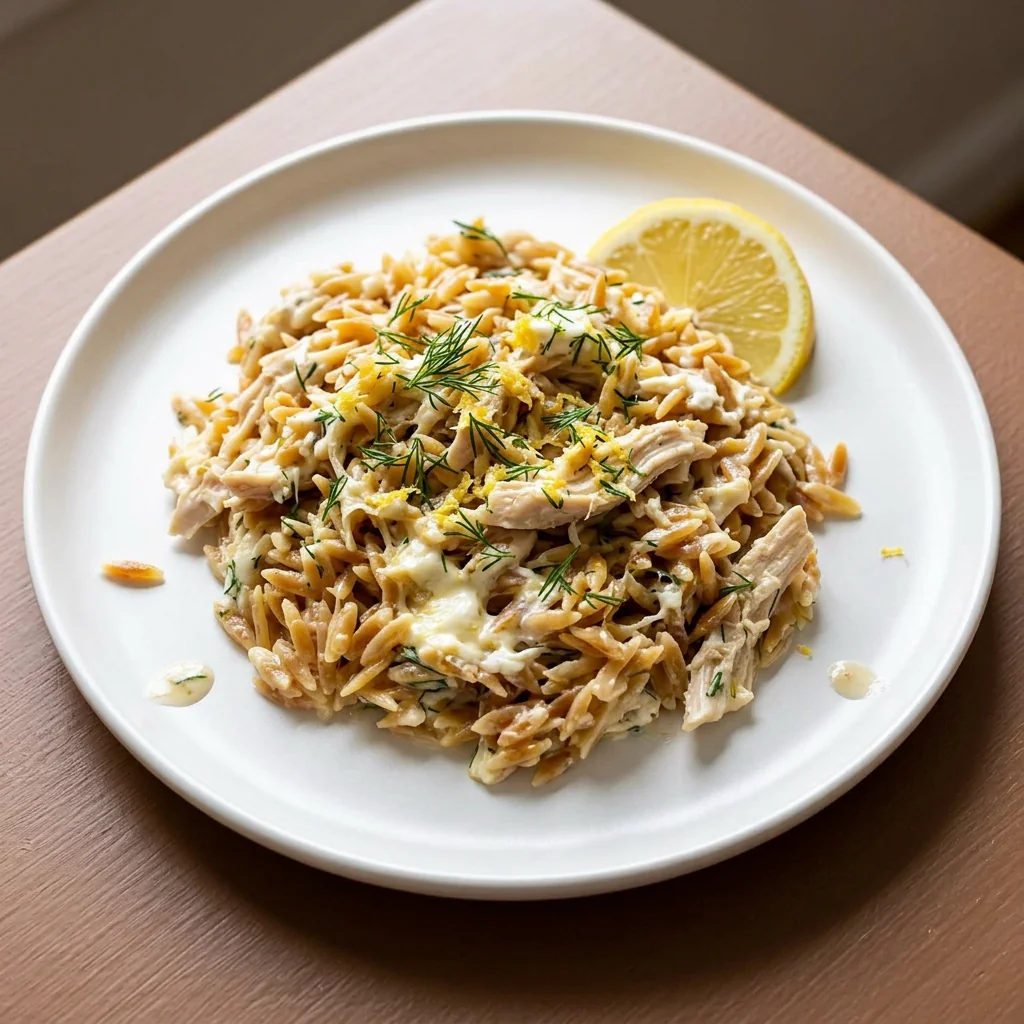
Lemon herb chicken orzo is the bright, silky skillet dinner that tastes like spring decided to stay for dinner.
Seared chicken rests on a bed of orzo cooked right in chicken broth, finished with lemon zest, lemon juice, Parmesan, and a handful of wilted spinach.
It is ideal for busy weeknights, lemon lovers, one-pan people, and anyone who wants comfort food that will not put them to sleep. One skillet, thirty minutes, and every bite tastes like a restaurant that charges extra for the view.
Recipe at a Glance
| Prep time | 10 minutes |
| Cook time | 25 minutes |
| Total time | 35 minutes |
| Cooking method | One-skillet orzo simmer with lemon finish |
| Servings | 4 |
| Main ingredients | Chicken breasts, orzo, chicken broth, lemon, Parmesan, spinach |
| Skill level | Easy |
Ingredients You’ll Need
- 4 chicken breasts
- 1 cup orzo
- 3 tbsp lemon juice
- 2 tbsp lemon zest
- 2 tbsp olive oil
- 2 tbsp butter
- 3 cloves garlic, minced
- 2 cups chicken broth
- 1/2 cup Parmesan cheese
- 1 cup fresh spinach
- 1 tsp oregano
- salt and pepper
- fresh basil
Ingredient Notes & Easy Substitutions
Chicken breasts: Four breasts season simply with oregano, salt, and pepper, then sear in olive oil until golden while the orzo takes over the pan. If yours are thick, slice them horizontally into cutlets so they cook evenly in their 6 to 7 minutes per side. The oregano crust is what makes this lemon herb chicken and not just lemon chicken.
Orzo and broth: One cup of orzo cooks directly in two cups of chicken broth, which is the whole trick of the dish; the pasta drinks the seasoning instead of salted water, and its starch thickens the pan into a sauce. Orzo looks like fat grains of rice and behaves like risotto’s low maintenance cousin, so stir it now and then while it simmers.
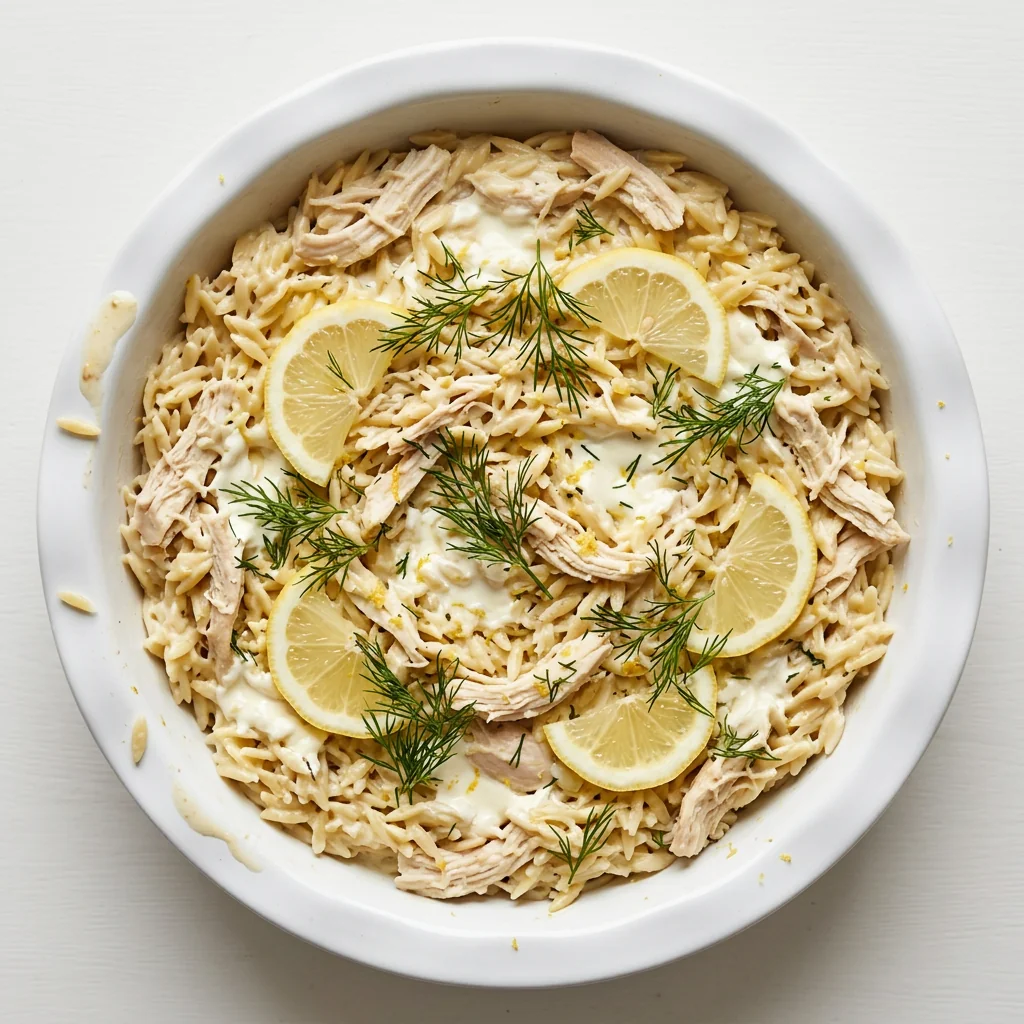
Lemon zest and juice: Two tablespoons of zest is the zest of about two lemons, and it is the ingredient that makes this dish sing in a higher register than juice alone can manage. The zest carries the perfume, the three tablespoons of juice carry the tang, and they land at different moments so both get to speak.
Butter, Parmesan, spinach, and basil: Two tablespoons of butter melt into the broth for body, the half cup of Parmesan melts into creaminess, the cup of spinach wilts in green, and fresh basil goes on at the very end where its perfume survives. This is the finish line team, and every member arrives in the last three minutes.
Equipment You’ll Need
- Large skillet with a lid
- Cutting board and knife
- Microplane or zester
- Wooden spoon
How to Make Lemon Herb Chicken Orzo
Step One: Season and Sear
Season the chicken with oregano, salt, and pepper. Cook it in the olive oil over medium high heat for 6 to 7 minutes per side, until golden and cooked through. Remove to a plate.
Give the chicken its full minutes on each side and leave it alone while it works; the golden crust it builds seasons the entire pan, and that fond becomes the orzo’s inheritance. Pull the breasts at 165 and let them rest on a plate. The pan stays on the heat, because it is about to become the orzo’s new home.
Step Two: Butter, Garlic, Orzo, Broth
Add the butter and garlic to the skillet and cook for 30 seconds, then add the orzo and chicken broth.
The butter melts into the chicken drippings and the garlic blooms for just its thirty seconds, fragrant but nowhere near brown.
The orzo goes in dry and toasts a moment in the butter, which keeps the grains distinct, then the broth pours in and lifts every browned bit off the pan floor. Stir well and settle into a simmer.
Step Three: Cook the Orzo
Cook the orzo for 10 minutes, until tender, stirring occasionally, then add the lemon juice and zest.
Ten minutes in a gentle simmer turns the orzo plush and the broth into a light sauce, and an occasional stir keeps it from sticking to the bottom where the fond lives.
When the grains are tender and most of the liquid is absorbed, the lemon juice and zest land and the whole pan turns bright. This is the moment the dish gets its name back.
Step Four: Spinach and Parmesan
Stir in the spinach and Parmesan, then return the chicken to the skillet.
The spinach wilts almost on contact, folding green through the creamy orzo, and the Parmesan melts into everything salty and smooth.
Nestle the chicken and any collected juices back into the pan, spooning some orzo over the tops. The chicken reheats gently in the residual warmth instead of cooking again, which is how it stays juicy.
Step Five: The Final Simmer
Simmer everything together for 3 minutes, then taste and adjust salt and pepper.
Three minutes lets the flavors marry and the sauce find its final thickness, silky and just loose enough to spoon.
Taste it now, because the Parmesan and broth have been seasoning quietly and the pan deserves a final word. If it thickens past your liking, a splash of broth loosens it without any drama.
Step Six: Basil and Serve
Garnish with fresh basil and serve straight from the skillet.
Torn basil goes on at the table moment, never earlier, because basil in a hot pan turns dark and sullen while basil on top stays green and perfumed.
Bring the whole skillet to the table and let everyone see the pan before it disappears, which takes about four minutes in practice. Lemon wedges on the side are for the extra bright crowd.
Serving Size & Batch Scaling
Four chicken breasts and a cup of dry orzo feed four generously. Scaling up is where the broth ratio matters; keep roughly two cups of liquid per cup of orzo and your pan will behave at any size.
The skillet is the limit, not the recipe; a second pan covers a crowd, and the components are inexpensive enough that this is a genuinely cheap impressive dinner. It is also one of those rare one-pan meals that looks composed on a plate without any styling effort at all.
Making More or Less?
Halving for two works cleanly in the same skillet; use two breasts and half a cup of orzo with one cup of broth, and the same clock applies with a watchful eye in the smaller volume.
For a bigger table, sear the chicken in two batches so nothing steams, and build the orzo in the widest pan you own. Make the full lemon finish regardless of batch size, because the brightness is the point and leftover brightness has never once been a complaint.
Nutrition Estimate Per Serving
- Calories: about 470
- Protein: 38 g
- Fat: 17 g
- Carbohydrates: 38 g
It is an estimate, not medically precise information, and the numbers sit in that happy middle where dinner satisfies without a food coma.
Lean protein, a modest pasta portion, and a handful of greens make this the weeknight plate you do not need to apologize for.
Numbers shift with the chicken’s size and the generosity of the Parmesan snowfall, but the shape of the dinner stays constant: high protein, moderate carbs from the orzo, and a vegetable that snuck in without a single complaint. It is the kind of balance that happens when dinner is built around flavor and lands on nutrition anyway.

Common Mistakes to Avoid
The classic mistake is unstirred orzo, which welds itself to the pan bottom in a starchy crust; occasional stirring is the entire maintenance schedule. The second is skipping the zest, since juice alone makes a flat lemon chicken and the zest is the aromatic half of the duet.
Overcooking the chicken is the quiet third mistake; it gets a second three minutes in the pan at the end, so pull it promptly at 165 during the sear. And add the basil at the end, always, because heat steals its perfume and never pays it back.
Troubleshooting Guide
My orzo absorbed all the liquid but is still firm. Cover the pan and add a splash of broth or water, then give it three more gentle minutes. Orzo varies by brand, and the grains are the only honest judge of doneness.
My dish tastes flat. It wants acid and salt in that order. An extra squeeze of lemon over the finished plates and a pinch of salt wake up every flavor in the pan instantly.
My orzo turned mushy. The simmer ran long or the heat boiled hard. Next round, pull it at ten minutes even if a little liquid remains, since the final simmer with the chicken finishes the absorption. Slightly loose fixes itself; mush does not.
Variations & Customizations
Swap the spinach for baby kale, add a cup of halved cherry tomatoes with the lemon, or finish with crumbled feta instead of some of the Parmesan for a Greek lean. A pinch of red pepper flakes in the butter wakes the whole pan up, and leftover shredded chicken stirred in at the end turns this into a ten minute meal.
The broth simmered orzo technique at Kristine’s Kitchen shaped this version, and the never skip the zest rule from By Kelsey Smith is why the lemon tastes alive instead of bottled. Extra Parmesan at the table is the standing house policy.
What to Serve With It
The skillet is a full plate, so sides stay simple. My garlic butter pasta is the butter noodle baseline for the pasta loyalists at the table.
And for the same bright, limey bowl energy, my street corn chicken rice bowl runs on a similar citrus and cheese rhythm with a Tex-Mex accent. A shaved cucumber salad keeps the whole table cool.
Meal Prep & Make-Ahead Instructions
The chicken can be seared in the morning and waits on a plate for the evening orzo run, which shrinks dinner to about fifteen minutes. You can also zest and juice the lemons ahead; the zest keeps happily in a small container in the fridge.
For weekly prep, cook the full skillet and portion it out; the orzo drinks sauce as it sits, so keep a splash of broth for the reheat. The spinach is best fresh, but it holds its own well enough through day three that nobody stages a protest.
Storage & Leftovers
Leftovers keep happily in a sealed container in the fridge for up to three days. The orzo keeps drinking sauce in the cold, so expect a denser, creamier pasta on day two.
A splash of broth or water on the reheat loosens it back to silky, and a few fresh basil leaves on top make the reheated bowl look deliberate. The lemon actually mellows overnight into something rounder, which regulars start requesting on purpose.
Reheating Instructions
Reheat portions in the microwave for about 90 seconds with a splash of broth, stirring halfway, or warm gently in a covered skillet over low heat for four minutes.
Gentle heat and a little liquid are the entire technique, and either path brings the dish back to a very good lunch. A final squeeze of lemon after warming makes day two taste newly decided rather than reheated.
Frequently Asked Questions
Can I use chicken thighs instead of breasts? Yes; boneless thighs sear the same way and stay even juicier through the final simmer. Keep the same clock and pull them at 165, and the lemon herb treatment suits them beautifully.
Can I make it creamy? Stir in a quarter cup of cream or a spoonful of cream cheese with the Parmesan and the orzo turns silky and rich. The lemon cuts through it happily, and nobody at the table will object.
Is two tablespoons of zest too much? It is bold, and it is correct for this dish; the zest perfumes the whole pan without the sharpness extra juice would bring. If your lemons are enormous, start with one and a half tablespoons and taste.
Can I add vegetables? Absolutely; halved cherry tomatoes, peas, or asparagus pieces all fold in during the final minutes. Anything quick cooking joins the spinach club and keeps the one-pan promise intact.