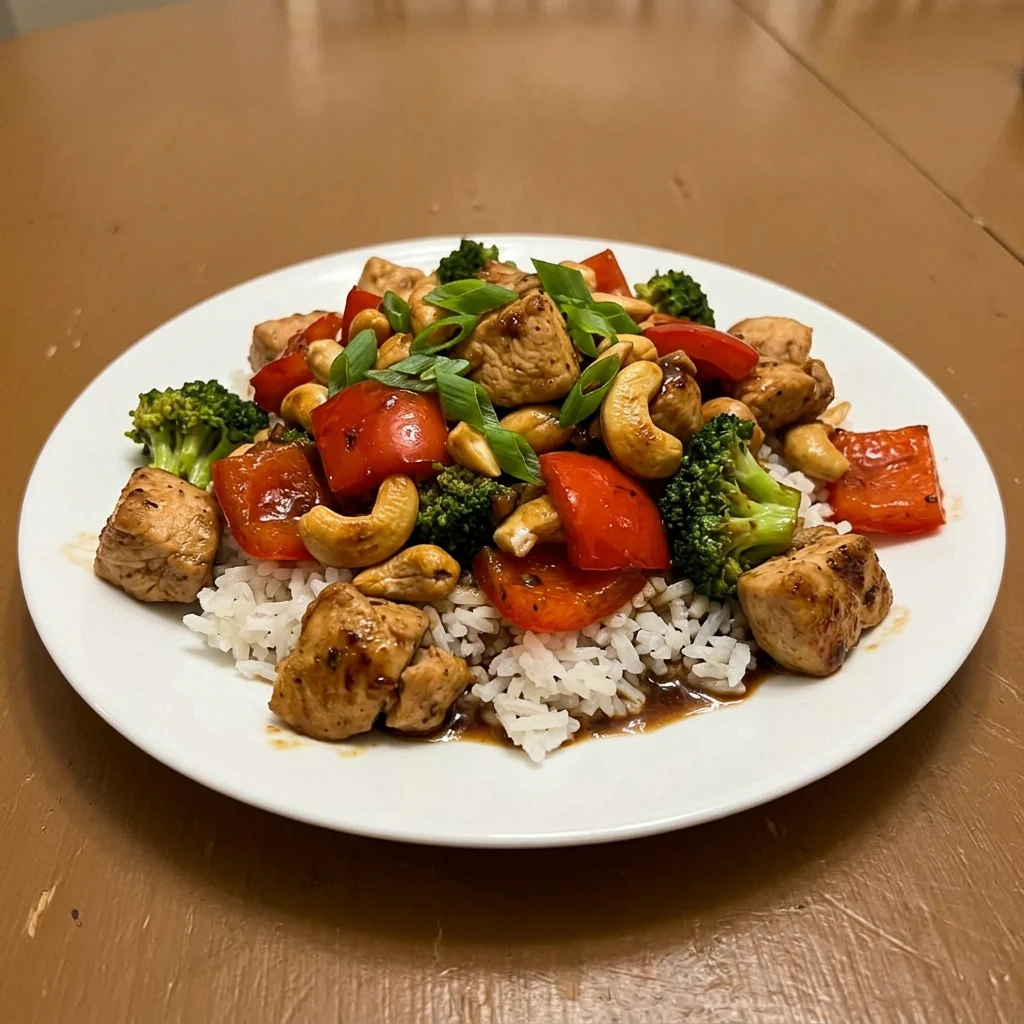
Chicken cashew stir fry is the wok night that beats takeout to the door. Cubed chicken sears fast over high heat, tumbles with crisp bell pepper and broccoli, and glosses up in a hoisin soy sauce before a cup of toasted cashews changes everything.
It is ideal for fifteen minute dinners, cleaning out the vegetable drawer, fakeaway Fridays, and anyone who believes dinner should sizzle. One wok, one bowl of sauce, and a kitchen that smells like your favorite strip mall in the best way.
Recipe at a Glance
| Prep time | 15 minutes |
| Cook time | 15 minutes |
| Total time | 30 minutes |
| Cooking method | High heat wok stir fry |
| Servings | 4 |
| Main ingredients | Chicken breasts, cashews, bell pepper, broccoli, hoisin, soy sauce, sesame oil |
| Skill level | Easy |
Ingredients You’ll Need
- 1.5 lbs chicken breasts, cubed
- 1 cup cashews
- 2 tbsp soy sauce
- 1 tbsp rice vinegar
- 1 tbsp hoisin sauce
- 1 tsp sesame oil
- 2 tbsp vegetable oil
- 1 red bell pepper, diced
- 1 cup broccoli florets
- 3 cloves garlic, minced
- 1 tsp ginger, grated
- 2 green onions, sliced
- 1 tbsp cornstarch
- 2 tbsp water
Ingredient Notes & Easy Substitutions
Cubed chicken: A pound and a half of chicken breasts, cut into even bite sized cubes, sears quickly over high heat and stays juicy. Pat the cubes dry before they hit the wok, because a dry surface browns while a wet one steams. Thighs swap in happily and forgive high heat even more gracefully.
The sauce: Soy sauce, rice vinegar, hoisin, and a drop of sesame oil, tightened with a cornstarch and water slurry, make the glossy brown sauce that defines the dish. The hoisin brings sweet depth, the vinegar cuts it, and the cornstarch turns it from a seasoning into a glaze. Whisk it before the wok gets hot; stir fry waits for no one.
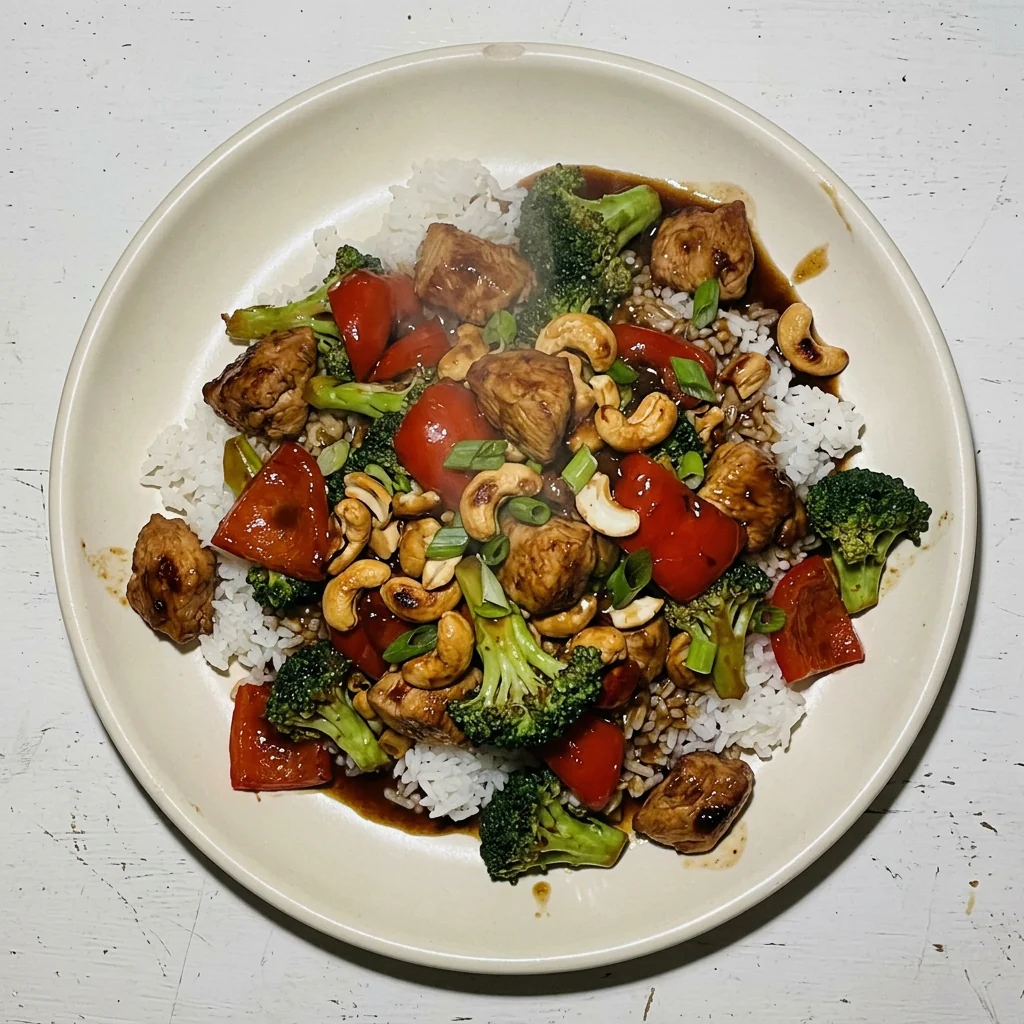
Vegetable oil: Two tablespoons of neutral vegetable oil are the stir fry workhorse, standing up to high heat without smoking the way olive oil sulks. Get the wok properly hot before the oil goes in, then the oil before the chicken; the order matters and takes ten seconds.
Cashews and green onions: One cup of cashews goes in at the very end, keeping their toast and crunch against the glossy chicken, and sliced green onions finish the dish with fresh snap. Roasted and lightly salted cashews are ideal; raw ones taste shy in the finished plate.
Equipment You’ll Need
- Wok or large heavy skillet
- Small bowl and whisk, for the sauce
- Wooden spatula or tongs
- Chef’s knife and cutting board
How to Make Chicken Cashew Stir Fry
Step One: The Sauce
Whisk the soy sauce, rice vinegar, hoisin, sesame oil, cornstarch, and water together in a small bowl.
Stir fry cooking moves too fast for measuring once the wok is hot, so the sauce is built first and stands by the stove like a relay runner. The cornstarch settles as it sits, so give it a re-whisk right before it lands in the wok. The mixture looks thin and unassuming now; thirty seconds against high heat turns it into lacquer.
Step Two: Hot Wok
Heat the vegetable oil in a wok over high heat until it shimmers.
A properly hot wok is the entire secret of stir fry; the oil should shimmer and slide quickly across the surface, and the first ingredient should sizzle on contact. If it only bubbles politely, wait longer. High heat is not a suggestion in this recipe, it is the cooking method wearing a name tag.
Step Three: Sear the Chicken
Stir fry the chicken for 5 to 6 minutes, until golden on the outside and cooked through. Remove it to a plate.
Let the cubes sit undisturbed for the first minute so a sear forms, then keep them moving until golden all over and cooked through. Removing the chicken now is the restaurant move; it waits on a plate while the vegetables cook quickly, then returns at the end tender instead of rubbery. Those browned bits left in the wok are flavor currency about to be spent.
Step Four: The Vegetables
Add the bell pepper, broccoli, garlic, and ginger and stir fry for 3 minutes.
Three minutes over high heat leaves the pepper and broccoli crisp tender, bright, and just scorched at the edges where the flavor lives. The garlic and ginger go in with the vegetables so they perfume the oil without burning, since scorched garlic is the one bitter note this dish cannot forgive. Toss constantly; stillness is for simmering, not stir frying.
Step Five: Sauce and Thicken
Return the chicken to the wok, pour in the sauce, and cook until it thickens and glosses everything, about a minute.
The cornstarch slurry activates in the hot wok almost instantly, turning the thin sauce into a shining glaze that clings to every cube and floret. Keep everything moving so the sauce coats rather than puddles. When the wok contents look like the takeout photo, the heat’s job is done.
Step Six: Cashews and Green Onions
Stir in the cashews and sliced green onions and serve over rice.
The cashews join at the very end so they stay crunchy, and the green onions wilt just slightly on contact, keeping their color and snap. Spoon it over steamed rice immediately, letting the extra glaze soak in at the edges. The first bite explains why this dish has outlived every food trend of the last fifty years.
Serving Size & Batch Scaling
A pound and a half of chicken with a cup of cashews feeds four over rice. Doubling is two wok sessions, not one crowded pan, because a full wok steams instead of sears and the whole dish turns pale.
The ingredients are inexpensive and the cooking is fast, which makes this the weekday answer to the takeout receipt. A cup of rice started before the prep even begins means everything lands on the table in under half an hour, together and hot.
Making More or Less?
Halving for two works in the same hot wok with the same clock; make the full sauce if you like extra glaze over the rice, which most right thinking people do.
Scaling up for a crowd, stir fry in batches and hold the finished rounds on a platter, then toss everything briefly together before serving to re-glaze. The wok respects volume limits; work with them and the dish stays restaurant quality at any size.
Prep bowls make wok night look effortless; stack the sauce, aromatics, vegetables, and chicken in the order they hit the pan before the heat goes on. The cooking takes minutes, and the calm is worth more than the speed.
Nutrition Estimate Per Serving
- Calories: about 480 over rice
- Protein: 38 g
- Fat: 20 g
- Carbohydrates: 36 g
It is an estimate, not medically precise information, and the protein number is the headline, backed by the cashews’ healthy fats. Compared to its takeout twin, this version runs lighter on oil and sugar with all the gloss intact.
Common Mistakes to Avoid
The classic mistake is a lukewarm wok, which steams the chicken gray instead of searing it gold; wait for the shimmer. The second is adding the cashews early, since they spend their crunch in the sauce and arrive soft.
Overcooking the broccoli is the quiet third mistake, turning bright florets olive and soft; three minutes is a promise. And crowd the pan at your peril, because stir fry is a solo art form performed at speed.
Troubleshooting Guide
My sauce is thin. The cornstarch settled or the wok was not hot enough when it landed. Mix a teaspoon more cornstarch with a tablespoon of water, re-whisk, and let it bubble another thirty seconds; it will glass over quickly.
My chicken is rubbery. The cubes were small and the heat shy, so they stewed instead of seared. Cubes of even, generous size, a properly hot wok, and a short cook keep them juicy; carryover heat finishes the centers.
My garlic burned. It hit the oil alone or the heat outpaced the tossing. Add garlic and ginger together with the vegetables next time, and keep everything moving; burnt garlic waits for no spatula.
Variations & Customizations
Swap the broccoli for snap peas or green beans, add diced pineapple with the sauce for sweet and sour territory, or finish with a drizzle of chili oil for the heat loyalists. Water chestnuts bring the classic crunch, and a pinch of white pepper in the sauce is the restaurant secret worth stealing.
The soy, hoisin, and rice vinegar sauce balance at Tasty shaped this version, and the high heat wok discipline from The Woks of Life is why the chicken sears instead of steams. Extra sesame oil at the table is for the fragrance loyalists, of whom there are many.
A fried egg on top of each rice bowl is the day after upgrade, with the yolk doing sauce duty nobody planned for. It turns leftover stir fry into a brunch situation, which is the kind of problem solving that builds traditions.
What to Serve With It
Steamed rice is the base, and a simple side keeps the plate honest. My Korean BBQ pork is the other bold, rice friendly dinner for your world flavors week.
And when you want another hot skillet dinner with big flavor, my cowboy butter steak bites are the land based counterpart to wok night. Crisp cucumber salad with rice vinegar is the cooling side this sizzle deserves.
Meal Prep & Make-Ahead Instructions
The sauce whisks together up to a week ahead and waits in a jar in the fridge, and cubed chicken keeps happily for a couple of days. Prep the vegetables in the morning and dinner becomes a true fifteen minute performance.
For weekly meal prep, stir fry a double batch and portion it over rice into containers; the flavors hold for four days and reheat without drama. Keep the cashews separate in a small bag and add them at lunchtime so they crunch like the first serving.
If the week looks long, freeze a portion of the cooked stir fry without the rice; the glaze protects the chicken through a freeze thaw better than most dishes. Thaw overnight and reheat in a hot skillet to bring back a trace of wok char.
Storage & Leftovers
Box up the cooled stir fry and refrigerate for up to four days, with the rice stored separately when you can manage it.
The glaze settles into the chicken overnight and the leftovers taste rounder and sweeter than night one, which is stir fry’s quiet gift. The cashews soften in storage, which is exactly why the separate bag trick exists for the meal prep crowd.
Reheating Instructions
Reheat portions in a hot skillet for about three minutes to bring back a hint of sear, or microwave for about 90 seconds with a splash of water to loosen the glaze.
The skillet re-wakes the edges while the microwave wins the weeknight sprint, and a scatter of fresh green onion on the reheated bowl erases the leftover evidence. Fresh cashews on top are the difference between good and why did we not make a double batch.
Frequently Asked Questions
Can I use chicken thighs? Yes, and many stir fry cooks prefer them; cube boneless thighs the same and keep the clock identical. They stay juicy under high heat and reheat even better than breast for meal prep.
Can I make it gluten free? Use tamari in place of the soy sauce and check that your hoisin is a gluten free brand, since some contain wheat. The sauce comes together identically and the dish keeps all its gloss.
Can I add more vegetables? Absolutely; snap peas, carrots, mushrooms, and baby corn all stir fry happily in the three minute window alongside the broccoli. Just keep the total volume reasonable, because an overloaded wok steams instead of sears.
Do I need a wok? No; a large, heavy skillet works well if you give it the same high heat and work in batches. The wok’s shape helps tossing, but heat and speed are the real equipment.
Can I make it ahead for a party? Stir fry is a last minute dish by nature, but you can do every bit of prep in advance and execute two quick batches when guests arrive. Ten minutes at the wok in front of friends is better entertainment than most appetizers.