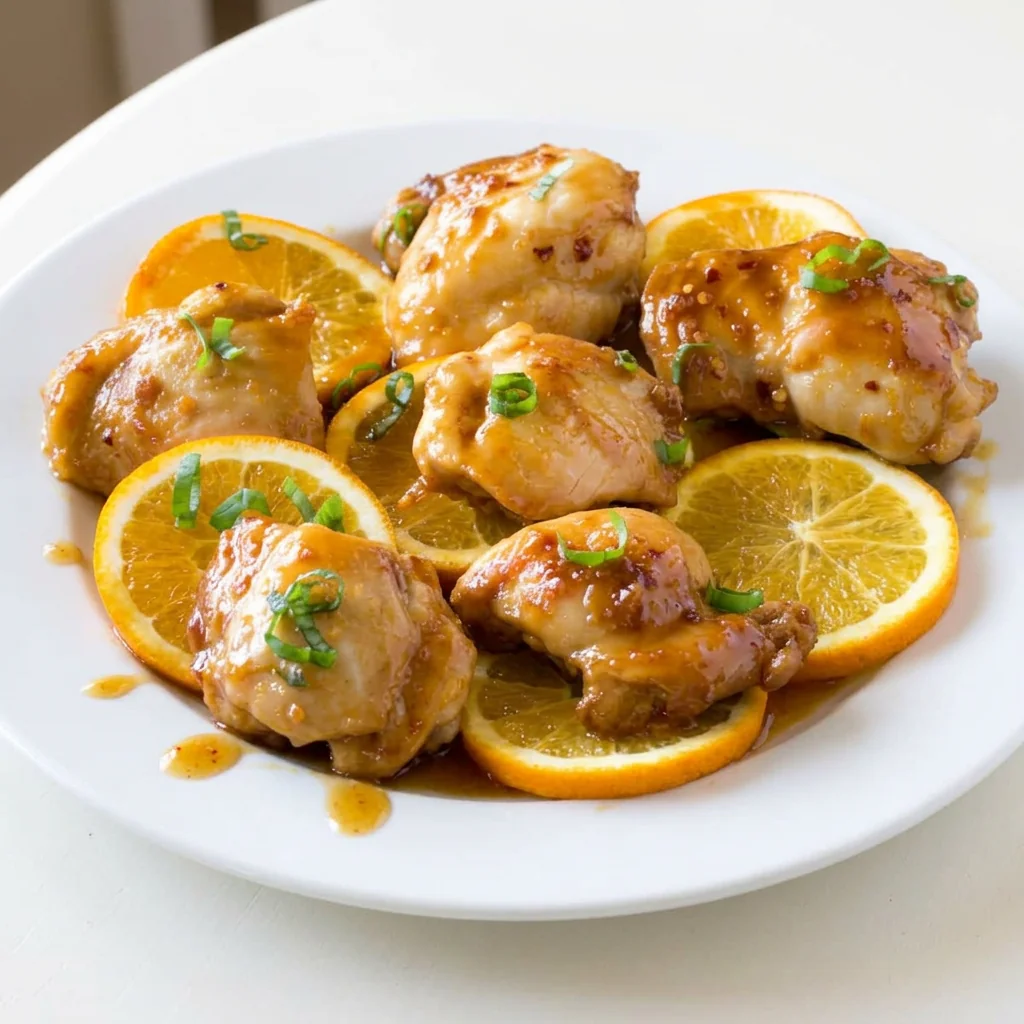
Orange ginger chicken thighs are the sticky, glossy skillet dinner that tastes like your favorite Chinese takeout order grew up.
Crispy skinned thighs bathe in a homemade orange soy honey glaze with fresh ginger and garlic, finished with green onions and sesame seeds.
It is ideal for fakeaway Fridays, feeding a table that fights over the last piece, using the wok skills you already have, and anyone who believes crispy skin is a love language. One skillet, forty minutes, and a glaze worth licking off the plate when nobody is watching.
Recipe at a Glance
| Prep time | 10 minutes |
| Cook time | 30 minutes |
| Total time | 40 minutes |
| Cooking method | Skillet crisped thighs, glaze reduction |
| Servings | 4 |
| Main ingredients | Chicken thighs, orange juice, soy sauce, honey, ginger, garlic |
| Skill level | Easy |
Ingredients You’ll Need
- 8 chicken thighs
- 1/2 cup orange juice
- 2 tbsp soy sauce
- 2 tbsp honey
- 1 tbsp rice vinegar
- 1 tsp ginger, grated
- 3 cloves garlic, minced
- 1 tbsp cornstarch
- 2 tbsp olive oil
- 1 tsp sesame oil
- green onions
- sesame seeds
Ingredient Notes & Easy Substitutions
Chicken thighs: Eight thighs feed a table of four with serious appetites, and skin-on thighs are the ones to buy because the skin is where the crisp lives. They cook skin-side down first, rendering their own fat until golden, and dark meat stays juicy through the final glaze simmer in a way breasts never manage.
The glaze: Half a cup of orange juice with soy sauce, honey, rice vinegar, grated ginger, and minced garlic is the whole sauce, and the teaspoon of sesame oil goes in with it for that toasted background note. Fresh orange juice is brighter, but the carton works on a Wednesday, and the simmer forgives it completely.
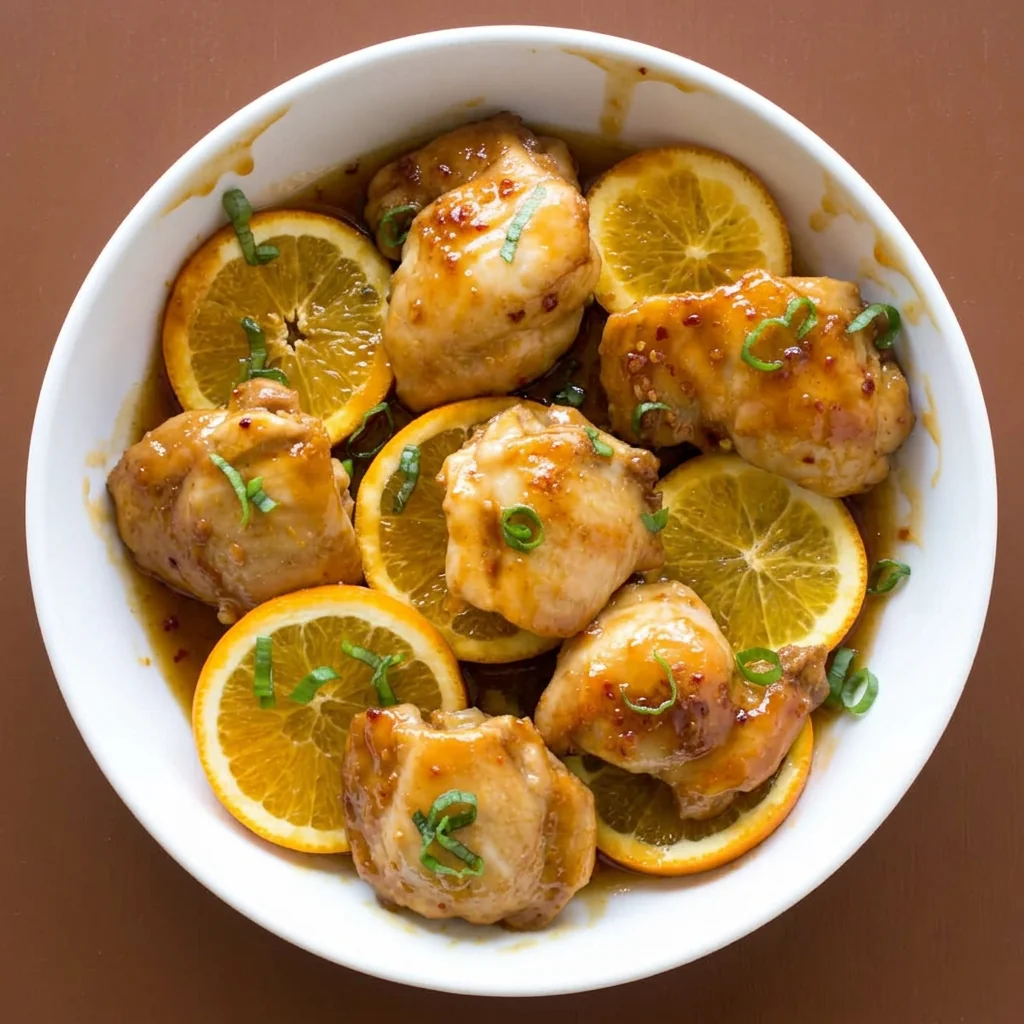
Cornstarch: One tablespoon whisked with a tablespoon of water becomes the slurry that turns the simmering sauce into a lacquer. Without it the glaze stays a thin broth that pools instead of clinging, and clinging is the entire personality of this dish. Whisk it smooth right before it hits the pan, because cornstarch settles fast.
Green onions and sesame seeds: Sliced green onions bring the fresh snap over the glossy dark glaze, and sesame seeds scatter over the top for crunch and looks. They are garnishes with a job description, and both go on after the heat so their texture survives the plate.
Equipment You’ll Need
- Large skillet, cast iron preferred
- Small bowl, for the slurry
- Tongs
- Grater, for the ginger
How to Make Orange Ginger Chicken Thighs
Step One: Season and Heat
Season the chicken with salt and pepper. Heat the olive oil in a large skillet over medium high heat.
Simple seasoning is deliberate here; the glaze brings the big flavors, and the salt and pepper just make sure the chicken itself is delicious underneath. Let the oil shimmer properly before the thighs land, because a confident sear starts with a hot pan and a patient cook.
Step Two: Crisp the Skin
Cook the chicken skin-side down for 5 minutes, then flip and cook 5 more minutes. Remove to a plate.
Skin-side down and hands off; the skin needs uninterrupted contact to render its fat and turn deeply golden, and moving it early tears the masterpiece. Five minutes a side in a properly hot skillet gets thighs most of the way to done, and the final simmer finishes the job. Let them rest on a plate while the glaze builds.
Step Three: Build the Glaze
Add the orange juice, soy sauce, honey, rice vinegar, ginger, and garlic to the skillet and simmer for 3 minutes.
The liquids deglaze the pan and lift all the chicken drippings into the sauce, which is flavor you already paid for. Three minutes of simmering cooks off the raw edge of the garlic and ginger and reduces the juice into something more serious. Scrape the pan bottom with a wooden spoon; that is where the depth lives.
Step Four: Thicken
Mix the cornstarch with 1 tablespoon of water, add it to the sauce, and cook until thickened.
The slurry transforms the simmering liquid in under a minute, turning it glossy and clingy as it bubbles. Keep it moving so the cornstarch does not clump, and pull it when the sauce coats the back of a spoon. It thickens further as it reduces with the chicken, so aim for slightly loose rather than pudding.
Step Five: Return and Glaze
Return the chicken to the skillet and spoon the sauce over the top.
Nestle the thighs skin-side up into the glaze, then spoon it over each piece deliberately, the way a glaze is supposed to be applied.
The skin stays above the liquid line where it can keep its crunch, and the meat side drinks the sauce below. This spoon work is the difference between glazed chicken and chicken with sauce poured nearby.
Step Six: Final Simmer and Garnish
Simmer for 5 minutes, then garnish with green onions and sesame seeds.
Five minutes in the glaze lets the thighs finish cooking through and the sauce reduce to a lacquer that clings to a spoon with intent.
Scatter the green onions and sesame seeds over the top and bring the skillet to the table, because this dish deserves the entrance. Serve over rice so none of the glaze escapes justice.
Serving Size & Batch Scaling
Eight thighs and half a cup of glaze feed four generously, two thighs each with rice. Doubling means two skillets, because a crowded pan steams the skin soft instead of crisping it, and crisp is non negotiable.
The ingredients are inexpensive and the glaze is pantry stock, which makes this one of the cheapest ways to feel like a takeaway night without the delivery fee. It also holds beautifully on a buffet, staying glossy and warm longer than most skillet dishes dare.
Making More or Less?
Halving for two uses four thighs and the same glaze recipe, because a little extra glaze over rice is the entire point of having rice.
Scaling up, mix a second batch of glaze in a bowl rather than doubling into the pan all at once, and reduce in two rounds. The skillet keeps its discipline, the sauce keeps its shine, and the table gets the same glossy result however many thighs showed up.
Nutrition Estimate Per Serving
- Calories: about 450
- Protein: 34 g
- Fat: 24 g
- Carbohydrates: 18 g
It is an estimate, not medically precise information, and most of the carbohydrate is the honey doing its glaze work. Compared to its restaurant orange chicken cousin, this version skips the fryer and lets the skin and the glaze carry all the indulgence.
The glaze is the swing factor in these numbers; a heavier spoonful adds sugar grams and gloss in equal measure. Serve the thighs with roasted broccoli or rice and the plate rebalances itself, and either way the protein number keeps doing quiet hero work for a dinner that tastes like a treat.
Leftover glaze brushed onto tomorrow’s chicken is a gift you give your future self, and it costs nothing tonight.
Common Mistakes to Avoid
The classic mistake is flipping the thighs early, which tears the skin and steams it pale; five uninterrupted minutes is the contract. The second is adding the glaze while the skin is still crisping, which boils it soft, so the chicken always comes out first.
Dumping the cornstarch in dry is the quiet third mistake, leaving little cloudy pearls in your beautiful lacquer; slurry first, always. And give the final simmer its full five minutes, because that reduction is where takeout flavor is manufactured at home.
One last trap: zesting the orange after juicing it. Once halved, an orange is nearly impossible to zest, and the zest is where the perfume lives. Zest first, juice second, and the whole dish gets an upgrade for zero extra effort.

Troubleshooting Guide
My skin is not crispy. The pan was crowded, the heat was shy, or the glaze got impatient. Next round, work in batches, wait for the shimmer, and keep the skin-side up during the final simmer so the glaze never softens it.
My glaze is too thin. Whisk another teaspoon of cornstarch with a tablespoon of water and simmer it in; it will glass over in a minute. Reduction is the second tool, so give it two more minutes if the slurry alone is not enough.
My glaze tastes flat. It wants a brightener; a splash more rice vinegar or an extra squeeze of orange lifts the whole sauce. A pinch of salt at the end is also legitimate, since reductions concentrate everything except salt.
Variations & Customizations
Add a pinch of red pepper flakes with the ginger for heat, swap the honey for brown sugar for a deeper caramel note, or finish with a teaspoon of orange zest for extra perfume. Boneless thighs work skinless for a lighter plate, and a shower of cilantro alongside the green onions is the fusion move that works.
The orange juice and honey glaze balance at The Stay At Home Chef shaped this version, and the vinegar and sesame oil accents from Mom Foodie are why the glaze tastes layered instead of sweet. Rice is the base, and extra glaze on that rice is the standing rule.
What to Serve With It
Steamed rice and something green is the complete picture. My Korean BBQ pork is the other sweet-savory, rice friendly dinner for your fakeaway week.
And for the tropical sibling, my Hawaiian chicken sheet pan runs on the same sweet glaze energy with pineapple on its side. Quick blanched broccoli or snap peas keep the plate honest between glaze moments.
Meal Prep & Make-Ahead Instructions
Whisk the glaze ingredients up to three days ahead and refrigerate; the garlic and ginger steep into something even better. You can also season the thighs the night before, uncovered in the fridge, which dries the skin slightly and crisps it even harder.
For weekly prep, cook the full recipe and portion thighs over rice with extra glaze spooned on; they reheat well for four days. The green onions and sesame seeds stay in a small container and go on fresh at lunch, keeping the whole thing looking newly made.
Storage & Leftovers
Tuck the cooled thighs and every drop of glaze into a container for up to four days. The glaze sets into a jelly in the cold, which looks alarming and is completely normal.
Warmth turns the jelly back into lacquer, and the flavors have usually deepened overnight into something better than night one. Cold chicken thigh with congealed orange glaze straight from the container is also a not-so-secret delicacy among people who cook.
Reheating Instructions
Reheat the thighs in a 350 oven for about 12 minutes to bring back the skin, or microwave at fifty percent power for about 90 seconds if crunch is negotiable that day.
The oven protects the crisp while the microwave wins the lunch hour sprint, and either way the glaze loosens back to glossy with the heat. A few fresh green onions after warming make the reheated plate look intentional again.
Frequently Asked Questions
Can I use boneless skinless thighs? Yes; they cook faster, about four minutes per side, and soak up the glaze beautifully. You lose the crisp skin, which is a real cost, but the dish remains excellent and weeknight faster.
Can I use bottled orange juice? You can, and the simmer treats it kindly. Fresh squeezed is brighter and worth it when oranges are in season, but the honey and ginger carry the flavor either way.
How do I know the thighs are done? Bone-in thighs are best between 175 and 190, where the connective tissue melts and the meat turns silky, and twenty total minutes of skillet and simmer time gets them there. A thermometer at the thickest part, avoiding the bone, is the honest answer.
Can I make it spicy? Add red pepper flakes to the glaze with the ginger, or a spoonful of sriracha at the simmer stage. The sweet heat combination is the reason orange chicken’s spicy cousins always sell out first.