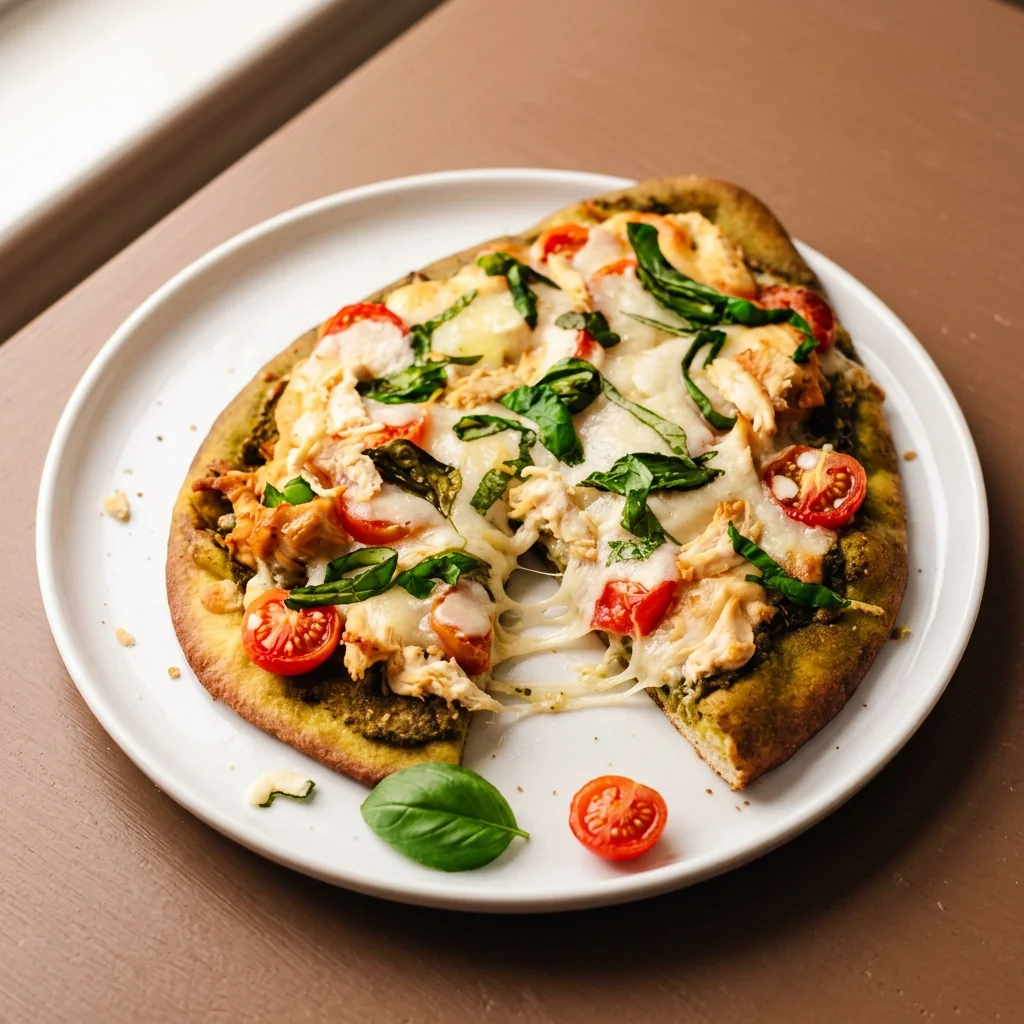
Pesto chicken flatbread is the fifteen minute dinner that eats like a pizza night and cleans up like a snack.
Crisp flatbreads get slicked with basil pesto, piled with rotisserie chicken, mozzarella, and cherry tomatoes, baked until molten, and finished with Parmesan, basil, and a balsamic drizzle.
It is ideal for hectic weeknights, lazy Fridays, feeding kids and grownups the same thing without complaint, and anyone who believes dinner can be this easy. Two flatbreads, one oven, and zero stress.
Recipe at a Glance
| Prep time | 5 minutes |
| Cook time | 12 minutes |
| Total time | 17 minutes |
| Cooking method | High heat oven baked flatbread |
| Servings | 4 |
| Main ingredients | Flatbread, rotisserie chicken, basil pesto, mozzarella, cherry tomatoes, balsamic glaze |
| Skill level | Easy |
Ingredients You’ll Need
- 2 flatbread or naan
- 1 cup shredded rotisserie chicken
- 3 tbsp basil pesto
- 1 cup mozzarella cheese, shredded
- 1/2 cup cherry tomatoes, halved
- 1/4 cup Parmesan cheese
- 2 tbsp olive oil
- fresh basil leaves
- balsamic glaze
Ingredient Notes & Easy Substitutions
Flatbread or naan: Two flatbreads or naan are the crust, and naan’s pillowy chew blistering at the edges is hard to beat at 425. Either works straight from the package, and no par-baking is needed at this temperature for this short bake. This is the rare recipe where the store bought shortcut is the actual technique.
Pesto and chicken: Three tablespoons of basil pesto spread thin cover both breads with herby, garlicky base flavor, and a cup of shredded rotisserie chicken turns it into a real dinner. The rotisserie bird is doing free seasoning work here; its savory crustiness under pesto and cheese is the combination that keeps this recipe in heavy rotation.
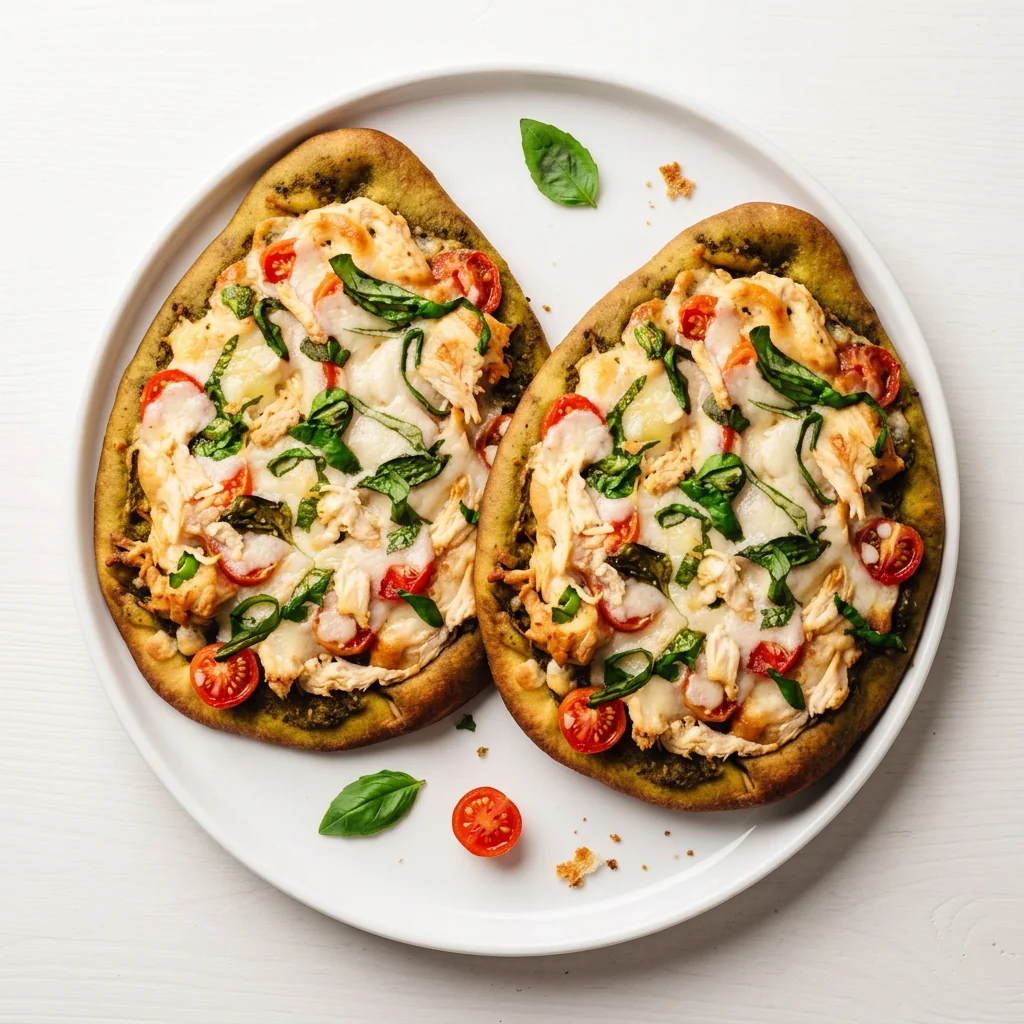
Mozzarella and cherry tomatoes: One cup of shredded mozzarella melts into the bubbly blanket that holds every topping in place, and half a cup of halved cherry tomatoes roast into sweet little bursts on top. Shred the mozzarella from a block if you have three minutes, because block cheese melts creamier than the anti caked bagged kind.
The finish team: A drizzle of olive oil before the bake helps the edges turn golden, and after the oven comes the quarter cup of Parmesan, fresh basil leaves, and a zigzag of balsamic glaze. The cold, sweet, tangy drizzle over hot cheesy flatbread is the flavor contrast that makes people ask what makes it taste like that.
Equipment You’ll Need
- Baking sheet
- Chef’s knife
- Cutting board
- Spatula or pizza cutter
How to Make Pesto Chicken Flatbread
Step One: Preheat
Preheat the oven to 425.
A properly hot oven is the difference between crisp flatbread and soft flatbread, so let it come all the way to temperature before the breads go in.
High heat blistering the edges in a short bake is the whole texture plan. The rack belongs in the center where the bottoms crisp without burning the toppings.
Step Two: The Pesto Base
Spread the pesto evenly over both flatbreads.
Thin and even is the goal; pesto is potent, and a heavy hand at the center leaves the edges raw with flavor and the middle slick with oil.
Leave a small border like a pizza crust line, because the border is where the crisping happens and the eating-by-holds happens too. Three tablespoons across two breads is exactly the right coverage.
Step Three: The Toppings
Top with the shredded chicken, mozzarella, and cherry tomatoes.
Chicken first in an even scatter so every slice gets its share, then the mozzarella over the top like a blanket, then the tomato halves tucked cut-side up so they roast instead of steaming. Resist piling the center; flatbread toppings that migrate to the middle leave a bare, sad perimeter. Even coverage is the entire art form here.
Step Four: The Oil Drizzle
Drizzle the olive oil over the assembled flatbreads.
A thin drizzle across the top helps the cheese brown in spots and the exposed crust turn golden and snappy. Two tablespoons covers both breads with a little left for the baking sheet edges if your breads run thin. Think of it as basting the whole surface toward crunch.
Step Five: Bake
Bake for 10 to 12 minutes, until the cheese is melted and bubbly.
Ten minutes gives you golden edges and molten cheese; twelve adds deeper browning and crispier bottoms. Everything on the bread is already cooked, so the oven is only doing texture work. Watch the last two minutes, because the line between bubbly gold and overly brown mozzarella is thin and the oven does not announce it.
Step Six: The Finish
Top with the Parmesan, fresh basil leaves, and a drizzle of balsamic glaze. Slice and serve.
All three finishers land after the oven, cold against the hot cheese: the salty Parmesan snowfall, the basil leaves, and the sweet tangy balsamic zigzag.
Slice into strips or squares and serve immediately while the bottoms still crackle. The balsamic glaze bottle lives beside the stove for the rest of your life after this dinner.
Serving Size & Batch Scaling
Two flatbreads feed four as halves or two very committed appetites whole. Scaling up means more baking sheets, and the assembly line moves fast enough that a second sheet is ready before the first comes out.
This is the budget dinner party trick; one rotisserie bird covers four to six flatbreads, and guests assemble their own if you set the toppings out. It also cuts into perfect party squares, which is how it ends up at every gathering it attends.
Cut the flatbread into smaller squares and it becomes a party platter that disappears in waves; ten minutes of oven time scales to a crowd better than almost any hot appetizer. The per person cost drops accordingly, which is the kind of math hosts appreciate loudly.
Making More or Less?
Halving for one uses one flatbread, half of everything, and the same 425 clock; dinner for one that took twelve minutes and one sheet of parchment.
For a crowd, bake in shifts and hold the finished flatbreads on a rack in a low oven so the bottoms stay crisp. The toppings can be prepped into bowls in the afternoon, and the whole operation becomes a build and bake assembly line that guests can join.
Stagger two flatbreads through the oven if the crowd outgrows one sheet pan; the second goes in as the first comes out, and nobody notices the fifteen minute offset. Raw dough quarters and pre-shredded toppings hold in the fridge for hours, so the assembly line simply waits for an empty rack.
Nutrition Estimate Per Serving
- Calories: about 380
- Protein: 24 g
- Fat: 20 g
- Carbohydrates: 27 g
It is an estimate, not medically precise information, and the numbers make it a legitimately balanced dinner rather than a guilty pizza stand-in. Lean chicken, real cheese, and fresh tomatoes on a thin crust is a plate you can feel good about serving weekly.
A flatbread dinner lives or dies by portion honesty, and these quarters cut cleanly into four servings with a side salad, or two generous halves when the evening demands it. The cheese carries most of the calories, the chicken carries the protein, and the basil carries the argument that this counts as a balanced plate.
Common Mistakes to Avoid
The classic mistake is pesto overload, which sogs the bread and overwhelms the cheese; three thin tablespoons is plenty. The second is watery tomatoes flooding the center, so halve them and tuck them cut-side up to roast rather than seed-side down to stew.
Skipping the finishing drizzle is the quiet third mistake, because the balsamic against the hot cheese is the flavor twist that elevates the whole bread. And do not drown the crust edge in toppings; that border is the handle and the crunch.

Troubleshooting Guide
My flatbread is soggy in the middle. The toppings were heavy with moisture or the oven was not fully preheated. Halve and dry the tomatoes next time, and give the oven its full temperature before baking; a crisp base needs real heat from minute one.
My cheese browned before the bottom crisped. The rack sat too high. Drop to center rack, and tent loosely with foil if the top races ahead; the bottom catches up quickly at 425.
My flatbread tastes bland. The pesto was stretched thin or the Parmesan was shy. A pinch of salt over the finish, a little more Parmesan, and an extra balsamic zigzag fix it at the table in ten seconds flat.
Variations & Customizations
Add thin red onion slices before baking, scatter arugula on after with the basil, or swap the mozzarella for fresh torn mozzarella for creamier pools. A spoonful of pesto stirred into the chicken before it lands deepens the green, and red pepper flakes over the finish wake up the whole bread.
The pesto and rotisserie pairing at Easy Family Recipes shaped this version, and the block mozzarella and juicy tomato tips from Midwestern HomeLife are why the cheese melts creamy and the bread stays crisp. A shower of extra basil is never the wrong answer.
What to Serve With It
Flatbread night loves a dip-able side. My cheesy garlic bread dinner is the other cheese-on-bread celebration for your carby comfort rotation.
And for a bowl of something warm beside the crisp, my chicken pot pie soup is the creamy counterpart that a slice of flatbread was born to dunk. A simple arugula salad with lemon keeps the whole plate lively.
Meal Prep & Make-Ahead Instructions
Shred the chicken and halve the tomatoes in the morning, and dinner becomes a five minute assembly at night. The pesto waits in its jar, the cheese waits in its bag, and the whole thing is closer to a ritual than a recipe.
You can fully assemble the flatbreads a few hours ahead and refrigerate them uncovered on the baking sheet; the short bake goes straight from fridge to oven with a minute added. For parties, set up a topping bar and let everyone build their own before they hit the oven.
Storage & Leftovers
Fridge life for leftover flatbread is about three days, wrapped in foil or boxed up once fully cooled.
The crust softens in the cold as bread does, but the oven brings the snap back on reheat day, and the balsamic and basil flavors settle in nicely overnight. Cold leftover flatbread eaten over the sink is also a time honored tradition and will not be judged here.
Cold flatbread is a legitimate breakfast in this kitchen, and day two quarters reheat into something very close to fresh. Keep the balsamic glaze off until reheating if you know leftovers are coming, since the drizzle dulls overnight while the crust stays capable of re-crisping.
Reheating Instructions
Reheat in a 375 oven or toaster oven for about 8 minutes to revive the crisp bottom, or in a dry skillet over medium heat for three minutes covered.
The oven and skillet both protect the texture that the microwave destroys, so choose one of those whenever the crunch matters. A few fresh basil leaves and another thin drizzle of balsamic after warming make day two taste like a fresh order.
Frequently Asked Questions
Can I use fresh mozzarella? Yes; tear it and pat it dry first, since fresh mozzarella carries water that can sog the bread. It melts into creamy pools rather than a stretchy blanket, and many people prefer exactly that.
Can I grill these instead? Absolutely; assemble as written and grill over medium indirect heat with the lid closed for about six to eight minutes until the cheese melts. The smoky char on the crust is a genuinely excellent summer variation.
What else can I top it with? Thin red onion, baby spinach, kalamata olives, and artichoke hearts all fit the pesto flavor family. Keep the total toppings modest so the crust bakes crisp under the weight of ambition.
Is balsamic glaze the same as balsamic vinegar? No; glaze is cooked down and syrupy, which is why it drizzles and clings. Reduce a cup of vinegar by half for a homemade version, or buy the bottle once and thank yourself at every flatbread night.