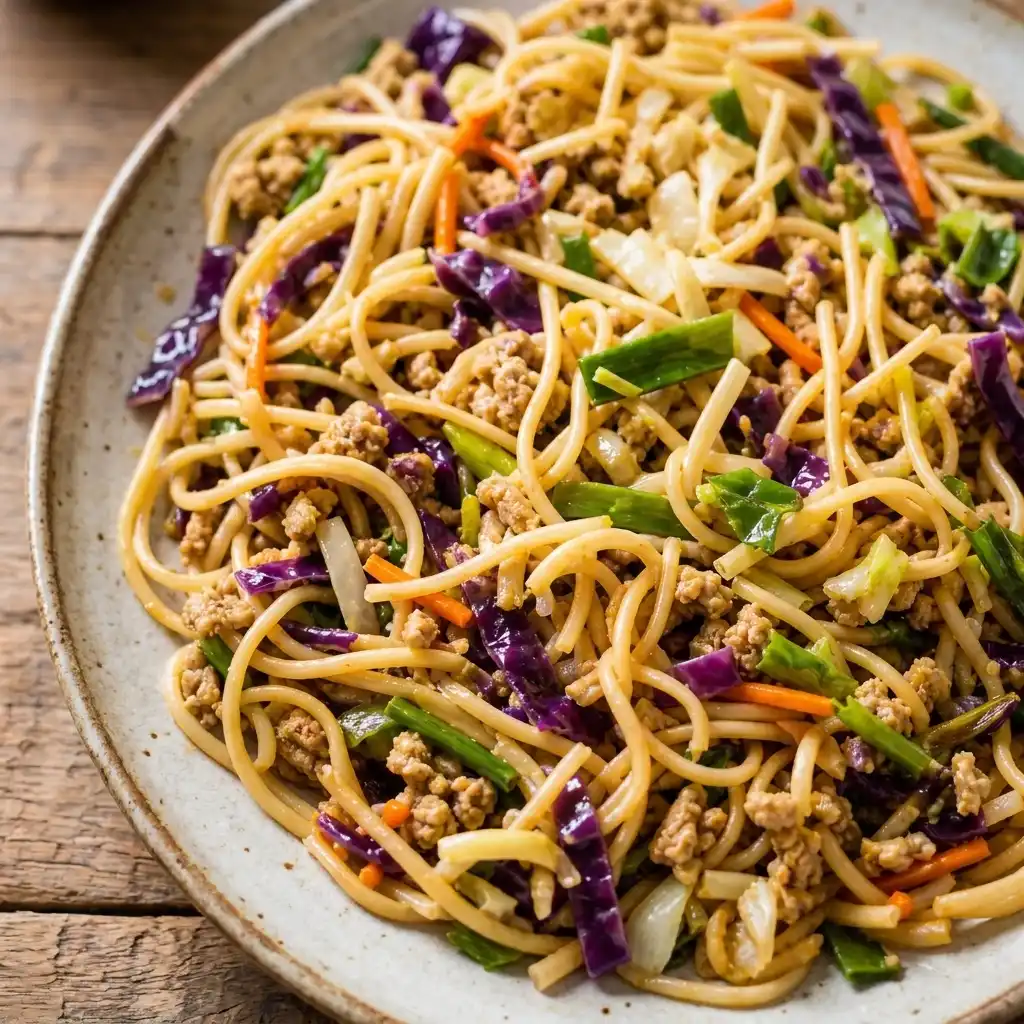
A potsticker noodle bowl is what happens when you take everything you love about dumplings and skip the folding. You get wide, chewy lo mein noodles tossed with browned ground pork, crunchy cabbage, and a sauce that tastes exactly like the dipping sauce from your favorite dumpling spot.
The whole thing comes together in one skillet in about thirty minutes, and it hits that same savory, sweet, slightly spicy note that makes potstickers so addictive.
If you have ever ordered takeout noodles and thought they needed more personality, this recipe fixes that.
The dark soy sauce gives the noodles a deep mahogany color, the mirin adds a subtle sweetness, and the sriracha lets you dial the heat up or down depending on who is eating. This is bold, saucy, and unapologetically slurpable.
The Quick Snapshot
- Prep Time: 10 minutes
- Cook Time: 20 minutes
- Total Time: 30 minutes
- Servings: 4
- Difficulty: Easy
- Cuisine: Asian-inspired
- Cooking Method: Stovetop / One-pan
- Meal Type: Dinner
- Calories (per serving): ~480
- Protein: ~28g
- Carbs: ~52g
- Fat: ~18g
What Hits Your Senses
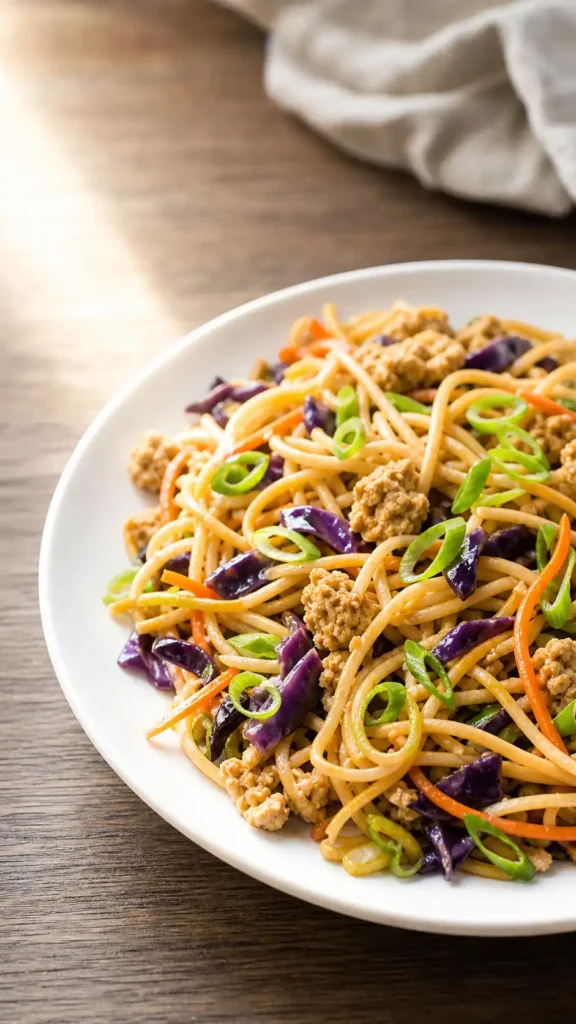
The noodles are glossy and dark, coated in a sauce that clings to every strand instead of pooling at the bottom of the bowl.
The ground pork adds a rich, meaty base with crispy edges where it hit the hot pan. The cabbage slaw stays slightly crunchy, giving you texture contrast against the soft noodles.
The green onions on top add a sharp, fresh bite that cuts through the richness. The smell is that unmistakable combination of toasted sesame oil, ginger, and garlic that makes your kitchen smell like a Chinese restaurant. The sriracha adds a slow warmth that builds with each bite.
Ingredients You’ll Need
- 8 ounces wide lo mein noodles – These are the foundation. Wide, flat noodles hold sauce better than thin ones and give you that chewy, substantial bite. Udon noodles work as a swap if your store is out, though the texture is bouncier and less chewy.
- 1 tablespoon peanut oil – Has a high smoke point and a neutral flavor that lets the sauce shine. Vegetable oil works if you have a peanut allergy.
- 1 pound ground pork – The protein and the flavor base. Ground pork releases fat as it cooks, which carries seasoning into the noodles. Do not drain it. That fat is free flavor.
- ¼ cup plus 2 tablespoons sliced green onions – Split into two jobs. The larger portion cooks with the pork and mellows out. The smaller portion goes on raw as a garnish for freshness and crunch.
- ½ cup low-sodium chicken broth – The liquid component of the sauce. Low-sodium lets you control the salt level since the soy sauce already brings plenty.
- 3 tablespoons mirin – A sweet Japanese rice wine that gives the sauce its characteristic potsticker-dipping-sauce quality. This is the one ingredient you should not skip. If you do not have mirin, mix 3 tablespoons of rice vinegar with a pinch of sugar. It is not identical, but it gets you in the neighborhood.
- 2 tablespoons dark soy sauce – Thicker, sweeter, and less salty than regular soy sauce. It is the reason restaurant lo mein looks glossy and dark instead of pale and wet. Regular soy sauce works in a pinch, but the color and depth will be noticeably lighter.
- 1 tablespoon minced garlic – About 3 to 4 cloves. Fresh is best. The garlic cooks briefly in the sauce so it does not need much time.
- 2 teaspoons grated ginger – Use a microplane to grate it into a fine paste. Fresh ginger has a warmth and slight spiciness that ground ginger cannot replicate.
- 1 teaspoon sesame oil – Toasted sesame oil is a finishing oil, not a cooking oil. It adds that nutty, aromatic quality that makes Asian dishes taste authentic. A little goes a long way.
- ½ teaspoon sriracha – Optional but recommended. It adds a gentle background heat. If you like it spicy, double it. If you are serving kids, leave it out entirely.
- 4 cups bagged coleslaw mix – Shredded green cabbage, red cabbage, and carrots. The bagged mix saves you from slicing three vegetables on a Tuesday night. Fresh cabbage works too, about 4 cups thinly shredded.
Browse our dinner recipes for more weeknight meals, or check out our chicken recipes if you want to add protein variety to your rotation.
Ingredient Swaps
- Ground chicken or turkey instead of pork: Both work, but they are leaner and will not release as much fat. Add an extra teaspoon of sesame oil to compensate for the lost richness.
- Ramen noodles instead of lo mein: They cook faster and have a slightly different texture, but the flavor profile is the same. Discard the seasoning packet.
- No dark soy sauce: Use regular soy sauce plus ½ teaspoon of molasses or brown sugar. It will not be as thick, but the color and sweetness will be closer to the real thing.
- Vegetarian version: Swap the pork for extra-firm tofu, pressed and cubed. Use vegetable broth instead of chicken broth. The sauce carries the dish, so the flavor holds up.
Kitchen Tools
- Large 12-inch skillet or wok – You need the surface area for the pork to brown properly and the noodles to toss without spilling over the sides.
- Tongs – The best tool for tossing noodles with sauce. A spoon will not grip the noodles well enough.
- Small mixing bowl – For whisking the sauce ingredients together before adding them to the pan.
- Pot for boiling noodles – A large pot with plenty of water so the noodles have room to move.
Walking You Through It
While your finished dish may not look exactly like the images in this post, following these instructions will give you the same delicious POTSTICKER NOODLE BOWL. So please follow with me!
This recipe moves fast once you start cooking, so have everything prepped and ready before you turn on the stove. The actual cooking time is about fifteen minutes, but the workflow is smooth if you set up your ingredients first.
Boil the noodles. Cook the lo mein noodles according to the package directions. Drain them and immediately rinse under cold running water. This step matters more than most people realize. The cold rinse washes off the surface starch that makes noodles stick together in a clumpy mass. If you skip it, you will end up with a tangled knot that no amount of sauce can penetrate. Set the rinsed noodles aside.
Brown the pork. Heat the peanut oil in your large skillet over medium-high heat. Add the ground pork and the ¼ cup of sliced green onions. Cook for 5 to 6 minutes, breaking the pork up with a wooden spoon as it cooks.
You want the pork fully browned with no pink remaining and slightly crispy edges where it has made contact with the hot pan. Do not walk away during this step. The green onions cook faster than the pork and can burn if you are not watching. Stay by the stove, stir occasionally, and keep the pork moving.
Make the sauce while the pork cooks. In a small bowl, whisk together the chicken broth, mirin, dark soy sauce, minced garlic, grated ginger, sesame oil, and sriracha. Give it a good stir so everything is combined. Set it next to the stove so you can pour it in quickly when the time comes.
Bring it all together. Once the pork is browned, add the cooked noodles, the coleslaw mix, and the sauce to the skillet. Use your tongs to gently toss everything together. The coleslaw mix will start to wilt and shrink as it hits the heat. Keep tossing for 2 to 3 minutes until the sauce has reduced slightly and coats the noodles evenly.
You want the sauce clinging to the noodles, not swimming at the bottom of the pan. If the sauce seems too thin after 3 minutes, let it go for another minute. If it gets too thick or starts looking dry, add a splash of broth or water.
Serve immediately. Transfer to bowls and top with the remaining 2 tablespoons of sliced green onions. The noodles are best right off the stove when the sauce is at its glossiest and the cabbage still has a bit of crunch.
For more Asian-inspired dinners, visit our healthy recipes for lighter stir-fry options, or pair this bowl with something from our soups and salads collection.
Nutrition at a Glance
- Calories: ~480 per serving
- Protein: ~28g
- Carbs: ~52g
- Fat: ~18g
Values are estimates. Actual nutrition varies based on the brand of noodles and the fat content of your ground pork.
Kitchen Wisdom
- Dark soy sauce is not the same as regular soy sauce. It is thicker, sweeter, and less salty. It adds color and body to the sauce. If you have never bought it before, look for it in the Asian aisle of most grocery stores. It keeps in the pantry for months and is worth having on hand.
- Do not drain the pork fat. When the ground pork cooks, it releases fat into the pan. That fat carries flavor directly into the noodles. Draining it means draining flavor. Trust the process.
- Rinse the noodles after boiling. This is the single most common mistake people make with Asian noodle dishes. Cold water removes the sticky surface starch. Without this step, the noodles clump together and the sauce cannot coat them evenly.
- The sauce thickens as it reduces. If your sauce looks thin when you first pour it in, give it a minute. The liquid evaporates and the sauce concentrates. If it over-reduces and gets too thick, a splash of water or broth brings it right back.
For a deeper look at the role of umami in Asian sauces, Serious Eats explains umami and how ingredients like soy sauce and mirin build it.
Common Hiccups
- Sauce is too thin and watery: It needs more time on the heat to reduce. Cook for another 1 to 2 minutes, tossing constantly, until it coats the noodles.
- Sauce is too thick or dry: Add a tablespoon of chicken broth or water and toss to loosen it. This happens if you cook the sauce too long or if your stove runs hot.
- Noodles are a clumpy mess: You skipped the cold rinse. Next time, rinse them under cold water after draining. Right now, you can try adding extra sauce and tossing aggressively with tongs to separate them.
- Green onions burned: The heat was too high or you walked away. Burned green onions taste bitter. Pick them out and add fresh ones at the end as garnish. The dish will be fine.
- Dish tastes salty: You used regular soy sauce instead of low-sodium broth, or you added extra soy sauce. Balance it with a squeeze of lime juice or a pinch of sugar.
Ways to Switch It Up
- Spicy potsticker noodle bowl: Double the sriracha or add ½ teaspoon of chili garlic sauce. The heat builds with each bite.
- Add vegetables: Snap peas, sliced bell peppers, or shiitake mushrooms can go into the skillet with the coleslaw mix. Cut them thin so they cook in the 2 to 3 minute window.
- Make it a bowl meal: Serve over steamed rice instead of mixing the noodles in. The sauce soaks into the rice beautifully.
- Beef instead of pork: Ground beef works with the same sauce. Use a leaner cut (90/10 or higher) so the dish does not get too greasy.
What Goes on the Plate Next
This is a complete meal on its own, but a few additions make it even better. A cup of hot and sour soup on the side turns it into a full restaurant-style dinner.
Steamed edamame with sea salt adds protein and is effortless. A simple cucumber salad with rice vinegar and sesame seeds provides a cold, crunchy contrast to the warm, saucy noodles.
Keeping It Fresh
- Fridge: Store leftovers in an airtight container for up to 4 days. The sauce tightens in the fridge, which is normal.
- Reheating: Warm in a skillet over medium heat with a splash of broth or water. The liquid revives the sauce and loosens the noodles. The microwave works but the noodles can get gummy.
- Meal prep: This packs well for lunch the next day. The flavors hold up better than most noodle dishes after refrigeration. I have not tested freezing it.
Questions People Ask
Can I make this ahead of time? You can prep the sauce and slice the green onions up to a day in advance. Cook the noodles and pork fresh for the best texture.
I cannot find lo mein noodles. What do I use? Udon, ramen (discard the seasoning packet), or even spaghetti work. The sauce is the star, so the noodle type is flexible.
Is this very spicy? With ½ teaspoon of sriracha, it has a gentle warmth. If you are sensitive to heat, leave the sriracha out. If you love spice, double or triple it.
Can I use regular soy sauce instead of dark soy sauce? Yes, but the noodles will be lighter in color and slightly less sweet. Add ½ teaspoon of molasses or brown sugar to compensate.
This potsticker noodle bowl is the kind of recipe you make once and then crave weekly. It is fast, bold, and that sauce is so good you will want to double it just to have extra for dipping. Try it on your next busy weeknight and watch it disappear.