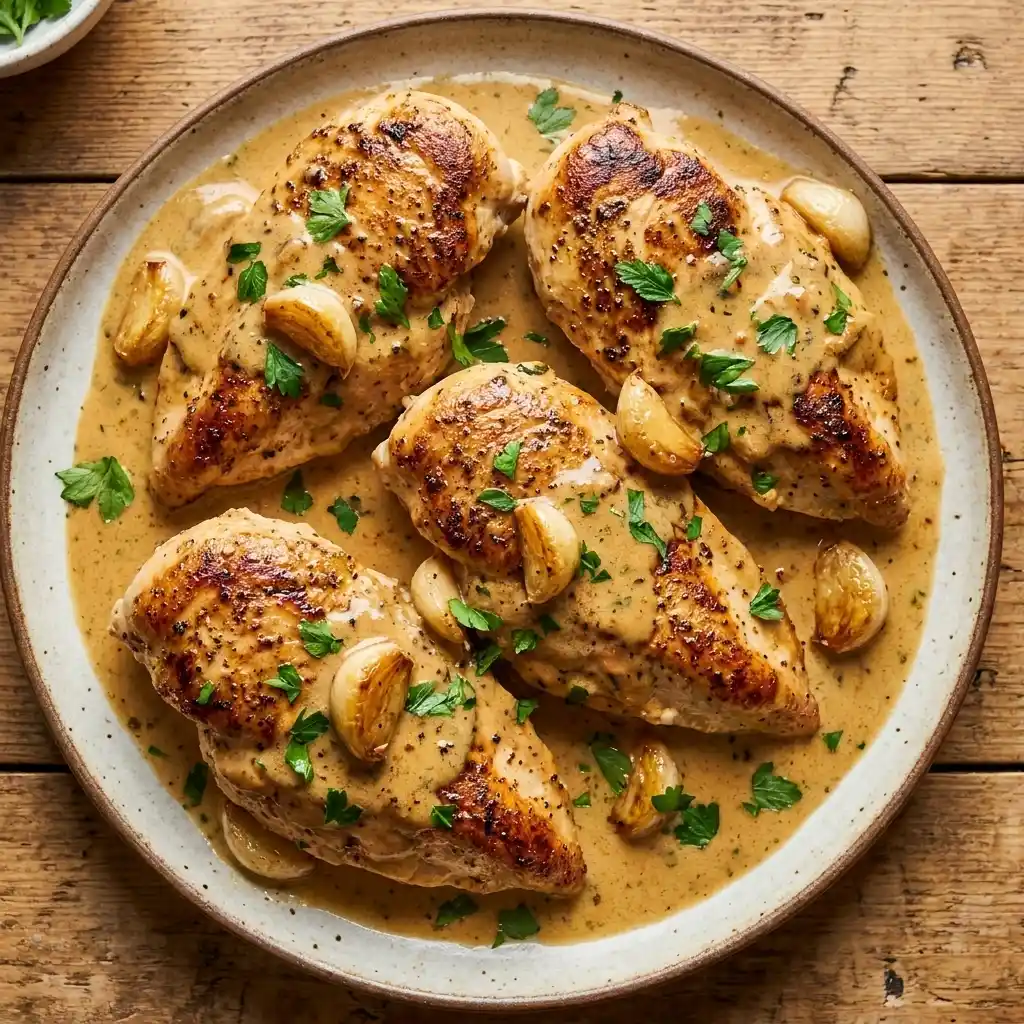
Creamy garlic chicken is the dinner you make when you want gravy on everything and you are not apologizing for it. Chicken breasts get dredged in a parmesan-flour mixture and seared until they develop a golden crust.
Then, in the same skillet, whole garlic cloves caramelize in butter until they turn sweet and soft. Chicken broth, heavy cream, and a beef bouillon cube transform those caramelized garlic drippings into a rich, savory gravy that you will want to pour over mashed potatoes, rice, bread, and probably your entire plate.
The whole thing takes about forty minutes, and it is all done in one skillet. If you have ever made a cream sauce that broke or turned greasy, this recipe shows you the exact technique to get it smooth and velvety every time.
The Quick Numbers
- Prep Time: 10 minutes
- Cook Time: 30 minutes
- Total Time: 40 minutes
- Servings: 4
- Difficulty: Medium
- Cuisine: American comfort food
- Cooking Method: Stovetop / One-skillet
- Meal Type: Dinner
- Calories (per serving): ~520
- Protein: ~35g
- Carbs: ~15g
- Fat: ~38g
What Hits Your Senses
The chicken has a crispy, golden crust from the parmesan-flour dredge that gives way to juicy, tender meat inside. The sauce is thick, glossy, and the color of caramel, with flecks of melted parmesan floating through it.
The whole garlic cloves are soft enough to mash with a fork and taste sweet and mellow, nothing like raw garlic. The aroma that fills your kitchen while the garlic caramelizes is warm, nutty, and slightly sweet.
Every bite of chicken coated in that garlic cream sauce feels like something you would order at a restaurant. The thyme and mustard powder add subtle background notes that make the sauce taste complex without requiring a long list of ingredients.
Ingredients You’ll Need
- 2 large boneless skinless chicken breasts – Sliced into 3 thinner cutlets each so you get 6 pieces total. Thinner cutlets sear faster, cook more evenly, and give you more surface area for the parmesan crust.
- Salt and pepper – For seasoning the chicken before dredging.
- 3 teaspoons Italian seasonings – A blend of dried oregano, basil, and thyme that seasons both the chicken and adds background flavor.
- ¼ cup flour – Combined with parmesan for the dredge. The flour creates the base layer that helps the crust adhere and thicken the sauce later.
- 4 tablespoons parmesan cheese, shredded – Mixed into the flour dredge. It toasts in the oil and creates a savory, slightly crispy crust on the chicken.
- 3 tablespoons olive oil – For searing the chicken. Olive oil handles medium-high heat well and adds its own subtle flavor.
- 2½ cups chicken broth – The liquid base of the sauce. Low-sodium is best since the bouillon cube and parmesan already add salt.
- 1 beef bouillon cube (or 1 teaspoon Better Than Bouillon) – This is the secret weapon. A single beef bouillon cube adds depth and umami that chicken broth alone cannot achieve. It sounds unusual in a chicken recipe, but it is the reason the gravy tastes so rich.
- 1 teaspoon low-sodium soy sauce – Adds umami and a hint of saltiness that deepens the sauce. Worcestershire sauce works as a substitute.
- 1 teaspoon onion powder – Reinforces the savory base without adding texture.
- ¼ teaspoon each: dried thyme and mustard powder – These two spices work together to give the sauce a subtle complexity. The thyme adds an earthy, herbaceous note. The mustard powder adds a slight tang and helps the sauce emulsify.
- 3 tablespoons butter – For caramelizing the garlic and building the roux that thickens the sauce.
- 10 whole garlic cloves, peeled – Whole cloves, not minced. Whole cloves caramelize slowly and develop a sweet, mellow flavor. Minced garlic would burn and turn bitter. If you have never cooked whole garlic cloves in butter, you are in for a surprise.
- 3 tablespoons flour – For making the roux after the garlic caramelizes. This is separate from the dredge flour.
- ¼ cup heavy cream – Added at the end to make the sauce velvety and smooth. The cream also cools the sauce slightly so the parmesan does not clump when you stir it in.
- ¼ cup parmesan cheese – Stirred into the sauce at the very end. It melts into the cream and adds the final layer of savory richness.
Browse our chicken recipes for more comfort food dinners, or visit our dinner recipes for complete meal ideas.
Ingredient Swaps
- Chicken thighs instead of breasts: Thighs stay juicier and are harder to overcook. Adjust the searing time by a minute or two per side.
- No beef bouillon: Use an extra ½ cup of chicken broth plus 1 tablespoon of soy sauce or Worcestershire. The depth will not be quite the same but it works.
- Mushrooms: Sauté 8 ounces of sliced mushrooms separately and stir them into the finished sauce. They add earthiness and texture.
- No heavy cream: Use half-and-half or whole milk, but reduce the sauce a bit longer to compensate for the thinner liquid. Do not boil the sauce after adding milk or it may curdle.
Kitchen Tools
- Large skillet (cast iron or enameled cast iron is ideal for searing and building sauce)
- Silicone spatula (for scraping the fond off the bottom of the pan)
- Whisk (for smoothing out the sauce)
- Tongs (for flipping and moving the chicken)
- Meat mallet (for pounding the chicken to even thickness)
Getting It Done
While your finished dish may not look exactly like the images in this post, following these instructions will give you the same delicious CREAMY GARLIC CHICKEN. So please follow with me!
This recipe moves in three phases: sear the chicken, caramelize the garlic and build the sauce, then combine and finish. The fond, those browned bits stuck to the bottom of the skillet after searing, is the flavor backbone of the entire sauce. Do not scrub it out.
Prep the chicken. Slice each chicken breast into 3 thinner cutlets. If they are still uneven, pound the thick end with a meat mallet until each piece is roughly the same thickness. Season both sides with salt, pepper, and Italian seasonings. Mix the flour and 4 tablespoons of shredded parmesan on a large plate. Dredge each cutlet in this mixture, pressing it in on both sides and shaking off the excess.
Sear the chicken. Heat the olive oil in your skillet over medium-high heat. When the oil shimmers, add the chicken in a single layer. Do not crowd the pan. If your skillet is not big enough for all 6 pieces, cook in two batches.
Cook for 4 to 5 minutes on the first side without moving it. You want a golden crust to develop. When the chicken releases easily from the pan, it is ready to flip. Cook for another 4 to 5 minutes on the second side. Transfer the chicken to a plate and cover it loosely with foil.
Caramelize the garlic. Reduce the heat to medium. Add the butter to the same skillet. Use a silicone spatula to scrape up the browned bits from the bottom. These bits, called fond, are concentrated flavor.
Add the whole garlic cloves and cook them for 6 to 7 minutes, stirring occasionally, until they are golden and softened. They will smell sweet and nutty. Do not rush this step. The caramelization is what gives the sauce its signature flavor.
Build the sauce. Sprinkle the 3 tablespoons of flour over the garlic and butter. Whisk to combine and cook for 1 to 2 minutes. This cooks the raw flour taste out and creates a roux. Add the chicken broth in splashes, whisking constantly to prevent lumps.
Drop in the beef bouillon cube, soy sauce, onion powder, dried thyme, and mustard powder. Stir until the bouillon dissolves. Pour in the heavy cream and bring the sauce to a boil, then reduce the heat to a simmer. Let it cook for 2 to 3 minutes until it thickens enough to coat the back of a spoon.
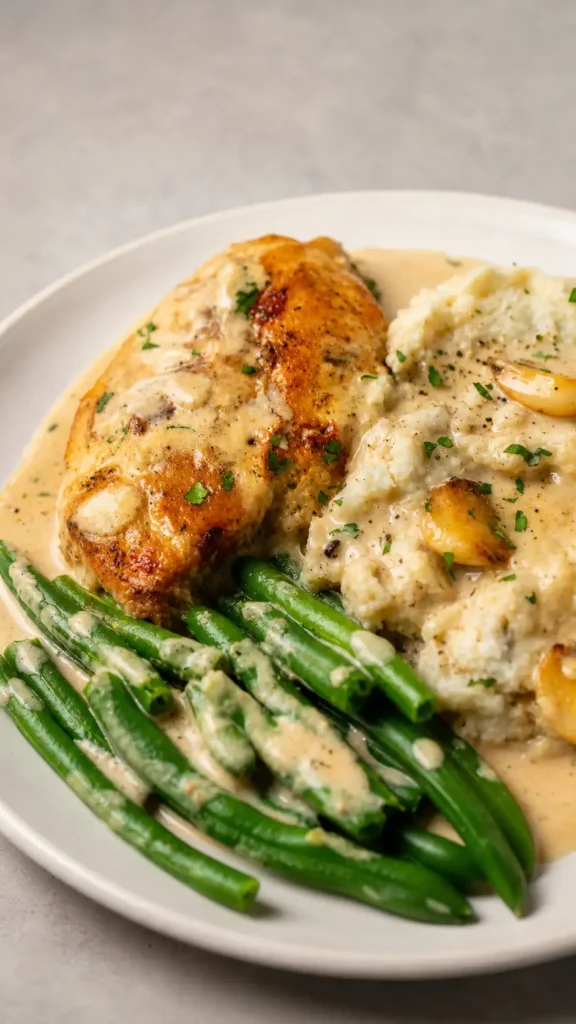
Finish the dish. Reduce the heat to low. Stir in the ¼ cup of parmesan cheese until it melts completely. Nestle the chicken back into the skillet, spooning the sauce over each piece. Cover and cook on low for 5 minutes so the chicken finishes cooking through and absorbs some of the sauce. Garnish with fresh parsley and serve over mashed potatoes.
For side dish ideas, visit our vegetable and side dishes or our healthy recipes for lighter options.
Nutrition at a Glance
- Calories: ~520 per serving
- Protein: ~35g
- Carbs: ~15g
- Fat: ~38g
Values are estimates. The high fat content comes from the butter, cream, and parmesan, which is what makes the sauce so luxurious.
Kitchen Wisdom
- Do not clean the skillet between steps. The fond left after searing the chicken is pure concentrated flavor. When you add the broth and scrape it up, you are building a sauce with layers that you cannot get from a clean pan.
- Whole garlic cloves caramelize differently than minced. Minced garlic has too much surface area and burns quickly. Whole cloves cook slowly, turning sweet and soft. They become a featured ingredient in the sauce rather than a background seasoning.
- The beef bouillon cube is not a mistake. It adds an umami depth that chicken broth alone lacks. This small addition is what makes the gravy taste like it simmered for hours.
- Add the parmesan off-heat or on very low heat. High heat makes parmesan clump and turn stringy instead of melting smoothly into the sauce. The cream should cool the sauce slightly before the cheese goes in.
For the science behind why fond adds so much flavor, Serious Eats explains the Maillard reaction and how browning transforms flavor in cooking.
When Things Go Sideways
- The sauce is lumpy: You added the broth too fast. Next time, pour it in splashes while whisking constantly. To fix lumps now, whisk vigorously or use an immersion blender briefly.
- The sauce is too thin: Simmer it uncovered for a few more minutes to reduce. If it is still thin, make a slurry of 1 teaspoon flour and 1 tablespoon cold water, whisk it in, and simmer for another minute.
- The sauce broke or looks greasy: The heat was too high when you added the cream. Remove from heat and whisk in a splash of cold broth. Bring it back together gently over low heat.
- The chicken is dry: You overcooked it during the sear. Next time, pull it from the pan when it is golden but still slightly underdone inside. It finishes cooking in the sauce during the covered step.
- The garlic burned: The heat was too high. Burnt garlic tastes bitter and cannot be fixed. Discard it and start the garlic step over with fresh cloves on lower heat.
Ways to Switch It Up
- Add mushrooms: Sauté 8 ounces of sliced mushrooms in a separate pan and stir them into the finished sauce. Cooking them separately keeps their texture firm and their color golden.
- Serve over pasta instead of potatoes: The sauce works beautifully over egg noodles or fettuccine. Add an extra splash of broth to loosen it for pasta.
- Add spinach: Stir 2 cups of fresh spinach into the sauce during the last minute of cooking. It wilts almost instantly and adds color and nutrition.
- Make it without the cream: Skip the heavy cream and use an extra ½ cup of broth for a lighter, thinner sauce. It will not be as velvety but the garlic flavor still carries the dish.
What Goes on the Plate Next
Mashed potatoes are the classic pairing because you need something to soak up all that gravy. Roasted green beans or steamed broccoli add a fresh, green contrast.
A simple side salad with vinaigrette cuts through the richness. Crusty bread works if you want to skip the potatoes.
Keeping It Fresh
- Fridge: Store leftovers in an airtight container for up to 3 days. The sauce thickens as it sits, which is normal.
- Freezer: Freeze for up to 3 months. Thaw overnight in the fridge.
- Reheating: Warm in a covered skillet over low heat with a splash of broth to loosen the sauce. Microwave works but the crust softens.
Common Questions
Can I use pre-minced garlic instead of whole cloves? You can, but the flavor will be sharper and more pungent because minced garlic does not caramelize the same way. It also burns much faster. If you use minced, add it in the last 30 seconds before the flour and watch it carefully.
Why beef bouillon in a chicken recipe? It adds an umami depth that chicken broth cannot provide on its own. The combination of chicken and beef flavors creates a more complex sauce. It is a common technique in restaurant kitchens.
Can I make this without heavy cream? Yes, but the sauce will be thinner and less velvety. Use half-and-half or whole milk and simmer the sauce longer to reduce it.
How do I know when the garlic is caramelized? The cloves should be golden on the outside and soft enough to pierce easily with a fork. They will smell sweet and nutty, not sharp and pungent. This takes about 6 to 7 minutes.
This creamy garlic chicken is the kind of recipe that earns a permanent spot in your rotation. The gravy alone is worth making, and once you learn the technique of caramelizing whole garlic and building a pan sauce, you will find yourself using it on everything. Try it this week and see how fast it disappears.
7 thoughts on “CREAMY GARLIC CHICKEN”
Comments are closed.