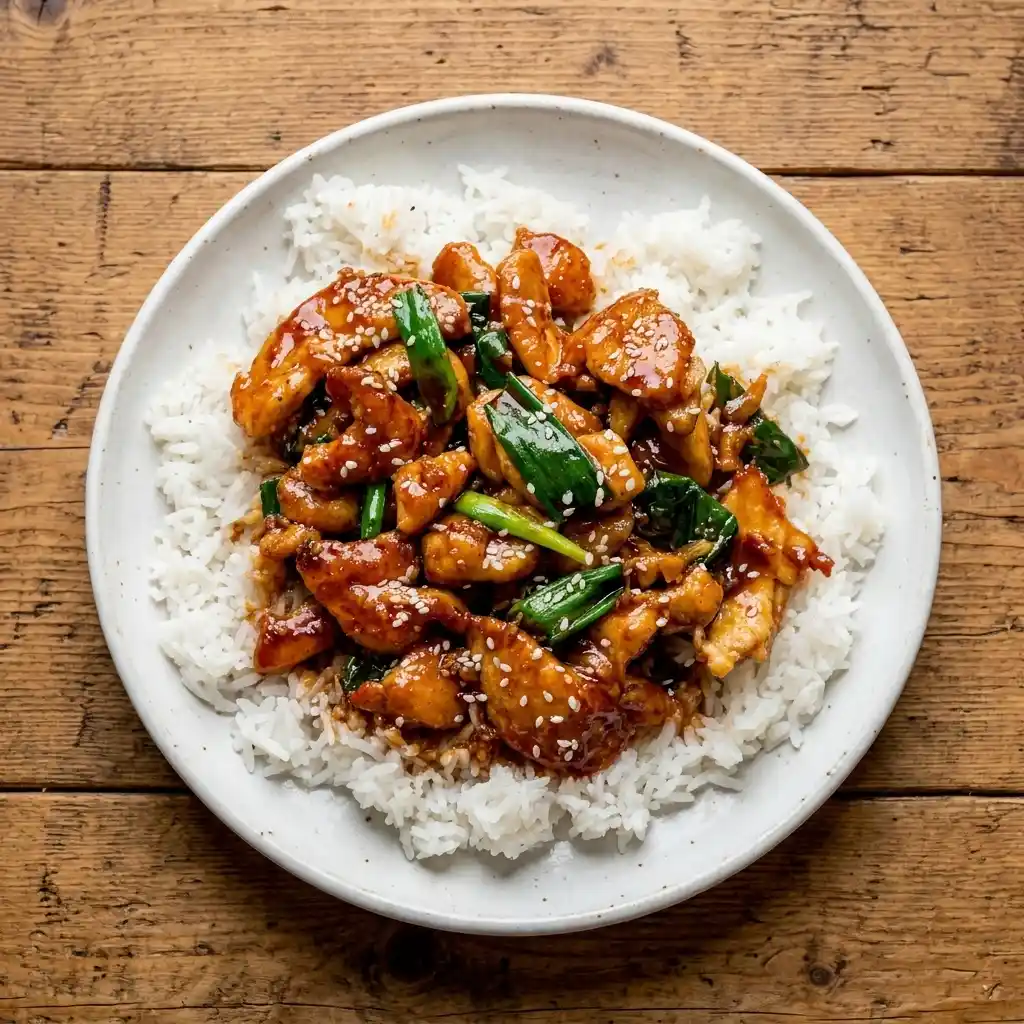
Mongolian chicken is the kind of dish that makes you question why you ever ordered takeout. You fry strips of chicken until the edges get crispy and golden, then toss them in a sticky, sweet, and savory sauce that coats every piece like candy.
The whole thing is done in about twenty minutes, and the sauce comes together in the same pan while the chicken rests. That sauce is the reason this recipe works.
Dark brown sugar melts into low-sodium soy sauce, a splash of sesame oil adds that toasty aroma, and a quick cornstarch slurry gives it a glossy, clingy texture that restaurants achieve but home cooks often miss. If your stir-fry sauces always turn out runny or bland, this recipe shows you exactly how to fix that.
The Quick Numbers
- Prep Time: 10 minutes
- Cook Time: 10 minutes
- Total Time: 20 minutes
- Servings: 4
- Difficulty: Easy
- Cuisine: Chinese-inspired American
- Cooking Method: Stovetop stir-fry
- Meal Type: Dinner
- Calories (per serving): ~380
- Protein: ~30g
- Carbs: ~35g
- Fat: ~14g
What You Taste
The first thing that hits you is sweetness, but it is not cloying. The dark brown sugar and soy sauce balance each other out, creating a sauce that is sticky and rich with a deep amber color.
The chicken has a light cornstarch crust that stays slightly crispy even after being tossed in the sauce, giving you a textural contrast between the crunchy edges and the tender center.
The ginger adds warmth, the garlic adds depth, and the sesame oil adds a nutty finish that lingers on your tongue. The green onions bring a mild, fresh bite that keeps the whole dish from feeling heavy. This is not a spicy dish, but it is deeply flavored and the kind of thing you keep eating long after you are full.
Ingredients You’ll Need
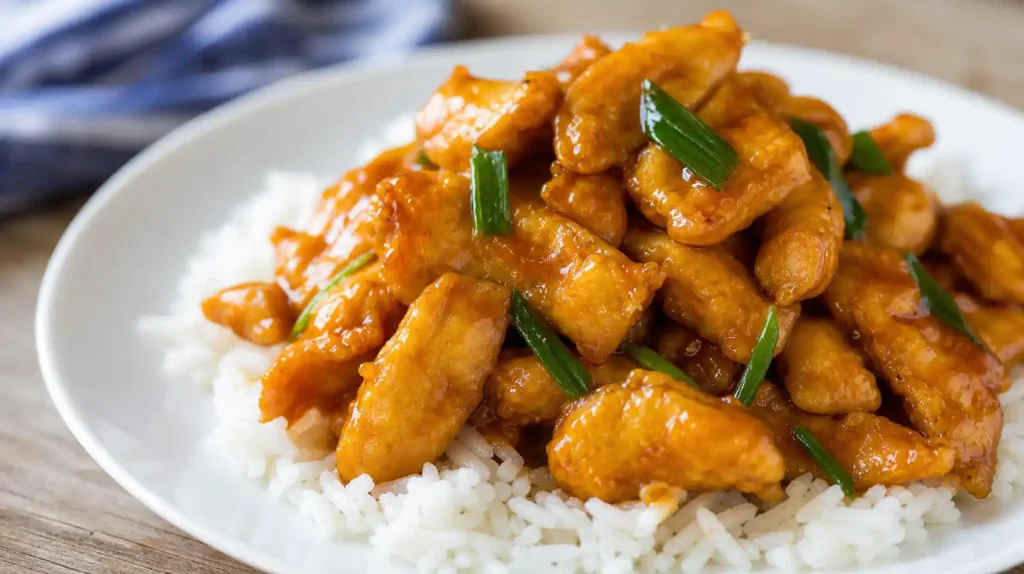
- 1 pound boneless chicken, cut into thin strips – Thighs are recommended because they stay juicy even after frying. Breasts work too, but they can turn rubbery if you overcook them even slightly. Cut the chicken into strips that are roughly the same size so they cook at the same rate.
- ¼ cup cornstarch plus 2 teaspoons extra – The larger amount coats the chicken and creates that crispy exterior when it hits the hot oil. The 2 extra teaspoons go into a slurry that thickens the sauce at the end. Cornstarch is called corn flour in some countries.
- Salt and pepper to taste – A pinch of each goes into the bag with the chicken and cornstarch. The soy sauce adds salt later, so keep this light.
- 3 tablespoons vegetable oil, plus extra if needed – For frying the chicken. You need enough oil to coat the bottom of the pan so the chicken can fry instead of steam. Add more between batches if the pan looks dry.
- 1 teaspoon ginger, minced – Fresh ginger only. Ginger powder does not give you the same aromatic, slightly spicy warmth. Mince it fine so it distributes evenly through the sauce.
- 1 teaspoon garlic, minced – Fresh garlic. One clove is usually about ½ teaspoon when minced, so use two cloves to get the full amount.
- ½ cup green onions, sliced – Both the white and green parts. The white parts cook with the aromatics and soften. The green parts go in at the end for freshness and color. About 2 full green onions will give you ½ cup sliced.
- ½ cup dark brown sugar – This is what makes the sauce sweet and gives it that deep, molasses-like color. Light brown sugar works but the flavor will be less complex. Do not use white sugar.
- ½ cup low-sodium soy sauce – The salty backbone of the sauce. Low-sodium is important because the sauce reduces and concentrates as it cooks. Regular soy sauce can make it too salty. Use gluten-free soy sauce if needed.
- 1½ teaspoons toasted sesame oil – Added to the sauce for that distinctive nutty aroma. Toasted sesame oil is a finishing oil, not a cooking oil, so it goes in at the sauce stage, not the frying stage.
- ⅓ cup water – Mixed with the 2 teaspoons of cornstarch to make the slurry that thickens the sauce. Mix it right before you pour it in, because cornstarch settles quickly.
Need more quick dinner ideas? Browse our chicken recipes or check our dinner recipes for complete meal inspiration.
Ingredient Swaps
- Chicken thighs instead of breasts: Thighs are more forgiving and stay juicier. If you have been disappointed by dry stir-fried chicken in the past, thighs will solve that problem.
- Beef instead of chicken: Flank steak or sirloin sliced thin works with the exact same sauce. This is essentially how Mongolian beef is made.
- No dark brown sugar: Light brown sugar works. White sugar will make the sauce sweeter without the molasses depth. Add ½ teaspoon of molasses to white sugar to approximate dark brown sugar.
- Gluten-free: Use tamari or coconut aminos instead of soy sauce. The flavor is slightly different but the technique stays the same.
- Add vegetables: Broccoli florets, sliced bell peppers, mushrooms, or zucchini can go into the pan with the ginger and garlic. Cut them small so they cook in the short sauce time.
What You Need
- Wok or large skillet – A wok is traditional, but a large flat skillet works fine. You need enough surface area to fry the chicken in batches without crowding.
- Zip-lock bag – For coating the chicken strips in cornstarch evenly. A bowl works too, but the bag method is faster and less messy.
- Tongs – For flipping and removing the chicken pieces.
- Small bowl – For mixing the cornstarch slurry right before adding it to the sauce.
Making It From Scratch
While your finished dish may not look exactly like the images in this post, following these instructions will give you the same delicious MONGOLIAN CHICKEN RECIPE. So please follow with me!
The key to this recipe is frying the chicken in batches so each piece gets crispy, then building the sauce quickly in the same pan. The sauce comes together in about two minutes, so have everything measured and ready before you start.
Coat the chicken. Cut the chicken into thin strips, about ¼ inch wide and 2 to 3 inches long. Put the strips into a zip-lock bag along with the ¼ cup of cornstarch, a pinch of salt, and a pinch of pepper.
Seal the bag and shake it vigorously until every strip is evenly coated. The cornstarch creates a thin layer that crisps up in the hot oil and helps the sauce cling to the chicken later.
Fry the chicken in batches. Heat the vegetable oil in your wok or skillet over medium heat. Add the chicken strips in a single layer, but do not crowd the pan. Overcrowding drops the oil temperature and the chicken steams instead of fries, which means no crispy edges. Fry a few strips at a time. Let them cook for 2 to 3 minutes on the first side until the bottom is golden brown.
Flip and cook for another 2 to 3 minutes on the other side. Transfer the cooked chicken to a plate lined with paper towels to absorb excess oil. Repeat with the remaining chicken, adding more oil between batches if the pan looks dry.
Continuation….
Build the sauce. After all the chicken is fried, look at your pan. If there is no leftover oil, add 2 to 3 teaspoons of fresh oil. Add the minced ginger, garlic, and half of the green onions. Toss them for about 30 seconds until fragrant. You will smell the ginger almost immediately.
Do not let the garlic brown. Add the toasted sesame oil, low-sodium soy sauce, and dark brown sugar. Stir to dissolve the sugar.
Thicken the sauce. Stir the cornstarch slurry one more time (the cornstarch will have settled at the bottom) and pour it into the sauce. Stir constantly for about 30 seconds. The sauce will start to thicken and turn glossy almost immediately.
This is the moment that separates a restaurant-quality sauce from a watery one. The cornstarch needs the heat to activate, so keep the pan on the burner while you stir.
Toss and serve. Add the fried chicken strips and the remaining green onions to the pan. Toss quickly until every piece is coated in the sticky sauce. Remove the pan from the heat. Serve immediately over steamed rice.
For more Asian-inspired meals, explore our healthy recipes or try pairing this with a side from our vegetable and side dishes collection.
Nutrition at a Glance
- Calories: ~380 per serving
- Protein: ~30g
- Carbs: ~35g
- Fat: ~14g
Values are estimates. The actual count depends on how much oil the chicken absorbs during frying and the size of your portions.
Worth Knowing
- The cornstarch slurry is your secret weapon. Mixing cornstarch with cold water before adding it to a hot sauce prevents lumps. If you sprinkle dry cornstarch directly into the hot sauce, it clumps instantly and you get little gelatinous balls instead of a smooth, glossy sauce. Always mix it with cold water first, stir it right before pouring, and add it while the sauce is actively simmering.
- Fry in batches, no matter how tempting it is to cram it all in. When too many pieces of chicken hit the oil at once, the temperature drops and the chicken boils in its own juices instead of frying. The result is pale, soft chicken instead of golden, crispy chicken.
- Dark brown sugar makes a difference. It contains molasses, which gives the sauce a richer color and a more complex sweetness than white sugar. The difference is visible and tasted.
- The sauce thickens off-heat too. Cornstarch continues to thicken as it sits. If the sauce looks perfect in the pan but too thick after a minute on the plate, add a splash of water or chicken broth to loosen it.
For the science behind how cornstarch thickens sauces, Serious Eats explains thickening agents and how they work in different cooking conditions.
Quick Fixes
- Sauce is too thin: It needs more time on the heat. Let it simmer for another 30 seconds to a minute while stirring. If it is still thin, mix another ½ teaspoon of cornstarch with 1 tablespoon of cold water and add it.
- Sauce is too thick: Add a tablespoon of water or chicken broth and stir. Cornstarch sauces tighten up quickly, so this is an easy fix.
- Chicken is not crispy: The oil was not hot enough or you crowded the pan. Next time, make sure the oil is shimmering before adding the chicken and fry in smaller batches.
- Dish is too salty: You used regular soy sauce instead of low-sodium, or you added too much salt at the cornstarch stage. Add a squeeze of lime juice or a pinch more sugar to balance it out.
- Chicken is rubbery: You overcooked it or used breasts that were too thick. Thighs are more forgiving. If using breasts, cut them thinner and pull them from the oil the moment they are golden.
Make It Your Own
- Spicy Mongolian chicken: Add 2 or 3 dried whole red chilies to the pan with the ginger and garlic. Or add a splash of your favorite hot sauce to the sauce mixture.
- Add broccoli: Toss 2 cups of small broccoli florets into the pan with the garlic and ginger. They cook in about 2 minutes and add color and nutrition.
- Hoisin sauce addition: Stir in 1 tablespoon of hoisin sauce along with the soy sauce. It adds depth and a slight fermented sweetness. Skip any additional salt if you do this.
- Serve over noodles instead of rice: Lo mein noodles or rice noodles both work. The sauce coats them beautifully.
What Pairs Well
Steamed white rice is the classic base because it soaks up the extra sauce. Brown rice or quinoa work if you prefer whole grains.
A side of steamed broccoli or snap peas adds green without much effort. If you want a complete spread, add a simple cucumber salad with rice vinegar on the side for a cool, crunchy contrast.
Keeping It Fresh
- Fridge: Store leftovers in an airtight container for 3 to 5 days. The chicken softens as it sits but the flavor holds up well.
- Reheating: Warm in a skillet over medium heat with a splash of water to revive the sauce. The microwave works but the chicken will not be crispy.
- Freezer: Freeze for up to 2 months. Thaw overnight in the fridge and reheat on the stove with a little broth.
- Make-ahead: The sauce can be mixed and stored in the fridge for up to 3 days. Fry the chicken fresh for the best texture.
Common Questions
Can I bake the chicken instead of frying? You can, but the texture changes significantly. Baked cornstarch-coated chicken is drier and less crispy. If you want to avoid frying, try an air fryer at 400°F for 8 to 10 minutes, flipping halfway.
Is Mongolian chicken spicy? The classic version is not spicy. It is sweet and savory. If you want heat, add dried red chilies or sriracha to the sauce.
Why cornstarch instead of flour for the coating? Cornstarch creates a lighter, crispier crust than flour. Flour absorbs more oil and gets heavier. Cornstarch stays delicate and shatters when you bite into it.
Can I use the same sauce for beef? Absolutely. Slice flank steak thin, coat in cornstarch the same way, and follow the exact same steps. That is Mongolian beef.
This Mongolian chicken recipe is going to become one of those dishes you make on repeat. It is fast, the sauce is addictive, and it tastes like something you would pay restaurant prices for. Give it a try this week and see if it does not end up on your regular rotation.