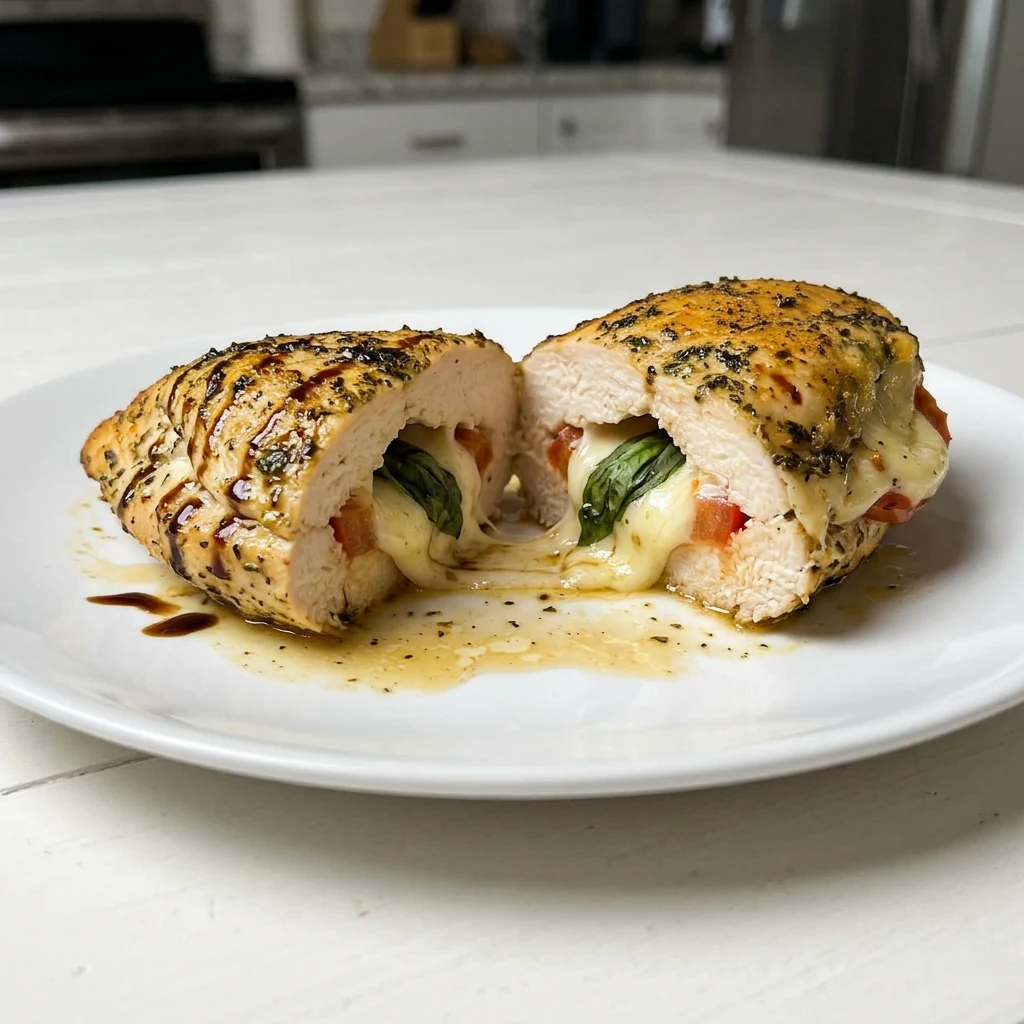
Chicken caprese stuffed breast is the dinner that looks like a restaurant plate and comes together in one skillet and one oven dish.
Each breast gets a pocket stuffed with fresh mozzarella, tomato, and basil, seared golden, baked through, and finished with a drizzle of balsamic glaze.
It is ideal for date nights, impressing guests without stress, summer tomatoes at their peak, and anyone who believes mozzarella is a food group. Forty five minutes, two colors on the plate, and zero leftovers if you play it right.
Recipe at a Glance
| Prep time | 20 minutes |
| Cook time | 26 to 31 minutes |
| Total time | About 50 minutes |
| Cooking method | Sear then oven bake, stuffed |
| Servings | 4 |
| Main ingredients | Chicken breasts, fresh mozzarella, roma tomatoes, basil, balsamic glaze |
| Skill level | Easy |
Ingredients You’ll Need
- 4 chicken breasts
- 1 cup fresh mozzarella, sliced
- 2 roma tomatoes, sliced
- 1/4 cup fresh basil
- 2 tbsp balsamic glaze
- 2 tbsp olive oil
- 1 tsp Italian seasoning
- 1/2 tsp garlic powder
- Salt and pepper
Ingredient Notes & Easy Substitutions
Chicken breasts: Four medium breasts are the canvas, and slicing a deep horizontal pocket is the only knife skill this recipe asks for. Cut into the thick side and almost, but never quite, through to the other side. If your breasts are enormous, halve them into four proper portions first, because a balanced pocket is a balanced dinner.
Fresh mozzarella: The cup of sliced fresh mozzarella melts into creamy pockets inside the chicken, which is the entire magic of the dish. Pat the slices dry before stuffing, because wet mozzarella weeps into the oven and waters the filling. Low moisture mozzarella works in a pinch, though you lose some of the milky luxury.
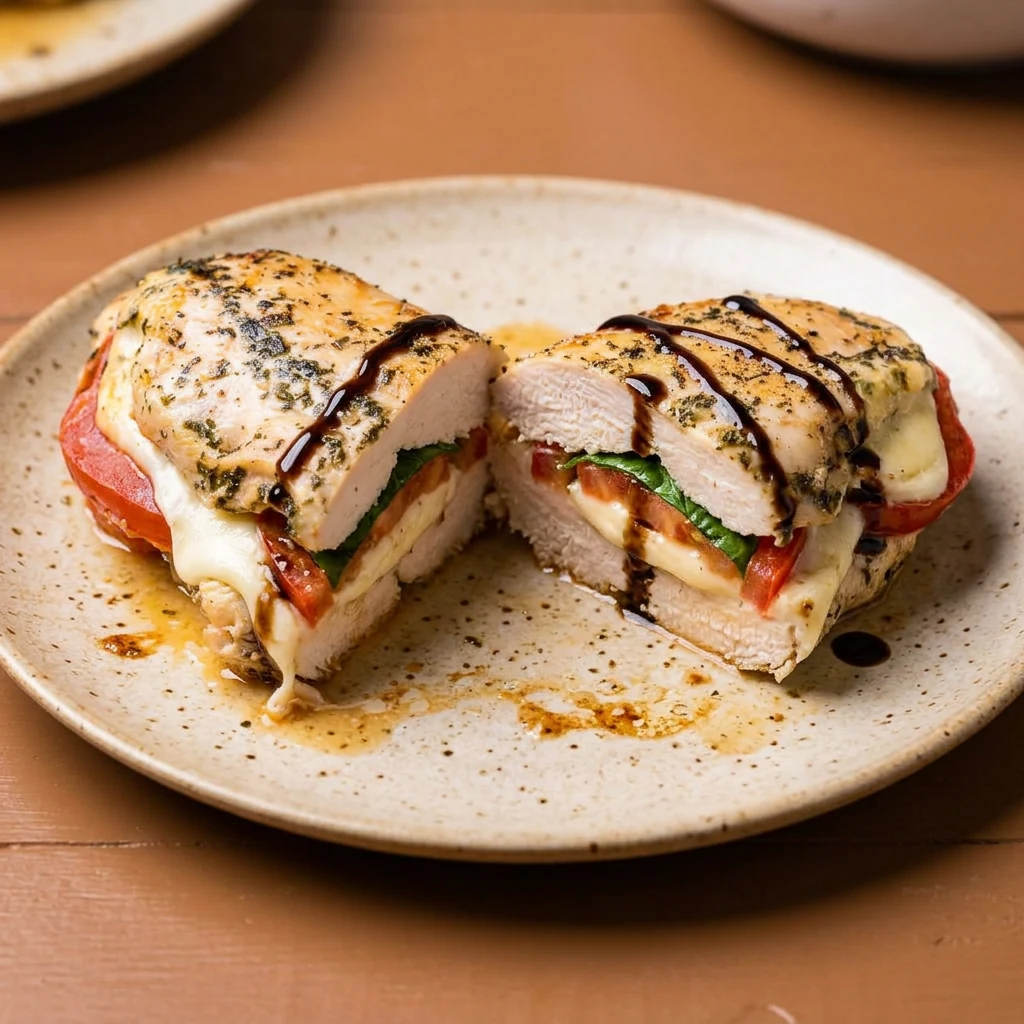
Roma tomatoes and basil: Roma slices are firm and low in seeds, which keeps the pocket from going watery, and the basil tucks in whole leaves for that caprese signature. Salt the tomato slices lightly and let them drain on a paper towel for a few minutes; the five extra minutes of patience is what keeps the filling creamy instead of soupy.
Balsamic glaze: Two tablespoons drizzled over the finished chicken bring the sweet tangy signature that ties the whole plate together. Store bought glaze is perfectly fine, or reduce a cup of balsamic vinegar by half for the homemade version. It goes on after the oven, always, because heat dulls its brightness.
Equipment You’ll Need
- Oven safe skillet or baking dish
- Sharp knife
- Toothpicks
- Cutting board
How to Make Chicken Caprese Stuffed Breast
Step One: Pocket Each Breast
Preheat the oven to 375. Slice each breast horizontally through the thick side to create a deep pocket, stopping before you cut all the way through.
The pocket is the whole architecture, so take it slow; a deep, even pocket holds the filling while a cut through becomes two flat cutlets and a different dinner. Open the breast like a book and check the corners, widening gently with the knife tip where the pocket feels shallow. Steady hands, no pressure, and it works every time.
Step Two: Season Inside and Out
Season the chicken inside the pocket and on both sides with the Italian seasoning, garlic powder, salt, and pepper.
Seasoning the inside of the pocket is the step most recipes skip and most dinners regret, because the filling only tastes as seasoned as the walls around it. Get the spices into the opening with your fingers and across the outside too, since the sear will toast them into the crust that makes each bite look golden.
Step Three: Stuff and Secure
Stuff each pocket with mozzarella, tomato, and basil, then secure the opening with toothpicks.
Layer mozzarella deepest, tomato in the middle, and basil against the opening, which keeps the basil’s color and flavor where the heat is gentlest.
Two toothpicks per breast, angled, hold the seam against the sear and the bake. Leave a little room at the opening; a stuffed to bursting pocket sheds its filling the moment the cheese melts.
Step Four: Sear Golden
Heat the olive oil in an oven safe skillet over medium high heat and sear the stuffed breasts 3 minutes per side, until golden.
The quick sear builds the golden crust and starts the cooking, so resist skipping it even though the oven finishes the job. Three minutes is all each side needs; the filling is not cooking yet, the crust is. If your skillet is not oven safe, transfer the seared breasts to a baking dish and continue from there.
Step Five: Bake Through
Transfer the skillet to the oven and bake at 375 for 20 to 25 minutes, until the internal temperature reads 165 in the thickest part.
Stuffed breasts cook slower than flat ones, so the thermometer is the only honest judge here; aim the probe into the thickest part of the meat, not the molten center. The cheese will be bubbling at the openings by the end, which is exactly the look you want. Rest the chicken five minutes before the final act.
Step Six: Balsamic and Serve
Drizzle the balsamic glaze over each breast and serve immediately, with any extra glaze at the table.
The glaze lands after the oven so it stays glossy and bright, pooling slightly around the chicken where it belongs. Cut into one breast and watch the mozzarella stretch, which is the moment everyone at the table quietly stops talking. Serve with something green and simple, because this plate already carries the drama.
Serving Size & Batch Scaling
Four stuffed breasts feed four, and doubling means two skillets or a searing session and a baking dish for the overflow. The stuffing math scales exactly; one cup of mozzarella, one tomato, and a basil quarter cup per four breasts.
This is the stealth dinner party play of the year; stuff and sear the breasts ahead, then bake them off in twenty minutes when guests arrive. The plate looks like twice the work, and the balsamic drizzle at the end is pure theater that costs nothing.
Making More or Less?
Halving for two uses two breasts, half the filling, and the same sear and bake, checked a couple of minutes early in a smaller dish.
Scaling up, stuff all the breasts first and sear in shifts, holding the finished seared ones on a plate, then bake everything together in a large dish. The oven does not care how many you baked, as long as the thermometer says 165.
Nutrition Estimate Per Serving
- Calories: about 380
- Protein: 44 g
- Fat: 18 g
- Carbohydrates: 6 g
It is an estimate, not medically precise information, and the low carb number surprises everyone, since all that indulgence is actually protein and vegetables in a trench coat. Dinner that flatters both the table and the macros is a rare bird indeed.
Common Mistakes to Avoid
The classic mistake is cutting through the breast instead of pocketing it, which turns the dinner into a sandwich; slow knife, shallow stop, done. The second is wet filling, since un drained mozzarella and tomatoes water down the pocket and cool the whole dish.
Overstuffing is the quiet third mistake, because molten cheese needs somewhere to go and it always picks the plate. Fill generously but leave the seam closable, and the toothpicks hold the rest.
Troubleshooting Guide
My filling leaked out. The pocket was overstuffed or the toothpicks were too few. Next round, two toothpicks angled well and a thumb’s width of empty seam; a little leak is normal, a lot means the opening was too full.
My chicken is pale after baking. The sear was skipped or too gentle. A minute under the broil at the end browns the top beautifully, watching the whole time, and the crust arrives fashionably late.
My pocket is raw near the filling. The thermometer found the cheese instead of the meat, or the breast was very thick. Probe the thickest meat section and give it five more minutes; cheese pockets cool the center more than people expect.
Variations & Customizations
Add sun dried tomatoes or prosciutto to the pocket for a deeper Italian accent, swap the basil for pesto spread inside, or finish with fresh arugula on top. A sprinkle of Italian breadcrumbs over the seared tops before baking is the crunchy variation, and leftover stuffed breasts slice beautifully over tomorrow’s salad.
For a lighter plate, spoon some of the tomato and basil over grilled zucchini halves, or tuck the same filling into thick portobello caps for the table’s one non chicken guest. The balsamic glaze flatters every one of these variations without a single change to the method, which is the quiet genius of the pocket.
The pocket technique at To Simply Inspire shaped this version, and the glaze timing and mozzarella handling from Jessica Gavin are why the filling stays creamy instead of watery. Fresh cracked pepper over the finished plate is the final word.
What to Serve With It
Something green and something buttery is the classic answer, and this plate needs little else. My garlic butter pasta is the Italian side dish that catches every drop of glaze.
For a vegetable that earns its seat beside mozzarella, my cheesy baked cabbage turns skeptics into believers. A simple arugula salad with lemon and shaved Parmesan keeps the whole plate restaurant worthy.
Meal Prep & Make-Ahead Instructions
Stuff the breasts up to a day ahead and refrigerate them on a plate, covered; the toothpicked pockets hold perfectly and the flavors settle in. Sear and bake when you are ready, adding a couple of minutes for the cold start.
You can also sear ahead and refrigerate, then bake from cold for about thirty minutes at dinner time. Cooked stuffed breasts keep for three days, and while the melty magic peaks on night one, sliced leftovers over greens are a genuinely excellent plan B.
Storage & Leftovers
Refrigerate leftovers in an airtight container for up to three days. The filling firms as it chills, which makes slicing the leftover breast over a salad remarkably easy.
This is not a freezing dish; fresh mozzarella turns watery through a freeze thaw, and the texture is the whole point. Fortunately the recipe scales so cleanly that making exactly enough is never a problem.
Reheating Instructions
Reheat in a covered baking dish at 350 for about 15 minutes, or microwave at fifty percent power in sixty second bursts until just warmed through.
Gentle heat keeps the cheese creamy instead of rubbery, and a fresh drizzle of balsamic after warming brings the plate back to its first night glory. A few new basil leaves on top cost thirty seconds and read as freshly cooked.
Frequently Asked Questions
Can I use dried basil instead of fresh? Dried works in the seasoning, but the fresh basil leaves inside the pocket are the caprese signature and worth holding out for. If fresh is impossible, a spoonful of pesto inside the pocket is the substitute that keeps the flavor honest.
Can I make these on the grill? Yes; sear the stuffed breasts over medium high heat for about four minutes per side, then move to indirect heat until they reach 165. The smoky char is a lovely variation, and the glaze still goes on at the end.
What if I do not have balsamic glaze? Reduce a cup of balsamic vinegar by half over medium heat for about fifteen minutes, and it thickens into glaze as it cools. In a true pinch, a drizzle of good olive oil and an extra pinch of salt finish the plate respectably.
Can I stuff them ahead and grill later? Yes, up to a day ahead; keep them cold until the grill is hot, and handle gently on the grates so the filling stays inside. Medium high, closed lid, and the thermometer decides the finish.
How do I know the chicken is done without cutting into it? An instant read thermometer in the thickest part of the meat, away from the cheese pocket, should read 165. Cutting in releases the very juices and filling you worked to keep inside, so let the probe do the poking.