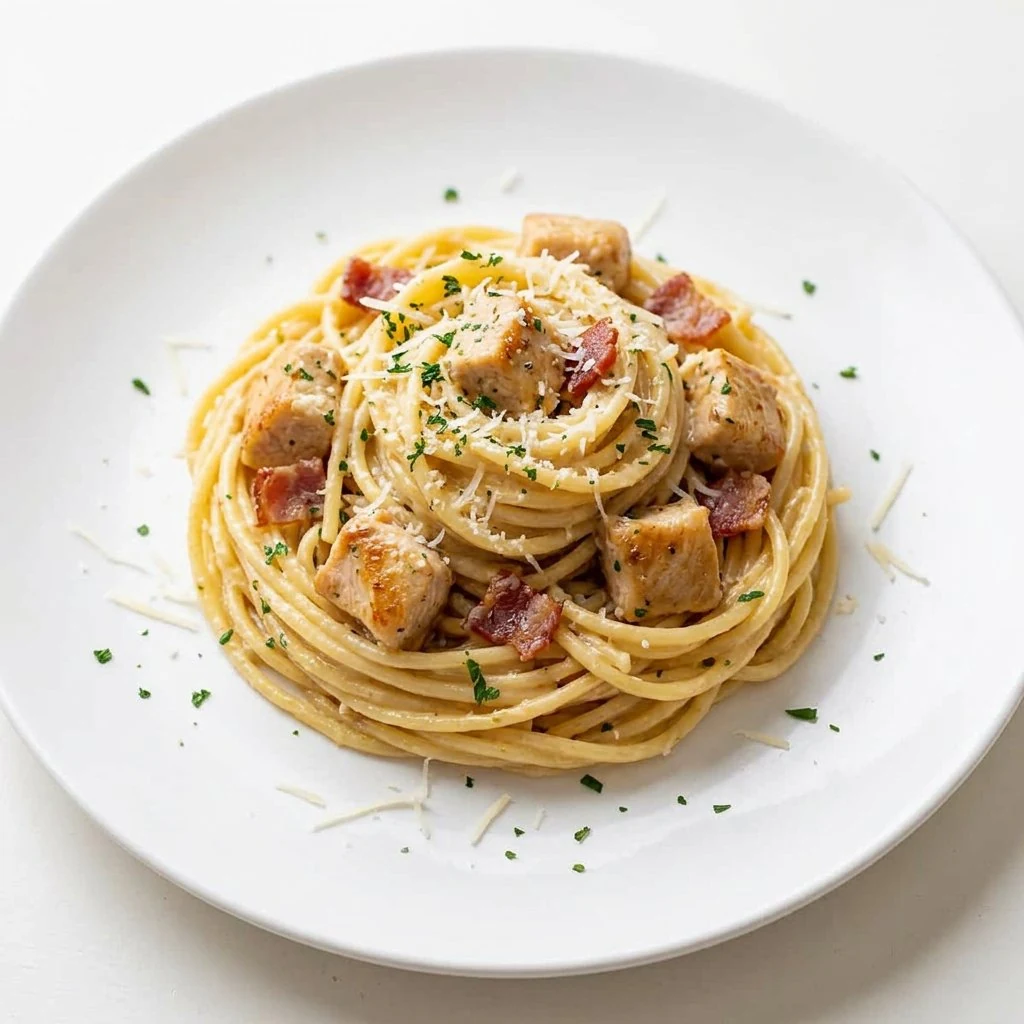
This creamy chicken carbonara with turkey bacon and parmesan is the classic Roman pasta trick applied to everyone’s favorite protein. Hot spaghetti gets tossed off the heat with whisked eggs and a mountain of parmesan, and the residual heat alone turns it all into a silky sauce that coats every strand.
You need this recipe when pasta night needs an upgrade, when a dinner that looks impressive for about twelve dollars sounds right, or when cream free carbonara that still tastes luxurious sounds like a magic trick worth learning. Thirty minutes, one pot plus one skillet, and serious payoff.
Recipe at a Glance
| Prep time | 10 minutes |
| Cook time | 20 minutes |
| Total time | About 30 minutes |
| Cooking method | Stovetop: egg and parmesan sauce cooked by residual pasta heat |
| Servings | 4 to 6 |
| Main ingredients | Spaghetti, chicken, turkey bacon, eggs, parmesan, garlic |
| Skill level | Easy with one moment of focus |
Ingredients You’ll Need
- 12 oz spaghetti
- 1 lb boneless skinless chicken breasts cut into bite size cubes
- 8 slices turkey bacon chopped
- 4 large eggs
- 1 cup freshly grated parmesan plus more for serving
- 4 cloves garlic minced
- 1/2 tsp black pepper plus more to taste
- 1/2 tsp salt for the chicken
- 1 tbsp olive oil if needed
- chopped parsley for serving
Ingredient Notes & Easy Substitutions
Your eggs and parmesan are the entire sauce, whisked smooth before anything touches heat; the method at I Am Homesteader whisks them in a bowl and lets residual heat do the cooking, and that off heat toss is the difference between silk and scrambled eggs. Grate the parmesan fine so it melts into the emulsion instead of sitting in strings.
Your turkey bacon renders less fat than pork bacon, so keep a tablespoon of olive oil handy to make up the difference; the flavor payoff is the same smoky backbone.
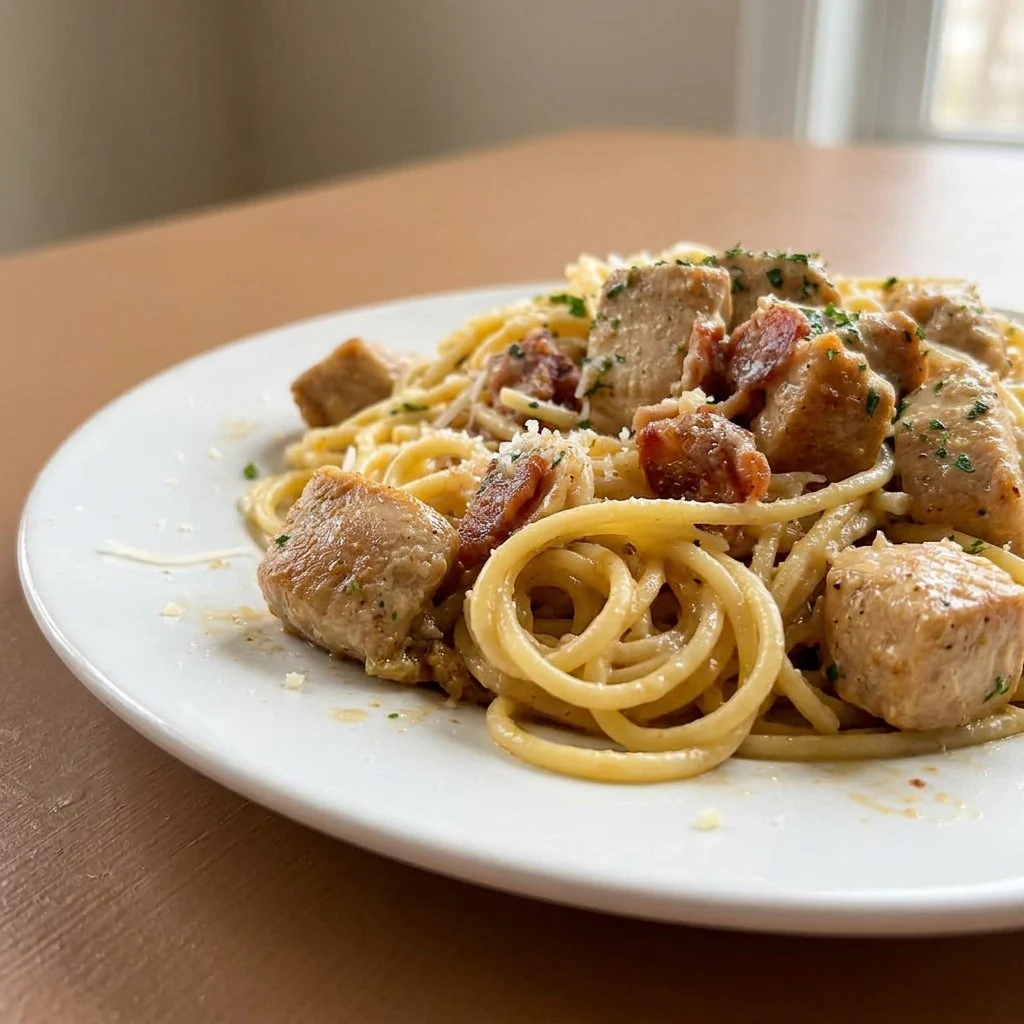
The cream enrichedThe cream enriched variation at Self Proclaimed Foodie adds a splash of heavy cream to the eggs for extra insurance against scrambling, and one or two tablespoons is a beginner friendly buffer.
Your chicken should be cut into even bite size cubes so it browns in the same window the bacon does. Save some pasta water before draining; that starchy liquid is the adjustable knob that loosens the sauce to the exact glossiness your table prefers.
Equipment You’ll Need
You need a large pot for the pasta, a large skillet, a big mixing bowl, a whisk, and tongs for the final toss. A ladle for fishing out pasta water and a microplane for the parmesan round out the kit.
The final toss happens fast, so have everything within arm’s reach before the pasta goes in: eggs whisked, bacon crisped, chicken cooked, water reserved. Carbonara is a rhythm dish, and rhythm loves a cleared counter.
How to Make Creamy Chicken Carbonara
Step One: Crisp the Turkey Bacon
Cook the chopped turkey bacon in your skillet over medium heat about 8 minutes until crisp at the edges. Transfer it to a paper towel lined plate and keep about a tablespoon of the rendered fat in the pan; that smoky grease is the flavor base for the chicken.
Step Two: Cook the Chicken
Season the chicken cubes with salt and pepper and cook them in the bacon fat over medium high heat about 6 to 8 minutes, turning occasionally, until golden and cooked through to 165. Add the garlic for the final minute so it blooms in the drippings without burning.
Step Three: Boil the Pasta
Cook the spaghetti in well salted water until just shy of al dente, about a minute less than the package says. Before draining, scoop out a full cup of pasta water; the starchy cloudiness is exactly what you want, because that starch is what makes the sauce cling.
Step Four: Whisk the Sauce Base
While the pasta boils, whisk the eggs, parmesan, and black pepper in your largest bowl until completely smooth and pale yellow. If you want the insurance version, whisk in two tablespoons of cream here; the method stays identical either way.
Step Five: The Toss
Add the drained hot pasta straight into the egg mixture and toss constantly for about a minute; the residual heat cooks the eggs into a creamy sauce, never a scramble, exactly the off heat finish the carbonara at I Am Homesteader builds. Add pasta water a splash at a time until the sauce flows like heavy cream.
Step Six: Bring It Together
Fold in the chicken, garlic, and crispy turkey bacon, tossing until every strand is coated and glossy. Serve immediately in warm bowls with extra parmesan, black pepper, and parsley; carbonara waits for no one, and its best moment is the first ninety seconds.
Serving Size & Batch Scaling
Twelve ounces of pasta feed four hungry people or six as part of a bigger Italian night with salad and bread. Doubling carbonara is possible in the widest pot you own, but the toss gets unwieldy; two batches is the calmer path to the same silky result.
The egg mixture scales exactly, the pasta water requirement scales up slightly, and everything else is arithmetic. What does not scale is the timing slack; a double batch needs everything pre staged twice as carefully.
Pasta water discipline is the real scaling secret; a bigger batch needs a bigger reserve, so scoop two full cups before draining a double. The starch ratio is what keeps every additional strand coated and glossy.
Making More or Less?
For two people, six ounces of pasta, two eggs, half a cup of parmesan, and half a pound of chicken works with the identical timeline. Keep the full garlic; small batches deserve full flavor.
If your table wants more vegetable presence, a cup of frozen peas stirred in with the chicken is the classic addition, and it asks for no other changes to the method.
Nutrition Estimate Per Serving
- Calories: about 520 per serving
- Protein: 39 g
- Carbohydrates: 52 g
- Fat: 17 g
- Fiber: 2.5 g
- Sugar: 3 g
- Sodium: about 760 mg
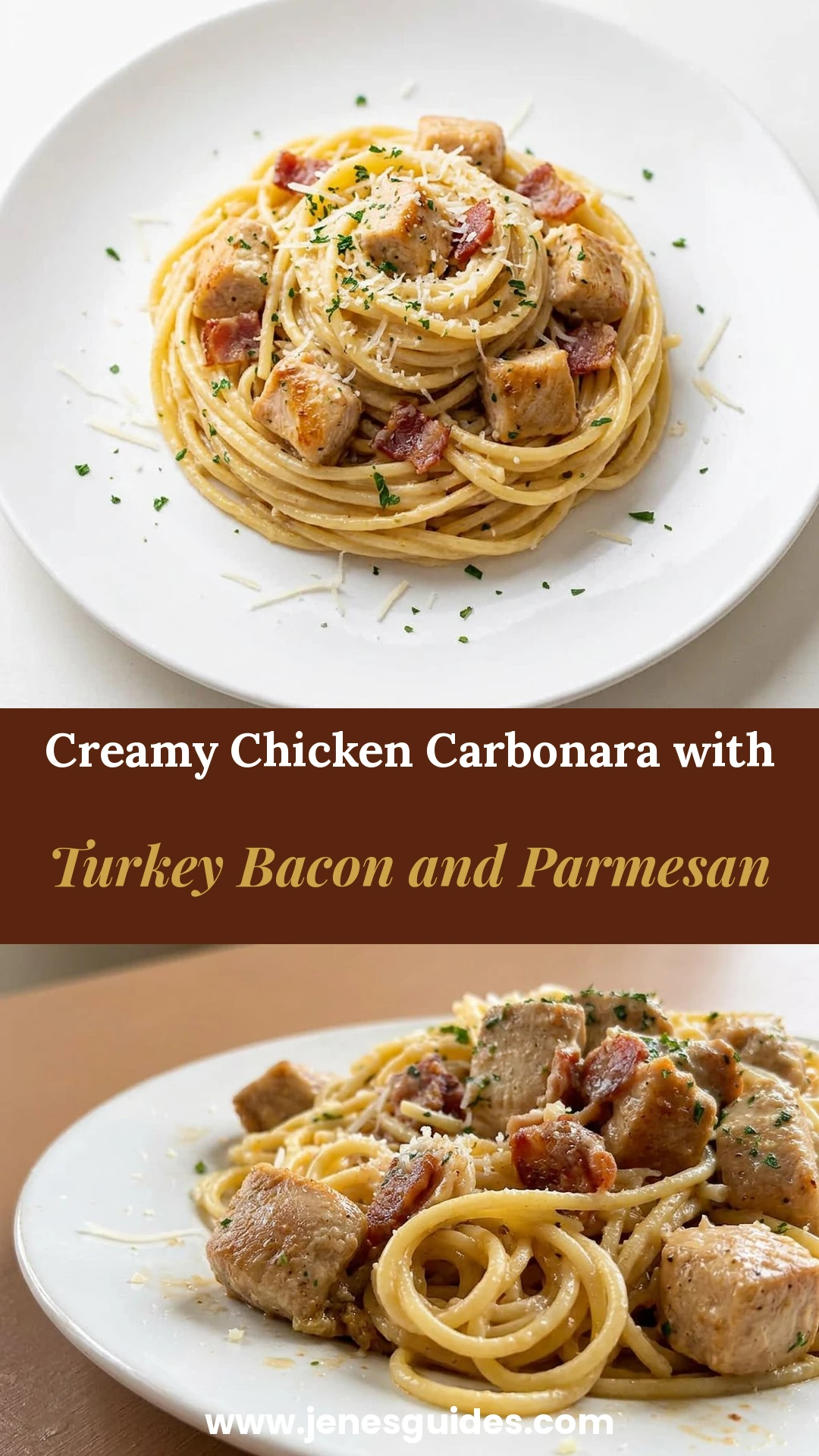
The following is an estimated nutritional breakdown based on standard ingredient data, offered as friendly guidance rather than clinical fact. Turkey bacon and skinless chicken keep this far lighter than the pork and guanciale original, and the numbers are the quiet perk of the swap.
Common Mistakes to Avoid
The number one carbonara mistake is pouring the eggs into a screaming hot pan, which gives you sweet scrambled egg pasta instead of sauce; the toss always happens off the burner in the bowl. The second is using pre grated parmesan, whose anti caking agents make the sauce grainy instead of glossy.
Do not skip reserving the pasta water, because the sauce almost always needs a splash or three to reach flowing consistency. And do not overcook the pasta, since it finishes in the sauce for a minute; al dente at the drain is perfect at the table.
Finally, do not salt the final dish heavily before tasting; parmesan and bacon bring serious salt, and the cautious hand wins this particular race.
Troubleshooting Guide
If your eggs scrambled, the pasta or the bowl was too hot; next time, let the pasta rest one minute after draining before the toss. If the sauce is too thick, whisk in warm pasta water a splash at a time until it turns silky; starch and patience fix almost everything.
If the sauce is too thin and pooling, return the whole bowl over the pot of residual hot water for twenty seconds while tossing; gentle warmth thickens it fast. If the chicken dried out, cut the cubes smaller next round and trust the six minute side of the window.
If the dish tastes bland, it usually needs salt and black pepper rather than more cheese; carbonara is famously a pepper forward dish, and a fresh coarse grind at the end is half its personality.
Variations & Customizations
Swap the spaghetti for fettuccine or bucatini, or use chicken thighs instead of breasts for a juicier bite. A handful of peas, a shower of green onions, or a pinch of red pepper flakes all fold in cleanly, and a splash of cream in the egg mixture is the forgiving variation the kitchen at Self Proclaimed Foodie recommends for first timers.
For a smokier note, add a quarter teaspoon of smoked paprika to the chicken seasoning, which nudges the turkey bacon’s contribution in the right direction. Leftover rotisserie chicken cubes work too; just warm them in the bacon fat for two minutes before the toss.
If you want to stretch the dish for a bigger table without doubling the eggs, add a cup of steamed broccoli or blistered cherry tomatoes at the toss; the vegetables carry the sauce further and make six servings feel effortless. A final dusting of lemon zest just before serving brightens the whole bowl, and it costs about thirty seconds of grating.
What to Serve With It
A sharp arugula salad and garlic bread are the classic partners, because the plate needs something bright against all that richness.
This sitsThis sits naturally in your pasta rotation beside garlic butter pasta and baked mac and cheese, and carbonara is the night you want the pasta to feel like an event without the effort of one.
Warm bowls matter more than side dishes here; cold plates kill the sauce’s flow faster than anything else in the kitchen.
Meal Prep & Make-Ahead Instructions
You can cube the chicken, chop the bacon, and whisk nothing ahead; the eggs must be whisked fresh, but the chicken and bacon hold beautifully for a day. Cooked components keep separately, and the final toss takes ten minutes on night two.
True make ahead carbonara does not exist, and pretending otherwise is how scrambled egg pasta happens. What does work is doing every prep step before the pasta water boils, so the finish is one smooth two minute performance.
Storage & Leftovers
Leftovers keep in an airtight container in your fridge for up to three days. The sauce tightens and the pasta drinks it, so expect a denser, creamier bite on day two that many carbonara loyalists quietly prefer.
Freezing is not recommended; egg sauces weep when thawed and the texture never fully returns. Make what your table eats, and use the gentle reheat below for the rest.
Reheating Instructions
Reheat gently in a skillet over medium low with a splash of water or milk, tossing until the sauce loosens, about four minutes. The microwave works in short bursts with a stir between each, though the skillet protects the silky texture better.
A fresh grating of parmesan and a grind of pepper over the reheated bowl resets the whole plate. Day two carbonara will not be identical to night one, but it will be gone just as fast.
One last habit worth building: warm your bowls. Thirty seconds of hot tap water in each serving bowl, dumped and dried right before plating, keeps the sauce loose and glossy all the way to the table. It sounds fussy until you watch a sauce tighten up on a cold bowl mid dinner, and then it becomes permanent routine.
Frequently Asked Questions
Can this be made ahead? The chicken and turkey bacon can be cooked a day ahead, but the egg sauce must happen fresh at serving. The whole dish takes thirty minutes, and the last two minutes are the part that refuses to be rushed or reheated into greatness.
Will the raw eggs be safe? The residual heat of the hot pasta cooks the eggs to well above the safe temperature while you toss, which is the entire engineering of carbonara. If you prefer extra certainty, the two tablespoon cream buffer makes the sauce even more forgiving.
Can you use regular bacon or pancetta? Absolutely; the method is identical and the render is richer, so you may not need the extra olive oil. Turkey bacon keeps it lighter, which is the specific assignment this recipe answers.
Why is my carbonara dry? Almost always: too little pasta water. The sauce needs that starchy liquid to turn creamy and to stay creamy on the plate, so reserve a full cup and add it generously at the toss.