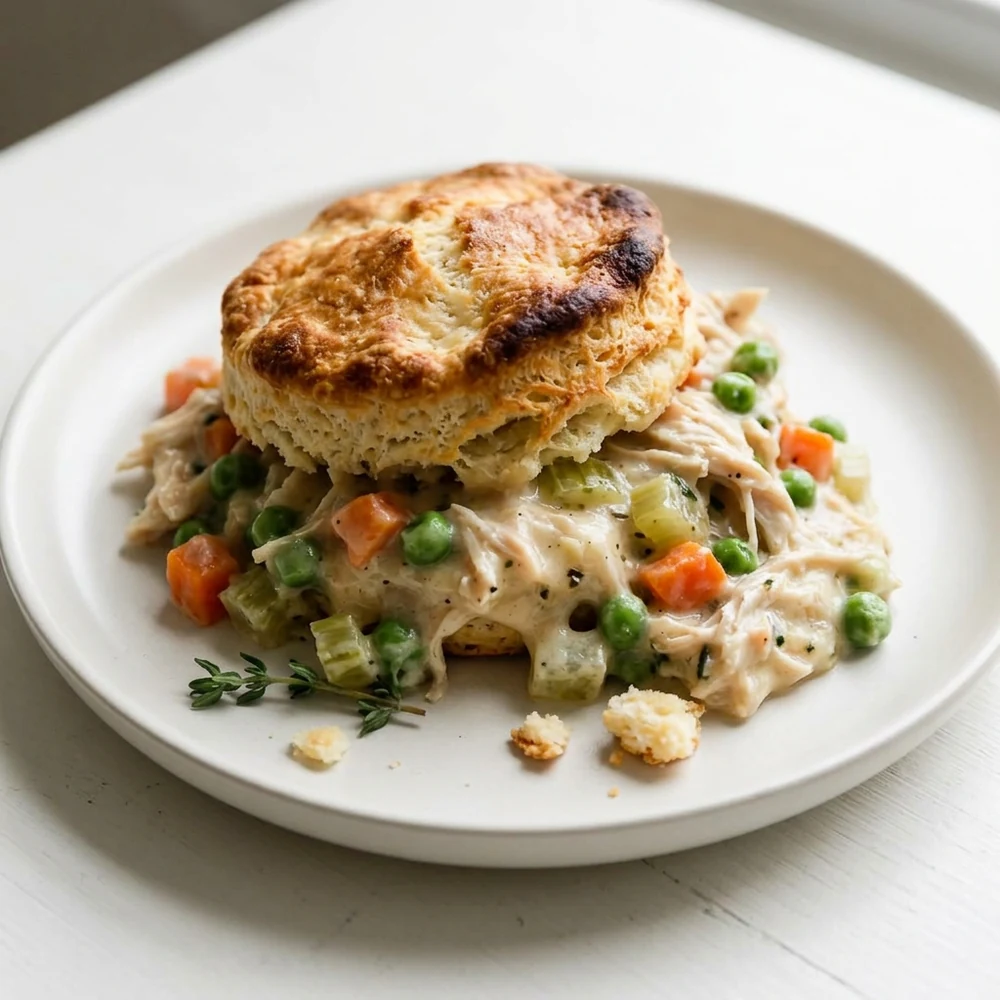
Chicken pot pie with biscuits swaps the fussy pastry crust for a golden, buttery biscuit lid, and you will never look back. You simmer shredded chicken, carrots, celery, and peas in a creamy thyme filling, drop biscuit dough over the top, and bake until the whole pot bubbles under a golden cap.
You need this recipe when your week needs a casserole that hugs back, when your rotisserie chicken needs a second act, or when the words chicken pot pie have been living rent free in your head. One pot, one bake, and the whole house smells like Sunday.
Recipe at a Glance
| Prep time | 25 minutes |
| Cook time | About 30 minutes |
| Total time | About 55 minutes |
| Cooking method | Stovetop cream filling baked under a from scratch biscuit topping |
| Servings | 6 |
| Main ingredients | Shredded chicken, carrots, celery, peas, chicken broth, buttermilk biscuits |
| Skill level | Easy to intermediate |
Ingredients You’ll Need
- 3 tbsp butter
- 1 onion chopped
- 3 carrots chopped
- 2 celery stalks chopped
- 1/4 cup flour
- 2 1/2 cups chicken broth
- 1/2 cup heavy cream or whole milk
- 2 1/2 cups shredded cooked chicken
- 1 1/2 cups frozen peas
- 1 tsp fresh thyme leaves
- 1 tsp salt
- 1/2 tsp pepper
- 1 tbsp lemon juice
- 2 cups flour for biscuits
- 1 tbsp baking powder
- 6 tbsp cold butter
- 3/4 cup buttermilk
Ingredient Notes & Easy Substitutions
Your chicken can be a store rotisserie bird shredded by hand, which is the move the pot pie builders at Souffle Bombay lean on, or any leftover roasted chicken you have on hand. Two and a half cups fills the pan properly, and dark meat from the legs makes the filling extra juicy if your bird cooperates.
Your filling is a classic butter and flour roux loosened with broth and cream, and the gradual liquid method at Pinch of Yum, stirring after each addition, is what keeps it silky instead of lumpy. The squeeze of lemon at the end is their secret weapon, and it lifts the whole creamy situation like a window in a stuffy room.
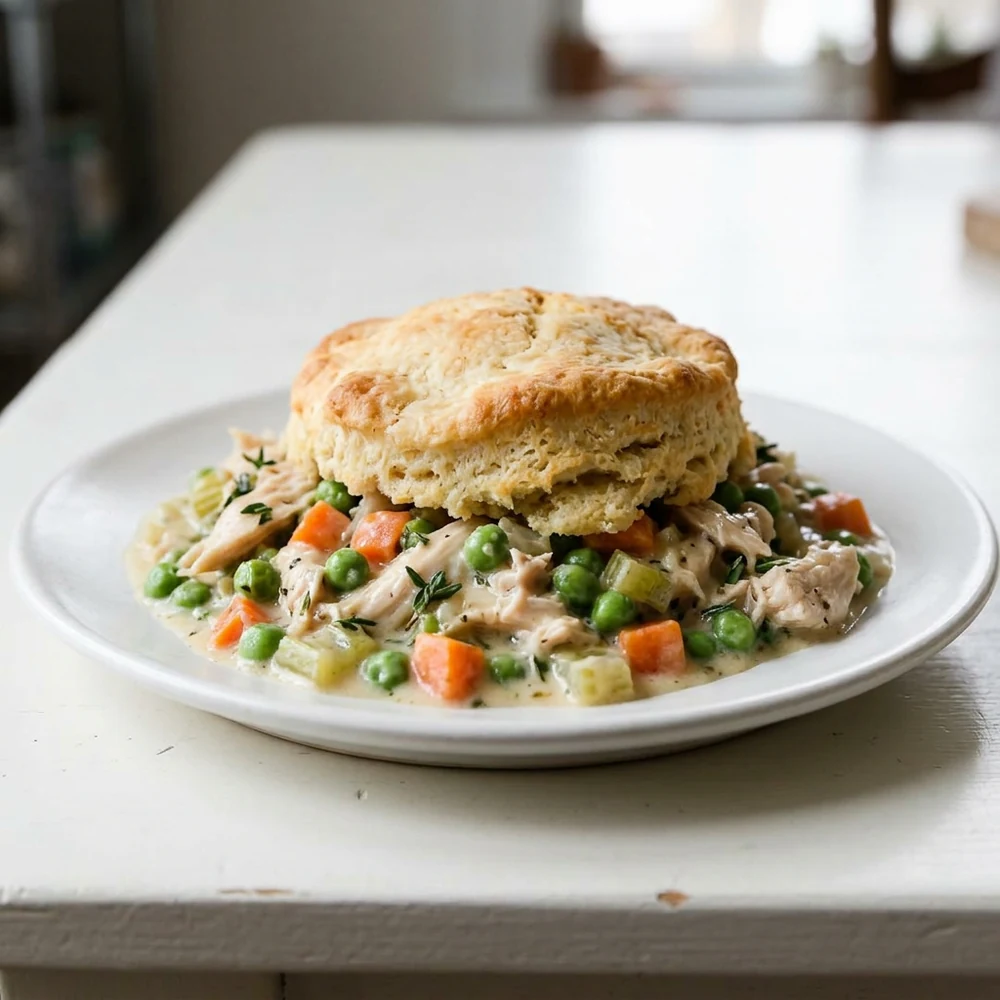
Your biscuits are a simple two cup flour drop recipe with cold butter and buttermilk, pressed together gently and dropped straight onto the hot filling. Store bought biscuit dough works in a pinch, and nobody at your table will stage an intervention, but from scratch takes fifteen extra minutes and tastes like it.
Equipment You’ll Need
You need a large oven safe skillet or a 9×13 baking dish, a saucepan if your skillet is not oven safe, a whisk, a big mixing bowl for the biscuits, and a baking sheet underneath to catch bubbles. A box grater grates cold butter like a dream if cutting it in is not your mood today.
If your skillet has a plastic handle, wrap it in foil or transfer the filling to a baking dish before the biscuits go on. Either vessel works; what matters is surface area, because more surface means more golden biscuit edges per serving.
How to Make Chicken Pot Pie with Biscuits
Step One: Sweat the Vegetables
Melt the butter in your skillet over medium heat and cook the onion, carrots, and celery about 8 minutes until softened and fragrant. This humble trio is the entire foundation of pot pie flavor, and giving it eight full minutes now pays you back all through dinner.
Step Two: The Roux
Sprinkle the flour over the vegetables and stir for 1 to 2 minutes until it disappears and smells faintly nutty. That brief toast cooks out the raw flour taste and sets up the thickening, and your whisk should keep everything moving so no pale patches survive.
Step Three: Build the Filling
Gradually stir in the chicken broth, then the cream, stirring after each addition until smooth before adding more. Simmer until the sauce coats your spoon, about 5 minutes, then fold in the shredded chicken, peas, thyme, salt, and pepper, and finish with the lemon juice off the heat.
Step Four: The Biscuit Dough
While the filling simmers, whisk the two cups of flour with the baking powder and a half teaspoon of salt, cut in the cold butter until the mixture looks like coarse crumbs, and stir in the buttermilk just until a shaggy dough forms. Overmixing is the enemy; lumpy dough bakes into tender biscuits, smooth overworked dough bakes into regret.
Step Five: Drop and Top
Drop the biscuit dough in eight to nine mounds over the hot filling, leaving a little space between them for puffing. Brush the tops with a splash of buttermilk for a deeper golden finish, and set the dish on a baking sheet to catch any bubbly overflow on its way to glory.
Step Six: The Bake
Bake at 400 for 20 to 25 minutes until the biscuits are golden and cooked through and the filling bubbles at the edges. If your biscuits brown early, tent foil over the top; if a knife slid into a biscuit center comes out clean and the filling steams, dinner has officially arrived.
Serving Size & Batch Scaling
One skillet or 9×13 dish serves six generously, and this is the rare casserole that tastes even better on day two. For a bigger table, the whole recipe doubles into two dishes; the filling scales exactly, and the biscuit dough doubles without argument in one large bowl.
For a smaller household, make the full amount anyway and rejoice in leftovers, or halve everything into an 8×8 dish and check the bake five minutes early. The filling to biscuit ratio is the soul of the dish, and it survives every scale.
Making More or Less?
If your crew includes dedicated biscuit people, mix half again more biscuit dough and add three extra mounds; nobody has ever complained about an excessive biscuit to filling ratio at this particular table.
You can also portion the cooled filling into two smaller dishes, biscuit only one now, and freeze the other filling bare for a future no prep dinner. Fresh biscuits on a thawed filling is a twenty five minute ticket to round two.
Nutrition Estimate Per Serving
- Calories: about 520 per serving
- Protein: 27 g
- Carbohydrates: 45 g
- Fat: 25 g
- Fiber: 5 g
- Sugar: 6 g
- Sodium: about 890 mg

The following is an estimated nutritional breakdown based on standard ingredient data, so treat these numbers as friendly guidance rather than clinical fact. Between the chicken and the vegetables, this is a comfort dinner with real nutrients attached, and the biscuit on top is the tax you pay happily.
Common Mistakes to Avoid
The classic mistake is a filling that is too loose, because runny filling boils up around the biscuits and turns the undersides gummy; simmer until the sauce coats a spoon before anything goes in the oven. The second is overworking the biscuit dough, which trades flaky tenderness for toughness every single time.
Do not skip the lemon juice because it sounds optional. One tablespoon wakes up a cream filling in a way salt alone cannot, and it is the quiet difference between good pot pie and the pot pie people request again next week.
Finally, do not crowd the biscuits edge to edge. They nearly double in the oven, and biscuits touching biscuits steam each other pale instead of browning into that golden lid you are picturing.
Troubleshooting Guide
If your filling seems thin before baking, simmer it a few extra minutes on the stove; flour needs time, not company, to thicken. If the baked filling is still loose, your measurements ran heavy on broth, and a slurry of one tablespoon flour whisked with cold milk, stirred in and simmered two minutes, fixes it on the stove after.
If the biscuits browned before they cooked through, tent foil over the dish and give them five more minutes; a paring knife into a biscuit center should come out clean. If the filling is bubbly but the biscuits are pale, move the dish up a rack for the last five minutes.
If the whole dish tastes flat, it needs salt first and lemon second; cream and starch swallow seasoning quietly, and a final check of both at the stove saves the plate.
Variations & Customizations
Add a cup of sauteed mushrooms or diced potatoes to the filling for a heartier pot, or stir in a handful of shredded cheddar with the chicken for a cheddar biscuit pot pie situation. Turkey after Thanksgiving works exactly like the chicken, which is how this dish earns two holidays a year.
For a herby direction, swap the thyme for rosemary or add a tablespoon of chopped fresh parsley to the biscuit dough. A pinch of cayenne or a few dashes of hot sauce in the filling is the grown up upgrade nobody identifies and everybody asks about.
What to Serve With It
Honestly, this is a one dish dinner, and a simple green salad with sharp vinaigrette is all the supporting cast it needs. If you want the full pot pie universe on one table, a bowl of chicken pot pie soup makes a cozy soup and bake combo for cold nights, and any leftover biscuit energy carries straight into small batch homemade biscuits for the weekend breakfast table.
Roasted green beans or glazed carrots round out the plate when your crowd runs vegetable positive, and extra black pepper over the biscuit lid is the finishing touch this pot deserves.
Meal Prep & Make-Ahead Instructions
You can make the filling up to two days ahead and refrigerate it; rewarm it on the stove until hot before the biscuits go on, because cold filling means raw biscuits and burnt tops. The biscuit dough can also be mixed in the morning and held in the fridge.
You can even assemble the whole unbaked dish in the afternoon, hold it in the fridge, and bake it cold at 400 for about 30 minutes. The biscuit lids rise slightly less from cold, but the golden cap and bubbling filling arrive right on schedule.
Storage & Leftovers
Leftovers keep covered in your fridge for up to three days. The biscuits soften as they sit and drink up filling, which many household members consider an upgrade rather than a flaw; your mileage may vary and both camps are valid.
Freeze the filling without biscuits for up to two months; thaw overnight and top with fresh biscuit dough when you bake. Fully baked leftovers freeze acceptably for a month with softer biscuits on the other side, best reheated covered in the oven.
Reheating Instructions
Your oven at 350, covered loosely with foil, reheats portions in about 15 minutes; uncover for the last five to re-dry the biscuit tops a little. The microwave handles a bowl in about two minutes and softens the biscuit completely, which is a trade you get to choose daily.
A fresh grind of pepper and a tiny spoonful of butter melting into the reheated filling makes day two taste intentional, and if the filling thickened overnight, a splash of broth loosens it back to serving texture.
Frequently Asked Questions
Can this be made ahead? Yes, the filling up to two days ahead and the whole unbaked dish earlier in the day; bake cold with about five extra minutes. For the best biscuit rise, add the dough right before the dish goes into the oven whenever your schedule allows.
Can you use store bought biscuits? Absolutely; a can of refrigerated biscuit dough drops on top exactly like homemade, and the bake time stays the same. The from scratch version takes about fifteen extra minutes and gives you taller, tangier biscuits, but the shortcut is fully respectable.
Why did my biscuits turn out dense? Dense biscuits come from overmixed dough or warm butter. Stir just until the shaggy dough comes together, keep the butter cold from the fridge, and handle the dough as little as humanly possible.
Can you use puff pastry instead? You can, and it bakes into a flaky lid at the same temperature for about 20 minutes; it is a different, fancier personality than biscuits, but the filling does not change a bit. Choose based on the mood of your table, not the rules.