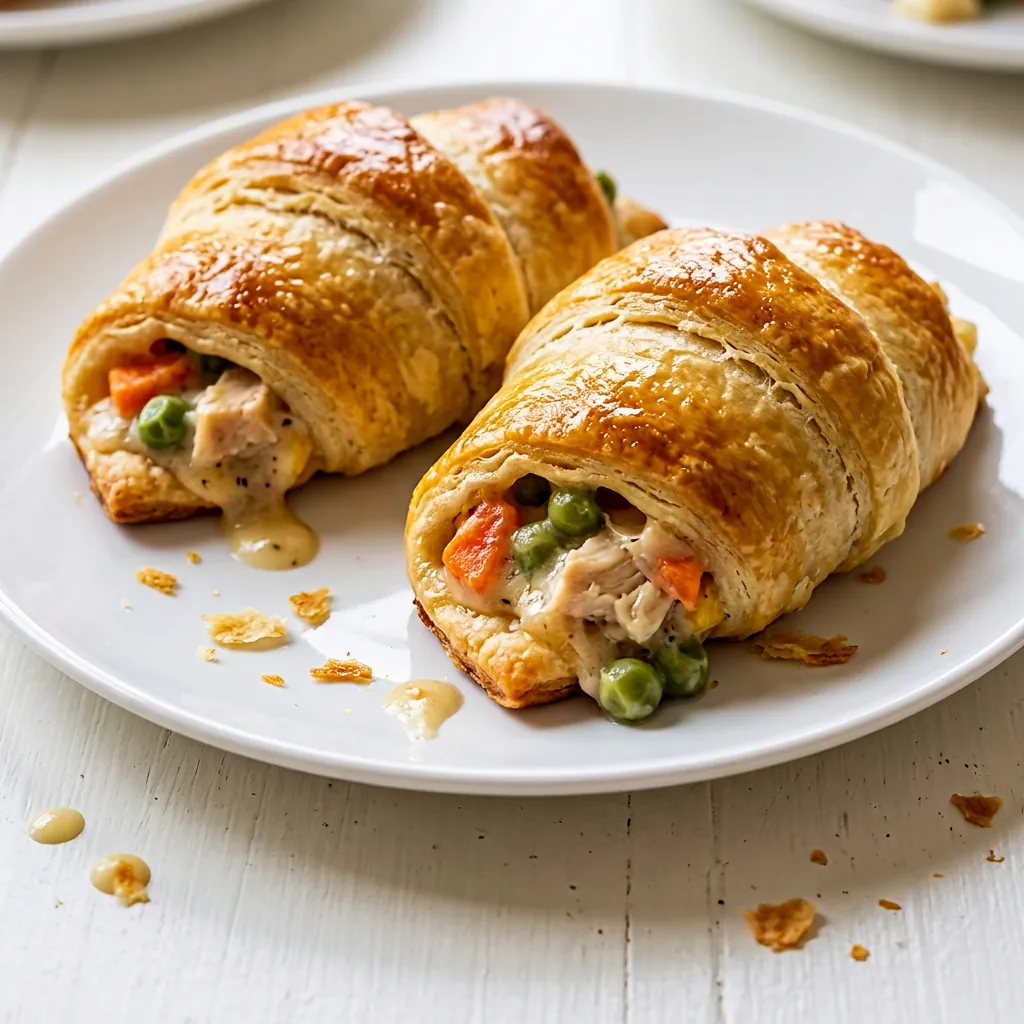
Chicken pot pie crescent rolls bakes the whole beloved filling under a golden crescent crust, no pastry skills required.
Creamy chicken, vegetables, and potatoes get tucked into a 9×13 with canned crescent dough above and below, and it comes out bubbling with a crust everyone fights over.
It is ideal for weeknights, potlucks, kids who love pot pie but not the wait, and anyone who wants the comfort of a double crust without touching a rolling pin. One dish, fifty minutes, and the whole house smells like Sunday.
Recipe at a Glance
| Prep time | 20 minutes |
| Cook time | 40 to 50 minutes |
| Total time | About 70 minutes |
| Cooking method | Oven bake, double crescent crust |
| Servings | 8 |
| Main ingredients | Crescent rolls, cooked chicken, mixed vegetables, cream soups |
| Skill level | Easy |
Ingredients You’ll Need
- 2 (8 oz) packages refrigerated crescent rolls
- 2 tbsp butter
- 1 pound cooked cubed chicken breast
- 1 pound chopped rotisserie chicken
- 1 (16 oz) package frozen mixed vegetables
- 1 (15 oz) can sliced potatoes, drained
- 1 (10.5 oz) can cream of chicken soup
- 1 (10.5 oz) can cream of mushroom soup
- 1/2 cup milk
Ingredient Notes & Easy Substitutions
The chicken: The recipe as written uses two pounds of cooked chicken, cubed breast and chopped rotisserie together, which makes this the meatiest pot pie on the block.
Use both for a hearty casserole, or one pound of either if that is what the fridge holds; the filling is flexible by design. Fully cooked meat only, since the bake is about melding, not cooking.
Crescent rolls: Two tubes of refrigerated dough are the entire crust strategy, one pressed into the bottom and one draped over the top. Keep them cold until the moment you unroll them, because cold dough handles far better than room temperature dough. Pinch the bottom seams firmly; they are the foundation that holds the filling.

Mixed vegetables and canned potatoes: Frozen mixed vegetables bring the classic peas, carrots, corn, and green beans in one bag, and canned sliced potatoes make the filling weeknight fast with no peeling. Drain the potatoes well, since extra liquid is the enemy of a crisp bottom crust. Diced leftover potatoes work identically.
Two soups and milk: Cream of chicken and cream of mushroom together build the classic pot pie gravy, warmed with milk until pourable. Warming them before they meet the filling is the step that makes the whole dish bake evenly, because a cold soup center is what leaves cold spots in baked casseroles.
Equipment You’ll Need
- 9×13 inch baking dish
- Large saucepan
- Medium saucepan
- Wooden spoon
How to Make Chicken Pot Pie Crescent Rolls
Step One: The Bottom Crust
Preheat the oven to 350. Line the bottom of a 9×13 inch baking dish with one package of crescent roll dough, pinching the seams together to form a single sheet.
Press the perforated seams firmly with your fingers so the dough becomes one continuous crust, and bring it slightly up the sides if you can.
This bottom layer is what turns a casserole into a pot pie, and it bakes into a tender, buttery foundation that soaks up just enough gravy to be dangerous. Cold dough unrolls cleanly; warm dough tears.
Step Two: The Chicken Filling
Melt the butter in a saucepan over medium heat, add the chicken, mixed vegetables, and drained potatoes, and cook until heated through, about 5 minutes.
The butter coats everything and warms the filling through so the bake time is about the crust, not about heating cold centers.
Five minutes is all it takes; the vegetables thaw and the chicken steams gently in the butter. Stir occasionally and keep the heat moderate, since the goal is warmth, not browning.
Step Three: The Gravy
In a separate pan, warm both cans of soup, then slowly stir in the milk and cook until smooth and combined.
Warming the soups first lets the milk fold in without lumps, creating a pourable gravy that distributes evenly through the filling.
Pour the milk slowly while stirring, and the sauce should end up smooth, creamy, and just loose enough to coat a spoon. This two pan dance is what separates an even pot pie from one with dry corners.
Step Four: Fill the Crust
Add the soup mixture to the chicken mixture, stir until everything is evenly coated, and pour it into the prepared baking dish, spreading it level.
Combine the two off the heat so the filling stays thick and scoopable, and push it into the corners of the crust so every slice gets its share.
Level the surface with the back of the spoon; the top crust deserves a flat stage. The filling should look generous but not soupy, more pie than stew.
Step Five: Top Crust On
Unroll the second package of crescent dough and lay it over the filling, pinching the seams together and tucking the edges toward the sides of the dish.
Work quickly with cold dough and do not worry about perfection; rustic folds bake into character, and every seam seals itself as the dough rises. If the sheet does not quite reach a corner, stretch it gently or patch it with a spare triangle. A couple of small slits in the top let steam escape and keep the crust from going soggy.
Step Six: Bake Golden
Bake at 350 for 40 to 50 minutes, until the crescent crust is deep golden brown and the filling bubbles at the edges. Rest 10 minutes before slicing.
The long bake does two jobs, cooking the bottom crust through and heating the filling until it bubbles, so do not pull it at the first golden blush; the top should be a deep, confident brown.
The ten minute rest is essential, letting the gravy settle so slices lift clean instead of flowing. Then serve it straight from the dish and watch the top crust disappear first.
Serving Size & Batch Scaling
A 9×13 with two pounds of chicken feeds eight generous slices. Doubling means two dishes; the filling recipe splits cleanly and both pans fit on two oven racks with a rotation halfway through.
This is a budget comfort classic; crescent dough, canned goods, and chicken feed a table for the price of one bakery pot pie slice. It travels beautifully to potlucks in the baking dish, and the empty dish always comes home with requests for the recipe.
Making More or Less?
Halving fits an 8×8 dish with one tube of crescents and half the filling, and the bake drops closer to 35 to 40 minutes, watched for the same deep golden top.
Doubling means two 9×13 dishes with the filling scaling exactly, baked on two racks and swapped halfway through. This is the potluck math the recipe was born for, and the empty dishes always come home with recipe requests pinned to them.
Nutrition Estimate Per Serving
- Calories: about 520
- Protein: 27 g
- Fat: 28 g
- Carbohydrates: 38 g
It is an estimate, not medically precise information, and the crescent crust earns every one of its carbohydrate shares. A simple green salad alongside is the fresh counterweight this rich, buttery bake wants.
Common Mistakes to Avoid
The classic mistake is skipping the seam pinching, which leaves the bottom crust leaking filling into the dish; sixty seconds of finger pressure solves it. The second is adding cold soup straight to the filling, which bakes unevenly and leaves cool pockets in the center.
Pulling the bake too early is the quiet third mistake; the top browns before the bottom crust finishes, so trust the full forty to fifty minutes. And let it rest, because pot pie gravy straight from the oven runs like it has somewhere to be.
Troubleshooting Guide
My bottom crust is pale and soggy. The filling went in wet or the bake was short. Next round, drain the potatoes thoroughly and aim for the deep golden mark; if it happens anyway, a few minutes on the lowest rack crisps the base back up.
My top crust browned too fast. The dish sits high in the oven or the dough is thin at the edges. Tent loosely with foil for the remaining bake; the crust finishes cooking in trapped heat without darkening further.
My filling seems dry. The soups and milk ratio is the whole gravy, so measure them rather than eyeballing. A splash of extra milk stirred in before the top crust goes on loosens a dry filling without thinning the flavor.

Variations & Customizations
Stir a cup of shredded cheddar into the filling for a cheesy pot pie, add a teaspoon of poultry seasoning for extra classic flavor, or swap in leftover turkey after the holidays with zero other changes. A pinch of black pepper and thyme in the gravy makes it taste more homemade than the ingredient list suggests.
The bottom crust technique at Be Centsational shaped this version, and the warming the gravy separately approach from Chocolate with Grace is why every slice bakes even. Fresh parsley over the top crust after baking is a small, cheerful finish.
What to Serve With It
This is a full meal in a dish, so sides stay light: a crisp salad or steamed green beans. My chicken pot pie soup is the bowl version of this exact craving for nights when crust is optional.
For the bread basket beside it, my cheesy garlic bread is the crowd pleaser, though honestly the crescent crust has that job covered tonight. Cold milk for the kids is the traditional pairing and it is traditional for a reason.
Meal Prep & Make-Ahead Instructions
You can cook the filling and gravy a day ahead and refrigerate them separately, so assembly is a fifteen minute layering job at dinner. Keep the crescent dough refrigerated until the moment it unrolls.
You can also assemble the full dish a few hours ahead and hold it in the fridge, adding about ten minutes to the bake. The unbaked dish freezes reasonably for up to a month, though the crescent texture is at its best fresh, so plan accordingly.
Storage & Leftovers
Keep leftover slices covered in the fridge for up to four days. The crust softens under the gravy as it rests, which is simply the pot pie becoming its cozy second version.
Reheated slices are genuinely good, and day two pot pie with a fork straight from the container is a time honored tradition. The filling alone also freezes well for two months, ready to top with fresh crescent dough for an instant future bake.
Reheating Instructions
Reheat slices in the microwave for about 90 seconds, or bring the whole dish back at 350 for 15 to 20 minutes, tented with foil so the crust does not darken further.
The oven keeps some of the crust’s texture while the microwave wins on speed for single slices. If crispness matters to you, a few minutes in a hot skillet with the slice directly in it revives the bottom crust surprisingly well.
Frequently Asked Questions
Can I use just one type of chicken? Yes; the recipe lists two pounds total, and one pound of either cubed breast or rotisserie works if that is what you have. Use two pounds when you want the meatiest filling, one pound when the pantry decides.
Can I use fresh potatoes instead of canned? You can; dice them small and simmer until just tender before they join the filling, since the bake alone will not cook raw potato through. The canned slices exist to save exactly that step.
Can I make this ahead? Assemble it a few hours ahead and refrigerate, adding about ten minutes to the bake, or prep the filling and gravy a day early. The crust is at its flakiest baked fresh, which is the one timing worth protecting.
Why did my bottom crust not cook through? The filling was cold or too wet when it went in, or the bake was cut short. Warm filling, drained potatoes, and the full bake time are the trio that delivers a done bottom crust every time.