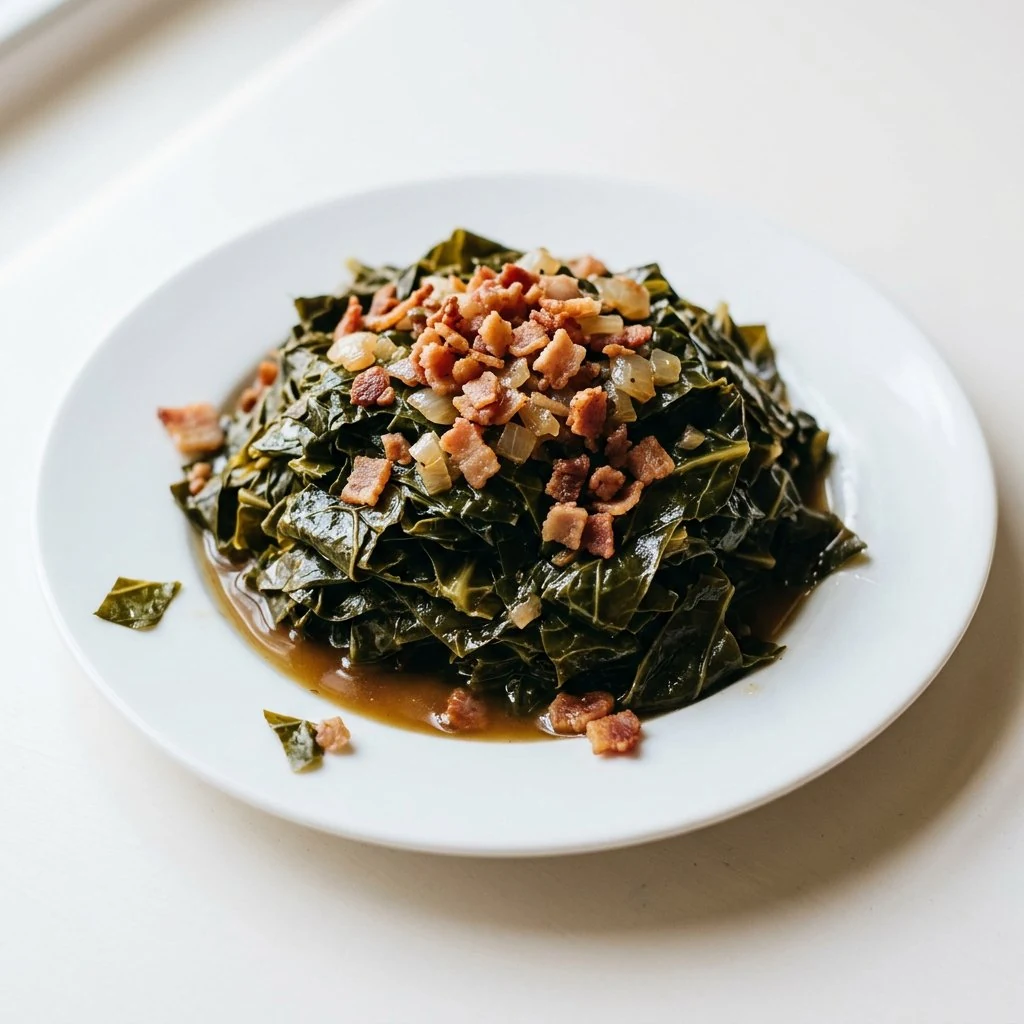
Collard greens bacon style are the slow simmered, smoky, pot liquor rich Southern side that turns a tough green into silk. You cook bacon until crisp, wilt a mountain of greens into the fragrant fat with broth, vinegar, and a pinch of red pepper, then let everything simmer until the greens are tender enough to eat with a spoon.
You need this recipe if your dinner table needs a vegetable with a spine, if your holiday menu wants a taste of the South, or if you have always wanted pot liquor worth sopping up with cornbread.
Recipe at a Glance
| Prep time | 15 minutes |
| Cook time | About 1 hour 10 minutes |
| Total time | About 1 hour 25 minutes |
| Cooking method | Stovetop simmer in bacon fat and chicken broth |
| Servings | 6 |
| Main ingredients | Collard greens, bacon, onion, garlic, chicken broth, cider vinegar |
| Skill level | Easy |
Ingredients You’ll Need
- 2 bunches collard greens
- 6 slices bacon
- 1 onion diced
- 4 cloves garlic minced
- 2 cups chicken broth
- 2 tbsp apple cider vinegar
- 1 tsp sugar
- 1/2 tsp red pepper flakes
- salt and pepper
Ingredient Notes & Easy Substitutions
Your collards should be deep green, crisp, and heavy for their size, and two bunches wilts down to a modest pot, so do not panic at the mountain raw. Wash them thoroughly, in several changes of water, because greens hide grit in their folds like it is their job.
Your bacon does double duty as flavor and cooking fat, and the traditional approach at Heirloomed leans on smoky bacon and cider vinegar for exactly this reason. The pot method at Dinner at the Zoo keeps half the bacon back to sprinkle at the end, which is why your finished pot gets crunch on top instead of only soft smokiness within.
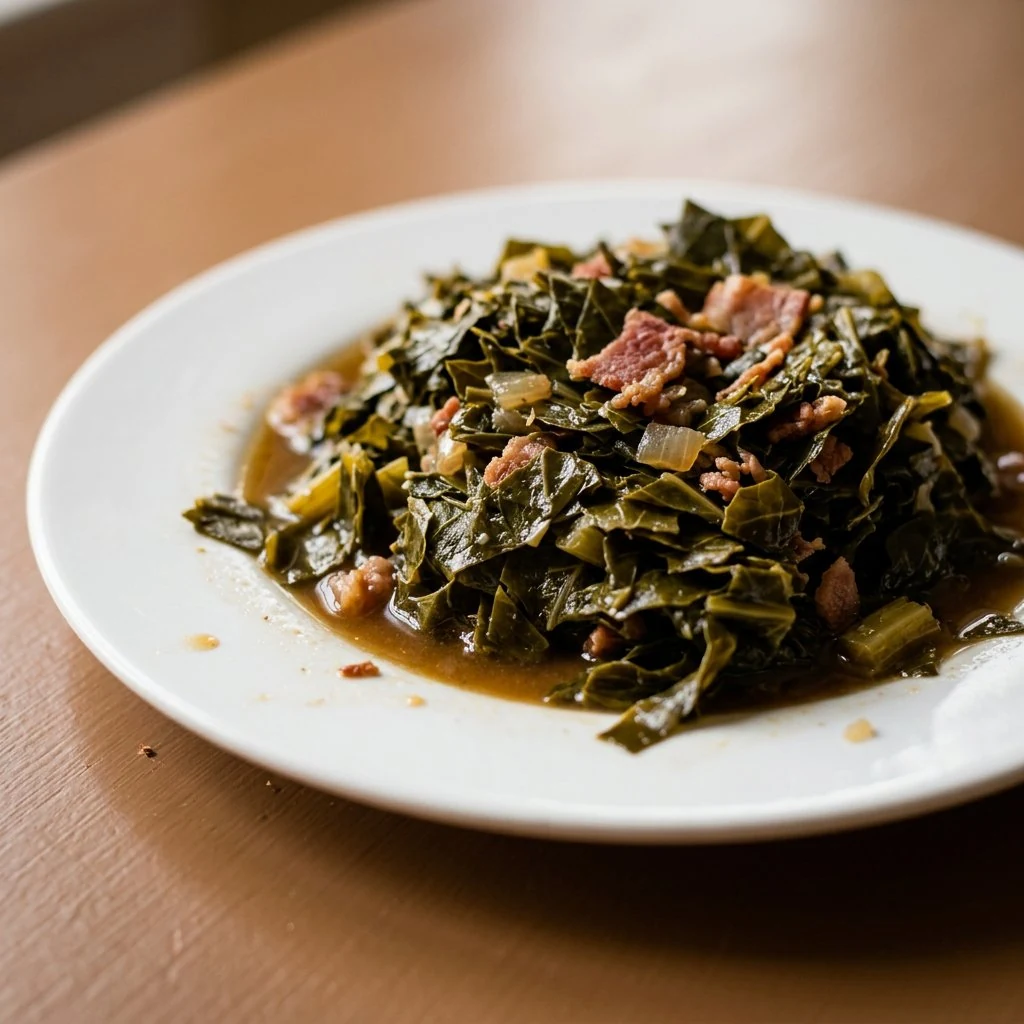
Your broth should be chicken for the deepest flavor, and the vinegar plus sugar balance each other so the greens taste rounded rather than sharp. Red pepper flakes are adjustable; the half teaspoon whispers, a full teaspoon announces, and you know your table.
Equipment You’ll Need
You need a large heavy pot with a lid, a sharp knife, a cutting board, a colander for washing, and tongs for turning the greens as they wilt. A wooden spoon handles the aromatics, and paper towels drain your crispy bacon.
If your pot is barely big enough for the raw greens, add them in handfuls, letting each handful wilt before the next goes in. Greens collapse dramatically, and within five minutes your overflowing mountain becomes a tidy, simmering pot with room to stir.
How to Make Collard Greens Bacon
Step One: Wash and Chop
Wash the collard greens thoroughly, remove the thick center stems, and chop the leaves. Three changes of water is the honest standard, because hidden grit ruins an otherwise perfect pot; lift the greens out of the water rather than draining so any sand stays behind in the bowl.
Step Two: Bacon First
Cook the bacon in your big pot until crispy, then remove it and crumble it, leaving every drop of that liquid gold fat behind. Your bacon fat is the cooking medium and the flavor foundation, so whatever you do, do not wipe the pot.
Step Three: The Aromatics
Add the onion and garlic to the bacon fat and cook 3 minutes until softened and fragrant. The onion picks up the smoky drippings, the garlic blooms without burning, and your kitchen enters its first stage of smelling like Sunday in the South.
Step Four: Build the Broth
Add the chicken broth, vinegar, sugar, and red pepper flakes and bring the pot to a boil. This seasoned liquid becomes the pot liquor, so give it a quick stir and taste; it should taste slightly bold, because the greens will mellow it as they drink it in.
Step Five: The Long Simmer
Add the collard greens, reduce the heat, and simmer 45 to 60 minutes until tender. Press the greens under the liquid with your tongs, lid the pot partially, and stir now and then; done right, your fork slides through a leaf with zero squeak, which is the whole test.
Step Six: Season and Crown
Season with salt and pepper, then top the pot with the crumbled bacon. Taste a spoonful of the broth before the final salt; between the bacon and the broth, the pot may already be where it needs to be, and the bacon on top should stay crisp for contrast.
Serving Size & Batch Scaling
Two bunches feeds six as a side, and the leftovers are arguably better than the first serving. At a holiday table with many dishes, this pot stretches further; with cornbread as the only companion, count four servings and no regrets.
Doubling requires a bigger pot or two pots, since raw greens are mostly volume. The simmer time stays the same, and your second pot becomes next week’s side or the best soup base decision you have made all year.
For a taste of tradition, set out pepper vinegar or pepper sauce at the table; a few dashes of the spicy vinegar over a hot bowl of greens is the old school finish that regulars request without being asked. Small bottles of it live in Southern refrigerators for exactly this purpose, and now yours can too.
Making More or Less?
For two people, one bunch with half the bacon, broth, and seasonings simmers in the same window. The ratios matter more than the volume, and a small Dutch oven holds a single bunch’s mountain without drama.
If your crowd runs big, simmer the full recipe a day early and reheat for serving; collards are one of the rare sides that genuinely improve overnight. The pot liquor deepens, the vinegar rounds out, and your day of hosting just got easier.
Nutrition Estimate Per Serving
- Calories: about 135 per serving
- Protein: 6 g
- Carbohydrates: 10 g
- Fat: 8 g
- Fiber: 4 g
- Sugar: 2 g
- Sodium: about 540 mg
The following is an estimated nutritional breakdown based on standard ingredient data, so treat these figures as friendly guidance rather than medical advice. Collards bring serious vitamin A, C, and K to the table, and the broth you drink from the bowl carries them too.
Common Mistakes to Avoid
The classic mistake is undercooking collards, which leaves them chewy and bitter; these greens want the full simmer, and sixty minutes is not a typo. The second is skipping the thorough wash, because one bite of grit undermines every compliment your pot was about to earn.
Do not discard the stems without a thought; the thick center ribs are too fibrous for the pot, but sliced thin and briefly pickled, they are a chef’s snack while you wait. The leaves are the mission, and the stems are your kitchen reward.
Finally, do not rush the bacon step on high heat. Bacon cooked slowly renders more fat and crisps more evenly, and your pot needs every drop of that fat to carry the flavor the long simmer expects.
Troubleshooting Guide
If your greens taste bitter after the full simmer, add the sugar a quarter teaspoon at a time and give the pot ten more minutes; bitterness usually means they needed more time, not more sweetener. If the pot is too smoky or salty, a peeled raw potato simmered in the broth for fifteen minutes pulls some of the salt out.
If your greens seem tough at the hour mark, they were older or the stems were incompletely stripped; keep simmering and check every fifteen minutes. Collards are honest vegetables, and they tell you when they are done by surrendering.
If your pot liquor tastes thin, simmer uncovered for the last ten minutes to concentrate it. That broth is the part you drink from a spoon and sop with cornbread, so treat its reduction as the main event, not an afterthought.
Variations & Customizations
Swap the bacon for a smoked ham hock or a couple of turkey wings for a different smoky tradition, or add a splash of hot sauce at the table for heat seekers. A teaspoon of honey with the vinegar pushes the sweet and sour balance toward the version that converts collard skeptics.
Mix in kale or mustard greens for a blended pot with varied textures, or cook a pound of drained black eyed peas into the last thirty minutes for a one pot New Year’s luck situation. The pot liquor does not care what you simmer in it; it makes everything taste intentional.
What to Serve With It
Cornbread is non negotiable, because pot liquor exists to be sopped, and these greens hold their own next to fried chicken, pork chops, or holiday ham. They share a smoky kinship with southern green beans when your table leans vegetable forward, and a plate featuring slow cooker pulled pork with these greens beside it is Southern comfort executed from scratch.
A bowl of these greens with rice and a fried egg is a quiet, complete meal, and the leftovers over grits the next morning are the tradition nobody warned you about but everyone repeats.
Meal Prep & Make-Ahead Instructions
Wash, stem, and chop the greens up to two days ahead; store them in a bag with a dry paper towel in the fridge. You can also cook the entire pot a day early, since overnight rest improves the flavor, and reheating is a gentle twenty minute affair.
For holiday cooking, make the full pot the day before and hold the bacon topping separately so it stays crisp. Reheat covered on low with a splash of broth, crown with bacon at the table, and your side dish will taste like you spent the whole morning on it.
Storage & Leftovers
Leftover collards keep in their pot liquor in an airtight container for up to four days, and the liquid protects them from drying out. Store the bacon separately if you can, so it keeps its crunch for the reheated rounds.
Freezing works well for up to three months, pot liquor included; thaw overnight and reheat gently. The texture softens a touch, which in a green you are simmering for an hour anyway, is barely a footnote, and the flavor holds strong.
If your leftover pot has more broth than greens, do not pour it off; freeze the pot liquor in ice cube trays and drop two cubes into soups, rice, or beans later. Your freezer gains the best stock cube in the building, made from ingredients you already paid for once.
Reheating Instructions
Reheat the greens in a covered pot over low heat with a splash of broth or water for about fifteen minutes, stirring once. The microwave handles single bowls in about two minutes, and greens, unlike bread, are completely unbothered by the microwave.
A fresh splash of cider vinegar after reheating wakes the pot back up, and the reserved bacon goes on after the heat, always. Your day two bowl, with cornbread on the side, is the portion regulars would fight for.
Frequently Asked Questions
Can this be made ahead? Yes, and it should be; collards taste better the next day. Cook the full pot up to two days ahead, refrigerate in their liquid, and reheat gently before serving with the bacon added fresh at the end.
How do you get the grit out of collard greens? Fill a sink or big bowl with cold water, swish the leaves around, and lift them out, leaving the grit behind. Repeat with fresh water two more times; if the final bowl of water runs clear, your greens are clean.
Can you use pre cut bagged collards? You can, and they save the stemming and chopping work, though they cook faster, so start checking at thirty minutes. Wash bagged greens too, because convenience does not automatically mean clean.
What exactly is pot liquor? It is the savory broth left in the pot after the long simmer, rich with bacon, vinegar, and green flavor. Southerners consider it the best part of the dish, sopped with cornbread or drunk straight from a spoon, and now you will too.