
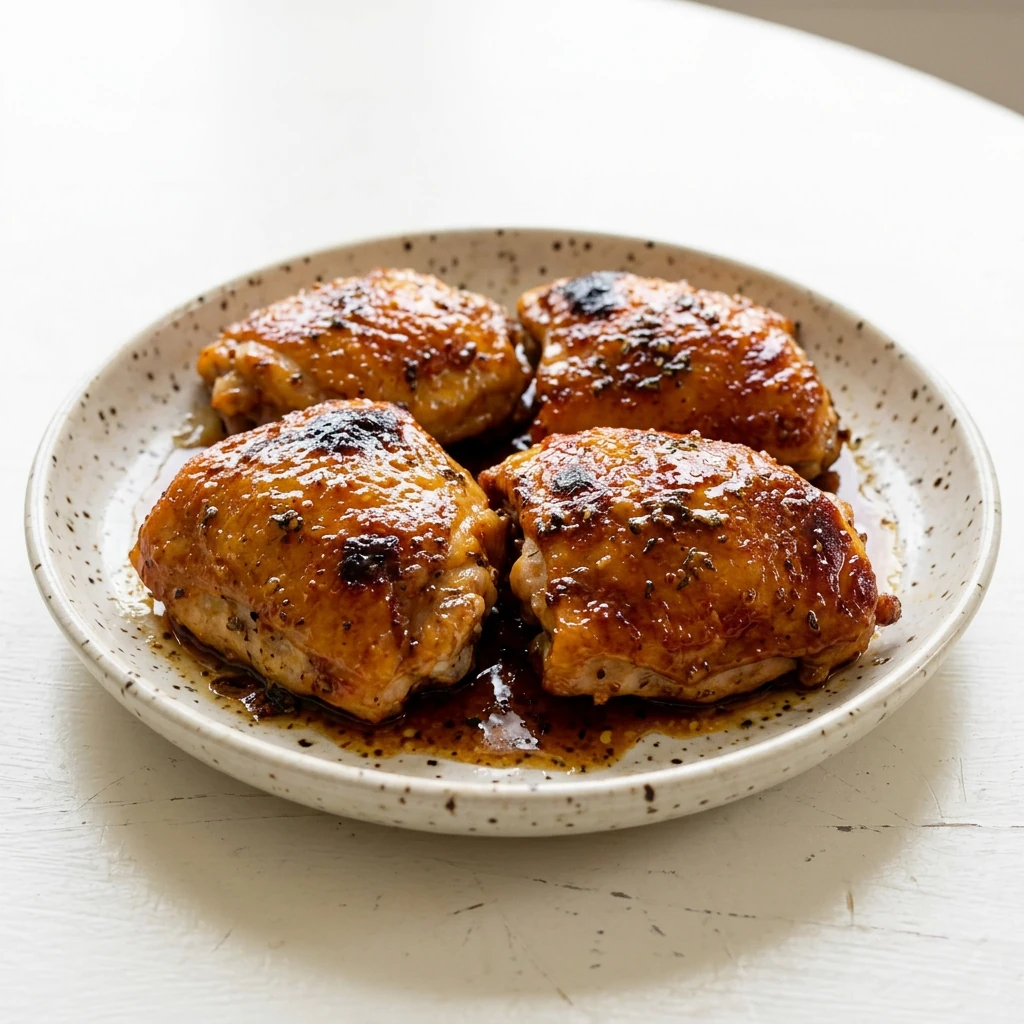
Honey mustard chicken thighs are the forty minute dinner that tastes like a marinade worked all day. Eight thighs bake uncovered in a glossy Dijon and honey sauce until golden on top and juicy underneath, with a spoonable pan sauce left behind.
It is ideal for weeknights, picky eaters, Sunday supper with rice, and anyone who wants big flavor from a six ingredient sauce. One bowl, one dish, and an oven that does everything else.
Recipe at a Glance
| Prep time | 10 minutes |
| Cook time | 30 to 40 minutes |
| Total time | About 50 minutes |
| Cooking method | Oven bake, uncovered, sauce pooled |
| Servings | 4 |
| Main ingredients | Chicken thighs, Dijon mustard, honey, olive oil |
| Skill level | Easy |
Ingredients You’ll Need
- 8 boneless skinless chicken thighs
- 1/4 cup Dijon mustard
- 1/4 cup honey
- 1 tbsp olive oil
- 1/2 tsp salt
- 1/2 tsp pepper
- 1/2 tsp oregano
- 1/4 tsp cayenne pepper, optional
Ingredient Notes & Easy Substitutions
Chicken thighs: Boneless skinless thighs are the right cut for a covered in sauce bake, because they stay juicy through the full cook where breasts would tighten up. Pick eight similar sized thighs so they finish together, and trim any big fat pads. If you only have boneless breasts, drop the bake to about 25 to 30 minutes and lean on the thermometer.
Dijon mustard: Dijon is the backbone, tangy and smooth, and it mellow beautifully in the oven while the honey caramelizes the top. Yellow mustard is too sharp and flat for this sauce, so keep it Dijon if you can. Whole grain mustard is a lovely swap if you want texture and a little extra bite in the finished sauce.
Honey: Equal parts honey and Dijon is the classic balance, and the honey does double duty as flavor and as the browning engine for those golden tops. Warm honey for ten seconds in the microwave if it has crystallized, and it will whisk into the sauce without a fight.
Oregano and cayenne: The oregano gives the sauce a savory floor so it tastes herbed rather than sweet, and the optional cayenne is the pinch that keeps each bite interesting. Use a light hand; a quarter teaspoon is felt, not seen, and the honey rounds its edges as it bakes.
Buying the mustard: Any mainstream Dijon works here, though brands swing widely in salt and punch, so taste yours straight from the jar before it meets the honey. A very salty Dijon means the added salt can drop to a quarter teaspoon, and a gentle one might want the full amount plus a splash of white wine vinegar for backbone.
Equipment You’ll Need
- 9×13 inch or similar baking dish
- Small mixing bowl and whisk
- Instant read thermometer
- Spoon, for basting and serving
How to Make Honey Mustard Chicken Thighs
Step One: Oven and Sauce
Preheat the oven to 350. In a small bowl, combine the Dijon mustard, honey, olive oil, salt, pepper, and oregano, whisking until completely smooth.
Whisking the sauce separately matters because honey clings to a spoon and Dijon clings to itself, and only real whisking turns them into one glossy sauce. It should look like warm caramel with attitude. Add the cayenne here too if you are using it, so the heat distributes evenly instead of landing on one unlucky thigh.
Step Two: Coat the Thighs
Place the chicken in a greased baking dish, pour the sauce over it, and turn each thigh so it is evenly coated, smooth side up.
Coating every surface now is what seasons the meat through the whole bake, since thighs release a little liquid in the oven and the sauce thins as it heats. Turn each piece with tongs rather than pouring sauce over the top only. Arrange them in a single snug layer; crowding is fine in a dish like this because the sauce conducts the heat.
Step Three: Bake Uncovered
Bake uncovered for 30 to 40 minutes, until the tops are golden and the internal temperature reads 165 in the thickest thigh.
Uncovered is the method and the magic, because the honey needs dry oven air to caramelize and a covered dish would give you pale, steamed chicken. Start checking at thirty minutes with the thermometer in the thickest piece, away from any bone of fat. The sauce will look loose and bubbly at the edges, which is exactly what you want at this stage.
Step Four: Baste and Rest
Spoon the pan sauce over the hot thighs and let them rest in the dish for 5 minutes before serving.
The rest is when the sauce rethickens from a loose bake into a spoonable glaze, and the thighs reabsorb their juices after the heat lets go. Basting now also dissolves the caramelized honey bits from the dish sides back into the sauce, which is where much of the flavor lives. Do not skip this; five minutes buys you a completely different dish.
Step Five: Sauce Over Everything
Spoon the pan sauce generously over each thigh as you plate, letting the extra pool beside whatever starch is sharing the dish.
The sauce is half the reason this recipe exists, so treat it like a condiment wearing a main dish costume. It re loosens as the thighs rest, and a second spoonful over the plate after slicing keeps every bite coated. Rice, mashed potatoes, or crusty bread all exist to catch what the thighs leave behind.
Step Six: The Final Taste
Taste the pan sauce one last time and adjust it in the dish, with a pinch of salt, a drizzle of honey, or a grind of black pepper until it tastes exactly right.
Honey and mustard brands vary more than any two other pantry staples, so the last taste belongs to you and not the recipe. A squeeze of lemon brightens a sauce that leans sweet, while an extra pinch of oregano deepens one that leans sharp. Thirty seconds of adjusting here is the difference between good and memorable.
Serving Size & Batch Scaling
Eight thighs feed four generously at two per plate, or six when there are sides. Doubling is simply two dishes, since thighs like a single layer and the sauce scales by eye: one part Dijon, one part honey, for as many thighs as you have.
This is a budget triumph of a dinner; thighs are the most affordable cut in the case, and the sauce is pantry shelf stock. Leftovers shred beautifully over rice or into a lunch container, and the sauce keeps them glossy through day three.
Making More or Less?
Halving works for four thighs with half the sauce and the same 30 to 40 minute window, thermometer in charge as always. The leftovers reheat so well that eight thighs often turn out to be a deliberate lunch strategy rather than optimism.
Feeding a crowd, two dishes bake side by side and the sauce doubles in one bowl at the same one to one honey and Dijon ratio. The pan sauce is why this recipe scales happily, since it only ever asks you to whisk more of the same two things.
Nutrition Estimate Per Serving
- Calories: about 400
- Protein: 40 g
- Fat: 22 g
- Carbohydrates: 12 g
It is an estimate, not medically precise information, and the honey accounts for nearly all of the carbohydrate. Paired with rice and something green, this is a complete plate that eats like a restaurant sauce dish for a fraction of the cost.
Common Mistakes to Avoid
The top mistake is covering the dish, which steams the color right off the honey glaze; this bake stays uncovered from start to finish. The second is skipping the whisk, because unmixed honey pools and burns in one spot while the rest of the dish goes under seasoned.
Pulling the chicken without a thermometer is the quiet third mistake; thighs are forgiving, but thirty versus forty minutes is a wide window and the thermometer ends the guessing. And let them rest, because sauce from a rested dish clings instead of running.
Troubleshooting Guide
My tops are pale at 40 minutes. The dish may be crowded or on a low rack. Move it up one rack and give it five more minutes; the honey will take color the moment the surface dries out.
My sauce is thin. Thighs release juice as they cook, so this is normal at the thirty minute mark. Rest the dish five minutes and the sauce tightens; for a thicker gravy, stir a teaspoon of cornstarch into a tablespoon of cold water and whisk it into the hot pan sauce.
My sauce tastes too sharp. Mustard brands vary in punch, so balance with an extra drizzle of honey stirred into the pan sauce off heat. A pat of butter swirled in at the end also rounds any edge without sweetening the dish.
Variations & Customizations
Add a tablespoon of whole grain mustard alongside the Dijon for texture, or a minced clove of garlic to the sauce for a savory edge. A splash of apple cider vinegar sharpens the honey beautifully, and bone in thighs work with ten extra minutes on the clock and a thermometer check near the bone.
The uncovered 350 bake and honey Dijon ratio at Cooking LSL shaped this version, and the mustard depth notes from Foodie Crush are why the sauce tastes layered instead of one note. Fresh thyme instead of oregano is a lovely spring variation.
What to Serve With It
Rice or mashed potatoes are the natural landing pads for that pan sauce, and something green keeps the plate honest. My smothered chicken and gravy is the comfort sibling for your next sauce loving night.
For a side that earns its place next to honey and mustard, my cheesy baked cabbage brings the savory balance this sweet glaze wants. Warm bread is never wrong when there is sauce in the dish.
Meal Prep & Make-Ahead Instructions
Whisk the sauce up to three days ahead and refrigerate it in a jar; dinner becomes a pour and bake. You can also coat the thighs in the dish in the morning, cover, and refrigerate, then bake straight from cold with five extra minutes on the clock.
Cooked leftovers keep for four days and reheat gently with a splash of water to revive the sauce. The shredded meat is also meal prep gold over rice containers, where the honey mustard works as a dressing by day two.
Storage & Leftovers
Keep the cooled thighs in their sauce in a sealed container for up to four days, which keeps every piece glossy and tender.
The honey flavor deepens overnight, and cold shredded thigh meat over a salad with a squeeze of lemon is a genuinely good lunch. Freeze the meat and sauce together for up to two months; thaw overnight and reheat gently, since honey sauces tighten in the cold.
Reheating Instructions
Reheat in a covered skillet over medium low for about six minutes with a splash of water, or microwave at fifty percent power in sixty second bursts until just warmed through.
Gentle heat keeps the sauce silky and the thighs tender, while a hard microwave boil tightens honey into taffy. A fresh grind of pepper after warming wakes the plate right up.
Frequently Asked Questions
Can I use chicken breasts instead of thighs? You can; cut large breasts in half, reduce the bake to 25 to 30 minutes, and pull them at 165 promptly since breast dries faster than thigh. The sauce works exactly the same.
Can I marinate the chicken in this sauce ahead? Yes, up to overnight, and the flavor goes deeper; just bake everything, marinade included, in the dish. The honey may darken the tops a touch faster, so start checking at twenty five minutes.
Is the cayenne spicy? A quarter teaspoon across eight thighs is a warm hum, not heat, and the honey rounds it further. Leave it out for heat sensitive tables and the dish is still completely itself.
Can I make this dairy free? It already is; the sauce is mustard, honey, oil, and seasonings with no dairy anywhere. Serve it with olive oil mashed potatoes and the whole plate stays dairy free.