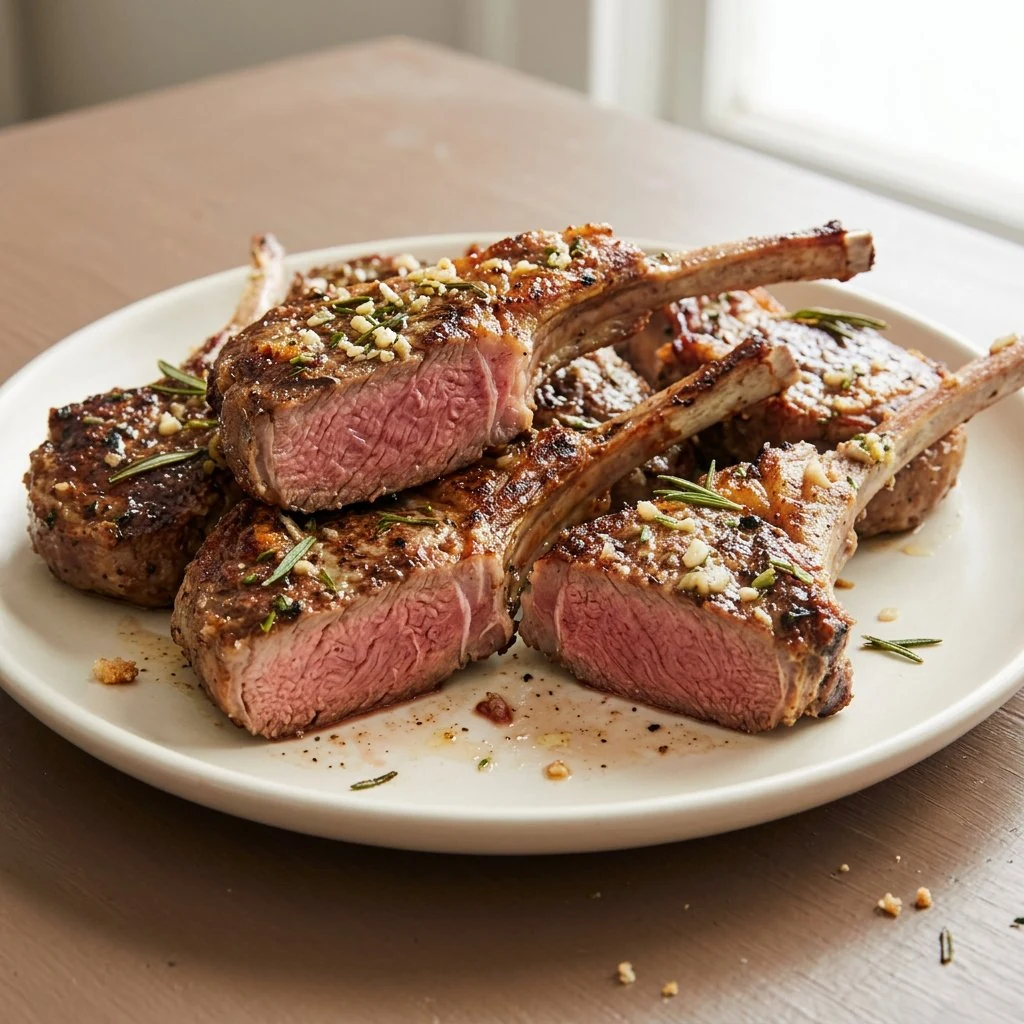
Pan seared lamb chops with rosemary and garlic is the dinner that makes a regular evening feel like an occasion without any fuss.
Eight lamb chops rest in a quick marinade of olive oil, garlic, fresh rosemary, lemon, and Dijon for thirty minutes, then hit a screaming hot skillet with butter for 3 to 4 minutes per side until the crust is deep gold.
The center stays rosy medium rare, and the browned butter gets spooned over everything at the end. Rested five minutes, this is steakhouse energy from one pan.
It is ideal for date nights, holiday tables that need a showpiece, anyone who thinks lamb is intimidating, and people who believe butter is a sauce category. Tonight, it proves it.
Recipe at a Glance
| Prep time | 10 minutes, plus 30 minute marinade |
| Cook time | 10 minutes |
| Total time | 50 minutes |
| Servings | 4 |
| Main ingredients | Lamb chops, fresh rosemary, garlic, butter |
| Skill level | Easy |
Ingredients You’ll Need
- 8 lamb chops
- 3 cloves garlic, minced
- 2 tbsp fresh rosemary, chopped
- 2 tbsp olive oil
- 1 tbsp lemon juice
- 1 tsp Dijon mustard
- Salt and pepper, to taste
- 2 tbsp butter, for the pan
Ingredient Notes & Easy Substitutions
Lamb chops: Rib chops are the elegant lollipop style chops, while loin chops look like tiny T bones and are meatier; both sear beautifully in this recipe.
- Ask for chops about an inch thick, because thin chops race past medium rare before the crust forms. Eight chops feed four generously with sides.
Fresh rosemary: This is the classic lamb pairing, piney and floral, and fresh makes a real difference here since the marinade time is short. Dried rosemary works in a third of the amount if fresh is unavailable. Strip the leaves from the woody stems and chop them small so they distribute into the oil.
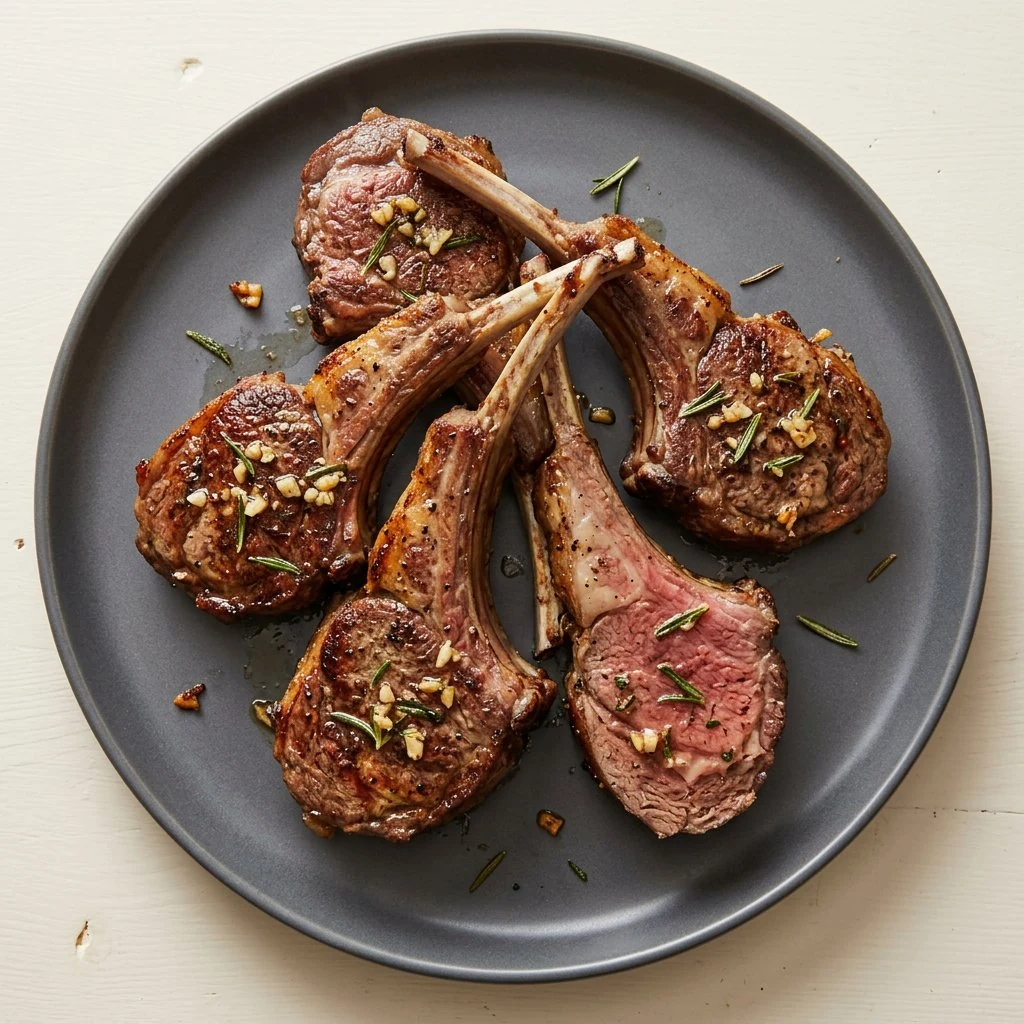
Lemon juice and Dijon: One tablespoon of lemon brightens the rich meat, and the teaspoon of Dijon helps the marinade cling while adding a whisper of tang.
Do not overdo the lemon; lamb loves a highlight, not a soak. This little acid lift is what makes people ask what made the lamb taste so alive.
Butter: The final searing fat and the sauce, all in one. Butter foams around the chops, browns into nuttiness, and becomes the pan sauce you spoon over everything. If you want to be extra, a smashed extra clove of garlic and a rosemary sprig in the butter turn the pan into a basting studio.
Equipment You’ll Need
- Cast iron or heavy skillet
- Shallow dish or zip top bag, for marinating
- Tongs
- Spoon, for basting
- Instant read thermometer
- Cutting board and foil, for resting
How to Make Lamb Chops Rosemary
Step One: Mix the Marinade
In a small bowl, whisk together 2 tbsp olive oil, the minced garlic, chopped rosemary, 1 tbsp lemon juice, 1 tsp Dijon mustard, and a good seasoning of salt and pepper until it looks like a loose, fragrant paste.
Whisking the Dijon in first helps it emulsify with the oil so the marinade clings evenly instead of pooling. Take a breath over the bowl; rosemary and garlic in olive oil is one of the great smell combinations, and it is about to be lamb’s entire personality. Season boldly, because lamb can carry more salt and pepper than you think.
Step Two: Marinate for Thirty Minutes
Rub the marinade all over the lamb chops, coating every surface, and let them sit at room temperature for 30 minutes.
Thirty minutes is the sweet spot, long enough for the garlic and rosemary to perfume the meat, short enough that the lemon does not start curing the surface.
Room temperature chops also sear more evenly than cold ones, so this rest is doing double duty. Rub with your hands; it is the only way to know every chop is covered, and honestly it is a nice way to spend two minutes.
Step Three: Heat the Pan Properly
Place a large cast iron or heavy skillet over high heat and let it get properly hot, two to three full minutes, then add the butter and let it melt and begin to foam.
A properly hot pan is the entire difference between a mahogany crust and gray lamb. The butter should foam and quiet down, with the milk solids just starting to turn golden; that is your cue.
If the butter browns immediately and smells nutty, the pan is ready; if it blackens, wipe it out and start again, because burnt butter is bitter and lamb deserves better.
Step Four: Sear to Medium Rare
Lay the chops in the pan with a little space between them and sear for 3 to 4 minutes per side for medium rare, letting each side build a deep golden crust before turning. Spoon the foaming butter over the chops as they cook.
Resist moving them during the sear; a chop that lifts easily is a chop that is ready to flip, and lifting early tears the crust. The butter basting is not just theater, it cooks the top surface gently while the bottom crusts.
For medium rare, aim for about 130 to 135 degrees on an instant read thermometer at the thickest part; the chops will coast a few degrees higher as they rest.
Step Five: Rest, Patiently
Transfer the chops to a cutting board or warm plate, tent them loosely with foil, and let them rest for 5 minutes before serving.
Those five minutes are the least glamorous and most important part of the recipe, because resting lets the juices redistribute instead of running onto the board at the first cut.
Meanwhile the pan butter stays warm and ready for its final job. Whatever you do, do not skip this; lamb rested five minutes eats juicier than lamb sliced straight away, every single time.
Step Six: Spoon the Butter and Serve
Give the pan butter a stir, spoon it warmly over the rested chops, and serve immediately with lemon wedges if you like.
That herb flecked, garlicky butter is the sauce, the garnish, and the reason people will hover near the platter.
Lamb and rosemary already belong together, but lamb, rosemary, and brown butter is a reunion. Bring the platter to the table and accept the quiet nod of respect that follows.
Serving Size & Batch Scaling
Eight chops feed four people two chops each, or six lighter appetites three each. Scaling up means working in batches or using two pans, because crowding drops the temperature and steams the meat instead of searing it.
For two, cook four chops and keep the full marinade amount, since it keeps for a week and improves chicken and pork all week long.
A big cast iron handles six chops at once; beyond that, batches with a quick wipe of the pan between rounds keep the sear honest.
Making More or Less?
Cooking for two, cook four chops and keep the full marinade, which keeps for a week and quietly improves chicken and pork all week long.
Scaling up means batches or two pans, because crowding drops the temperature and steams instead of sears; a big cast iron handles six chops, and beyond that, wipe the pan between rounds. The butter basting stays exactly the same no matter how many rounds you run.
Nutrition Estimate Per Serving
Two chops land around 430 calories with roughly 34 grams of protein, 31 grams of fat, and just a gram or two of carbohydrates, nearly all of it from the marinade and butter.
It is an estimate, not medically precise information, and lamb is rich but deeply satiating, which is a polite way of saying nobody needs a snack after this dinner. Trim the fat edge if you want the numbers lighter; the flavor survives.
Common Mistakes to Avoid
The number one lamb mistake is a lukewarm pan, which gives you gray, steamed chops with no crust; heat the skillet until it honestly feels a little intimidating.
The second is overcooking out of caution; lamb at medium rare is tender and rosy, while lamb pushed toward well done turns firm and assertive in a way many tables did not sign up for.
Do not let the marinade garlic sit on the chops for hours either; garlic in oil turns sharp and can scorch in the pan, and thirty minutes is all the perfume you need.
And rest the chops; this is the second time I have said it, and it is worth repeating because the reward is real.
Troubleshooting Guide
My chops burned on the outside. The heat was slightly fierce or the pan had dark, bitter butter; lower the heat a notch for the second side, and pour off blackened butter before it ruins the sauce. Golden brown, not blackened, is the target.
My lamb overcooked. Chop thickness and pan heat vary, so trust the thermometer over the clock and pull at 130 to 135 for medium rare. If it happens anyway, slice thin and extra butter fixes many small sorrows.
My garlic turned bitter. Minced garlic from the marinade can scorch against the pan. Next time, brush off excess garlic bits before searing, or tuck whole smashed cloves into the butter instead, where they perfume without burning.

Variations & Customizations
Add a pinch of dried oregano and a little lemon zest for a Greek leaning marinade, or swap the rosemary for thyme if that is what the window box offers. A final sprinkle of flaky salt over the buttered chops is a small luxury that tastes enormous.
The butter basting rhythm at House of Nash Eats shaped my spoon work, and the marinade balance at Copykat is why the lemon stays at a bright tablespoon instead of taking over. Mint chimichurri is the traditional cousin if your table loves lamb with mint.
What to Serve With It
Creamy mashed potatoes, crispy roasted potatoes, or a lemon rice pilaf are the classic partners, and something green and snappy keeps the plate bright.
My cheesy baked cabbage is the unexpected side that disappears fastest next to rich lamb.
If the butter basting won you over, my cowboy butter steak bites take the same skillet joy in a beefy, dip friendly direction. A simple arugula salad with lemon vinaigrette rounds out the plate in five minutes flat.
Meal Prep & Make-Ahead Instructions
Mix the marinade in the morning and it waits happily in the fridge all day; rub it on when you get home and dinner is a ten minute sear away. The marinade itself keeps for a week and makes itself useful on chicken thighs and pork chops all week.
Cooked chops hold well for two days and are excellent cold, sliced over salads, though the sear is best fresh.
If you are cooking for a dinner party, sear the chops slightly shy of target, rest them, then give them thirty seconds per side in hot butter right before serving, which is exactly what restaurants do.
Storage & Leftovers
Store leftover chops in an airtight container in the refrigerator for up to three days, with the pan butter spooned over them to keep the surface from drying. Reheat gently, or eat them cold, which lamb happily permits.
Cold lamb sliced thin over arugula with a squeeze of lemon and shaved Parmesan is a legitimate next day lunch that feels like it came from a cafe with a linen napkin policy.
Freezing cooked chops is safe for two months, though the texture is noticeably better fresh or refrigerated.
Reheating Instructions
Reheat in a covered skillet over low heat for about three minutes per side with a small spoon of butter and a splash of water, or warm them in a 300 degree oven until just heated through.
The goal is warm, not re-cooked, because lamb is at its best when the center stays rosy; low heat and a few minutes get you there.
And that is the whole cast iron: rosemary scented chops, a deep golden crust, and brown butter doing what brown butter does best, which is making an ordinary evening taste like a celebration.
Frequently Asked Questions
What internal temperature is medium rare lamb? Pull the chops at 130 to 135 degrees in the thickest part; they coast a few degrees higher while resting and land in perfect rosy medium rare territory.
Can I marinate the lamb overnight? Thirty minutes to an hour is ideal for this marinade, because the lemon keeps working the surface the longer it sits. If overnight is your only window, mix the marinade without the lemon and add it just before cooking.
Can I grill these instead? Absolutely; a hot grill over direct heat cooks them in the same 3 to 4 minutes per side, and the rosemary garlic marinade handles beautifully over charcoal.
Do I need to remove the fat edge or the fell? A thin fat edge bastes the chops as they cook and I leave it on, scoring it lightly so it does not curl. The fell, the thin membrane on the outside, peels off easily if your butcher has not already removed it.