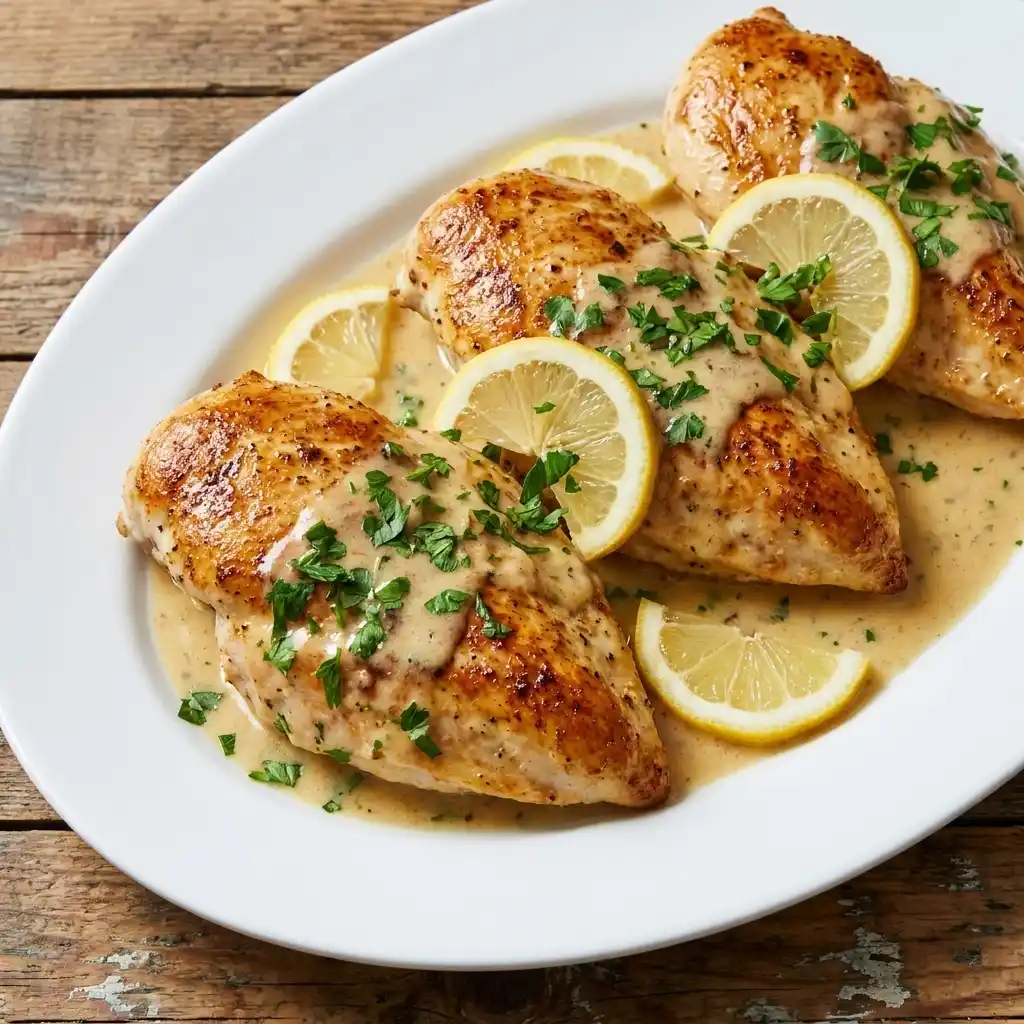
Lemon chicken recipe is the dinner you make when you want something that tastes bright and fresh but still feels like comfort food. Chicken breasts get sliced into cutlets, dipped in an egg mixture, coated in a parmesan-flour crust, and pan-fried until crispy and golden.
Then a quick lemon butter sauce comes together in about five minutes, and you pour it over the chicken so it soaks into the crust and pools on the plate for dipping.
The whole thing is done in thirty minutes, and the contrast between the crispy parmesan crust and the tangy, buttery sauce is what makes this dish unforgettable.
If you have ever had chicken that tasted flat or one-note, the combination of lemon, butter, garlic, and parmesan in this recipe solves that problem completely.
At a Glance
- Prep Time: 15 minutes
- Cook Time: 15 minutes
- Total Time: 30 minutes
- Servings: 4
- Difficulty: Easy
- Cuisine: Italian-inspired American
- Cooking Method: Pan-fried + stovetop sauce
- Meal Type: Dinner
- Calories (per serving): ~460
- Protein: ~38g
- Carbs: ~8g
- Fat: ~33g
What Ends Up on Your Plate
The chicken cutlets have a thick, golden parmesan crust that shatters when you cut into it, revealing juicy, tender meat inside.
The lemon butter sauce is thin enough to pour but rich enough to coat the chicken, with a bright citrus tang that cuts through the richness of the parmesan and butter.
The garlic in the sauce adds a warm, savory depth that keeps the lemon from tasting one-dimensional. Every bite balances crispy, creamy, tangy, and savory. The lemon slices on top are not just garnish. Squeezing fresh lemon over the finished chicken adds a burst of acidity that wakes up the whole plate.
Ingredients You’ll Need
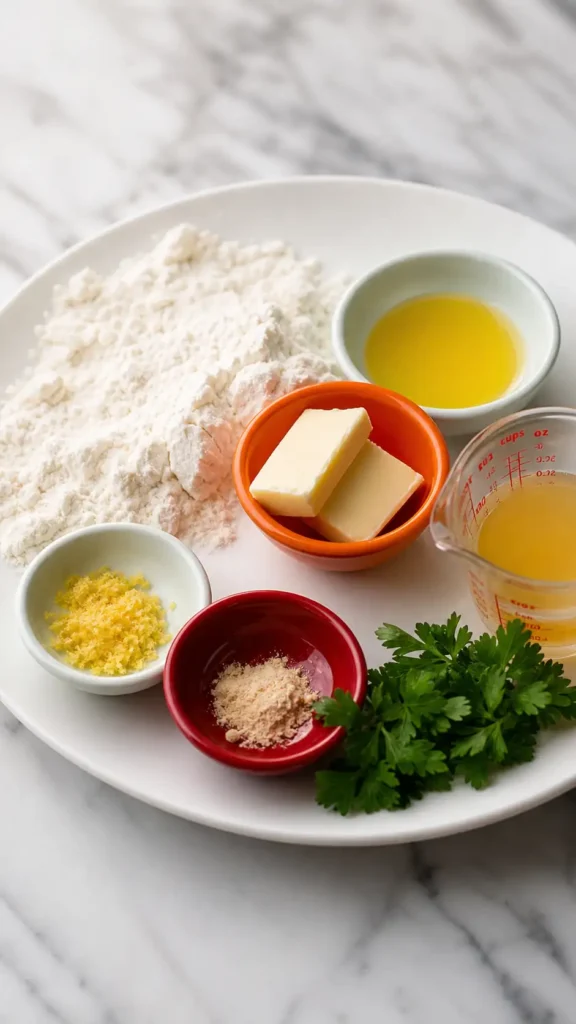
For the chicken:
– 1½ pounds chicken breast (2 large), patted dry – Cut in half lengthwise to make 4 thinner cutlets, then pounded to even thickness. Thinner cutlets cook faster and get crispier than thick ones.
– 2 large eggs – The binder that holds the parmesan crust to the chicken. Whisked with seasonings so the flavor penetrates from the inside.
– 1 garlic clove, minced – Mixed into the egg mixture for a subtle garlic base.
– ½ teaspoon Italian seasoning – Added to the egg mixture for an herby layer.
– ½ teaspoon salt and ¼ teaspoon black pepper – Seasoning the egg mixture.
– 1 cup parmesan cheese, grated – The star of the crust. Freshly grated parmesan melts and crisps in the pan in a way that pre-shredded cannot match.
– 3 tablespoons all-purpose flour – Mixed with the parmesan to create the dredge. The flour helps the parmesan adhere and creates a cohesive crust.
– 1 tablespoon olive oil – For pan-frying the chicken. You need enough oil to coat the bottom of the skillet so the crust browns instead of sticking.
For the lemon butter sauce:
– 8 tablespoons unsalted butter – Yes, a full stick. This is a butter-based sauce. The butter emulsifies with the lemon juice and broth to create a silky, glossy sauce.
– 2 garlic cloves, minced – Cooked in the butter until fragrant. Fresh garlic is essential here.
– ¼ cup lemon juice – About the juice of 2 lemons. Fresh is mandatory. Bottled lemon juice tastes flat and metallic. Squeeze it from the lemons you are using for garnish.
– ¼ cup chicken broth – Thin the sauce slightly and adds savory depth so it is not just butter and lemon.
– ¼ teaspoon black pepper – For the sauce.
For garnish:
– 1 tablespoon fresh parsley, chopped – Adds color and a fresh, grassy note.
– ½ lemon, sliced – For garnish and for squeezing over the finished dish.
Looking for more weeknight chicken ideas? Browse our chicken recipes or check our dinner recipes for complete meal inspiration.
Ingredient Swaps
- Chicken thighs instead of breasts: Boneless, skinless thighs work well. They stay juicier and cook in about the same time.
- No fresh lemons: You really need fresh lemon juice here. If you absolutely cannot get them, use 3 tablespoons of bottled lemon juice plus 1 teaspoon of lemon zest from a jar.
- Lighter version: Skip the parmesan crust entirely. Season the chicken with salt, pepper, and Italian seasoning, then pan-fry in a little oil. Make the sauce as written. The dish is lighter but still delicious.
- Adding vegetables: Asparagus, green beans, or zucchini can be sautéed in the same pan after the chicken comes out. The lemon sauce coats them beautifully.
Kitchen Tools
- Large non-stick skillet – For frying the chicken. Non-stick helps the parmesan crust release cleanly.
- Meat mallet – For pounding the chicken to even thickness.
- Small saucepan – For making the lemon butter sauce while the chicken cooks.
- Tongs – For flipping and moving the chicken.
- Instant-read thermometer – For confirming the chicken hits 165°F.
Walking You Through It
While your finished dish may not look exactly like the images in this post, following these instructions will give you the same delicious LEMON CHICKEN RECIPE. So please follow with me!
The chicken and the sauce can cook at the same time, which is how this recipe finishes in thirty minutes. Start the chicken, and while the first side is browning, begin the sauce in a separate pan.
Cut and pound the chicken. Slice each chicken breast in half lengthwise so you have 4 thinner cutlets. Place them between plastic wrap and pound with a meat mallet until they are an even thickness, about ½ inch. This ensures every piece cooks at the same rate and the crust browns evenly.
Set up the breading station. In one shallow bowl, whisk together the eggs, minced garlic, Italian seasoning, salt, and pepper. In another bowl, mix the grated parmesan and flour.
Have the chicken pieces ready nearby. This assembly line approach keeps the process smooth and prevents your hands from turning into breaded messes.
Bread the chicken. Dip each cutlet into the egg mixture, making sure it is fully coated. Then dredge it in the parmesan mixture, pressing the crumbs in on both sides. Shake off the excess. The coating should be generous but not so thick that it falls off in the pan.
Pan-fry the chicken. Heat the olive oil in your skillet over medium heat. When the oil is hot, add the chicken cutlets in a single layer. Cook for 4 to 5 minutes on the first side until the bottom is crispy and golden brown.
Next Steps….
Flip and cook for another 4 to 5 minutes on the second side. If the crust starts browning too quickly, reduce the heat. You want the crust golden, not black.
The internal temperature should reach 165°F. Transfer the cooked chicken to a plate and cover loosely with foil to keep it warm.
Make the lemon butter sauce. While the chicken is cooking (or right after, in the same skillet), melt the butter in a saucepan over medium heat. Add the minced garlic and sauté for about 30 seconds until fragrant. You will smell it immediately.
Do not let it brown. Pour in the lemon juice, chicken broth, and pepper. Whisk to combine and let the sauce cook for about 2 minutes over medium heat.
It will come together into a smooth, slightly thickened butter sauce. The lemon juice and butter emulsify as they simmer.
Combine and serve. Pour the warm lemon butter sauce over the cooked chicken, turning each piece so both sides get coated. Garnish with chopped parsley and lemon slices. Serve immediately while the crust is still crispy and the sauce is warm.
For lighter side options, visit our healthy recipes or browse our soups and salads for fresh pairings.
Nutrition Snapshot
- Calories: ~460 per serving
- Protein: ~38g
- Carbs: ~8g
- Fat: ~33g
Values are estimates. The fat content reflects the butter in the sauce and the parmesan crust.
Kitchen Wisdom
- Fresh lemon juice is non-negotiable. Bottled lemon juice tastes flat and slightly metallic. Fresh juice has brightness and acidity that transforms the sauce. If you only have bottled, add twice as much lemon zest to compensate for the lost intensity.
- Do not skip the pounding. Uneven chicken means the thin end is overcooked and dry by the time the thick end is done. Pounding takes two minutes and makes every piece cook perfectly.
- Cook the sauce while the chicken fries. This is the time-saving trick that makes this a thirty-minute meal. The sauce takes five minutes. The chicken takes ten. Overlap them and everything is hot and ready together.
- Reduce heat if the crust browns too fast. Parmesan burns faster than flour-based breading. If you see the edges darkening too quickly, turn the heat down to medium-low. A slightly slower cook gives you a golden crust without char.
For a guide on cooking chicken safely, the FDA safe cooking temperature chart confirms 165°F as the minimum for poultry.
Common Hiccups
- The crust fell off: You did not press the parmesan mixture firmly enough onto the chicken, or the chicken was wet when you breaded it. Pat the chicken completely dry before dipping it in the egg.
- The sauce separated: The heat was too high or you cooked it too long after adding the lemon juice. Remove from heat and whisk in a tablespoon of cold butter. This brings the emulsion back together.
- The chicken is dry inside: You cooked it too long. Next time, use a thermometer and pull it at 165°F. The residual heat carries it a few degrees higher as it rests.
- The sauce is too tart: Reduce the lemon juice to 3 tablespoons and add an extra tablespoon of chicken broth. Some lemons are more acidic than others, so you may need to adjust.
- The crust is soggy: You let the chicken sit in the sauce too long before serving. Pour the sauce over the chicken right before it goes to the table for the crispiest result.
Make It Your Own
- Add capers: Stir 1 tablespoon of drained capers into the sauce. Their briny, tangy flavor is a natural match for lemon and butter.
- Piccata style: Add ¼ cup of white wine to the sauce along with the lemon juice. The wine adds acidity and complexity.
- No crust version: Skip the egg and parmesan coating. Season the chicken with salt, pepper, and Italian seasoning, pan-fry in oil, and make the sauce as written. This cuts the fat significantly and the lemon sauce still carries the dish.
- Add pasta: Serve the chicken and sauce over angel hair pasta. The thin noodles soak up the lemon butter beautifully.
What Pairs Well
Mashed potatoes are the traditional base because they absorb the lemon butter sauce. Pasta, especially angel hair or linguine, works if you want something lighter.
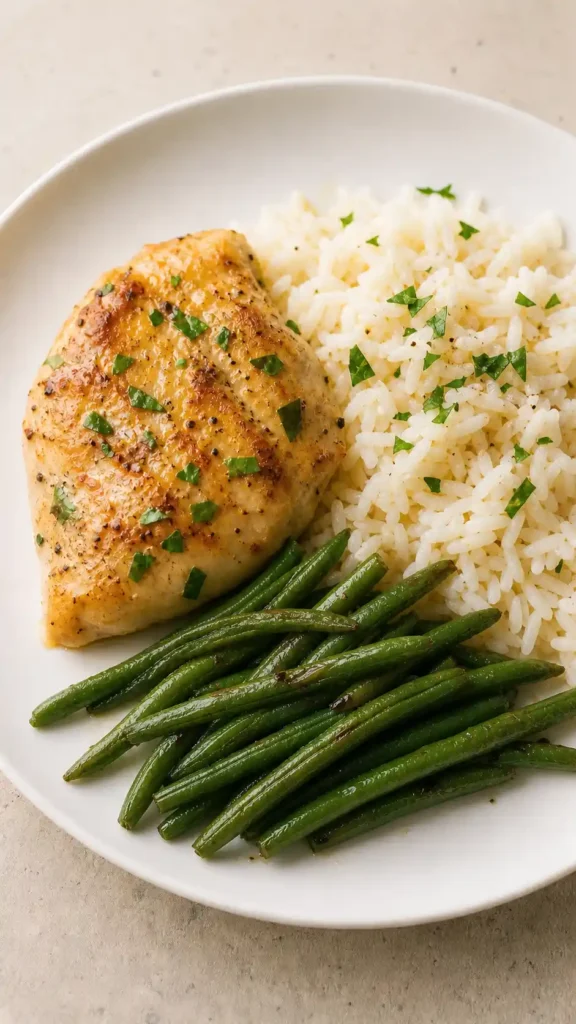
Steamed asparagus or green beans add a fresh, green element. A Caesar salad with its own lemony dressing complements the flavors perfectly.
Keeping It Fresh
- Fridge: Store leftovers in an airtight container for up to 3 days. The crust softens in the fridge, which is normal.
- Reheating: The oven is best. Bake at 375°F for 8 to 10 minutes until the chicken is warm and the crust firms up again. The microwave makes the crust soggy.
- Make the sauce ahead: The lemon butter sauce can be made up to 2 days in advance and stored in the fridge. Reheat gently over low heat, whisking to re-emulsify.
- Prep the chicken ahead: You can slice, pound, and bread the chicken up to 8 hours in advance. Store it covered in the fridge and pan-fry when you are ready.
Questions People Ask
Can I make this without the parmesan crust? Yes. Season the chicken with salt, pepper, and Italian seasoning, then pan-fry in olive oil. Make the sauce as written. It is lighter and faster, though you lose the crispy crust.
Can I use chicken thighs? Absolutely. Use boneless, skinless thighs. The cook time is similar, and thighs stay juicier. Check the internal temperature reaches 165°F.
Is this the same as chicken piccata? Not quite. Chicken piccata typically uses a flour dredge without parmesan and includes capers. This recipe uses a parmesan crust for more texture and skips the capers, though you can add them if you want a piccata influence.
How do I keep the crust crispy with the sauce? Pour the sauce over the chicken right before serving. The longer the crust sits in the sauce, the softer it gets. You can also serve the sauce on the side and let people spoon it over their own portion.
This lemon chicken recipe delivers restaurant-quality flavor in thirty minutes with ingredients you probably already have.
The parmesan crust and the lemon butter sauce are the kind of combination that makes you go back for a second piece. Try it this week and see for yourself.
3 thoughts on “LEMON CHICKEN RECIPE”
Comments are closed.