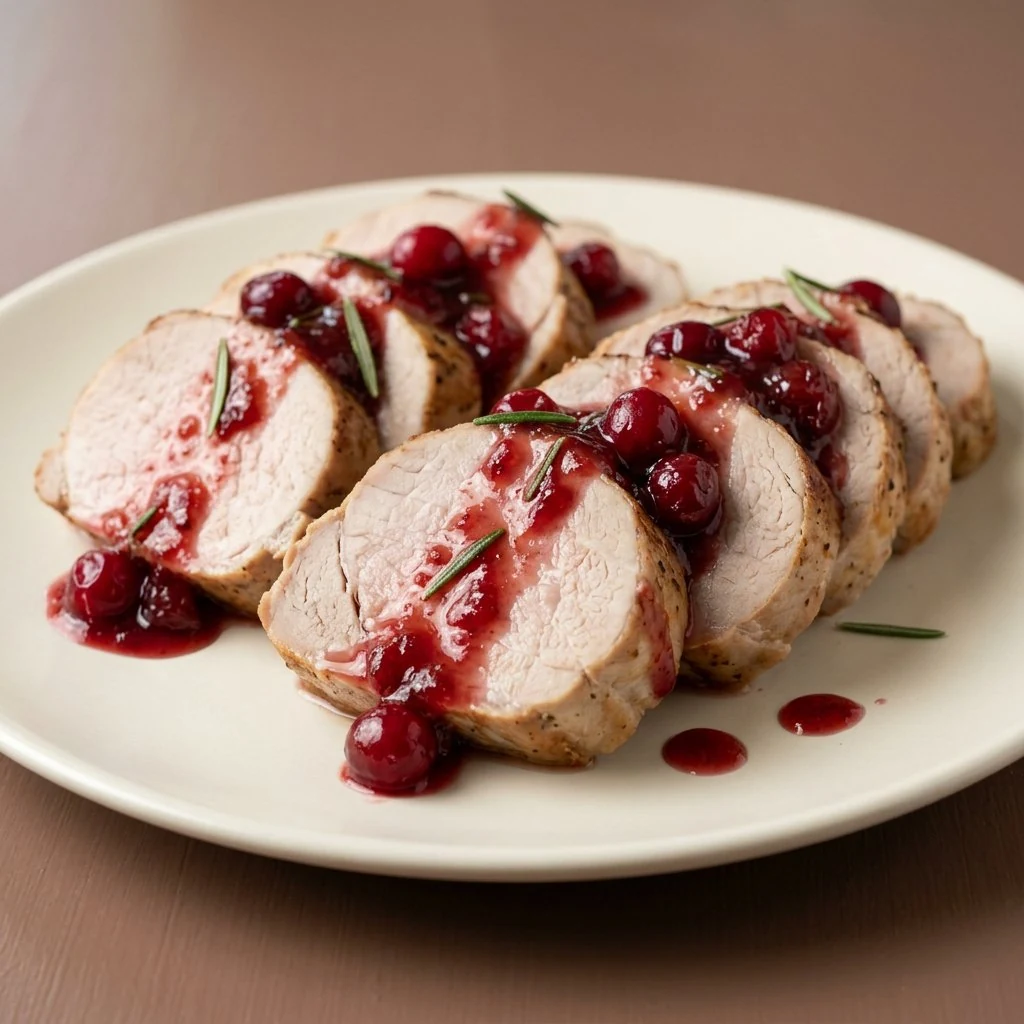
Pork tenderloin with cranberry sauce is the dinner that pulls off holiday flavor on a regular Wednesday. Two lean pork tenderloins are seasoned with rosemary, seared until golden in an oven safe skillet, then
roasted at 400 degrees for 15 to 20 minutes until they reach a blushing 145, while a quick cranberry orange sauce simmers alongside until glossy.
Every slice gets that sweet tart, jewel colored drizzle of sauce, and the whole dinner finishes in about forty minutes flat with no juggling.
It is ideal for festive dinners that refuse to be fussy, date nights, anyone who hoards cranberry sauce after the holidays, and people who think pork deserves much better publicity. It does, and this plate is the entire campaign.
Recipe at a Glance
| Prep time | 10 minutes |
| Cook time | 30 minutes |
| Total time | 40 minutes |
| Servings | 6 |
| Main ingredients | Pork tenderloins, cranberry sauce, orange juice, Dijon |
| Skill level | Easy |
Ingredients You’ll Need
- 2 pork tenderloins
- 1 cup cranberry sauce
- 1/4 cup orange juice
- 2 tbsp brown sugar
- 1 tsp Dijon mustard
- 2 cloves garlic, minced
- 1 tsp dried rosemary
- 1 tbsp olive oil
- Salt and pepper, to taste
Ingredient Notes & Easy Substitutions
Pork tenderloins: Tenderloin is the slim, exceptionally lean cut sold two to a pack, and it roasts in under half an hour, which is why weeknights love it.
Do not swap in a pork loin roast without changing the clock, because a loin is a different animal entirely, thicker and slower. Look for the two pack and you are already halfway to dinner.
Cranberry sauce: Whole berry canned sauce is exactly right here; the berries hold their shape and pop in the pan. Jellied cranberry sauce also works and melts into a smoother sauce. Homemade fresh cranberry sauce is a lovely upgrade, though it needs a touch more sugar since fresh berries run sharp.
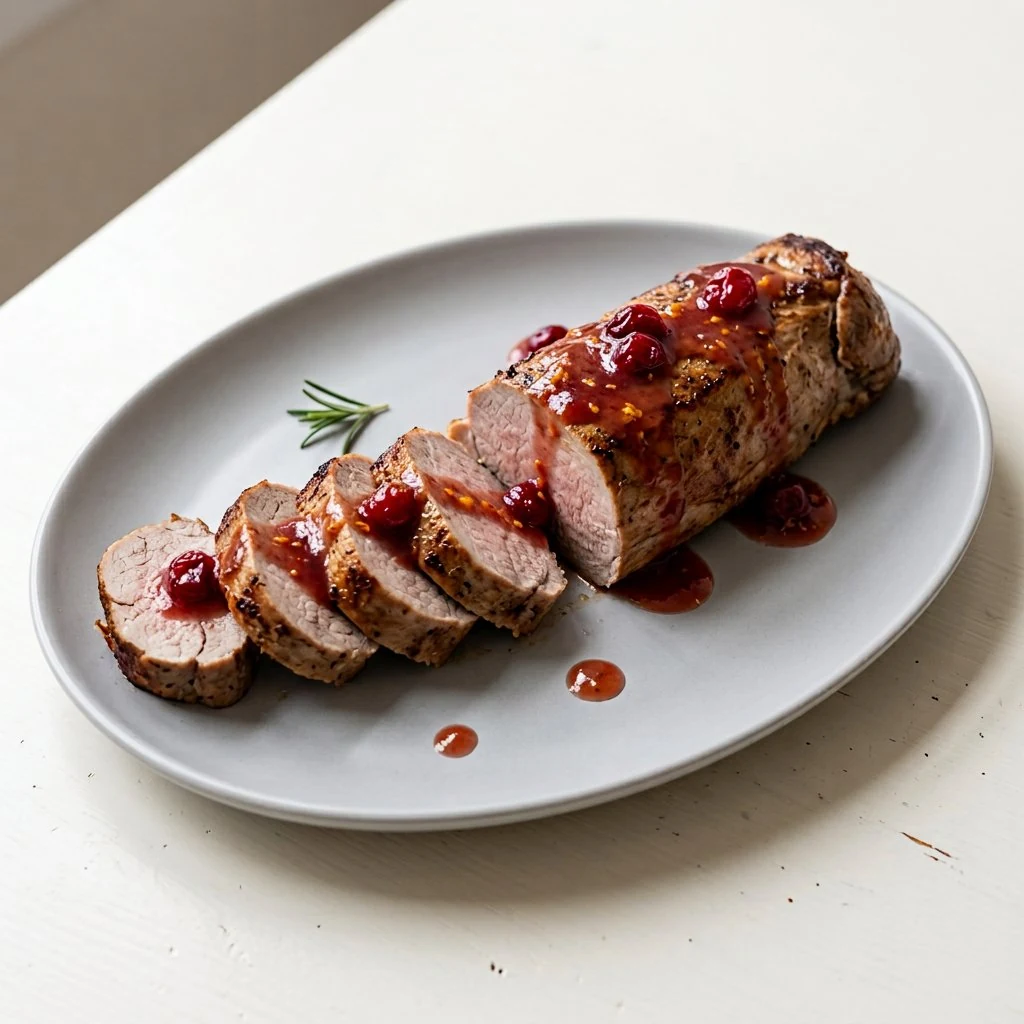
Orange juice: Fresh squeezed is brighter, but good bottled juice does the job without ceremony. The orange and cranberry pairing is the entire flavor story, tangy and sunny against the rich pork. If you have an orange lying around, a little zest into the sauce at the end is a lovely flourish.
Dijon mustard: One teaspoon sounds tiny and performs like a giant, rounding the sweetness with gentle tang so the sauce tastes composed rather than cloying. Whole grain mustard works too. Do not skip it; cranberry sauce alone is a side dish, but cranberry with Dijon is a sauce with a plan.
Equipment You’ll Need
- Large oven safe skillet
- Medium saucepan
- Instant read thermometer
- Tongs
- Carving board and sharp knife
No oven safe skillet? Sear in any skillet, transfer the tenderloins to a small baking dish, and roast as directed; the sauce does not care which path it takes to the table.
How to Make Pork Tenderloin Cranberry Sauce
Step One: Season with Rosemary
Preheat the oven to 400 degrees. Pat the tenderloins dry and season them all over with salt, pepper, and 1 tsp dried rosemary, crumbling the rosemary between your fingers as you sprinkle so it wakes up.
Drying the surface is the quiet first step of every good sear, because moisture steams and dryness browns. Crumbling dried rosemary is a small ritual with real payoff; whole needle like leaves stay sharp and papery, while crumbled rosemary melts into the crust. Tenderloin is mild, so this seasoning is its personality, and a shy hand shows.
Step Two: Sear to Gold
Warm 1 tbsp olive oil in your largest oven safe skillet on medium high heat, then sear the tenderloins 3 minutes a side until every face is golden brown.
You are building color, not cooking meat through, so three minutes a side is the contract. Hold each side down firmly at first so the whole surface kisses the pan, and let those brown bits accumulate; they are free flavor. The tenderloins will not be even remotely done, and that is precisely on schedule.
Step Three: Roast to 145
Transfer the skillet to the oven and roast for 15 to 20 minutes, until an instant read thermometer reads 145 degrees in the thickest part of the tenderloin.
Tenderloin is lean enough that the window between perfect and dry is small, so treat 145 as the finish line and the thermometer as the referee.
Start checking at fifteen minutes; slender tenderloins finish fast. At 145 the meat is faintly pink, juicy, and completely safe by modern standards, which is the way pork should always be served.
Step Four: Build the Cranberry Sauce
While the pork roasts, combine 1 cup cranberry sauce, 1/4 cup orange juice, 2 tbsp brown sugar, 1 tsp Dijon, and the minced garlic in a medium saucepan over medium heat.
Whisk as it warms so the cranberry sauce loosens and the Dijon disperses instead of hiding in one stubborn corner.
The mixture will look loose and a little chaotic at first, then pull itself together into something glossy and unified. This parallel cooking is what keeps the whole dinner inside forty minutes.
Step Five: Simmer Until Glossy
Let the sauce simmer gently for about 10 minutes, stirring now and then, until it slightly thickens and coats the back of a spoon. Keep it on low once it gets there.
The sauce is ready when you drag a finger across the coated spoon and the trail holds for a second. It thickens further as it cools, so aim for slightly loose rather than jam; nobody wants cranberry cement over beautiful pork. Taste it, and if your berries were tart, an extra teaspoon of brown sugar rounds it out without apology.
Step Six: Slice and Drizzle
Rest the tenderloins for five minutes, then slice into thick medallions and serve with the warm cranberry sauce spooned generously over the top.
Resting first is what keeps the juices in the meat instead of on the board, and slicing across the grain into plump medallions shows off the rosy interior.
Spoon the sauce down the center of the slices so every piece gets lacquered, and keep extra at the table because it disappears fast. This is the plate that makes people ask what the occasion is, and you get to say Tuesday.
Serving Size & Batch Scaling
Two tenderloins slice into about twelve medallions and feed six alongside simple sides. Doubling is easy; sear in batches if needed, roast on a sheet pan, and make the sauce in a larger pot, since the sauce recipe doubles without any timing changes.
For two people, cook a single tenderloin with the full sauce and roast it a few minutes shy of the range, since one tenderloin heats the pan faster. The extra sauce keeps beautifully and is secretly magnificent on a turkey sandwich the next day.
Making More or Less?
Cooking for two, one tenderloin plus the full sauce is the play; the roast runs a touch short and the extra sauce keeps beautifully for turkey sandwiches.
Doubling for guests is painless; sear in batches if the skillet is crowded, roast on a sheet pan, and make the sauce in a larger pot, since the sauce doubles with zero timing changes. Nothing about the method gets harder at scale, which is exactly why it earns holiday duty.
Nutrition Estimate Per Serving
One serving lands around 290 calories with roughly 31 grams of protein, 7 grams of fat, and 24 grams of carbohydrates, nearly all from the fruit forward sauce.
It is an estimate, not medically precise information, and tenderloin is among the leanest proteins you can put on a plate, which keeps the numbers pleasant. The flavor to effort ratio remains the real headline, and it is outrageous.
Common Mistakes to Avoid
The critical mistake is overcooking tenderloin past 145, because its leanness means every extra minute costs juice you cannot get back; the thermometer is the whole game.
The second is skipping the sear, which costs the golden crust that makes the slices look and taste finished.
On the sauce side, do not walk away during the simmer; cranberry sauce thickens suddenly at the end, like it was waiting for you to look at your phone.
And slice the pork with a sharp knife, because a dull blade compresses the meat and squeezes out the very juices you worked to keep.
Troubleshooting Guide
My sauce is too thin. Simmer two or three more minutes; it tightens fast at the end. If you are truly impatient, a pinch of cornstarch whisked in and boiled for thirty seconds fixes it without changing flavor.
My sauce is too tart. Stir in brown sugar a teaspoon at a time until it makes you happy; cranberry varies by brand and season, and you are the final authority.
My pork was done before the sauce. Pull it, tent it loosely with foil, and let it rest; the sauce finishes on its own schedule and everything lands together anyway. This is the beauty of parallel tracks.

Variations & Customizations
Add a splash of orange liqueur or a sprig of fresh rosemary to the saucepan for a holiday version, or swap the orange juice for apple cider in the fall. A pinch of red pepper flakes turns the sauce sweet hot, which converts even the skeptics at the table.
The roast and sauce structure at Norine’s Nest inspired my homemade sauce instincts, and the weeknight speed of the version at That Recipe is what convinced me this belongs in the regular rotation. Serve leftovers cold, sliced thin over greens, and thank me quietly.
What to Serve With It
Mashed potatoes, wild rice, or buttered noodles are the ideal sauce catchers, and something green keeps the plate fresh.
My small batch homemade biscuits are the sleeper pick here, because biscuit plus pork plus cranberry sauce is a complete and glorious thought.
If pork is having a week at your house, my Cuban mojo marinated pork takes the same tenderloin somewhere entirely different, garlicky and citrus sharp. Roasted brussels sprouts or green beans round out the festive plate without stealing the cranberry spotlight.
Meal Prep & Make-Ahead Instructions
The sauce can be made up to three days ahead and reheats in two minutes; honestly, it thickens and improves overnight like a good chutney.
Season the tenderloins in the morning too, and dinner becomes a ten minute sear and a short roast while you set the table.
Fully cooked leftovers hold well for three days, and the whole dish travels happily to potlucks at room temperature tolerance. This is my stealth holiday dish for exactly that reason; almost everything can be done before guests arrive, and the kitchen stays calm.
Storage & Leftovers
Store sliced pork and sauce together in an airtight container in the refrigerator for up to three days, with the slices spooned through the sauce so they stay glossy and moist.
The sauce will set in the cold, almost jelly like, which is its natural state and part of its charm. Cold sliced pork with set cranberry sauce on crusty bread might genuinely be the best leftover in this entire recipe collection, and I do not say that without weighing the competition.
Reheating Instructions
Reheat slices gently in a covered skillet over low heat with a spoonful of the sauce and a splash of water for about five minutes, or microwave at fifty percent power in short bursts until just warm.
Low heat is the entire strategy, because lean pork punishes aggressive reheating with dryness. And that is the whole tenderloin: rosemary crusted, rosy centered, and draped in a cranberry orange sauce that tastes like the holidays agreed to visit early.
Frequently Asked Questions
Can I use fresh cranberries instead of cranberry sauce? Yes; simmer a cup of fresh cranberries with the orange juice and an extra three tablespoons of brown sugar for about ten minutes, until they pop and soften into sauce.
Do I have to sear the tenderloins? The sear builds the golden crust and deep flavor, and it takes twelve minutes total. If you must skip it, roast a few minutes longer, but the crust is what separates good from memorable.
Is slightly pink pork safe to eat? Yes; whole cuts of pork are safe at 145 degrees with a short rest, and that gentle pink is exactly what juicy, properly cooked pork looks like now. The well done pork of decades ago was a punishment we have collectively outgrown.
Can I make the sauce with leftover whole berry cranberry sauce from Thanksgiving? That is precisely what it is for; whisk it with the orange juice, sugar, Dijon, and garlic, simmer briefly, and watch leftovers become the best part.