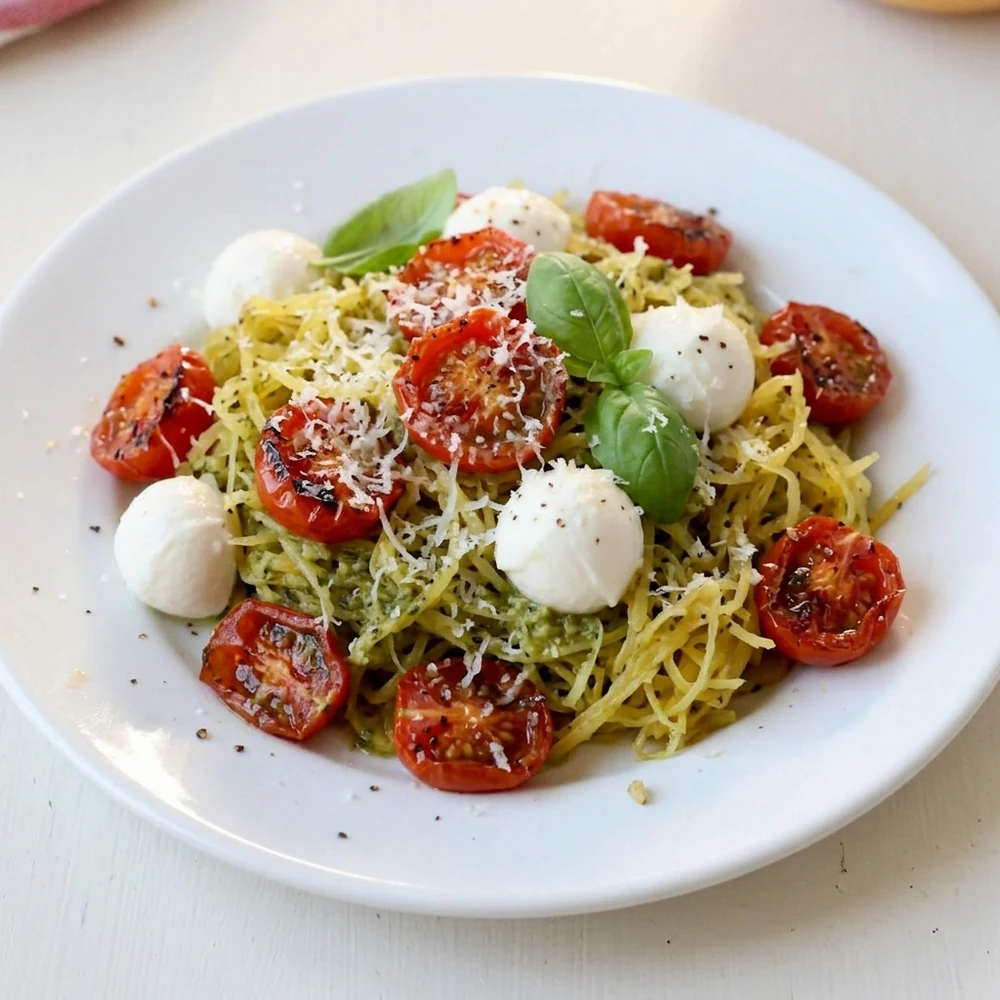
Spaghetti squash pesto is the pasta night lookalike that comes out of the produce aisle. A whole squash roasts until tender, shreds into golden strands with nothing but a fork, and gets tossed with basil pesto, burst cherry tomatoes, and milky mozzarella pearls.
It is ideal for low carb pasta cravings, meatless Mondays with real substance, using up the giant squash from the market, and anyone who wants dinner to feel like noodles without the nap that follows. One oven, one sheet pan, and a bowl of twirlable strands with zero boiling water involved.
Recipe at a Glance
| Prep time | 10 minutes |
| Cook time | 50 minutes |
| Total time | 1 hour |
| Cooking method | Oven roasted squash shredded into strands, warm tossed |
| Servings | 4 |
| Main ingredients | Spaghetti squash, basil pesto, cherry tomatoes, mozzarella pearls |
| Skill level | Easy |
Ingredients You’ll Need
- 1 large spaghetti squash
- 1/2 cup basil pesto
- 1 cup cherry tomatoes halved
- 1/2 cup fresh mozzarella pearls
- 2 tbsp olive oil
- 1 clove garlic minced
- salt and pepper
- Parmesan cheese
- fresh basil
Ingredient Notes & Easy Substitutions
The spaghetti squash: One large squash, about four to five pounds, yields the most strands and roasts evenly, so choose one that feels heavy for its size with a matte, uniformly golden rind. Cut carefully; a sturdy knife and a stable board do the job, and microwaving it for three minutes first softens the skin for an easier start.
The pesto: Half a cup of basil pesto is the entire sauce, coating the warm strands in one toss with no stove time at all, so use a jar or batch you genuinely like. The strands are mild and slightly sweet, which means the pesto carries the dish, and this is the moment for the good stuff from the deli counter.

Tomatoes and mozzarella: One cup of halved cherry tomatoes brings juicy acidity that cuts the rich pesto, and half a cup of mozzarella pearls melt softly into the warm strands instead of vanishing. Toss them in while the squash is hot but not scorching, so the pearls soften at the edges and keep their shape.
Olive oil, garlic, and the finishers: Two tablespoons of olive oil season the squash before roasting, and the single minced clove of garlic blooms in the warm strands when tossed. Parmesan and fresh basil land at the end, because a plate built on pesto deserves its own family reunion on top.
Equipment You’ll Need
- Large baking sheet
- Sturdy chef’s knife
- Fork, for shredding
- Large bowl
How to Make Spaghetti Squash Pesto
Step One: Preheat and Cut
Preheat the oven to 400. Cut the squash in half lengthwise and scoop out the seeds.
The safest path through a whole squash is to trim a thin slice off the top and bottom so it sits flat, then cut down through the middle with a firm rocking motion.
A spoon scrapes the seed cavity clean in seconds, and the seeds can be roasted like pumpkin seeds if the household snacks strategically.
Step Two: Season and Place
Drizzle the cut sides with the olive oil, salt, and pepper, and place the halves cut side down on a baking sheet.
Cut side down is the roasting method that steams the flesh tender while the skin chars slightly, and the oil on the cut face keeps the strands from sticking to the pan.
Rub the oil into both halves with your hands so every surface is covered. The empty cavities face up, ready to release their steam.
Step Three: The Roast
Roast for 40 to 50 minutes, until the flesh is tender and the strands separate easily when tested with a fork.
Start checking at forty minutes by flipping a half and dragging a fork across the flesh; it should shred with almost no pressure. A bigger squash wants the full fifty. Under roasted squash fights the fork and disappoints at the table, so let the tenderness, not the clock, make the final call.
Step Four: Shred the Strands
Let the halves cool for a few minutes, then use a fork to scrape the flesh into spaghetti like strands.
Drag the fork across the flesh lengthwise and watch the magic happen; the strands come away in golden tangles that genuinely resemble spaghetti, which is where this squash got its name.
Fluff them in the shell or scrape everything into a bowl. Stop scraping when you hit the skin; the rind stays behind where it belongs.
Step Five: The Pesto Toss
Toss the warm strands with the pesto, minced garlic, cherry tomatoes, and mozzarella pearls.
Warm strands drink pesto like hot pasta does, so toss while the heat is on your side, folding rather than stirring so the strands stay long.
The garlic mellows against the warmth, the tomatoes release a little juice into the sauce, and the mozzarella pearls soften at their edges into creamy pockets. Taste a strand; it should be boldly pestoed.
Step Six: Top and Serve
Season with salt and pepper, then top with Parmesan and fresh basil and serve.
A final seasoning check, a snowfall of Parmesan, and a scatter of torn basil finish the plate, which is at its best served immediately while the strands are hot and the cheese is just turning creamy. Twirl a fork like it is real spaghetti, because tonight, functionally, it is.
Serving Size & Batch Scaling
One large squash makes four generous dinner bowls, and the halves roast side by side on a single sheet pan. Scaling means more pans on more racks, with a rack swap halfway, because the sheet pan is the only bottleneck this recipe knows.
This is one of the best value vegetarian dinners in the rotation; a single squash, a half cup of pesto, and one ball of mozzarella feed four people a dinner that eats like a trattoria plate. It also happens to be naturally gluten free, which covers a whole guest list category without a separate dish.
Making More or Less?
A smaller squash halves cleanly for two servings, and the roast shortens to about 35 to 40 minutes, so start checking early. The toss ratios scale by feel; a strand meal wants enough pesto to coat, not drown.
For a crowd, roast all the halves ahead and shred them into a big bowl, then reheat the strands in the oven for ten minutes and toss with the pesto just before serving. The make ahead strands hold beautifully, and the final toss takes four minutes while guests find their seats.
Nutrition Estimate Per Serving
- Calories: about 250
- Protein: 8 g
- Fat: 17 g
- Carbohydrates: 19 g

It is an estimate, not medically precise information, and the profile is the pitch for squash nights everywhere. The strands deliver pasta satisfaction at a fraction of the starch, the pesto and olive oil bring honest fats, and the whole bowl stays comfortably light enough for seconds, which people will take.
Common Mistakes to Avoid
The classic mistake is under roasting, because firm squash shreds into crunch instead of strands; test with a fork and let the tenderness decide. The second is over roasting into mush, which turns the strands watery, so check at forty minutes and pull the squash the moment it yields.
Tossing the pesto into cold strands is the quiet third mistake, since pesto clings to warmth and sits in greasy lumps on cold squash. And salt the squash before roasting, because seasoning only at the end leaves the strands tasting like a garnish instead of the main event.
Troubleshooting Guide
My squash is watery. It over roasted or was tossed while steam was still escaping. Let the halves cool five minutes before shredding, blot the strands with a towel, and toss; next round, pull the squash at first tenderness and the strands stay bouncy.
The strands are short and mushy. The fork dragged crosswise instead of lengthwise, or the squash cooked past tender. Shred along the flesh’s natural grain for long strands, and remember a bigger squash holds its structure better than a small one.
The pesto tastes flat. The strands needed salt or the pesto needed a squeeze of lemon; both are thirty second fixes at the bowl. A little extra Parmesan also deepens the sauce, because salty cheese is the emergency seasoning that never files a complaint.
Variations & Customizations
Add grilled chicken or white beans for protein, roast the tomatoes alongside the squash until they burst, or finish the bowls under the broiler with extra mozzarella for a baked version. Sun dried tomatoes swap in for fresh, red pepper flakes bring heat, and a fried egg on top turns it into the world’s most interesting breakfast.
The cut side down roasting method from Two Peas and Their Pod shaped this version, and the warm toss with pearls from Whitney Bond is why the mozzarella softens into creamy pockets instead of vanishing. Roasted squash seeds with salt are the cook’s snack while the rest of dinner lands.
What to Serve With It
Garlic bread keeps the pasta night theme honest. My garlic butter pasta is the flour based twin for the half of the table that wants the real thing side by side.
And when the evening leans cozy instead of bright, my cheesy smothered mushroom chicken is the comfort counterpart. A simple arugula salad with lemon keeps the plate as fresh as the strands deserve.
Meal Prep & Make-Ahead Instructions
The squash can roast up to three days ahead; shred the strands, cool them, and hold them in the fridge, then reheat and toss with pesto in four minutes flat. Dinner on a Tuesday becomes a reheat with a garnish, which is the highest compliment a prep session can earn.
For weekly prep, roast two squashes on Sunday, shred both, and portion the strands into containers; one half becomes this dinner and the other half waits for whatever the week demands. Toss each portion with pesto only at reheating time, because dressed strands soften faster than undressed ones.
Storage & Leftovers
Leftovers keep in a sealed container in the fridge for up to four days, and the strands hold their texture better than actual pasta ever does overnight.
The pesto settles into the strands and the flavors deepen by day two, making the leftovers arguably the better lunch, though the mozzarella firms up in the cold. Store the basil garnish separately if you can, because fresh basil on day two tastes like the dish was made that morning.
Reheating Instructions
Reheat portions in a skillet over medium heat for about five minutes with a small splash of water, or microwave for about 90 seconds, stirring halfway.
The skillet revives the strands with a light sizzle while the microwave wins the office lunch hour, and either way, fresh basil and an extra grating of Parmesan after reheating reset the whole bowl. Cold pesto spaghetti squash straight from the container is also genuinely good, which makes it a rare leftover with two correct temperatures.
Frequently Asked Questions
How do I cut a spaghetti squash safely? Trim a slice off the top and bottom so it sits flat, stabilize the board, and rock the knife down through the middle with steady pressure; microwaving the whole squash for three minutes softens the rind first. If it resists, drop it in the oven for ten minutes whole and cut the softened squash in half safely.
Can I microwave the squash instead of roasting? Yes; halves in a dish with a little water cook in about 12 to 15 minutes, though the oven version brings deeper flavor and better texture. The microwave is the weeknight rescue, and the strands never have to know.
Is spaghetti squash actually like spaghetti? It is its own honest vegetable with a pleasant snap and a mild sweetness, and the strand shape makes it the best pasta impression in the produce aisle. Expect a lighter bite than wheat noodles, and dress it boldly so it plays the role with confidence.
Can I freeze cooked spaghetti squash? Not really; the strands turn watery and soft after thawing and never recover their bounce. The roasted strands keep four days in the fridge, which covers the meal prep window without any freezing drama.