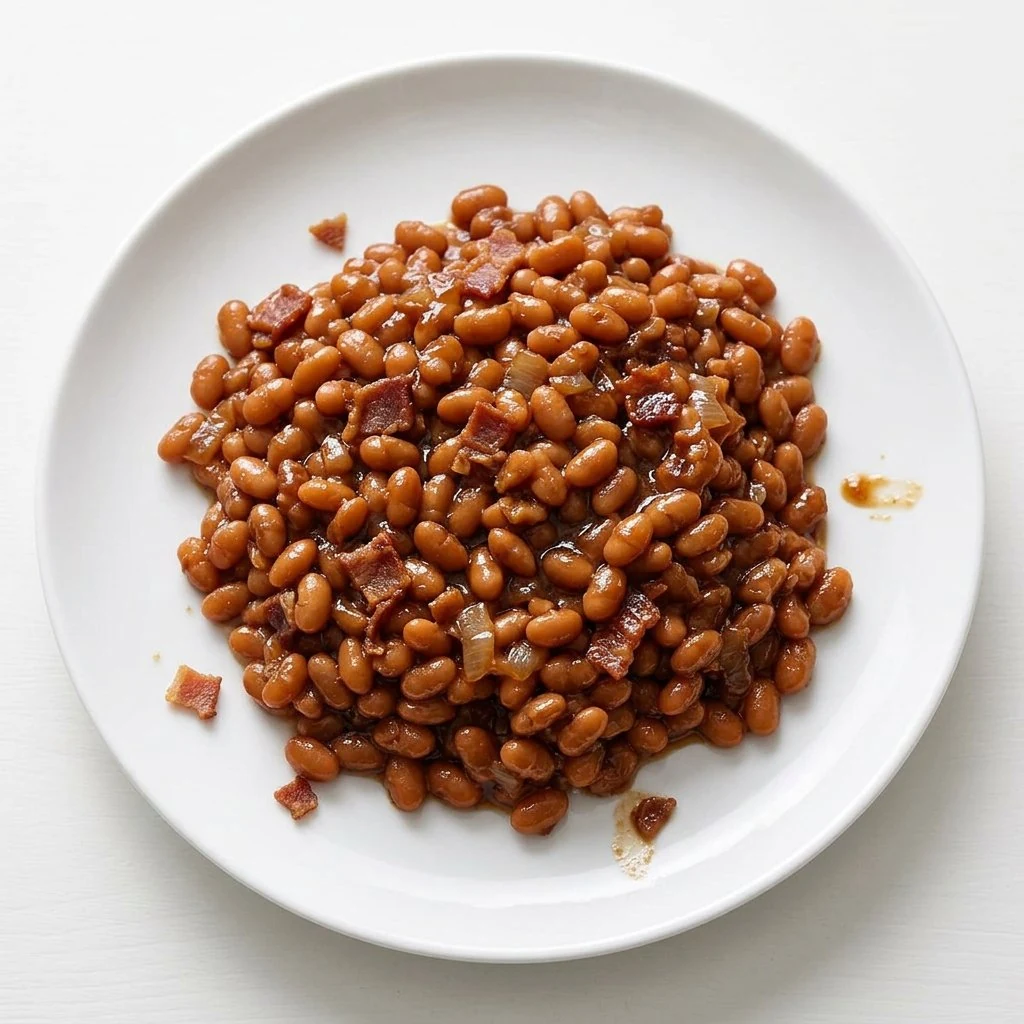
Baked beans molasses style are the deep, sweet, smoky pot of beans your cookouts and cold nights have been waiting for. You soak dried navy beans overnight, simmer them until almost tender, then bake them low and slow with bacon, onion, molasses, and brown sugar until the sauce turns thick and glossy.
You need this recipe if canned beans have been holding your barbecue hostage, if your kitchen deserves a smell that makes the whole house wander in asking questions, or if you want a side dish that improves while you ignore it for hours.
Recipe at a Glance
| Prep time | 15 minutes plus overnight soak |
| Cook time | 5 to 6 hours |
| Total time | Overnight soak plus 6 hours |
| Cooking method | Stovetop simmer, then long covered bake at low oven heat |
| Servings | 8 to 10 |
| Main ingredients | Dried navy beans, bacon, molasses, brown sugar, mustard, onion, cider vinegar |
| Skill level | Easy, requires planning |
Ingredients You’ll Need
- 2 cups dried navy beans
- 1/2 lb bacon
- 1 onion diced
- 3/4 cup molasses
- 1/4 cup brown sugar
- 2 tbsp mustard
- 2 tsp salt
- 1/2 tsp pepper
- 4 cups water
- 2 tbsp apple cider vinegar
Ingredient Notes & Easy Substitutions
Your navy beans are the classic choice, small and creamy, and they need the full overnight soak; the from scratch bakers at A Mind Full Mom soak theirs the same way, because unsoaked beans take forever and cook unevenly. Great Northern beans work if that is what the shelf offers, with a slightly bigger bite.
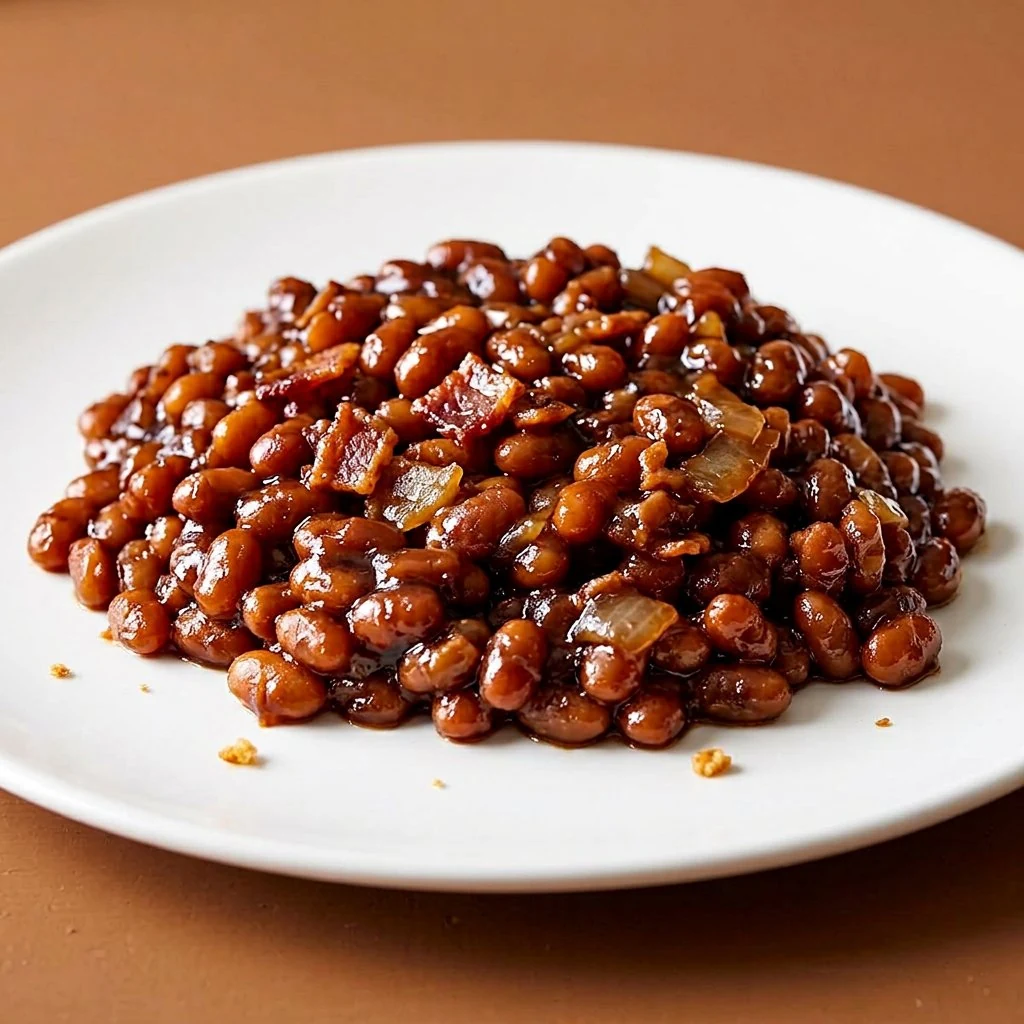
Your molasses is the soul of the pot, so use the regular unsulphured kind rather than blackstrap, which turns bitter over the long bake. The twice cooked approach at Alton Brown leans on the same molasses and low slow heat logic, and your covered dish gets there in one vessel.
Your mustard is the background note that keeps all that sweetness from flattening out, and the cider vinegar at the end brightens the whole pot. Chop the raw bacon so it distributes through the beans instead of sitting on top like a garnish with commitment issues.
Equipment You’ll Need
You need a large bowl for the overnight soak, a big pot for the simmer, a deep baking dish with a lid or tight foil, and a wooden spoon. A colander drains the soaked beans, and measuring cups keep the molasses and sugar honest.
A Dutch oven does double duty here, simmering on the stove and going straight into the oven covered, which means one less dish. If your baking dish has no lid, two layers of foil sealed at the edges hold the moisture in for the long bake just fine.
How to Make Baked Beans Molasses
Step One: The Overnight Soak
Soak the beans overnight and drain them. Cover the dried beans by a few inches of cold water in your biggest bowl; by morning they will have doubled and gone plump, and drained, they are ready for their first actual cooking lesson.
Step Two: The First Cook
Place the beans in a pot with fresh water, bring to a boil, and simmer 1 hour until almost tender. Almost is the key word; they finish in the oven, and beans that go in fully soft turn to mush over the long bake, so stop while they still have a whisper of firmness.
Step Three: Oven and Dish
Preheat your oven to 300F and place the beans in a baking dish. This is the low and slow zone where Boston baked bean flavor gets built, and a deep dish means the water you add next covers everything at the right depth.
Step Four: The Flavor Lineup
Add the onion, bacon, molasses, brown sugar, mustard, salt, pepper, and vinegar to the dish. Give it a careful stir so the sauce base spreads through the beans, and the raw onion and bacon will slowly turn into the sweet smoky backbone over the hours ahead.
Step Five: Water to Cover
Add enough water to cover the beans. This is the reserve tank for the long haul, and your 4 cups usually does it; the beans drink it gradually, and what remains by the end is the thick sauce everyone spoons over everything.
Step Six: The Long Bake
Cover and bake 4 to 5 hours, checking the water level occasionally, until the beans are tender and the sauce is thick. If the pot looks dry at a check, splash in a little more water; by the final hour, remove the lid so the sauce reduces and the top caramelizes.
Serving Size & Batch Scaling
Two cups of dried beans becomes a deep dish that feeds eight to ten as a barbecue side, and leftovers genuinely improve for days. At a cookout with a full spread, count ten servings; over rice for dinner with cornbread, count six generous bowls.
Doubling means two dishes, not one deeper one, because beans at the bottom of a tall dish cook at a different speed than the top. Two covered dishes side by side on the same rack bake evenly, and your party problem becomes a freezer problem, which is a good problem.
Making More or Less?
For a smaller household, use one cup of dried beans and roughly two thirds of the sauce amounts in a smaller dish; the bake time shortens to about three and a half hours. The overnight soak does not scale down in time, so plan it the same.
If you forgot the soak entirely, boil the beans hard for two minutes, then let them sit covered off the heat for an hour before starting the simmer. It is not quite as even as the overnight soak, but it rescues dinner plans, and nobody at the table will know.
Nutrition Estimate Per Serving
- Calories: about 320 per serving
- Protein: 12 g
- Carbohydrates: 48 g
- Fat: 10 g
- Fiber: 9 g
- Sugar: 20 g
- Sodium: about 620 mg
The following is an estimated nutritional breakdown based on standard ingredient data, so treat the numbers as friendly context rather than lab work. Between the beans and the molasses, you are getting real fiber and real iron alongside the sweetness, which is more than most cookout sides can claim.
Common Mistakes to Avoid
The biggest mistake is skipping the soak, because unsoaked navy beans cook unevenly and can stay chalky through even the longest bake. The second is adding salt too late or too little; salt the pot at the start of the bake as written, because beans seasoned only at the end taste seasoned on the outside and hollow inside.
Do not let the dish run dry at any point in the bake. A single unattended hour with the water gone turns your glossy sauce into beans welded to the dish, and checking occasionally, as written, is not a suggestion so much as the whole job.
Finally, do not rush the bake at a higher temperature. Four hours at 300F builds the deep caramel flavor that two hours at 400F cannot buy, and the sauce texture depends on that long gentle reduction.
Troubleshooting Guide
If your beans are still firm after five hours, they were old or under soaked; add hot water, re cover, and keep baking, checking every thirty minutes, because old beans simply take longer and there is no shortcut past that. If the sauce is thin at the end, remove the lid for the last forty five minutes and let it reduce.
If your beans taste flat, they need the brightening duo: another splash of cider vinegar and a small pinch of salt. Long cooked sweet dishes settle into themselves, and a final acid lift at serving time wakes the whole pot up.
If the top darkened too much under the foil, your dish runs hot; lower the rack and tent the foil looser next time. The goal is a deep mahogany top, not charcoal, and the difference is usually just ten minutes of attention at the end.
Variations & Customizations
Swap the bacon for a smoked ham hock nestled into the beans for a deeper, more old fashioned pot, or add a teaspoon of smoked paprika when you want smoke without the meat. A diced jalapeno with the onion leans the pot gently toward the spicy end of the cookout table.
For a maple variation, replace the brown sugar with pure maple syrup, and for a tangier Boston style, add an extra tablespoon of mustard and vinegar. A pinch of ground ginger or a shake of chili flakes in the sauce is the kind of change that starts family debates in your favor.
What to Serve With It
These beans are mandatory next to anything off the grill, and they were born to sit beside pulled pork. A slow afternoon with slow cooker pulled pork and a pot of these beans is a cookout without the grill, and Cuban mojo marinated pork with a spoon of these on the plate turns your kitchen into the best restaurant in town.
Cornbread is the traditional teammate, and a simple slaw cuts the sweetness with crunch. Over leftover rice the next day, with a fried egg on top, these beans quietly become breakfast, and nobody complains.
Meal Prep & Make-Ahead Instructions
These beans are the ultimate make ahead dish, tasting better on day two after the flavors marry overnight in the fridge. Bake them a day before your event, refrigerate in the dish, and reheat covered at 300F for about 40 minutes before serving.
The soaked raw beans can also wait a day in the fridge if your schedule slips, and the full baked pot freezes beautifully for up to three months. Thaw overnight and reheat low and slow, loosening with a splash of water if the sauce tightened.
Storage & Leftovers
Leftovers keep in your fridge for up to five days in an airtight container, and the sauce thickens as it chills into spoon coating glory. A splash of water when reheating loosens it back to pot luck texture without diluting the flavor.
Freeze portions in freezer bags flat for up to three months; thawed and reheated beans make a fast lunch over rice or a shameless midnight snack straight from the bowl. The bacon softens slightly in the freezer, and the molasses does not care one bit.
Reheating Instructions
Your oven at 300F, covered, reheats the whole dish in about 40 minutes; a saucepan over low with a splash of water handles portions in ten. The microwave works in ninety second bursts with a stir, and beans are forgiving in ways bread never is.
A final teaspoon of cider vinegar stirred into reheated beans is the professional refresh, brightening the molasses like the pot was just made. Fresh black pepper on top, and your day three beans taste like a decision, not a leftover.
Frequently Asked Questions
Can this be made ahead? Yes, and it should be; the beans taste best on day two. Bake them a day early, refrigerate, and reheat covered at 300F before serving. The overnight rest deepens the molasses and smoke into something the first day cannot quite reach.
Can you use canned beans instead of dried? You can in a pinch; use about five cans, drained, skip the soak and the simmer, and bake covered at 300F for just 1.5 to 2 hours until saucy. The texture is softer and the flavor slightly less deep, but it still beats the can.
Why are my beans still hard after hours of baking? Old beans or a missed soak are the usual culprits, and sometimes hard water slows them further. Keep them covered with hot water and keep baking; they will get there, and next time a fresher bag plus a proper overnight soak solves it.
Can you make them in a slow cooker instead? Yes; after the stovetop simmer, move everything to the slow cooker on low for about 8 hours with the lid slightly ajar near the end to thicken. The oven version builds a slightly deeper top, but the slow cooker earns its counter space here.