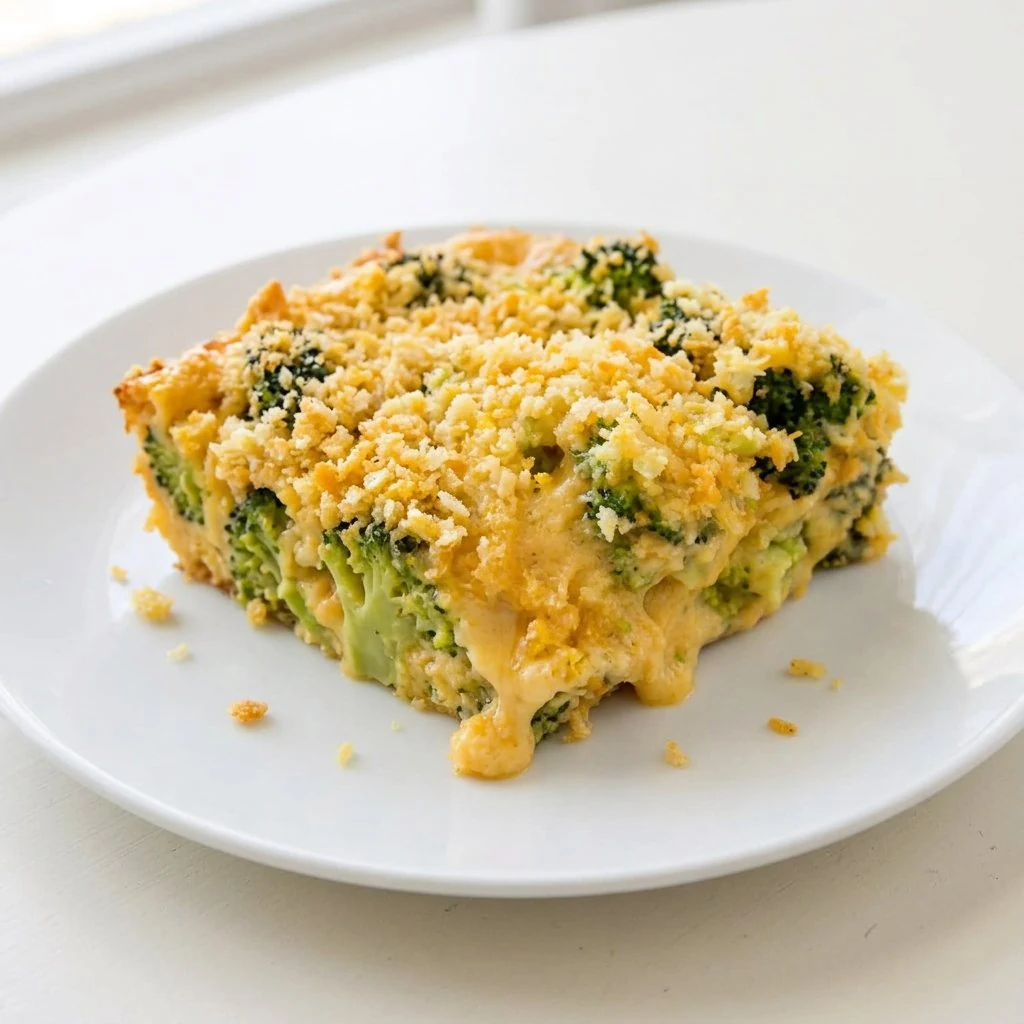
Broccoli cheese casserole is the from scratch answer to every soup can casserole you have ever tolerated. You steam fresh broccoli until just tender, pour a real cheddar sauce over it, one enriched with eggs and a whisper of nutmeg, and bake until the top bubbles gold and your kitchen smells like the best kind of holiday.
You need this recipe if your holiday table needs a vegetable dish people actually claim, if your weeknight needs cheese sauce logic, or if you are done with casseroles that taste like the label of their ingredients.
Recipe at a Glance
| Prep time | 15 minutes |
| Cook time | About 40 minutes |
| Total time | About 55 minutes |
| Cooking method | Stovetop cheese sauce poured over steamed broccoli, then oven baked |
| Servings | 6 |
| Main ingredients | Broccoli, butter, flour, whole milk, sharp cheddar, eggs, nutmeg |
| Skill level | Easy to intermediate |
Ingredients You’ll Need
- 1 lb broccoli florets
- 3 tbsp butter
- 3 tbsp flour
- 2 cups whole milk
- 8 oz sharp cheddar cheese shredded
- 2 large eggs
- 1 tsp salt
- lots of fresh cracked black pepper
- grated fresh nutmeg
Ingredient Notes & Easy Substitutions
Your broccoli should be fresh, cut into even bite size florets so they steam at the same speed, and four minutes is all they get because the oven finishes the job. The from scratch sauce philosophy at Kristine’s Kitchen is the same as yours here: real butter, real flour, real cheese, no cans anywhere in sight.
Your cheddar should be sharp and shredded from a block, because sharp cheddar survives baking with its personality intact and block cheese melts smoother than bagged. The sauce builders at Butter & Baggage call their homemade version the best broccoli casserole they have made, and the sharp cheddar is doing a lot of that talking.
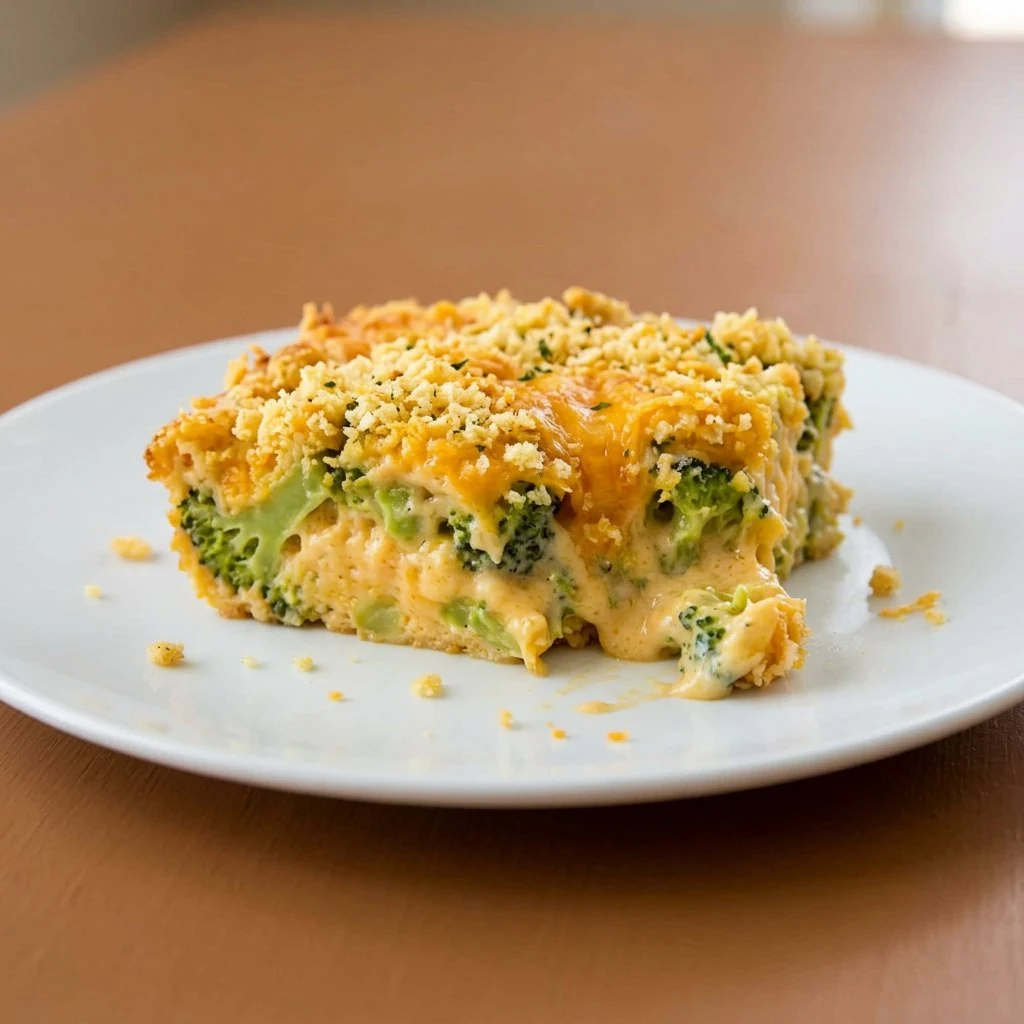
Your two eggs are what set the sauce into a custardy slice instead of a loose pour, and tempering them keeps the sauce from scrambling. Nutmeg is the secret background singer; one small grating over the pot makes the whole sauce taste like you have been making this for decades.
Equipment You’ll Need
You need a 2-quart baking dish, a saucepan, a whisk, a steamer basket or pot with an inch of water, a small bowl for the eggs, and a box grater for the cheese. Measuring spoons and cups round out your station, and that is genuinely all of it.
A shallow dish bakes faster and gives you more golden top per serving, which is the part everyone remembers. If your dish runs deep, add five extra minutes to the bake and check that the center is hot before you call it done.
How to Make Broccoli Cheese Casserole
Step One: Preheat and Steam
Preheat your oven to 375F and grease a 2-quart baking dish. Steam the broccoli until tender-crisp, about 4 minutes, then place it in the baking dish; your florets should still have a confident bite, because thirty more oven minutes are coming and mush starts here if you linger.
Step Two: Start the Roux
Melt the butter in a saucepan over medium heat, whisk in the flour, and cook it 1 minute. That brief cook is what removes the raw flour taste and sets up the thickening, and your whisk should keep everything moving so the roux stays pale gold, never brown.
Step Three: Milk and Thicken
Gradually whisk in the milk and cook until thickened, about 5 minutes. Pour slowly, whisk constantly, and watch the sauce slide from watery to velvety; it coats the back of your spoon when it is ready, and patience here is what separates silky from lumpy.
Step Four: Cheese Off the Heat
Remove the pan from the heat and stir in the cheese until melted, then add the salt, pepper, and nutmeg. Off heat is the rule, because cheese over direct flame turns grainy and oily, and your sauce should stay glossy enough to reflect your good decisions.
Step Five: Temper the Eggs
Beat the eggs in a small bowl, temper them with some hot sauce, then stir the eggs into the sauce. Add that hot cheese sauce a spoonful at a time to the eggs while whisking, which eases their temperature up gently; skip this and you cook the eggs into little scrambled regrets.
Step Six: Pour and Bake
Pour the sauce over the broccoli and bake 30 minutes until bubbly and golden. You want active bubbles at the edges and a lightly browned top, and a ten minute rest before serving lets the custard set so your spoonfuls come out creamy instead of runny.
Serving Size & Batch Scaling
One pound of broccoli and this much sauce fills a 2-quart dish and serves six as a holiday side. Next to a rich main, it stretches further; as the star of a vegetarian night with crusty bread, it feeds four honestly.
Doubling means a 9×13 dish, two saucepans or one very large one, and the same 375F oven with maybe five extra minutes. Make one dish and par bake it for later if your holiday oven is a traffic jam, and finish it while the turkey rests.
Making More or Less?
For a smaller table, halve everything into an 8×8 dish and bake for about 25 minutes. The sauce scales perfectly because it is a roux, and roux math does not care about your household size.
If you want extra golden top, double the sauce, pour half into the bake and reserve the rest for reheated portions later in the week. Fresh warm cheese sauce over day two leftovers is the kind of upgrade that costs you ten minutes and buys you applause.
If your crew is skeptical of eggs in the sauce, reassure them; the eggs are what turn a cheese pour into a sliceable custard, and nobody has ever identified them blind.
For a smaller table, bake half the assembled casserole now and hold the other half unbaked in the fridge for two days, giving the second bake the full thirty minutes from cold. Your effort spreads across two dinners with zero extra shopping.
Nutrition Estimate Per Serving
- Calories: about 310 per serving
- Protein: 17 g
- Carbohydrates: 13 g
- Fat: 22 g
- Fiber: 3 g
- Sugar: 5 g
- Sodium: about 640 mg
The following is an estimated nutritional breakdown based on standard ingredient data, so treat these numbers as guidance rather than gospel. Sharp cheddar, whole milk, and butter are doing the heavy lifting here, and your portion size is the real variable.
Common Mistakes to Avoid
The top mistake is over steaming the broccoli before it hits the dish, because the oven bake is coming and only the oven should decide when it is fully tender. The second is adding cheese over direct heat, which breaks your sauce into graininess; off the heat, always, and the cheese melts like it wants to.
Do not skip tempering the eggs, even if you are in a hurry. A ladle of hot sauce whisked into the beaten eggs takes ten seconds and saves the entire custard texture that makes this casserole slice beautifully instead of weeping.
Finally, do not undersalt the sauce before it bakes. Broccoli drinks seasoning, and a sauce that tastes slightly bold on the spoon lands perfectly once it mingles with the florets in the oven.
Troubleshooting Guide
If your sauce has lumps, whisk it hard off the heat or push it through a sieve before the cheese goes in; lumps at roux stage never fix themselves in the oven. If the sauce broke and looks oily, whisk in a splash of cold milk off the heat and it usually pulls back together.
If your baked casserole seems loose, it needed more oven time; give it ten more minutes and look for active bubbling at the edges. The eggs set the sauce, and setting takes until the center stops sloshing when you nudge the dish.
If your top browned before the center was hot, foil over the dish for the remaining minutes solves it. Your golden top and your molten center can absolutely coexist; they just need a little supervision from you.
Variations & Customizations
Add a cup of sauteed mushrooms or diced ham to the dish before the sauce goes on for a heartier casserole, or swap half the cheddar for gruyere when the holidays deserve it. A cup of cooked rice turns the side into a full meatless main that reheats like a dream.
For a crunchy top, scatter buttered breadcrumbs or crushed crackers over the dish for the last fifteen minutes of baking. A pinch of cayenne or a spoonful of Dijon whisked into the sauce sharpens everything without changing the soul of the recipe.
What to Serve With It
This casserole belongs on holiday tables next to ham and turkey, and it turns a plain roast chicken dinner into an event. It also loves a creamy companion like chicken pot pie soup, and when your week needs comfort on a schedule, it sits happily beside creamy smothered chicken and rice like they rehearsed it.
Crusty bread or a simple dinner roll handles sauce duty, and a sharp green salad keeps the plate honest. Between the cheese sauce and the bread, no leftover gravy stands a chance.
Meal Prep & Make-Ahead Instructions
You can make the cheese sauce up to two days ahead and refrigerate it; reheat it gently with a splash of milk before assembling. You can also assemble the entire unbaked casserole, cover, and refrigerate overnight, then bake it cold at 375F for about 40 minutes.
For the holiday play, par bake the casserole for twenty minutes in the morning, cool, and hold it in the fridge; a thirty minute uncovered bake at dinner time finishes it golden while your main dish rests. Your oven schedule just got easier and nobody will suspect a thing.
Storage & Leftovers
Leftovers keep covered in your fridge for up to four days, and the custard sets further as it chills, making day two squares slice cleanly. Reheat portions gently, because hard boiling the sauce again can weep the cheese back out.
Freezing works for up to two months, though dairy sauces can separate slightly after thawing. Thaw overnight in the fridge and reheat covered at 350F, stirring gently halfway; a fresh pinch of cheese melted over the top resets everything.
Reheating Instructions
Your oven at 350F, covered with foil, reheats the whole dish in about 20 minutes; single squares take 12 to 15. The microwave handles a portion in about 90 seconds at half power, stirring once, and half power is the whole trick to keeping the sauce smooth.
Under the broiler for two minutes at the end, reheated portions regain a golden top, and a fresh grind of black pepper over the dish brings the whole thing back to fresh baked energy. Your leftovers have a reputation to maintain; these steps are how.
Frequently Asked Questions
Can this be made ahead? Yes, assemble the whole unbaked casserole up to a day ahead and bake it cold with a few extra minutes, or make the sauce two days ahead. For big holiday meals, the par bake trick lets you finish it golden right before serving.
Can you use frozen broccoli? You can, thawed and drained very well, since frozen florets carry water that thins the sauce. Fresh is the better texture here, but frozen keeps the recipe in emergency weeknight territory when the fridge is bare.
Why did my cheese sauce turn grainy? Graininess means the cheese hit direct heat or the pan was too hot when it went in. Pull the sauce off the burner first, let it settle for a minute, then stir the cheese in gradually, and it melts into the smooth sauce you were promised.
Do the eggs really matter? Yes; they turn the sauce into a soft custard as it bakes, which is why this casserole slices into neat squares instead of pouring like soup. Tempering them first is the small step that protects that entire structure.