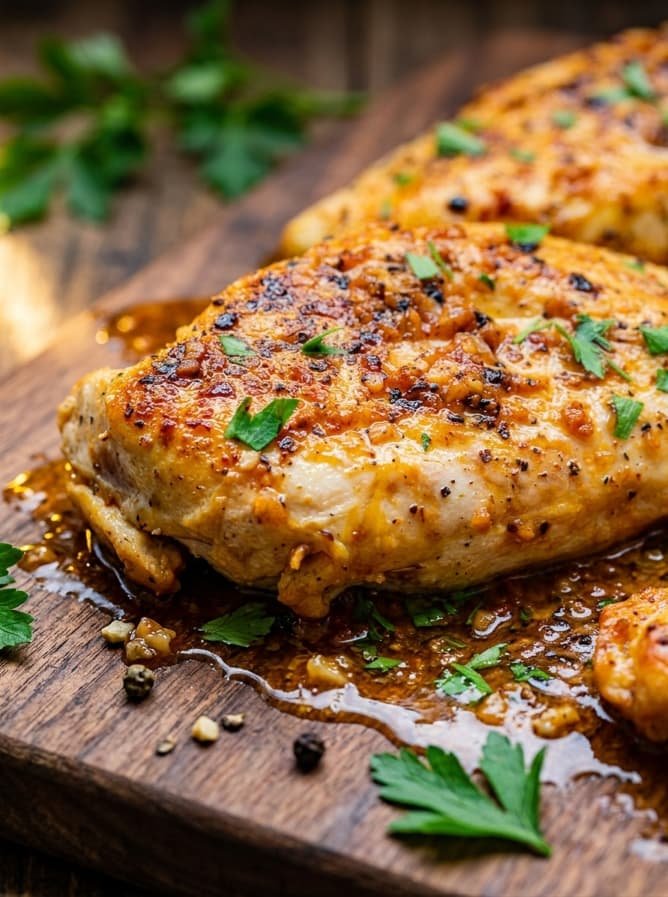
Garlic butter chicken is the kind of dinner that saves your evening when you have twenty minutes and zero patience for complicated cooking.
You sear boneless chicken breasts in a hot skillet until they develop a golden crust, then build a quick pan sauce with butter, garlic, and a splash of white wine that comes together while the chicken rests.
The whole thing, from the moment you open the fridge to the moment you set plates on the table, takes about twenty minutes. If you have ever pulled chicken off the stove only to find it dry on the inside or pale on the outside, this method fixes both of those problems in a single session.
You will learn exactly when to flip, when to walk away, and when to pull the chicken off the heat so it stays juicy every single time.
Quick Look
| Detail | Info |
|---|---|
| Prep Time | 5 minutes |
| Cook Time | 15 minutes |
| Total Time | 20 minutes |
| Servings | 4 |
| Difficulty | Easy |
| Cuisine | American |
| Cooking Method | Stovetop / Pan-seared |
| Meal Type | Dinner |
| Calories (per serving) | ~374 |
| Protein | 37g |
| Carbs | 2g |
| Fat | 24g |
What Hits the Plate
You get tender, juicy chicken breasts with a slight sear on the outside that gives way to soft, steamy meat inside. The garlic butter sauce is thin enough to spoon over rice or drag bread through, but rich enough that you will want to lick the skillet.
The garlic hits you first, warm and fragrant, followed by the round, nutty sweetness of melted butter and wine.
A sprinkle of fresh parsley at the end adds a bright, clean note that cuts through the richness. This is not a heavy dish. It feels fast and fresh, like something you would order at a bistro on a Tuesday.
Ingredients You’ll Need
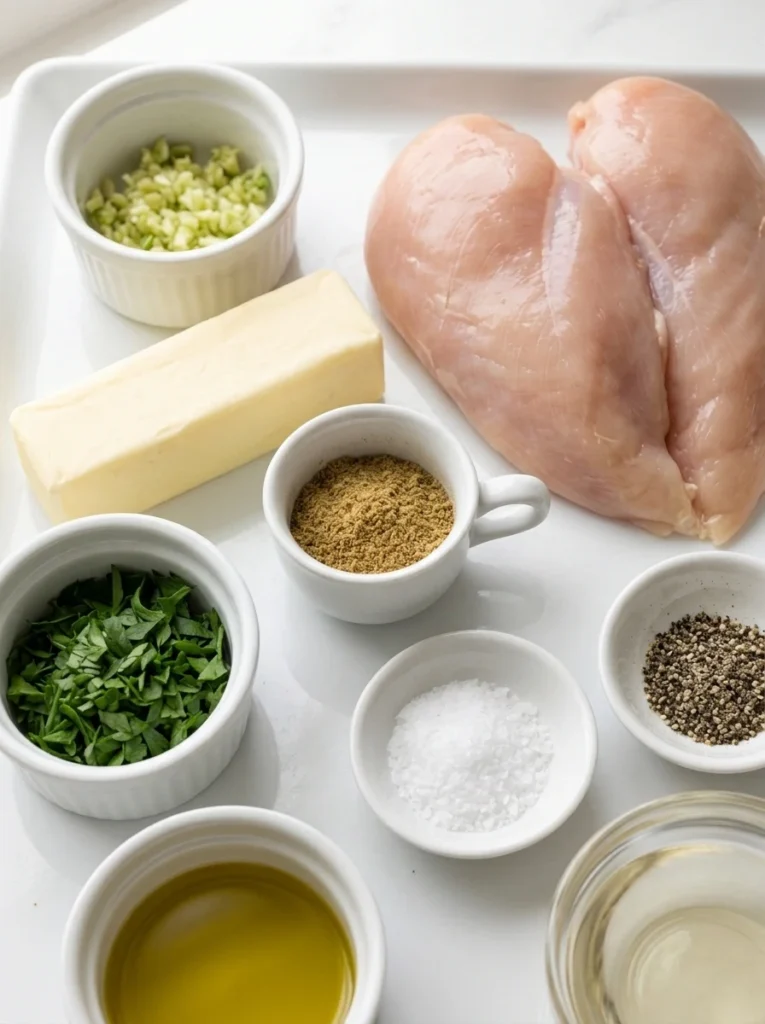
- 3 tablespoons olive oil – Gives the chicken a searing surface that butter alone cannot provide. Olive oil has a higher smoke point than butter, so it prevents burning while the chicken browns.
- 1½ pounds boneless skinless chicken breasts (4 average-sized pieces) – The star. Pounding them to an even thickness is essential so the thin end does not dry out before the thick end cooks through.
- 1 to 2 teaspoons poultry seasoning – A blend of dried herbs like thyme, rosemary, and oregano. If you have Trader Joe’s 21 Salute Seasoning, that works beautifully here. Any poultry seasoning or Italian herb blend will do.
- 1 teaspoon kosher salt – Kosher salt distributes more evenly than table salt and tastes less harsh. If you only have table salt, use about half a teaspoon instead.
- 1 teaspoon freshly ground black pepper – Freshly ground has more bite and aroma than pre-ground.
- ½ cup white wine or chicken broth – White wine adds depth and acidity that broth cannot fully replicate, but broth works perfectly if you prefer not to cook with wine. A dry white like pinot grigio or sauvignon blanc is ideal.
- 3 tablespoons unsalted butter – This creates the sauce. Unsalted lets you control the salt level. If you only have salted butter, use it and skip any additional salt in the sauce.
- 1 tablespoon garlic, finely minced – Roughly 3 to 4 cloves. Fresh garlic makes a real difference here because the flavor is the centerpiece. Jarred minced garlic works in a pinch, but the taste is noticeably milder.
- 2 teaspoons fresh parsley, chopped (optional) – For garnish. Fresh parsley brightens the whole plate. You could also use basil, chives, or cilantro if that is what you have.
Looking for more chicken ideas? Browse our full chicken recipes collection for dinners your family will actually look forward to.
Smart Ingredient Swaps
- Chicken thighs instead of breasts: Boneless skinless thighs stay juicier and are more forgiving if you accidentally overcook them slightly. They may need an extra minute or two per side.
- No white wine: Use chicken broth and add a squeeze of lemon juice at the end. The acidity mimics what the wine contributes.
- Dairy-free: Replace the butter with a plant-based butter alternative or an extra tablespoon of olive oil. The sauce will be slightly less rich but still delicious.
- Garlic powder instead of fresh: Use ½ teaspoon of garlic powder if you are out of fresh. Add it to the butter as it melts. The flavor is different but still good.
Kitchen Tools
- Large skillet (cast iron or stainless steel works best for getting a good sear; nonstick is fine but the crust will be lighter)
- Meat mallet or rolling pin (for pounding the chicken)
- Slotted spatula (for flipping and removing the chicken)
- Tongs (helpful for turning the chicken in the sauce at the end)
- Instant-read thermometer (optional but takes the guesswork out of doneness; chicken is done at 165°F)
Let’s Bring This Together
While your finished dish may not look exactly like the images in this post, following these instructions will give you the same delicious GARLIC BUTTER CHICKEN. So please follow with me!
You are going to sear the chicken, rest it, build the sauce in the same pan, and then coat the chicken in that golden garlic butter. One skillet. Twenty minutes. Here is how.
Step 1: Pound the chicken. Place each chicken breast between two sheets of plastic wrap or inside a zip-top bag. Using a meat mallet or a rolling pin, pound the thick end until the entire breast is roughly the same thickness, about ¾ inch. You are not trying to flatten it into a pancake.
You just want it even so the whole piece cooks at the same rate. This one step is the difference between chicken that is juicy throughout and chicken that is dry on one end and raw on the other.
Step 2: Season and sear. Pat the chicken dry with paper towels. Moisture on the surface prevents browning. Season both sides generously with the poultry seasoning, salt, and pepper. Heat the olive oil in your skillet over medium-high heat.
When the oil shimmers and you can feel the heat radiating when you hold your hand a few inches above the pan, lay the chicken in. Leave it alone. Do not poke it, move it, or peek underneath.
Let it sear for 5 minutes. If your chicken breasts are on the larger side, go 6 to 7 minutes. When you flip, the bottom should be a warm golden brown. If it is pale, it needed another minute.
Step 3: Cook the second side. Flip the chicken and let it cook undisturbed for another 5 minutes. The second side usually cooks a bit faster because the pan is already hot and the chicken is partially cooked through. Check the internal temperature with an instant-read thermometer if you have one.
You are looking for 165°F at the thickest part. Remove the chicken to a plate and let it rest. Do not skip the resting. The juices redistribute while the chicken sits, so when you cut into it, they stay inside the meat instead of running all over your cutting board.
Step 4: Deglaze the pan. With the heat still on medium-high, pour the white wine or chicken broth into the skillet. Step back slightly because it will bubble up fast and release a cloud of steam.
Use a wooden spoon or spatula to scrape up all the browned bits stuck to the bottom of the pan. Those bits, called fond, are concentrated flavor. That is where the sauce gets its depth. Let the liquid reduce for about 30 seconds to a minute.
Step 5: Build the garlic butter sauce. Turn the heat down to medium. Add the butter and stir continuously as it melts. Once it is fully melted and starting to foam slightly, add the minced garlic. Stir constantly for about 1 minute. You will smell the garlic almost immediately. As soon as it becomes fragrant and the raw edge is gone, it is done. Do not let the garlic brown. Burnt garlic tastes bitter and will ruin the sauce.
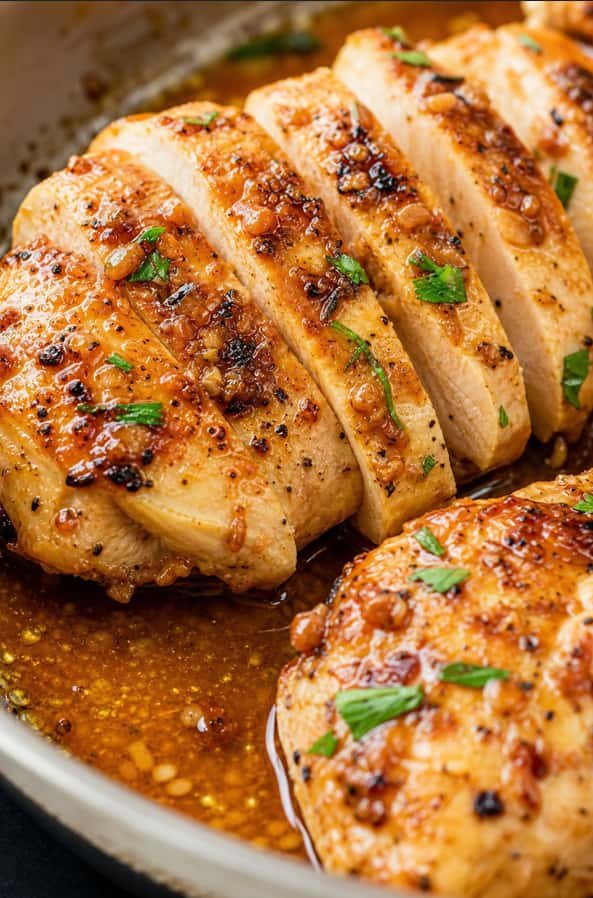
Step 6: Coat and serve. Turn the heat off. Add the chicken back into the skillet, turning each piece so both sides get coated in the garlic butter sauce. Spoon the sauce from the bottom of the pan over the top of each breast. Sprinkle with fresh parsley if you are using it. Serve immediately while the sauce is still warm and the chicken is juicy.
For a complete meal, serve this alongside something from our vegetable and side dishes collection, or check out our dinner recipes for more weeknight inspiration.
Nutrition at a Glance
| Nutrient | Per Serving |
|---|---|
| Calories | 374 |
| Protein | 37g |
| Carbs | 2g |
| Fat | 24g |
| Saturated Fat | 8g |
| Sodium | ~790mg |
| Fiber | 0.4g |
These values are estimates. Actual nutrition will vary based on the size of your chicken breasts and how much butter and oil you use.
Kitchen Wisdom
- Let the pan get hot before adding the chicken. A cold pan steams the meat instead of searing it. Wait until the oil shimmers before the chicken goes in.
- Do not overcrowd the skillet. If all four breasts do not fit in a single layer with space between them, cook in two batches. Overcrowding drops the pan temperature and the chicken boils in its own juices instead of browning.
- Use a dry white wine you would drink. Cooking wine from the grocery store is loaded with salt and tastes flat. A pinot grigio, sauvignon blanc, or even a dry rosé adds real flavor. If you would not pour a glass of it, do not cook with it.
- Rest the chicken before slicing. Five minutes on the plate is enough. The internal temperature actually rises a couple of degrees during resting as the juices settle. This is called carryover cooking, and it means your chicken ends up more tender.
For a deeper understanding of why resting matters, America’s Test Kitchen explains the science behind meat resting and how it affects juiciness.
When Things Go Sideways
- Chicken is browning too fast: Your heat is too high. Turn it down to medium and continue cooking. A dark golden crust is good. Black spots are not.
- Sauce is too thin: Let it simmer for another minute before adding the chicken back. The liquid reduces and concentrates as it cooks.
- Sauce is too thick or there is not enough of it: Add another splash of wine or broth. You can also add an extra tablespoon of butter at the end for a silkier consistency.
- Garlic turned bitter: You cooked it too long. Next time, add the garlic after the butter has melted and pull the pan off the heat sooner. Burnt garlic cannot be fixed. Start the sauce over if it happens.
- Chicken is undercooked in the center: Your breasts were too thick. Next time, pound them thinner. Right now, put the chicken back in the pan, cover with a lid, and cook on low for 3 to 4 more minutes until the internal temperature reaches 165°F.
Ways to Switch It Up
- Spicy garlic butter chicken: Add ¼ teaspoon of red pepper flakes to the butter along with the garlic. The heat blooms in the fat and spreads through the sauce without overpowering it.
- Lemon garlic butter chicken: Squeeze the juice of half a lemon into the sauce right before adding the chicken back. The acid brightens everything and cuts the richness.
- Creamy garlic butter chicken: Stir 2 tablespoons of heavy cream into the sauce after the garlic has cooked. It turns into a silky, restaurant-style pan sauce. Our healthy recipes section has lighter variations if you are watching your intake.
- Diced garlic butter chicken: Cut the raw chicken into bite-sized pieces before cooking. They cook in about 5 minutes total and the sauce coats every piece. Great for serving over pasta.
What Goes on the Plate Next
Garlic butter chicken pairs well with almost anything starchy because the sauce begs to be soaked up. Mashed potatoes, rice, or crusty bread are the classic choices.
A simple green salad with vinaigrette cuts through the richness and adds crunch. Roasted asparagus, green beans almondine, or steamed broccoli all work if you want vegetables without much extra effort.
If you are serving pasta on the side, spoon the garlic butter sauce right over the noodles. It doubles as a light pasta sauce.
Keeping It Fresh
- Fridge: Store leftover chicken in an airtight container for up to 5 days. The sauce will solidify in the fridge because of the butter. That is normal.
- Freezer: Freeze in a sealed container for up to 4 months. Thaw overnight in the fridge.
- Reheating: Warm gently in the microwave at 50% power in 30-second intervals, or reheat in a skillet over low heat with a splash of broth to loosen the sauce. High heat will dry out the chicken.
- Meal prep: Cook the chicken and store it with the sauce. Reheat and serve over fresh rice or with a quick salad for an easy lunch.
Common Questions
Can I make this without wine? Yes. Chicken broth works fine. Add a squeeze of lemon juice at the end to give it the slight acidity that wine would have contributed.
How do I know the chicken is done without a thermometer? Cut into the thickest part. The meat should be completely opaque with no pink, and the juices should run clear. A thermometer is more reliable and costs about ten dollars, which is worth it if you cook chicken regularly.
Can I use frozen chicken? Thaw it completely first. Frozen chicken releases too much water into the pan and will steam instead of sear. Thaw overnight in the fridge or in a bowl of cold water for about 30 minutes.
Why does my garlic keep burning? Garlic cooks much faster than most people expect. Add it after the butter has already melted, keep the heat at medium or lower, and stir constantly. One minute is usually all it needs. If the garlic is blond and fragrant, it is done. If it is starting to brown, it is about to burn.
Now go make this garlic butter chicken. It is fast, it is forgiving, and that pan sauce alone is worth turning on the stove for. Once you nail the technique, you will find yourself reaching for this recipe on busy weeknights without even thinking about it.
9 thoughts on “GARLIC BUTTER CHICKEN”
Comments are closed.