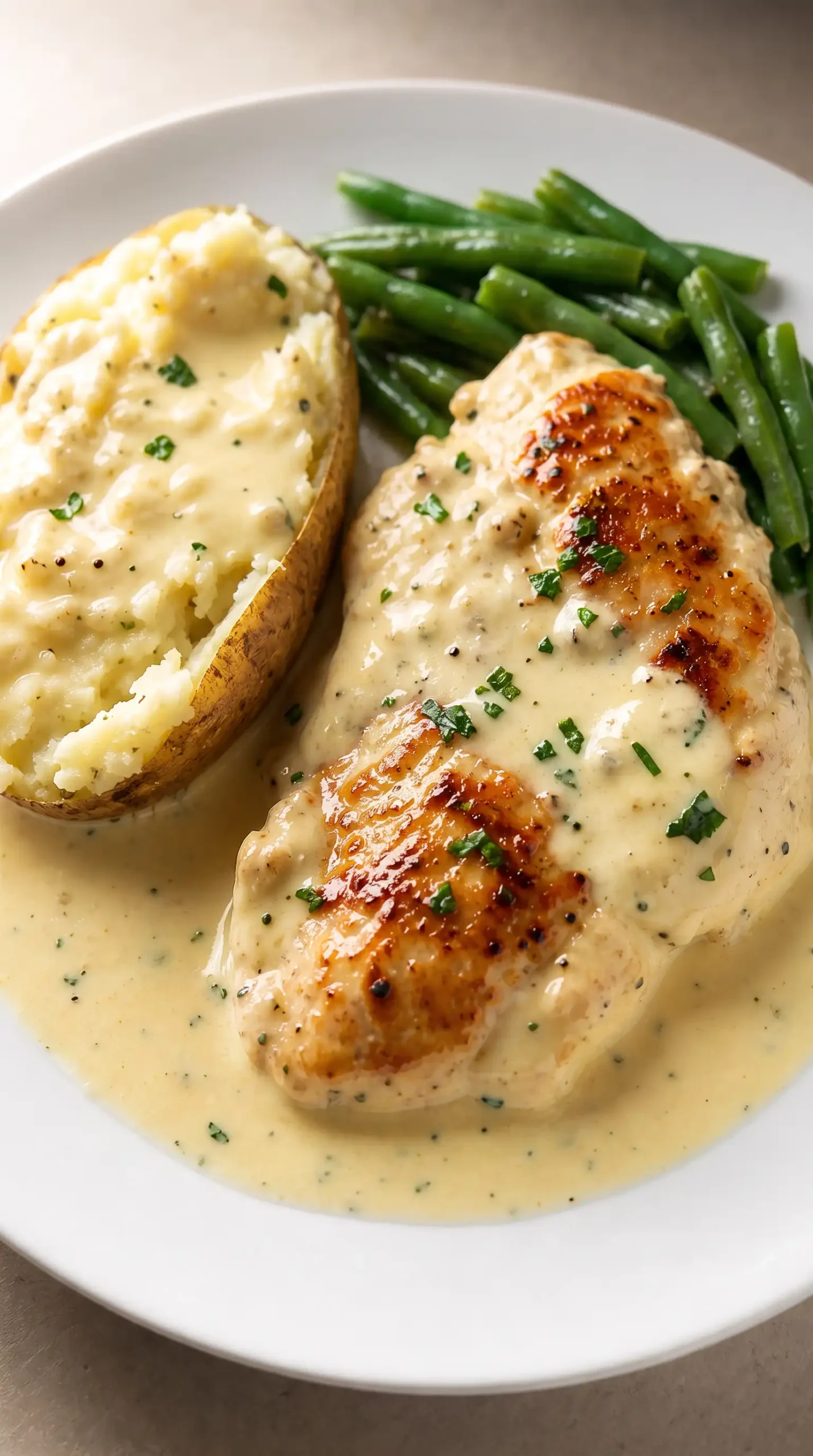
Creamy ranch chicken is the kind of dinner that makes you close your eyes at the first bite. Pan-seared chicken breasts with a golden crust, sitting in a glossy, tangy ranch cream sauce that you can spoon over mashed potatoes, rice, or straight off the plate with bread.
The sauce comes together in the same skillet after the chicken cooks, using the fond left behind from searing as the flavor base.
Ranch seasoning does the heavy lifting here. One and a half tablespoons of the dry mix transforms a basic cream sauce into something that tastes like you spent an hour building layers of flavor.
The whole recipe takes about twenty minutes from cutting board to plate. If your cream sauces always turn out bland or too thin, this one shows you the technique to get them thick, smooth, and packed with flavor every time.
The Quick Numbers
- Prep Time: 10 minutes
- Cook Time: 15 minutes
- Total Time: 25 minutes
- Servings: 4
- Difficulty: Easy
- Cuisine: American
- Cooking Method: Stovetop / One-skillet
- Meal Type: Dinner
- Calories (per serving): ~390
- Protein: ~32g
- Carbs: ~6g
- Fat: ~27g
What Hits Your Plate
The chicken has a lightly seasoned crust from the sear, golden on the outside and juicy inside. The sauce is thick, creamy, and the color of pale gold, with visible flecks of herbs from the ranch seasoning.
It tastes tangy from the sour cream, savory from the chicken stock and garlic, and herby from the dill, chives, and parsley in the ranch mix. The sauce clings to the chicken instead of running off.
When you spoon it over mashed potatoes, the potatoes soak it up like a sponge. This is comfort food that does not require a single complicated technique, and the sauce is good enough that you will want to double it.
Ingredients You’ll Need
- 2 large boneless chicken breasts – Cut horizontally into 4 cutlets. Thinner cutlets sear faster, cook more evenly, and stay juicier than thick whole breasts.
- ½ teaspoon garlic powder – For seasoning the chicken before searing.
- 1 teaspoon mixed herbs – A blend of dried thyme, oregano, or Italian seasoning. This adds an herby layer to the chicken itself.
- ½ teaspoon salt and ½ teaspoon pepper – For seasoning the chicken.
- 1 tablespoon olive oil – For searing the chicken. Olive oil handles the heat well.
- 1½ tablespoons butter, divided – Half goes in the pan with the oil for searing. The other half is used later to sauté the garlic and build the sauce.
- 1 tablespoon minced garlic – About 3 to 4 cloves. Fresh garlic sautéed in butter is the aromatic foundation of the sauce.
- 1 tablespoon flour – Cooked into the butter after the garlic to create a quick roux. This is what thickens the sauce without needing a ton of cream.
- 1 cup chicken stock – The liquid component of the sauce. Use low-sodium so the ranch seasoning does not make it too salty.
- ¼ cup sour cream – Room temperature sour cream blends into the sauce smoothly. Cold sour cream can cause the sauce to break or form lumps. Let it sit out for 20 minutes before you start cooking. Full-fat sour cream gives you the richest result.
- 1½ tablespoons ranch seasoning – The flavor powerhouse. Use a good quality dry ranch seasoning mix. If you want to make your own, combine ½ teaspoon each of dried parsley, dried dill, garlic powder, and onion powder, plus ¼ teaspoon each of salt and black pepper.
- Fresh parsley, chopped – For garnish. It adds color and a fresh contrast to the creamy sauce.
Browse our chicken recipes for more skillet dinners, or explore our dinner recipes for weeknight meal ideas.
Ingredient Swaps
- Chicken thighs instead of breasts: Thighs stay juicier and are more forgiving if you accidentally cook them a minute too long. Use boneless, skinless thighs and the same cook time.
- No sour cream: Use ¼ cup of heavy cream plus 1 tablespoon of cream cheese. The flavor is slightly different but the sauce stays rich and creamy.
- Greek yogurt instead of sour cream: Works well and adds a tangier flavor. Use full-fat Greek yogurt and add it off the heat so it does not curdle.
- Add bacon: Cook 4 slices of bacon before the chicken. Use the bacon fat to sear the chicken, then crumble the bacon over the finished dish. Bacon and ranch are a natural pairing.
- Add vegetables: Sauté mushrooms or spinach in the garlic butter before adding the flour. They add nutrition and texture.
Kitchen Tools
- Cast iron skillet – The best choice for getting a good sear on the chicken and building the sauce in the same pan.
- Whisk – For smoothing out the sauce and preventing lumps when you add the stock.
- Tongs – For flipping and removing the chicken.
- Meat mallet – For pounding the chicken cutlets to even thickness.
- Instant-read thermometer – For confirming the chicken hits 165°F.
Making It From Scratch
While your finished dish may not look exactly like the images in this post, following these instructions will give you the same delicious CREAMY RANCH CHICKEN. So please follow with me!
This recipe is all about building the sauce in the same skillet where you seared the chicken. The browned bits left in the pan, called fond, are the flavor backbone. Do not wash the skillet between steps.
Prep the chicken. Cut each chicken breast in half horizontally to make 4 cutlets. If any are still uneven in thickness, pound the thick end gently with a meat mallet.
Mix the garlic powder, mixed herbs, salt, and pepper together and season both sides of each cutlet. Let them sit while you heat the pan.
Sear the chicken. Heat the olive oil and ½ tablespoon of butter in your skillet over medium-high heat. When the butter melts and the oil shimmers, add the chicken cutlets in a single layer. Cook for 3 to 4 minutes on the first side until the bottom is golden brown.
Flip and cook for another 3 to 4 minutes on the second side. The chicken should be cooked through to 165°F. Remove the chicken from the skillet and cover it loosely with foil to keep it warm while you make the sauce.
Sauté the garlic. Reduce the heat to medium. Add the remaining 1 tablespoon of butter to the skillet. When it melts, add the minced garlic and sauté for 30 seconds until fragrant. You will smell it immediately. Do not let it brown. Garlic goes from fragrant to bitter in seconds, so keep it moving in the pan.
Build the roux. Sprinkle the flour over the garlic and butter. Stir constantly for 30 seconds. The flour cooks the raw taste out and creates a roux that will thicken the sauce. It should look like a smooth paste coating the bottom of the pan.
Add the stock. Pour the chicken stock into the skillet slowly, whisking constantly to prevent lumps. Scrape up the fond from the bottom of the pan as you whisk.
Those browned bits dissolve into the sauce and add depth you cannot get any other way. Bring the sauce to a gentle simmer and let it cook for 1 to 2 minutes until it starts to thicken slightly.
Add the sour cream and ranch. Lower the flame to its lowest setting. Add the sour cream and ranch seasoning. Whisk well until the sour cream is fully incorporated and the sauce is smooth and glossy. If the sauce seems too thick, add a splash more chicken stock. If it seems too thin, simmer it for another minute. Turn off the heat.
Bring it together. Add the chicken back to the skillet and spoon the sauce over each piece. Let it sit for a minute so the chicken warms through and absorbs some of the sauce. Sprinkle with fresh parsley and serve.
For more saucy chicken dinners, visit our healthy recipes or pair this with sides from our vegetable and side dishes collection.

Nutrition at a Glance
- Calories: ~390 per serving
- Protein: ~32g
- Carbs: ~6g
- Fat: ~27g
Values are estimates. The fat comes from the butter, sour cream, and olive oil, which is what makes the sauce so satisfying.
Kitchen Wisdom
- Room temperature sour cream matters. Cold sour cream dropped into a hot sauce can seize and form lumps. If you forget to take it out early, microwave it for 15 seconds to take the chill off before adding it.
- Add sour cream off the heat. Switch off the burner before stirring in the sour cream. High heat can cause sour cream to curdle or separate. The residual heat in the pan is enough to warm it through and create a smooth sauce.
- The flour-to-fat ratio creates the thickening power. One tablespoon of flour combined with one tablespoon of butter creates a roux that thickens one cup of liquid to a medium consistency. This is a reliable ratio you can use for any cream sauce.
- Ranch seasoning is more than just a salad dressing mix. It contains buttermilk powder, garlic, onion, dill, chives, parsley, salt, and pepper. That is seven seasonings in one tablespoon. It is an incredibly efficient way to add complex flavor with a single ingredient.
For the science behind how flour thickens sauces, Serious Eats explains how roux works and why cooking the flour first matters.
Quick Fixes
- Sauce is too thick: Add a splash of chicken stock, a tablespoon at a time, until it reaches the consistency you want.
- Sauce is too thin: Simmer it over medium heat for another minute or two to reduce. If it is still thin, make a slurry of ½ teaspoon flour and 1 tablespoon cold water, whisk it in, and simmer for 30 seconds.
- Sauce is lumpy: The sour cream was too cold or you added it too fast. Whisk vigorously. If lumps persist, press the sauce through a fine mesh strainer and return it to the pan.
- Sauce broke or looks greasy: The heat was too high when you added the sour cream. Remove from heat and whisk in a tablespoon of cold stock or a small cube of cold butter. This brings the emulsion back together.
- Chicken is dry: You overcooked it. Next time, pull it from the pan when it hits 165°F. To rescue it now, slice it and spoon extra sauce over each piece.
Ways to Change It Up
- Bacon ranch chicken: Cook and crumble 4 slices of bacon before you sear the chicken. Use the bacon fat for searing. Top the finished dish with the crumbled bacon for smoky, salty crunch.
- Mushroom ranch chicken: Sauté 8 ounces of sliced mushrooms in the garlic butter before adding the flour. The mushrooms add earthiness and pair beautifully with the ranch flavor.
- Spinach version: Stir 2 cups of fresh spinach into the sauce during the last minute of cooking. It wilts almost instantly and adds color and nutrients.
- Over pasta: Serve the chicken and sauce over penne or fettuccine. The sauce coats the noodles like a creamy ranch Alfredo.
What Pairs Well
Mashed potatoes are the classic choice because they soak up the creamy sauce. Rice works too, especially if you want something lighter. Steamed broccoli, roasted green beans, or green peas add a fresh, green element. Crusty bread is essential for wiping up any extra sauce left on the plate.
Keeping It Fresh
- Fridge: Store leftovers in an airtight container for up to 3 days. The sauce thickens in the fridge, which is normal.
- Reheating: Warm gently in a skillet over low heat with a splash of chicken stock to loosen the sauce. The microwave works but heat in 30-second intervals at 50% power to prevent the sauce from separating.
- Freezer: Freeze for up to 2 months. The sour cream sauce may separate slightly when thawed. Whisk it well while reheating to bring it back together.
- Meal prep: Cook the chicken and make the sauce separately. Store them together and reheat when ready. The chicken absorbs more sauce as it sits, so leftovers often taste even better.
Questions People Ask
Can I use ranch dressing instead of dry seasoning? Not for this recipe. Liquid ranch dressing would thin the sauce and add too much acidity. Use the dry seasoning mix as written.
What brand of ranch seasoning should I use? Hidden Valley is the standard and most widely available. Any dry ranch seasoning mix works, but check the sodium content. Some store brands are saltier than others.
Can I make this without sour cream? Use ¼ cup of heavy cream instead. The sauce will be slightly less tangy but still rich and smooth.
How do I keep the sauce from breaking? Add the sour cream off the heat and whisk it in gradually. If the sauce has been sitting for a while and looks separated, whisk in a small splash of warm stock to bring it back together.
This creamy ranch chicken is twenty minutes to comfort on a plate. The sauce alone is worth the price of admission, and once you learn the technique of building a cream sauce with a roux and sour cream, you will find yourself using it on everything. Try it this week and watch it become a regular in your dinner rotation.
1 thought on “CREAMY RANCH CHICKEN”
Comments are closed.