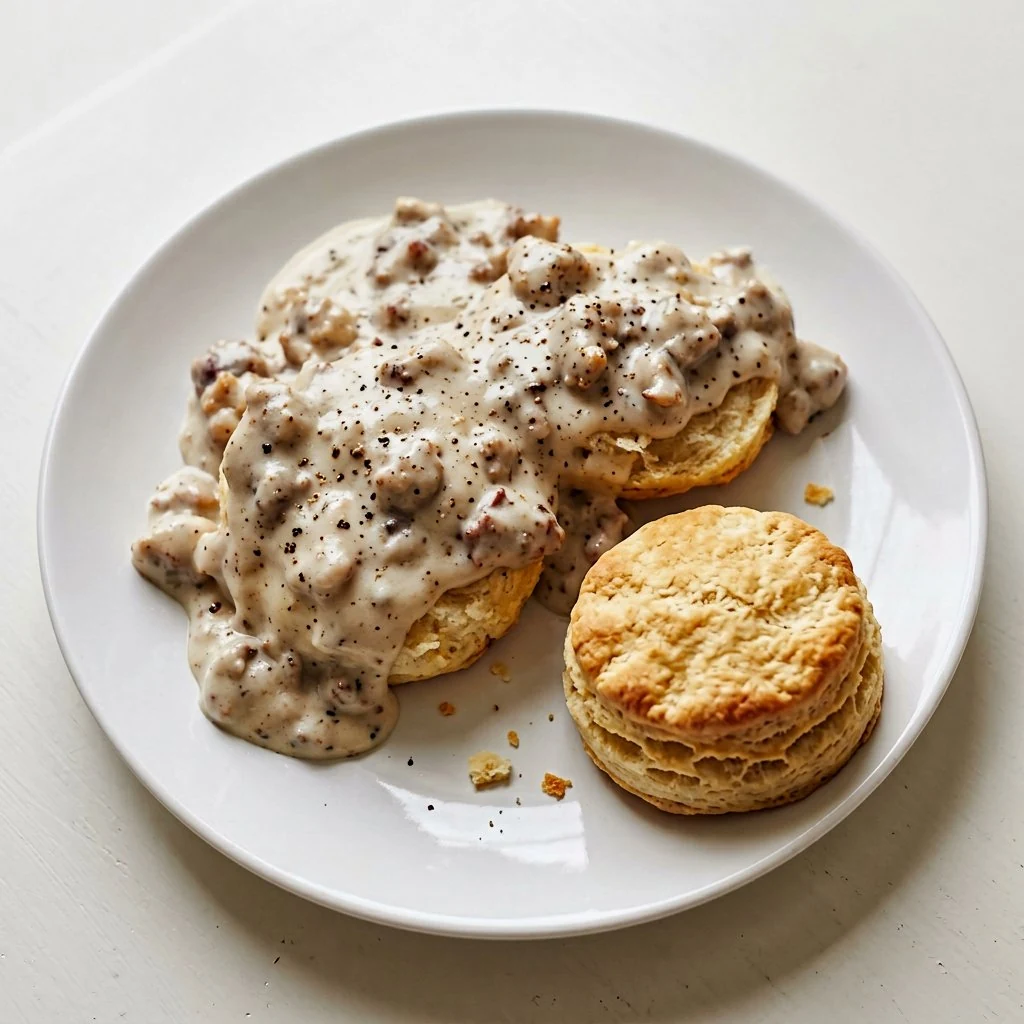
Biscuits sausage gravy is the breakfast that turns your kitchen into the corner diner everyone wishes was open. You brown a pound of sausage, stir in flour and milk until the gravy turns thick and peppery, and spoon it over hot drop biscuits you baked while the pan was still working.
You need this in your morning when your breakfasts have gone quiet, when your weekend deserves a ritual, or when you want to feed a table of people for about ten dollars and be called a hero for it.
Recipe at a Glance
| Prep time | 10 minutes |
| Cook time | 30 minutes |
| Total time | About 40 minutes |
| Cooking method | Stovetop sausage gravy plus oven baked drop biscuits |
| Servings | 4 |
| Main ingredients | Ground sausage, flour, milk, butter, buttermilk, baking powder |
| Skill level | Easy |
Ingredients You’ll Need
- 1 lb ground sausage
- 1/4 cup flour
- 3 cups milk
- 1/2 tsp salt
- 1/4 tsp pepper
- 2 cups flour for biscuits
- 1 tbsp baking powder
- 1/2 cup butter
- 3/4 cup buttermilk
Ingredient Notes & Easy Substitutions
Your sausage should be bulk breakfast sausage, mild or hot depending on your crowd, and you keep every drop of the rendered fat because that grease is the flavor engine of the gravy. The cooks at Two Peas and Their Pod insist you never drain the pan, and your gravy will prove them right.
Your milk for the gravy should be whole if you have it, because richer milk means creamier gravy; two percent works in a pinch. The biscuit butter must be cold, straight from the fridge, since cold butter pockets melt in the oven and leave those flaky layers your biscuits exist for.
Your buttermilk brings the tang that makes drop biscuits taste bakery made, and if the carton is empty, stir one teaspoon of vinegar into regular milk and let it sit five minutes. Extra pepper on top of the listed quarter teaspoon is not a substitution, it is tradition.
Equipment You’ll Need
You need a large skillet for the gravy, a mixing bowl for the biscuits, a baking sheet, a wooden spoon, a whisk, and measuring cups. A cast iron skillet is the classic choice because it browns sausage beautifully and holds heat while you wrangle the biscuits.
If you have a biscuit scoop or a large spoon you trust, dropping the dough goes faster and your biscuits come out even. Parchment on the sheet means zero sticking and a two second cleanup, which matters when gravy is calling your name.
How to Make Biscuits Sausage Gravy
Step One: Brown the Sausage
Cook your sausage in the large skillet over medium heat, breaking it into crumbles with your wooden spoon, until it is browned and cooked through with no pink left. Those crusty browned bits stuck to the pan are flavor gold, and you will dissolve them right into the gravy in the next step.
Step Two: Make the Gravy
Sprinkle the flour over the sausage and stir for a minute so it drinks up the fat, then gradually add the milk, stirring as it goes. Cook until thickened, then season with the salt and pepper; the crew at Bless This Mess Please notes your gravy simmers into full thickness over about five gentle minutes, so give it patience and frequent stirring.
Step Three: Start the Biscuits
For the biscuits, mix the two cups of flour and baking powder, then cut in the cold butter until the mixture looks like coarse crumbs with a few pea sized pieces left. Those butter fragments are your flaky layers, so stop when it looks shaggy, not sandy.
Step Four: Drop the Dough
Add the buttermilk and stir just until a shaggy wet dough forms, then drop spoonfuls onto your baking sheet, leaving an inch between mounds. Drop biscuits are meant to look homemade and rugged, so resist the urge to smooth the tops; those craggy peaks brown beautifully.
Step Five: Bake Them Hot
Bake at 450F for 12 to 15 minutes until the biscuits are tall and golden. Your oven this hot works fast, so start checking at twelve minutes; the bottoms should be firm and the tops deeply golden, and your kitchen will smell like a bakery at dawn.
Step Six: The Grand Assembly
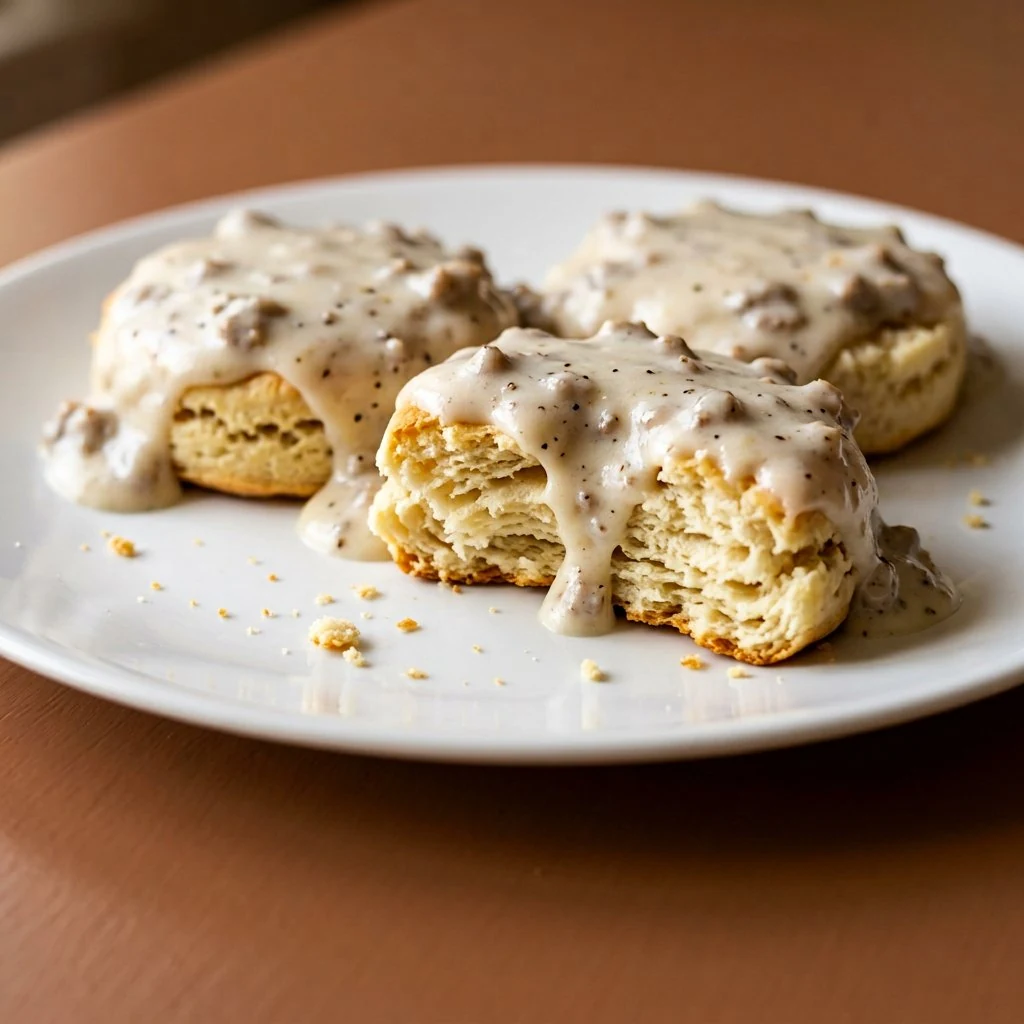
Split the warm biscuits and spoon the gravy generously over top. Give each plate one final grind of black pepper, because biscuits and gravy without visible pepper flecks is just a rumor of itself, and serve immediately while everything is steaming.
Serving Size & Batch Scaling
A pound of sausage and eight to nine biscuits feeds four people properly, which works out to two biscuits and a ladle of gravy each. Hungry crowds eat three biscuits apiece, and you should know your table well enough to see that coming.
To double for a brunch crowd, brown the sausage in two skillets or in stages, because crowding steams the meat gray instead of browning it brown. The biscuit dough doubles cleanly in one big bowl, and your baking time stays the same across two sheets.
Making More or Less?
For two people, cook the full pound of sausage anyway and refrigerate half the finished gravy; it reheats like a dream and future you gets a second breakfast with zero work. Halve the biscuit recipe and bake six, since cold biscuit dough is a sad compromise.
If you need to stretch the gravy for surprise guests, melt two tablespoons of butter into the finished gravy and whisk in an extra half cup of warm milk; the trick from Bless This Mess Please saves thin gravy every time. Season again after stretching, because added liquid always dilutes salt and pepper.
Nutrition Estimate Per Serving
- Calories: about 640 per serving
- Protein: 21 g
- Carbohydrates: 51 g
- Fat: 37 g
- Fiber: 2 g
- Sugar: 6 g
- Sodium: about 1150 mg

The following is an estimated nutritional breakdown drawn from standard ingredient data, offered as guidance rather than medical fact. Your sausage brand, butter, and biscuit size all nudge the numbers, and breakfast this good occasionally deserves the splurge.
Common Mistakes to Avoid
The number one mistake is draining the sausage fat, because flour stirred into that fat is what turns milk into gravy instead of milky sausage soup. The second is adding the milk all at once, which invites lumps; gradual milk with constant stirring keeps your gravy silk smooth.
Do not overwork the biscuit dough after the buttermilk goes in, because ten extra stirs turn tender layers into hockey pucks. Stir until the flour disappears, then stop, even if the dough looks imperfect; shaggy dough bakes into tall, tender biscuits every single time.
Finally, do not underseason the gravy at the finish. Potatoes are absent to absorb your salt, so taste at the end when the gravy has thickened, and adjust boldly; this dish wears its pepper proudly.
Troubleshooting Guide
If your gravy is too thick, whisk in warm milk a quarter cup at a time until it ribbon flows off the spoon. If it is too thin, simmer it five more minutes, stirring often; flour needs time and a gentle bubble to finish its job, not more raw flour dumped on top.
If your biscuits spread into flat moons, your butter was too warm or the dough too wet; next batch, chill the mixed dough ten minutes before dropping. If they brown too fast on the bottom, double up your baking sheets to insulate, and your undersides turn gentle gold.
If your gravy tastes pasty, the flour did not cook long enough with the sausage before the milk arrived; let it bubble a full two extra minutes while stirring, and the raw flour taste cooks away into something nutty and rich.
Variations & Customizations
Hot sausage brings the heat your spice lovers want, maple sausage tips the whole plate toward sweet and savory, and a half teaspoon of dried sage stirred into mild sausage gives it that old fashioned diner flavor. Brown and serve the same way regardless of which direction you go.
Stir a splash of hot sauce into the finished gravy, or fold in a handful of shredded cheddar at the very end for a cheeseburger breakfast situation. A fried egg on top of the whole arrangement is the move your weekend has been waiting for.
What to Serve With It
Scrambled eggs and fresh fruit round out the plate without competing, and strong coffee is non negotiable. If your biscuit love runs deeper, the small batch homemade biscuits in your back pocket scale down for quiet mornings, and when gravy night rolls around again, smothered chicken and gravy keeps the comfort theme running through your week.
A simple side of roasted tomatoes or sauteed spinach adds color and something fresh, which your rich, peppery plate will quietly appreciate between bites.
Meal Prep & Make-Ahead Instructions
You can make the full batch of gravy up to three days ahead; it thickens in the fridge into a spoon standing solid, so reheat it slowly with splashes of milk, whisking until it loosens back to ladling texture. The flavor actually deepens overnight, which feels like cheating and is not.
Biscuits are best baked to order, but you can mix the dry ingredients with the butter ahead, hold the bowl in the fridge, and add buttermilk and bake the moment you wake up. Fifteen minutes of morning effort and your house smells like you planned this for weeks.
Storage & Leftovers
Store gravy and biscuits separately in airtight containers in your fridge for up to three days, because together they steam each other into sogginess. Keep biscuits unwrapped loosely at room temperature if you are eating them within a day; sealed storage softens their crusts fast.
The gravy also freezes for up to two months, though dairy gravies can look slightly broken when thawed. A patient reheat with whisking and a splash of milk brings it back together, and your future self will still be grateful.
Leftover gravy also makes a sneaky great base for a next day breakfast; warm it in a skillet, crack two eggs right into it, and cover the pan until the whites set. Your split, toasted biscuits turn the whole thing into a plate that tastes planned, and the gravy seasons the eggs as they cook, which is the kind of kitchen magic that requires zero extra shopping.
Reheating Instructions
Reheat gravy in a saucepan over low heat with a splash of milk, whisking often, or microwave in thirty second bursts with a stir between each. Biscuits come back best in a 350F oven for about eight minutes, wrapped loosely in foil so they warm without drying.
The microwave revives a biscuit in fifteen seconds if speed wins, but the oven method restores the crust that makes biscuits worth baking. A fresh grind of pepper over the reheated plate and nobody will know this breakfast is on round two.
Frequently Asked Questions
Can this be made ahead? The gravy absolutely can, up to three days in advance, reheated gently with extra milk. Bake the biscuits fresh if your schedule allows, since they take barely fifteen minutes and the texture difference is enormous.
Can you use milk other than whole milk? Yes; two percent makes slightly lighter gravy and skim makes noticeably thinner gravy, so simmer a little longer to compensate. Evaporated milk thinned with water is a surprisingly rich backup if your fridge situation is dire.
Why is my gravy grainy? Grainy gravy usually means the flour hit hot fat in clumps or the milk went in too fast. Sprinkle flour evenly, stir it into the sausage for a full minute, then add milk in a slow stream while stirring, and your gravy smooths out like it was never in trouble.
Can you make the biscuits with regular milk? You can, though buttermilk gives drop biscuits their tender tang. If you swap in regular milk, add a squeeze of lemon or a splash of vinegar to mimic the acidity, and your biscuits stay soft instead of turning slightly stiff.