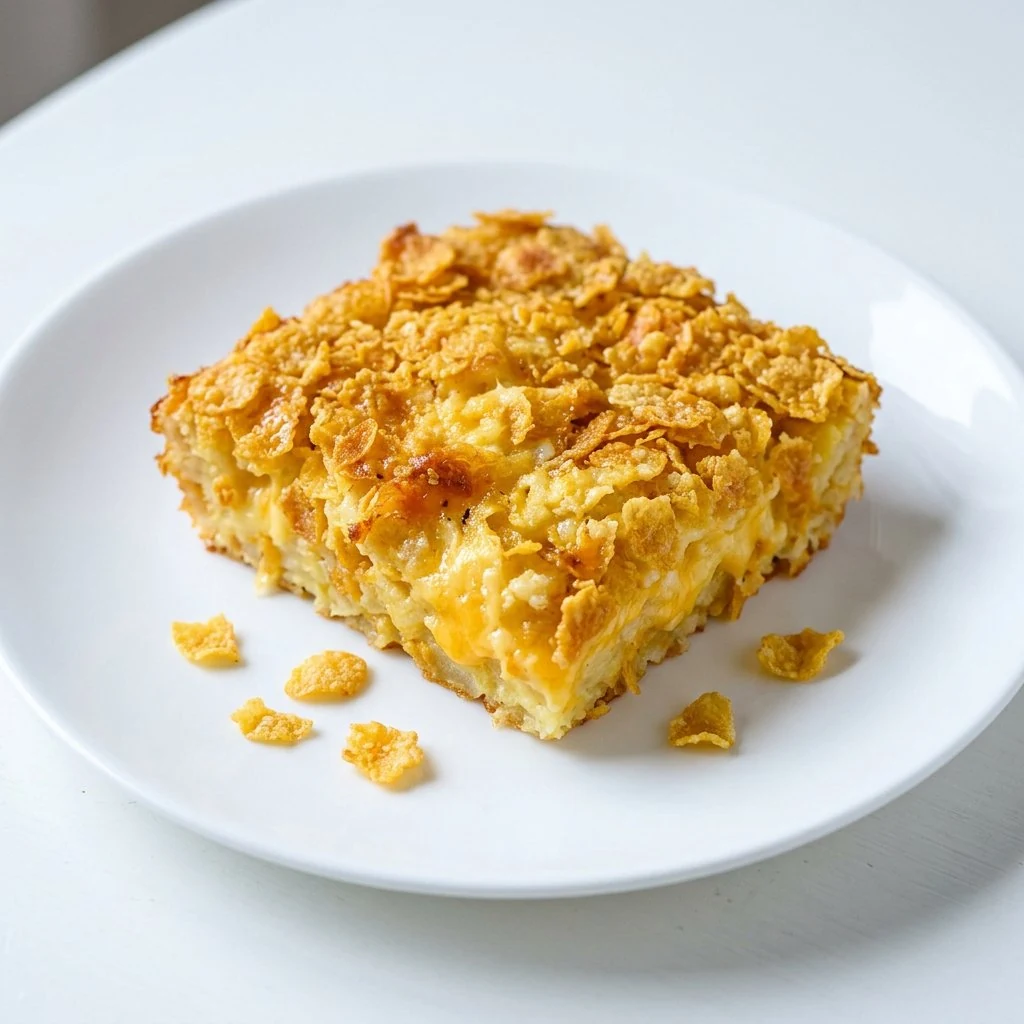
Hashbrown casserole is the creamy, cheesy, golden topped comfort dish that shows up at every potluck and leaves with an empty dish.
You stir thawed hashbrowns into a sour cream and cheddar mixture, slide it into the oven, and let a buttery cornflake crunch finish the job if you are feeling fancy.
You need this recipe when your brunch table needs an anchor, when your holiday spread lacks a crowd pleaser, or when dinner needs a side that makes everyone forget the main dish exists.
Recipe at a Glance
| Prep time | 15 minutes |
| Cook time | 45 to 55 minutes |
| Total time | About 1 hour 10 minutes |
| Cooking method | Oven baked casserole with optional buttered cornflake topping |
| Servings | 8 to 10 |
| Main ingredients | Frozen hashbrowns, cream of chicken soup, sour cream, cheddar, cornflakes |
| Skill level | Easy |
Ingredients You’ll Need
- 1 (32 oz) bag frozen hashbrowns thawed
- 2 (10.5 oz) cans cream of chicken soup
- 1/2 cup butter melted
- 1 cup sour cream
- 2 cups shredded cheddar cheese
- 1 tsp onion powder
- 1/2 tsp salt
- 1/2 tsp pepper
- Optional: 2 cups crushed cornflakes
- 2 tbsp butter melted
Ingredient Notes & Easy Substitutions
Your hashbrowns should be the shredded kind, thawed completely, because frozen ones weep water into your casserole and dilute all that creaminess. Spread the bag on a towel for thirty minutes or thaw overnight in the fridge, and pat them dry if they look wet; the folks at A Reinvented Mom stress the thawed detail for exactly this reason.
Your soup is the classic condensed cream of chicken, two full cans, which brings body and seasoning in one move. If you keep a homemade condensed soup substitute in your routine, an equal amount works, but the canned version is why this casserole comes together in ten minutes flat.
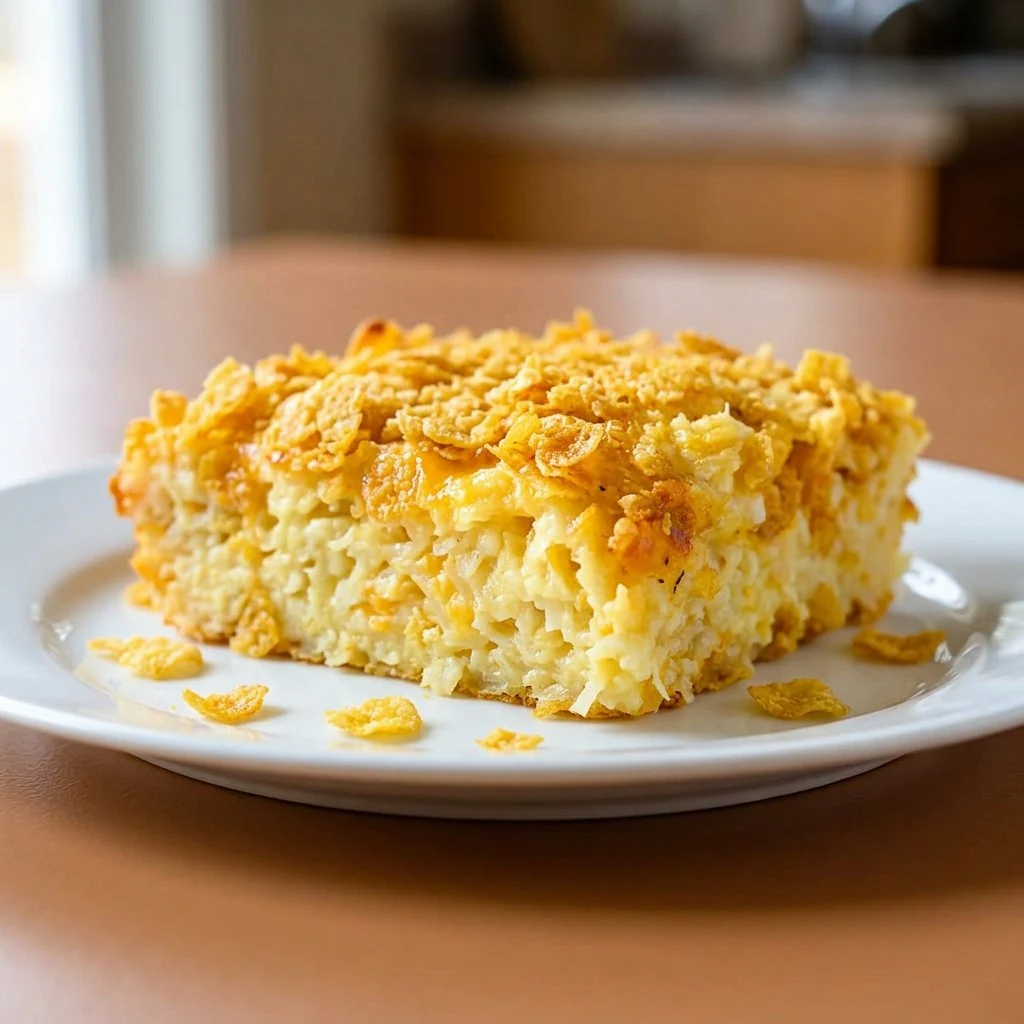
Your cheddar melts better when you shred it yourself, and the cornflake topping from JCP Eats shows how a simple butter and cereal crumble turns a soft casserole into a textural event. Cornflake cereal swaps for crushed buttery crackers or panko if your pantry votes differently.
Equipment You’ll Need
You need a 9×13 baking dish, one large mixing bowl, a sturdy spatula, a small bowl for the topping, and a zip top bag plus rolling pin if cornflakes are involved. Measuring cups and spoons round out the lineup, and that is genuinely the whole list.
A dish with straight sides gives you neat squares for serving, but any 3 quart casserole works. If your dish runs shallow, set it on a rimmed sheet pan for the bake so any bubbly edges never meet your oven floor.
How to Make Hashbrown Casserole
Step One: Preheat and Grease
Preheat your oven to 350F and butter a 9×13 baking dish. Butter, spray, or shortening all work; your only goal is clean release, because those crispy cheese edged corners are the pieces people quietly hunt for at the table.
Step Two: The Big Mix
Mix the hashbrowns, soup, melted butter, sour cream, cheddar, onion powder, salt, and pepper in your largest bowl. Stir until every strand of potato wears some of the creamy mixture; this is a two minute job that decides whether your casserole bakes into even, cheesy cohesion.
Step Three: Spread It Even
Spread the mixture into your prepared dish in an even layer, pressing it gently into the corners. A level surface bakes level, and level means every serving pulls out with the same creamy center and golden top as its neighbors.
Step Four: The Crunchy Question
If you are using the topping, mix the crushed cornflakes with the two tablespoons of melted butter and sprinkle the mixture over the casserole. Keep the crumbs coarse, not powdered, because big flakes bake into shatteringly crisp ridges while dust just goes sandy.
Step Five: The Long Bake
Bake 45 to 55 minutes until golden and bubbly. You want active bubbles at the edges and a top that has taken on color; if your topping browns early, tent foil over the dish for the remainder and let the center finish heating through.
Step Six: The Rest
Let the casserole rest 10 minutes before serving. Those minutes let the creamy base set from lava hot to spoonably thick, and your squares come out clean instead of slumping; the wait is short and the payoff is structural.
Serving Size & Batch Scaling
A full 9×13 dish serves eight to ten as a side, which makes it the default potluck contribution for good reason. At a brunch table with eggs and fruit, count on ten servings; next to nothing else, count on eight and a scramble for the corners.
Halving works in an 8×8 dish with the same bake window, checked five minutes early. Doubling means two dishes on two racks, swapped halfway, never one deeper dish, because a tall casserole stays cold in the middle while the top turns dark.
Making More or Less?
For a small household, use half a bag of thawed hashbrowns, one can of soup, and half of everything else in an 8×8 dish. The bake time barely changes, and your Tuesday gets a full casserole experience without a week of leftovers.
If you are feeding a buffet, assemble two dishes and bake them staggered so one comes out hot as guests arrive and the second follows thirty minutes later. Your topping stays crackly on the second dish instead of steaming soft on a buffet table all afternoon.
If you want a vegetarian table without a second recipe, this casserole steps up as the main with a big green salad beside it. The creamy base carries the plate, your cornflake topping keeps things fun, and nobody at a meatless dinner has ever left hungry over this exact arrangement. Add a can of drained green beans to the skillet meal if you want it heartier.
Nutrition Estimate Per Serving
- Calories: about 420 per serving
- Protein: 10 g
- Carbohydrates: 28 g
- Fat: 30 g
- Fiber: 2 g
- Sugar: 3 g
- Sodium: about 760 mg
The following is an estimated nutritional breakdown based on standard ingredient data, so treat it as a compass heading, not a lab result. Extra cheese, bigger scoops, and the cornflake topping all move your numbers in delicious directions.
Common Mistakes to Avoid
The top mistake is baking frozen hashbrowns straight from the bag, which releases water as they thaw inside the oven and leaves your casserole soupy at the edges. Thaw first, pat dry, and your creamy base stays creamy. The second mistake is crushing the cornflakes to powder; coarse flakes crunch, powder just disappears.
Do not skip the rest after baking, even when everyone is hovering with spoons. Those ten minutes are the difference between a casserole that holds its shape on the plate and one that spreads into a delicious puddle you have to apologize for.
Finally, do not under season out of respect for the cheese; this dish has a lot of mild potato to season, and the full salt, pepper, and onion powder amounts are what keep it from tasting flat.
Troubleshooting Guide
If your casserole is bubbly at the edges but cold in the center, your dish was packed deeper than the bake time expects; cover with foil and give it another fifteen minutes, checking the center with a knife tip for heat. If the top is done but the middle lags, foil saves the day again.
If your finished casserole seems greasy, your cheese or soup brands ran fattier than average; next round, cut the melted butter to six tablespoons. If it seems bland, add another half teaspoon of onion powder and a pinch of garlic powder, then taste before adding more salt.
If your cornflake topping went soft before serving, the casserole sat covered; hold the dish uncovered once it is out of the oven, since trapped steam is the natural enemy of every crunchy topping you will ever make.
Variations & Customizations
Fold in a cup of diced ham or crumbled cooked bacon to turn the side dish into a full breakfast casserole, or stir in a can of drained green chilies and swap pepper jack for the cheddar when your crowd leans spicy. A cup of frozen broccoli florets, thawed and patted dry, sneaks a vegetable in without a single complaint.
For a lighter version, use reduced fat soup, Greek yogurt in place of the sour cream, and cut the butter by half; the casserole stays creamy from the soup and cheese, and the cornflake topping keeps it feeling indulgent anyway.
What to Serve With It
This casserole belongs next to ham, roast chicken, meatloaf, or a holiday turkey, and it holds its own on a brunch buffet beside eggs and fruit. It also makes a hearty partner for cheesy hamburger potato casserole nights when your table has declared a potato theme, and it rounds out a plate of hobo casserole like they grew up together.
A crisp green salad with a sharp vinaigrette is the fresh edge your rich, creamy side wants, and a spoonful of pickled jalapenos on the side wakes up every bite for the heat seekers at your table.
Meal Prep & Make-Ahead Instructions
Assemble the casserole completely, topping included, up to a day ahead; cover and refrigerate, then bake cold at 350F for about 60 minutes. The make ahead version bakes up nearly identical, which is why this dish anchors so many holiday tables without holiday stress.
You can also freeze it unbaked for up to two months, wrapped tightly in foil and plastic. Thaw overnight in the fridge before baking as written; baking from frozen takes nearly double the time and rewards you with uneven results, so plan the thaw.
Storage & Leftovers
Covered leftovers keep in your fridge for up to four days. The cornflake topping softens in storage no matter what you do, so store it like the creamy casserole it is at heart, and re-crisp individual portions under the broiler if crunch matters to you.
Freezing cooked leftovers works for up to a month, though dairy based casseroles can separate slightly. Thaw overnight, reheat covered, and stir gently before serving; the flavor survives the freeze better than the texture, and a fresh sprinkle of cheese hides everything.
Label anything you freeze with the date, because three identical looking casseroles in a chest freezer is how mystery meals happen. Your future thawed hashbrown casserole reheats covered and tastes like you cooked all day, even on the day you absolutely did not.
Reheating Instructions
Your oven at 350F, covered with foil, brings a full dish back in about 20 minutes; individual squares reheat in 12 to 15. The microwave handles a single portion in about 90 seconds, best for the office lunch crowd who value speed over crust.
For leftover crunch, slide reheated portions under the broiler for two minutes and watch them the whole time. A fresh crack of black pepper after heating, and your day three hashbrown casserole eats like it just came out of the oven.
Frequently Asked Questions
Can this be made ahead? Yes, up to a full day in advance, refrigerated and baked cold with about five extra minutes. You can also freeze it unbaked for two months; thaw overnight in the fridge before it goes anywhere near the oven.
Do the hashbrowns have to be thawed? For this bake time, yes. Frozen hashbrowns flood the dish with water as they thaw mid bake, leaving the center loose and the edges greasy. Thirty minutes on a towel or overnight in the fridge solves it completely.
Can you make it without the cornflake topping? Absolutely; the casserole is complete without it, just softer on top. If you want crunch without cereal, buttered panko or crushed crackers do the same job, and a handful of extra cheese on top browns into its own crust.
Can you use fresh potatoes instead of frozen? You can shred and parboil fresh russets for five minutes, then chill before mixing, but this recipe exists for its ten minute prep. Frozen shredded hashbrowns are the whole point, and there is no shame in that shortcut.