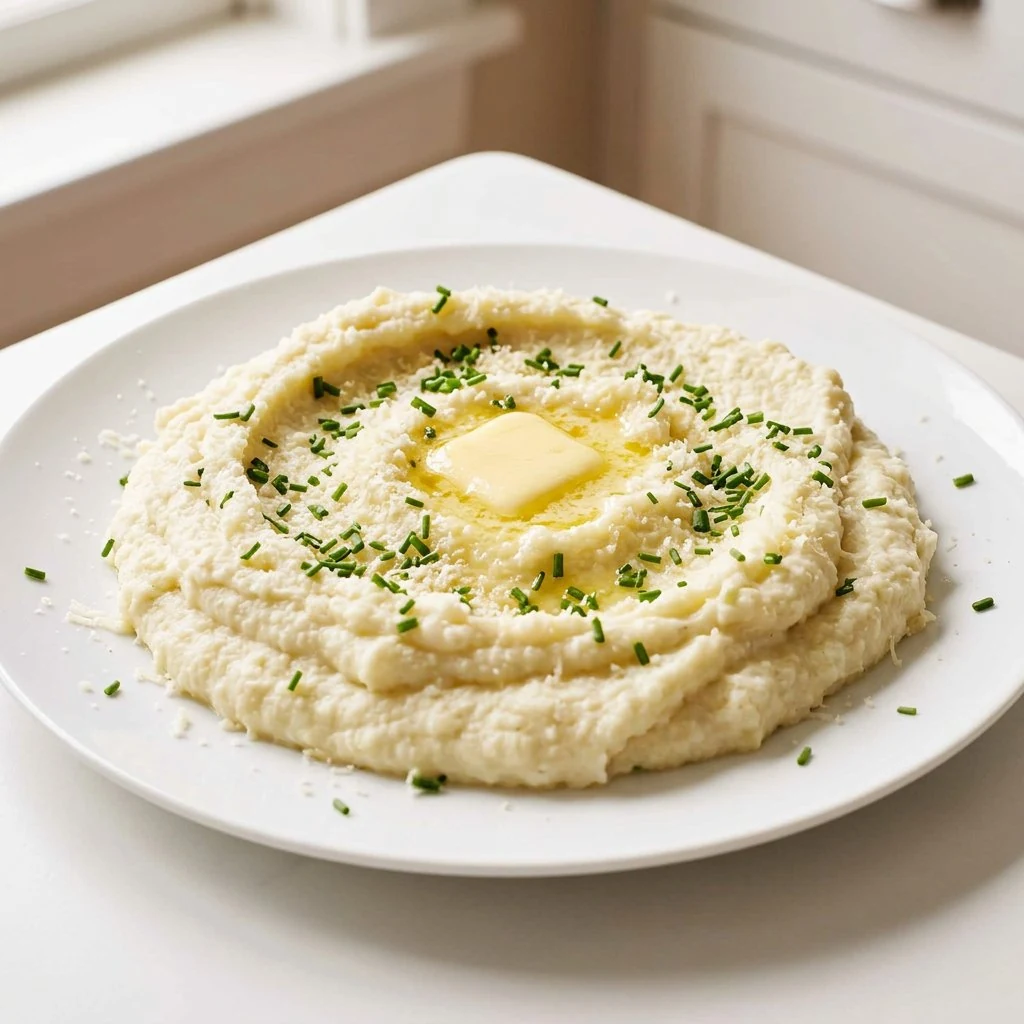
Mashed cauliflower garlic style is the silky, buttery, parmesan whipped side that lets you have mashed potato night any night you want it.
You steam florets until they surrender, blitz them in the food processor with sour cream, butter, and Parmesan, and season the whole cloud with garlic two ways.
You need this recipe if your mashed potato habit and your goals have stopped speaking, if your dinner plate needs a creamy anchor that costs almost nothing, or if you have a head of cauliflower and a food processor and ambition.
Recipe at a Glance
| Prep time | 10 minutes |
| Cook time | 20 minutes |
| Total time | 30 minutes |
| Cooking method | Stovetop steaming, then whipped smooth in the food processor |
| Servings | 4 to 6 |
| Main ingredients | Cauliflower, garlic, butter, sour cream, Parmesan, milk, chives |
| Skill level | Easy |
Ingredients You’ll Need
- 1 large head cauliflower
- 4 cloves garlic
- 2 tbsp butter
- 1/4 cup sour cream
- 1/4 cup milk
- 1/2 cup Parmesan cheese
- 1/2 tsp salt
- 1/4 tsp pepper
- 1/4 tsp garlic powder
- fresh chives
Ingredient Notes & Easy Substitutions
Your cauliflower should be firm and creamy white with tight florets and no brown spots, and one large head gives you about four generous servings. Steaming rather than boiling keeps water out of the finished mash, which is the entire difference between silky and soupy.
Your garlic goes into the steamer for the last five minutes, a trick that mellows its bite while keeping its soul, and the extra pinch of garlic powder deepens the savory note. The food processor approach at Cafe Delites shows how a quick blitz with butter and garlic turns cauliflower into something that genuinely competes with mashed potatoes.
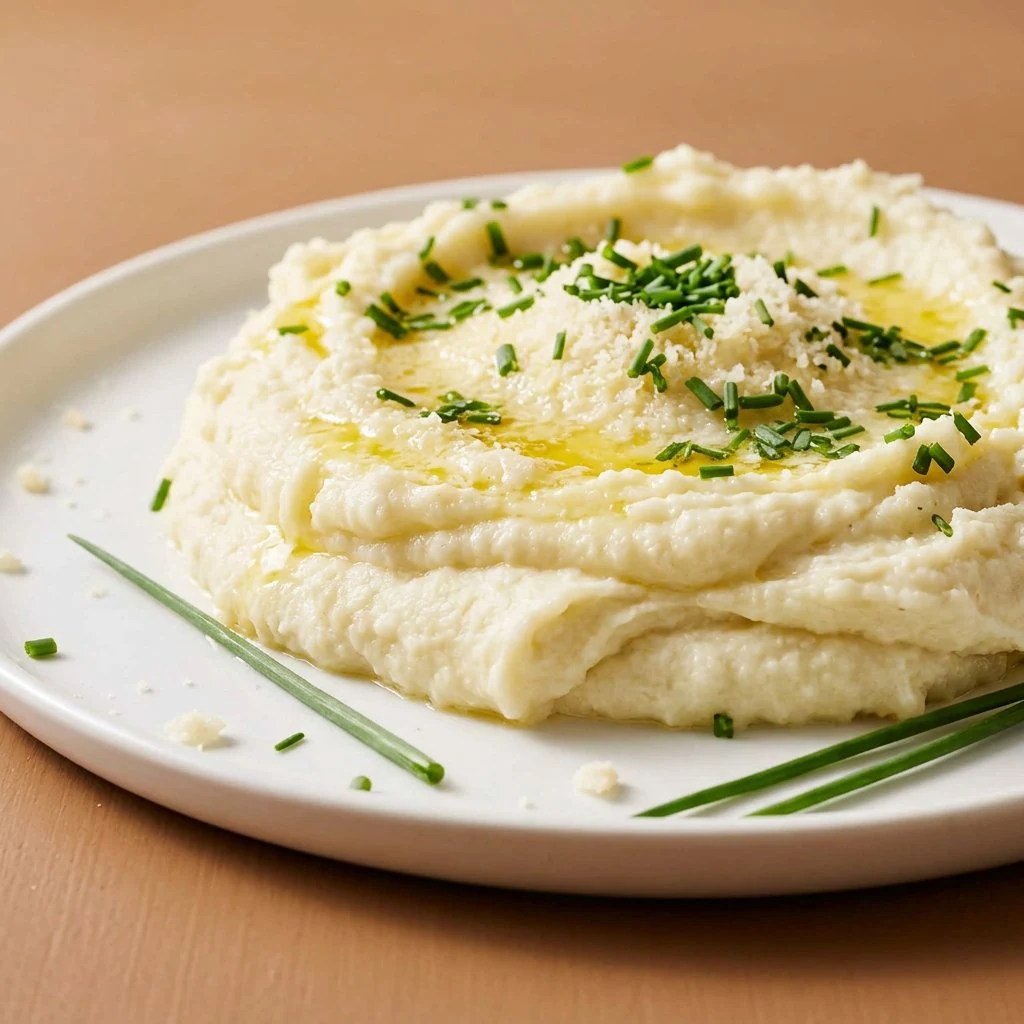
Your sour cream brings tang and body, and the Parmesan brings salt and richness, so taste before adding more salt. If you are out of milk, a splash of cream or even broth works, and She Keeps a Lovely Home simmers theirs with the garlic for the same mellow flavor you get from your steamer basket.
Equipment You’ll Need
You need a pot with a steamer basket, a food processor, a sharp knife, a cutting board, and a measuring cup and spoons. A rubber spatula helps you scrape every last creamy bit out of the processor bowl, because you will not want to waste any of it.
A blender works in a pinch if you process in small batches and keep the lid vented, but a food processor gives you control; you can pulse and check, and your mash goes exactly as far as you want it and not one step into glue.
How to Make Mashed Cauliflower Garlic
Step One: Cut and Steam
Cut the cauliflower into even florets and steam 15 to 20 minutes until very tender. Your fork should slide through with no resistance at all; a firm core will haunt your mash with lumps forever, so when in doubt, give it three more minutes over the steam.
Step Two: Garlic Joins Late
Add the garlic cloves during the last 5 minutes of steaming. This short ride softens their sharp edge while keeping their flavor bright, and your mash gets real garlic character instead of the raw bite that scares half the table.
Step Three: Drain Like You Mean It
Drain well and transfer the florets to a food processor. Let them sit in the hot dry pot or the strainer for a couple of minutes first, because every drop of steam that escapes now is water that never thins your mash later.
Step Four: The Rich Things
Add the butter, sour cream, milk, Parmesan, salt, pepper, and garlic powder to the processor bowl. Piling everything in at once lets the hot cauliflower melt the butter instantly and saves you a pan, and the machine will distribute all of it evenly in seconds.
Step Five: The Blitz
Process until smooth and creamy, stopping once to scrape the sides. Here is your judgment call: thirty seconds gets you fluffy mash with a little texture, a full minute gets you silken puree, and much beyond that risks gummy, so stop at the texture your table argues about.
Step Six: Garnish and Serve Hot
Garnish with fresh chives and serve hot. Cauliflower mash cools faster than potato mash, so warm your serving bowl with hot water first, and the chives on top add the fresh color note that makes the whole bowl look intentional.
Serving Size & Batch Scaling
One large head serves four as a generous side or six as part of a bigger spread, and the recipe scales cleanly. Two heads need processing in two batches, since an overloaded processor blades around a stationary bottom layer and leaves you chunks hiding under silk.
For a small household, half a head with half the mix-ins still processes smoothly; the ratios, not the volume, carry the flavor. Your leftovers reheat better than potato mash ever does, which tips the make extra argument strongly in your favor.
For a dinner party, portion the mash with a large ice cream scoop dipped in hot water between scoops; your servings come out looking like restaurant quenelles with zero extra skill required. A small drizzle of olive oil and a few extra chives over each scoop finish the plate like you rehearsed it.
Making More or Less?
For a crowd, steam batches and hold the florets in a warm dry pot, then process everything with doubled mix-ins in two quick rounds. Fold the batches together in a warm bowl, taste, adjust, and nobody will ever know it was an assembly line.
If you want it lighter, halve the butter and let the Parmesan and sour cream carry the richness; the mash barely notices, and neither will your guests. If you want it richer, cream in place of milk takes it straight into holiday territory.
Nutrition Estimate Per Serving
- Calories: about 155 per serving
- Protein: 8 g
- Carbohydrates: 10 g
- Fat: 10 g
- Fiber: 4 g
- Sugar: 3 g
- Sodium: about 430 mg
The following is an estimated nutritional breakdown based on standard ingredient data, so treat these numbers as friendly guidance rather than laboratory fact. This is the section where cauliflower quietly wins: a fraction of the carbs of mashed potatoes with most of the comfort intact.
Common Mistakes to Avoid
The number one mistake is undercooking the florets, because barely tender cauliflower processes into grainy paste instead of silk. The second is skipping the thorough drain; wet cauliflower makes soup, and no amount of cheese fixes a mash that slides off the spoon like broth.
Do not over process past the smooth point chasing extra fluff. Cauliflower releases water the longer it runs, and your beautiful mash loosens into puddle territory; stop at creamy, season, and serve, in that order, quickly.
Finally, do not serve it in a cold bowl. This mash cools fast, and a warm bowl plus hot contents buys you ten unhurried minutes at the table, which is exactly how long dinner conversation needs to get going.
Troubleshooting Guide
If your mash is loose and wet, return it to a saucepan and stir over low heat for a few minutes; the steam escapes and the mash tightens. A tablespoon of grated Parmesan stirred in helps too, since cheese absorbs while it melts.
If your mash tastes faintly of cafeteria, it was under seasoned or undercooked; add the garlic powder you skipped, a pinch more salt, and half the remaining Parmesan, then taste again. Cauliflower has a mild reputation, and seasoning is what rebuts it.
If your texture went gluey from over processing, whisk in a splash of warm milk by hand to relax it, and serve it as a rustic puree with confidence. The flavor is untouched, and honestly, most of your table will call it perfect anyway.
Variations & Customizations
Roast the florets instead of steaming for a nutty, deeper flavored mash, or swirl in a spoonful of pesto after processing when you want it green and dramatic. Roasted garlic mashed in at the end doubles down on the name of the dish in the best way.
For a fully dairy free version, olive oil, unsweetened almond milk, and nutritional yeast stand in for the butter, milk, and Parmesan, and the mash stays genuinely creamy thanks to the steam-softened florets. Fresh chives and an extra grind of pepper finish it like you planned it all along.
What to Serve With It
This mash is the understudy that steals the show next to roast chicken, meatloaf, or any saucy main that wants something to soak into. It keeps a low carb theme rolling after a side of cheesy baked cabbage, and when the main is a bowl of garlic butter pasta, your garlicky side dish and garlicky main agree with each other completely.
A crisp green salad or roasted green beans round out the plate, and a extra pat of butter melting into the center of the mash is the move your inner child already made peace with.
Meal Prep & Make-Ahead Instructions
You can steam the cauliflower up to two days ahead and refrigerate the florets; the mash comes together in five minutes when you need it. Fully mashed leftovers also hold beautifully, which makes this one of the rare sides that genuinely prefers your schedule.
For holiday prep, process the full mash in the morning, spread it in a buttered baking dish, and reheat covered at 350F for about 20 minutes before serving. The oven round actually improves the texture, drying it just enough to stand a spoon in.
Storage & Leftovers
Leftovers keep in an airtight container in your fridge for up to four days, and they thicken as they chill. A splash of milk and a stir return them to serving texture, and the flavor stays bright because cauliflower takes on garlic and cheese like a sponge takes on water.
Freezing works for up to two months in a freezer bag with the air pressed out; thaw overnight and reheat with fresh chives on top. Expect slightly looser texture after freezing, which a minute of stirring over low heat mostly talks back into shape.
If your leftovers have separated slightly in the fridge, do not panic; a vigorous stir with a splash of milk brings everything back together before the heat even goes on. Cauliflower mash is more forgiving than its reputation suggests, and it holds its garlic Parmesan flavor for days.
Reheating Instructions
Reheat in a saucepan over low heat with a splash of milk, stirring often, or microwave in sixty second bursts with a stir between each. The stovetop route rewards you with the texture closest to fresh, and it takes barely five minutes.
Fresh chives and a small extra pinch of Parmesan after reheating reset the whole presentation, and if the mash thickened past your liking, more warm milk one spoonful at a time brings it exactly back to where you want it.
Frequently Asked Questions
Can this be made ahead? Yes, up to two days ahead fully mashed, refrigerated, and reheated with a splash of milk. You can also steam the florets ahead and process them the moment dinner is close, which keeps the texture at its absolute peak.
Can you use frozen cauliflower? You can; steam it straight from frozen for a few extra minutes and drain it extra thoroughly, since frozen releases more water. The flavor is slightly milder, and the garlic and Parmesan step in to cover the difference.
Why is my cauliflower mash watery? Water in the mash traces back to undercooking, underdraining, or over processing. Steam until truly tender, let the florets steam dry for a few minutes, and stop the processor at smooth; those three habits keep the mash thick and spoonable.
Does it really taste like mashed potatoes? Honestly, it tastes like its own delicious thing: creamy, garlicky, and cheesy, with a lighter body than potato mash. Serve it expecting that, and it converts skeptics; serve it promising an exact potato clone and you set everyone up for confusion.