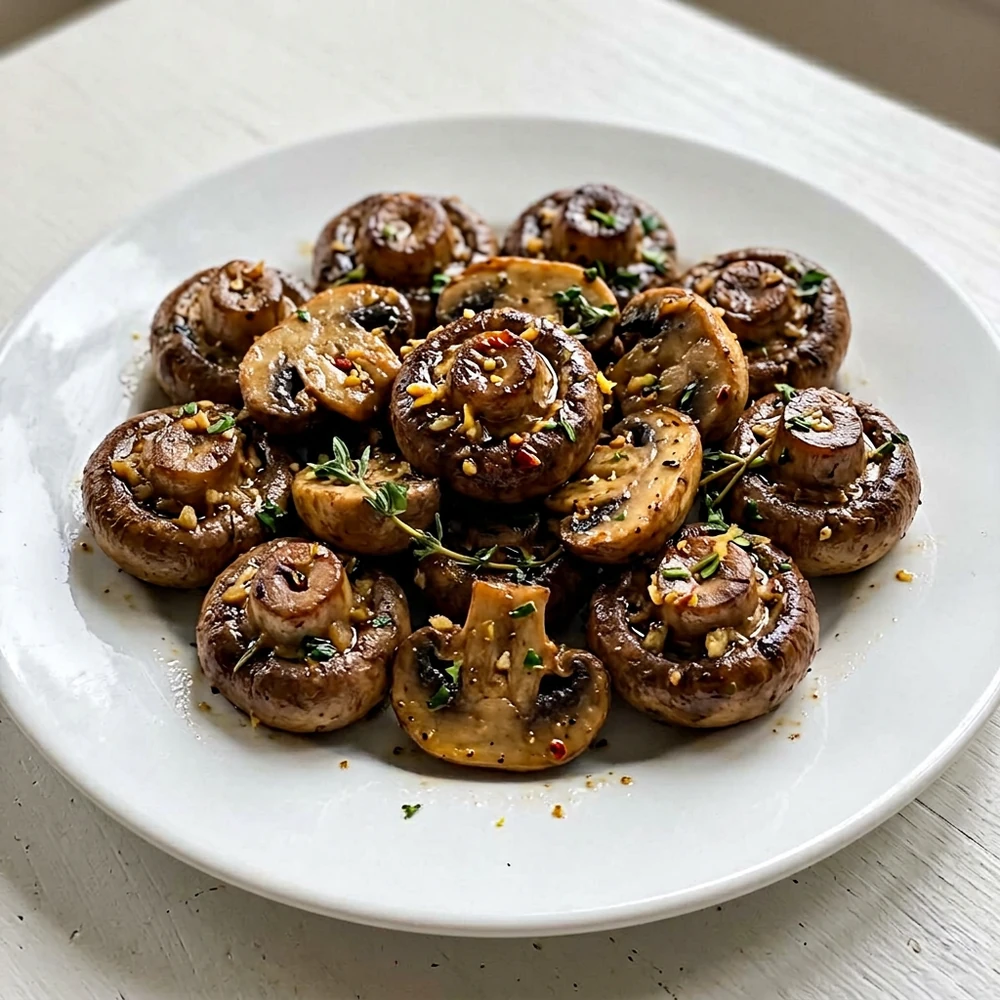
Garlic mushrooms butter style are the golden, juicy, pan seared bites that taste like a steakhouse side and cook in fifteen minutes.
You sear whole mushrooms in olive oil and butter until they brown properly, then finish them with garlic, lemon, parsley, and thyme in a glaze that clings to every cap.
You need this recipe when your steak night needs its rightful companion, when your dinner needs a savory side that costs almost nothing, or when mushrooms have been living in your fridge without a plan.
Recipe at a Glance
| Prep time | 5 minutes |
| Cook time | 10 minutes |
| Total time | 15 minutes |
| Cooking method | Pan seared in olive oil and butter over medium high heat |
| Servings | 4 |
| Main ingredients | Mushrooms, butter, garlic, olive oil, lemon, parsley, thyme |
| Skill level | Easy |
Ingredients You’ll Need
- 1 lb mushrooms
- 4 tbsp butter
- 4 cloves garlic minced
- 2 tbsp olive oil
- 1 tbsp lemon juice
- salt
- pepper
- fresh parsley
- fresh thyme
Ingredient Notes & Easy Substitutions
Your mushrooms can be cremini, white button, or a mix, and smaller caps sear more evenly than sliced pieces; leave them whole or halve only the big ones. The searing discipline at Lena’s Kitchen, butter and mushrooms into a hot pan with patience, is exactly what builds the golden crust here.
Your garlic goes in after the mushrooms brown, never before, because garlic in hot butter for seven minutes is garlic perfume and then garlic ash. The batch cooking logic at Foodie and Wine, letting the caps sit undisturbed to caramelize before tossing, is the difference between seared and steamed.
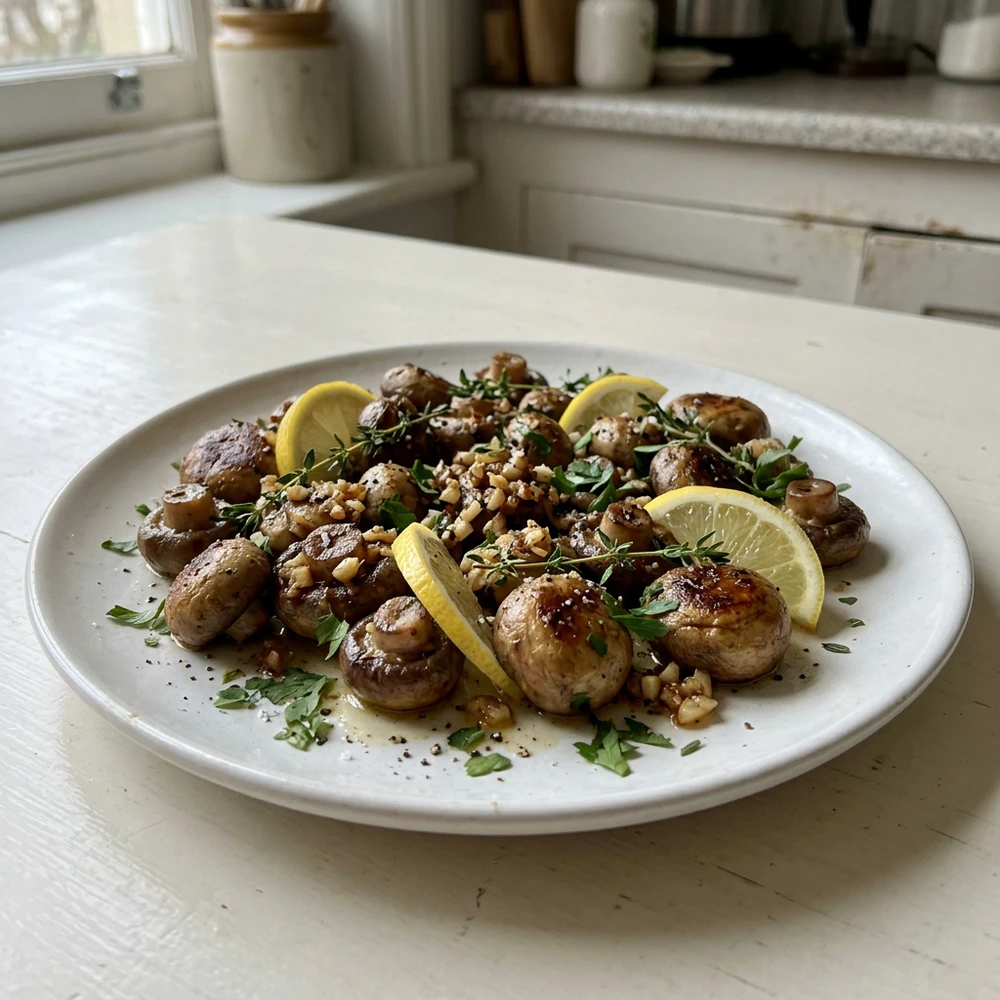
Your lemon juice arrives off the heat at the finish, brightening all that butter without curdling it, and the parsley and thyme go on at the very end where their freshness survives. Olive oil and butter share the pan because oil raises the smoke point while butter brings the flavor; it is a partnership, not a preference.
Equipment You’ll Need
You need a large skillet, a wooden spoon or tongs, a sharp knife, a cutting board, and a citrus juicer or strong opinions about squeezing lemons by hand. A paper towel or damp cloth wipes the mushrooms clean, because mushrooms drink water and a rinse makes them soggy before they ever see the pan.
A wide skillet matters, because one pound of mushrooms needs surface area; a crowded pan traps steam and pale mushrooms convince nobody. If your pan is small, sear in two batches and hold the first on a warm plate while the second works.
How to Make Garlic Mushrooms Butter
Step One: Heat the Fats
Heat the olive oil and butter together over medium-high heat until the butter foams and stills. That moment means the water has cooked off and the pan is properly hot; mushrooms into a shy pan drink fat and sulk, while mushrooms into a ready pan sear on contact.
Step Two: The Sear
Add the mushrooms and cook 5 to 6 minutes until golden, letting them sit undisturbed for the first couple of minutes. You will hear them hiss, then quiet, which is the sound of their moisture cooking off; when the undersides are deep gold, stir or toss and let the other sides join the club.
Step Three: Garlic, Late and Quick
Add the garlic and cook it 1 minute, tossing so every cap picks up some. One minute is exactly enough for the garlic to turn fragrant and golden; two is pushing it, and three is a tragedy, so this is the step you stand at the stove for.
Step Four: Season and Brighten
Season with salt, pepper, and the lemon juice, tossing to coat. The acid hits the hot pan and lifts every browned bit into the butter, making an instant pan sauce, and the salt lands where it belongs: on mushrooms that have already earned their flavor.
Step Five: The Herb Finish
Garnish with the chopped parsley and fresh thyme right in the pan. The residual heat wakes the herbs without cooking them into nothing, and the green flecks over all that gold is the visual that makes people ask what restaurant this came from.
Step Six: Serve Immediately
Slide the mushrooms into a warm bowl and serve them hot, with the buttery pan juices spooned over. Mushrooms wait for nobody; they are at their juiciest and glossiest in the first five minutes, and your timing should treat that as the deadline it is.
Serving Size & Batch Scaling
One pound of mushrooms serves four as a side, or two as a main event over toast with a fried egg on top. Mushrooms shrink dramatically as they cook, roughly by half in volume, so the pile in the pan is not the pile on the plate.
Doubling means two skillets or two sequential batches, because a double load in one pan drops the temperature and steams everything gray. The butter splits between pans, the garlic waits for each batch’s final minute, and your reward is twice the golden.
If you want the full steakhouse effect, finish each plate with an extra pinch of flaky salt over the mushrooms; the crystals crackle against the buttery caps and make the whole side taste like it came with a linen napkin.
Making More or Less?
For two, half a pound with half the fats and one clove of garlic makes a modest, perfect skillet in the same ten minutes. Keep the full lemon finish, because brightness refuses to scale down gracefully.
If you are feeding a crowd, sear in waves and hold finished batches uncovered on a warm platter rather than in a covered dish, which traps steam. A final minute of everything together in the biggest pan, with the garlic and herbs, re unifies the whole batch before serving.
Nutrition Estimate Per Serving
- Calories: about 165 per serving
- Protein: 4 g
- Carbohydrates: 6 g
- Fat: 15 g
- Fiber: 1 g
- Sugar: 2 g
- Sodium: about 300 mg
The following is an estimated nutritional breakdown based on standard ingredient data, so treat these figures as friendly guidance rather than clinical data. Mushrooms bring umami, B vitamins, and almost no calories to the party; the butter brings the reason the plate gets cleaned.
Common Mistakes to Avoid
The number one mistake is crowding the pan, which traps steam and gives you gray, rubbery mushrooms instead of golden, juicy ones. The second is adding garlic at the start; garlic needs one minute, mushrooms need six, and combining their schedules burns one and undercooks the other.
Do not wash the mushrooms under running water; wipe them with a damp cloth, because they absorb water like tiny sponges and watery mushrooms cannot sear. And do not stir constantly; the first minutes of contact with the hot pan are where the crust forms, and stirring resets your progress every time.
Finally, do not skip the lemon. It is one tablespoon, it arrives at the end, and it is the difference between rich mushrooms and rich mushrooms that taste alive.
Troubleshooting Guide
If your mushrooms released a puddle of water and refused to brown, the pan was crowded or the heat was shy; keep cooking, the water boils off, and they will brown eventually, just later than planned. Next batch, less company and more heat.
If your garlic burned, the heat was too high for its one minute; fish out what you can, and the remaining flavor is still salvageable with the lemon. If the dish tastes flat, it needs salt, not more butter; mushrooms are sponges for seasoning and famously shy without it.
If the butter browned before the mushrooms finished, that is not a disaster; brown butter and mushrooms are old friends. Just watch that the milk solids do not go from nut brown to black, and lower the heat a notch if the pan is racing.
Variations & Customizations
Add a splash of white wine or dry sherry after the garlic for a pan sauce with more ambition, or stir in a spoonful of Dijon at the finish for a tangy glaze. A pinch of red pepper flakes with the garlic handles heat seekers, and a dusting of Parmesan over the hot pan turns the side into an Italian leaning moment.
For a creamier version, add a quarter cup of cream in the final minute and let it reduce into the butter; over toast, that version is a meal. Mixed wild mushrooms make the whole dish fancier without changing a single step, which is the kind of upgrade worth the sticker price.
What to Serve With It
Steak is the canonical partner, and this side earns its steakhouse badge beside any seared chop or burger. It brings savory depth to a plate with Korean BBQ pork, and next to cheesy smothered mushroom chicken, it doubles down on the mushroom theme like a band playing their best song twice.
Spooned over toast, folded into an omelet, or piled beside roast chicken, these mushrooms fit anywhere savory is welcome, and the pan juices are a condiment your bread already knows about.
Meal Prep & Make-Ahead Instructions
Clean the mushrooms and mince the garlic up to a day ahead; store them separately in the fridge so the garlic does not perfume the whole drawer. The actual cooking is ten minutes, so there is genuinely no further ahead to get.
You can sear the mushrooms up to two days ahead and hold them in the fridge, then reheat quickly in butter with the garlic, lemon, and herbs added fresh. The sear softens slightly on day two, but the flavor holds, and the ten minute revival beats a fifteen minute from scratch on a busy night.
Storage & Leftovers
Leftovers keep in an airtight container in your fridge for up to three days, and they firm up as they chill. They remain entirely useful stirred into pasta, scrambled eggs, or grain bowls, which is honestly where most of them should be headed anyway.
Freezing cooked mushrooms is possible for up to two months, though the texture softens noticeably after thawing. Thawed, they are best destined for sauces and soups where their buttery flavor matters more than their sear.
Leftover garlic mushrooms make the world’s easiest bruschetta; toast thick slices of bread, rub them with a cut garlic clove, and pile the warm mushrooms on top with the pan juices. Your appetizer course appears from leftovers in five minutes, and nobody needs to know the plan was improvisation. Keep the juices; they are the whole show.
Reheating Instructions
Reheat leftovers in a skillet over medium heat with a small knob of butter for about three minutes, until hot and glistening again. The microwave works in forty five second bursts, best when the mushrooms are headed into eggs or pasta rather than onto a fancy plate.
A fresh squeeze of lemon and a pinch of parsley after reheating reset the brightness completely, and if the butter solidified in the fridge, the gentle pan heat brings the gloss right back. Day two mushrooms over toast remain one of the great quiet breakfasts.
Frequently Asked Questions
Can this be made ahead? You can sear the mushrooms up to two days ahead and finish them with garlic, lemon, and herbs during a quick reheat. The full dish is only fifteen minutes though, so most nights, from scratch is barely slower than leftovers.
Why did my mushrooms turn out rubbery? Rubbery mushrooms usually mean overcrowding, which steams them, or undercooking, which leaves their cell walls tough. Give them space, let the moisture cook off, and keep going until they actually brown; mushrooms get juicier as they cook, not drier.
Do you have to wash mushrooms? A quick wipe with a damp cloth or paper towel is all they need; a rinse will not ruin them, but waterlogged mushrooms sear poorly. If they are visibly gritty, rinse fast and dry thoroughly, then expect the pan to take a minute longer.
Can you use dried thyme instead of fresh? Yes, use half the amount and add it with the garlic so it blooms in the butter. Fresh thyme and parsley finish the dish brighter, but the dried route is entirely respectable on a weeknight.