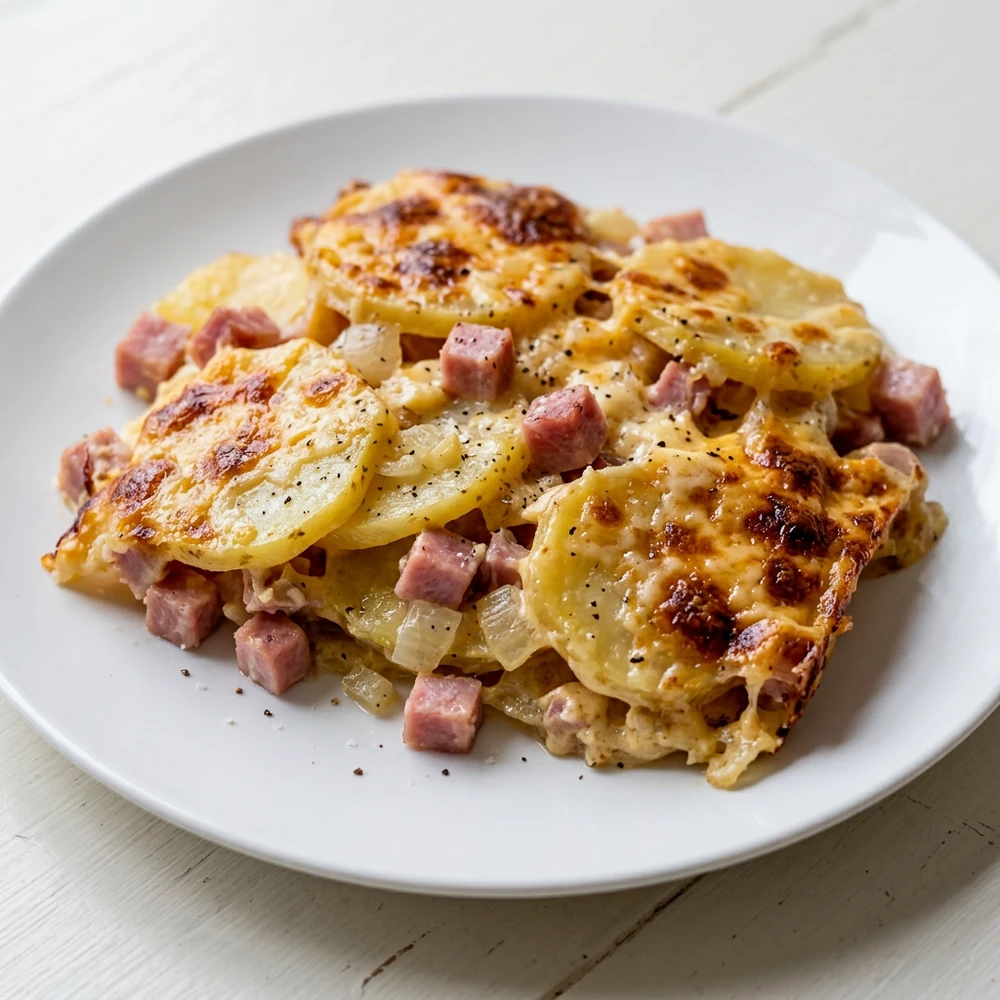
Scalloped potatoes ham style are the creamy, cheesy, layered comfort bake that turns leftover ham into the dish everyone remembers.
You build a real cheddar sauce with onion and nutmeg, layer it with thin sliced Yukon gold potatoes, and bake it covered, then uncovered, until the top turns golden and the edges bubble.
You need this recipe after every holiday ham, on every cold Sunday, and at every table where potatoes and cheese are considered love languages. One skillet, one dish, and about seventy minutes of mostly oven time, and dinner arranges itself into pure comfort.
Recipe at a Glance
| Prep time | 20 minutes |
| Cook time | About 1 hour 10 minutes |
| Total time | About 1 hour 30 minutes |
| Cooking method | Oven baked layered casserole, covered then uncovered |
| Servings | 8 |
| Main ingredients | Yukon gold potatoes, cooked ham, cheddar, onion, whole milk, nutmeg |
| Skill level | Easy to intermediate |
Ingredients You’ll Need
- 2 lbs Yukon gold potatoes thinly sliced
- 8 oz cooked ham diced
- 1/4 cup unsalted butter
- 1/2 cup yellow onion diced
- 1/4 cup all-purpose flour
- 2 cups whole milk
- 2 cups sharp cheddar cheese shredded
- 3/4 tsp kosher salt
- 1/2 tsp black pepper
- 1/8 tsp nutmeg
- 2 tsp chives chopped
Ingredient Notes & Easy Substitutions
Your potatoes should be Yukon golds, whose buttery texture and thin skins slice thin without turning gluey, the same base Jessica Gavin chooses for her scalloped ham bake. Slice them a scant quarter inch thick, evenly, because consistent slices are what make every layer finish tender at the same minute.
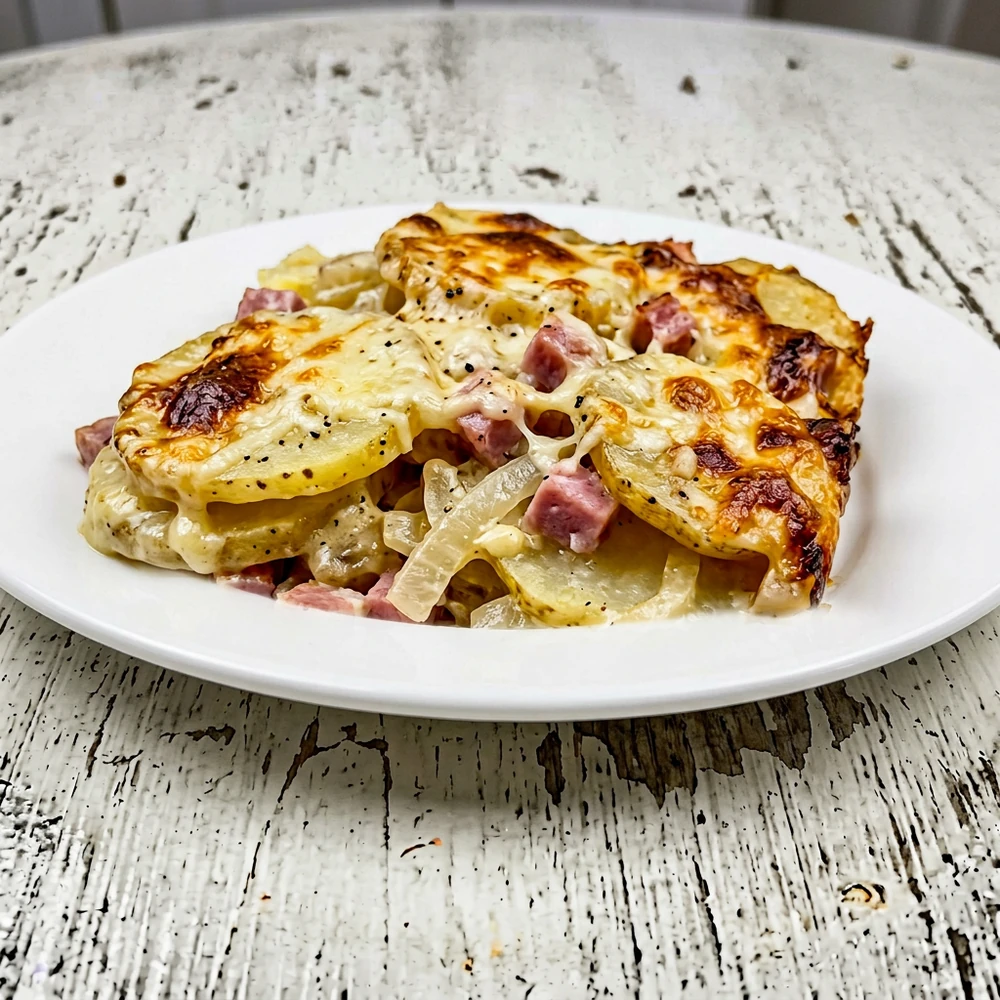
Your ham can be leftover holiday ham or good deli style diced ham, and it cooks briefly with the onion so its saltiness seasons the sauce itself. The roux logic at I Heart Naptime, butter and onion then flour then milk, is the same backbone here, and your nutmeg is the old fashioned background note that makes the sauce taste like it came from a proper kitchen.
Your cheddar should be sharp and shredded from a block, because sharp cheddar holds its flavor through the long bake. If your ham was very salty, taste the finished sauce before the final salt, since ham has been quietly seasoning this dish since 1950 and deserves the respect of a taste test.
Equipment You’ll Need
You need a 9×13 baking dish, a large skillet for the sauce, a whisk, a sharp knife or mandoline for the slices, and aluminum foil. Measuring cups and a box grater round out the station, and your mandoline, if you own one, earns its counter space tonight.
A mandoline gives you the even slices that bake evenly, and it also gives you a reason to respect your fingertips, so use the guard. If you are slicing by knife, aim for a scant quarter inch and accept a five minute longer bake if a few slices run proud.
How to Make Scalloped Potatoes Ham
Step One: Preheat and Grease
Preheat your oven to 375F and grease a 9×13 baking dish. Butter the bottom and sides generously, because those sauce kissed edges are the corners people serve themselves from, and a stuck layer of potato is the only real failure mode this dish has.
Step Two: Onion and Ham
Melt the butter in a skillet, add the onion and saute 3 minutes, then add the ham and cook 2 minutes. The onion softens into sweetness, the ham picks up a little color, and together they lay the savory foundation that plain scalloped potatoes always secretly wanted.
Step Three: Build the Sauce
Whisk the flour into the onion mixture, then gradually add the milk, stirring until smooth, and cook until thickened. Slow milk with constant stirring is what keeps the sauce velvet instead of lumpy, and it is ready when it coats your spoon and holds the line you draw through it.
Step Four: Cheese Off the Heat
Remove the skillet from the heat and stir in the cheese, salt, pepper, and nutmeg until the cheese melts. Off heat is the rule for smooth cheese sauce, and your finished sauce should taste slightly bold, because potatoes are about to dilute everything they touch.
Step Five: The Layers
Layer half the potatoes in the baking dish and pour half the sauce over, then add the remaining potatoes and sauce. Press the top layer down gently so the sauce finds every gap, because gaps are where undercooked slices hide and nobody forgives a raw potato in an otherwise perfect bite.
Step Six: Covered, Then Uncovered
Cover with foil and bake 45 minutes, then uncover and bake 20 more minutes until golden and bubbly. The covered phase steams the potatoes tender; the uncovered phase browns the top; garnish with chives and rest ten minutes before the first square gets cut.
Serving Size & Batch Scaling
A full 9×13 serves eight as a hearty side or six as a main with a vegetable beside it. This is a dish that feeds a holiday table and then keeps feeding it, and the leftovers reheat like they were designed for it.
Halving into an 8×8 dish works with the same sauce method and a bake time checked about ten minutes early. Doubling is two 9×13 dishes on two racks, swapped halfway, because depth is the enemy of a fully cooked center in potato bakes.
Making More or Less?
For a smaller household, use one pound of potatoes, four ounces of ham, and three quarters of the sauce in an 8×8; the covered and uncovered bake phases stay the same, checked early. Your small dish still gets the full golden top ceremony.
If you are feeding a crowd and short on oven space, assemble the dish completely in the morning and bake it at dinner time; this casserole actually benefits from a rest, as the sauce settles into the layers and the slices hold together better.
Nutrition Estimate Per Serving
- Calories: about 380 per serving
- Protein: 17 g
- Carbohydrates: 30 g
- Fat: 22 g
- Fiber: 3 g
- Sugar: 4 g
- Sodium: about 760 mg
The following is an estimated nutritional breakdown based on standard ingredient data, so treat these numbers as friendly context rather than lab certified facts. Ham and cheddar bring the protein and the salt, the potatoes bring the comfort, and your portion size is the honest variable.
Common Mistakes to Avoid
The top mistake is slicing the potatoes unevenly, because thin slices dissolve while thick ones stay firm and the dish argues with itself. The second is skipping the covered bake; without the foil phase, the top browns long before the potatoes finish, and you serve beautiful potatoes with a raw center.
Do not add the cheese over direct heat, or your sauce turns grainy before it ever reaches the dish. And do not skip the rest after baking, because those ten minutes are when the sauce sets and your squares come out looking like squares instead of a delicious landslide.
Finally, do not under season the sauce; potatoes and milk absorb salt aggressively, and the ham helps but does not carry the whole job. Taste the sauce before it goes over the layers and make it slightly bolder than seems reasonable.
Troubleshooting Guide
If your potatoes are still firm after the full bake, the slices ran thick or the dish is packed deep; cover again and give it fifteen more minutes, checking the center with a paring knife. If the top is brown before the center is tender, the foil phase got skipped or shortened; re cover and finish the job.
If your sauce seems thin after baking, it will thicken considerably as it rests; judge the dish after the ten minute set, not the moment it leaves the oven. If it still runs loose, a few extra minutes uncovered at the end of the bake evaporates the excess.
If the sauce broke or looks grainy, the cheese hit direct heat; the bake will mostly hide it, and next round, cheese off the heat, always. A sprinkle of fresh chives after the rest covers a multitude of sins and looks like a plan.
Variations & Customizations
Add a cup of frozen peas to the layers for color and sweetness, or swap half the cheddar for gruyere when you want the version people talk about in November. A layer of thinly sliced onions between the potatoes deepens the savory base, and a pinch of cayenne in the sauce is the change nobody can name and everybody requests.
For a lighter bake, use two percent milk and cut the cheese to one and a half cups; the sauce stays creamy from the roux, and the ham keeps every bite interesting. Leftover turkey works exactly like the ham after Thanksgiving, which is how this dish earns its place on two holidays a year.
What to Serve With It
These potatoes sit beside a simple green vegetable and call it a meal, and they are the natural destination for holiday ham leftovers. They share a comfort food wavelength with Cracker Barrel meatloaf on a Sunday plate, and a side of cheesy garlic bread turns the whole table into a cheese and starch summit that nobody leaves early.
A sharp green salad or roasted green beans keeps the plate balanced, and a spoonful of the pan sauce over everything is the house rule you should institute immediately.
Meal Prep & Make-Ahead Instructions
You can assemble the entire unbaked casserole up to a day ahead; cover and refrigerate, then bake it cold with an extra ten to fifteen minutes on the covered phase. The sauce method from Jessica Gavin makes this an easy day before dish, and the flavor is indistinguishable from same day assembly.
You can also make the sauce up to two days ahead and refrigerate it; it thickens in the fridge and loosens back over low heat with a splash of milk. Slice the potatoes and hold them submerged in cold water for up to a day, drained and dried well before layering.
Storage & Leftovers
Leftovers keep covered in your fridge for up to four days, and the squares set firmly as they chill, which makes them ideal for reheating in neat portions. This is one of those rare casseroles that tastes better on day two, after the sauce has soaked into every layer.
Freezing works for up to two months; wrap portions tightly, thaw overnight in the fridge, and reheat covered. Dairy sauces can separate slightly after a freeze, and a gentle reheat with a stir usually talks them back into shape.
Reheating Instructions
Your oven at 350F, covered with foil, reheats the whole dish in about 25 minutes; single squares take 12 to 15 and crisp nicely if you uncover them for the last few minutes. The microwave handles a portion in about 90 seconds, softening the top in exchange for speed.
Fresh chives after reheating, plus a small extra pinch of cheese melted under the broiler for a minute, make day three squares taste like a fresh bake. Your leftovers have a reputation to protect, and these two minutes protect it completely.
Frequently Asked Questions
Can this be made ahead? Yes, assemble the full unbaked casserole up to a day in advance and bake it cold with extra time, or bake it completely and reheat covered at 350F. Both routes land a golden, bubbling dish on the table with minimal day of effort.
Can you use a different potato? Russets work but thicken the sauce more and can turn slightly grainy; red potatoes hold their shape but stay firmer than classic. Yukon golds are the sweet spot of buttery texture and even tenderness, which is why this recipe asks for them by name.
Why are my potatoes still hard after baking? Thick or uneven slices, a skipped foil phase, or a too deep dish are the usual suspects. Cover the dish and keep baking in fifteen minute stretches until a paring knife slides through the center layers with no argument.
Can you make it without the ham? Yes, and it becomes classic cheesy scalloped potatoes; keep the onion and sauce exactly as written and season the sauce a touch bolder to cover the missing salt from the ham. Add sauteed mushrooms to the layers if you miss the savory heft.